January 20, 2021: Well, everything seems to be fine now. It’s been half a day, and so far, no abusive tweets from the new administration. So we are cautiously optimistic about tone.
Some people are sad, some people are happy. To the sad, we sympathize. Those of us who voted Biden will not gloat. Those of us who voted Trump will not lash out. One day, the tide will turn again. Joe the Plumber might be elected president in 2024. Or Joe Piscopo. Or Danny Bonaduce. So we will see how that goes. Could be OK. Might be bad. Some people would love it.
We could probably use less politics right now, less screaming at each other. It is easier to say that when our candidate has won. But whoever you voted for, we appreciate your readership, we don’t think there is anything funny about your pain. We’ve all been angry. At least all Americans have that in common. If you are looking for things that unite us, still, there is that. We have all been very very angry.
So for at least the next week, no politics at all. Maybe for much longer.
So what is there to write about, now?
We will publish pretty photos from around the world. See above, for example. Isn’t that pretty? (Gosh, it probably makes you feel peaceful, even if you are yearning.) We will publish more stuff like that, pretty and free stock photos. Doesn’t cost us anything, so why not?
We will rediscover humorous 19th century rhyming couplets. Or, at least, we will try. We will look. Cannot guarantee that we will rediscover anything, but we will try. We will write about AJR, Mannix reruns and “Bertha the Siberian Cheesehound.” Who among us does not love funny Siberian cheesehounds? Who among us doesn’t love AJR? Who can honestly say that they don’t love AJR?
But no politics, till at least one week from today. Maybe longer.
We have all seen the alarming headlines: Coronavirus cases are surging in 40 states, with new cases and hospitalization rates climbing at an alarming rate. Health officials have warned that the U.S. must act quickly to halt the spread – or we risk losing control over the pandemic.
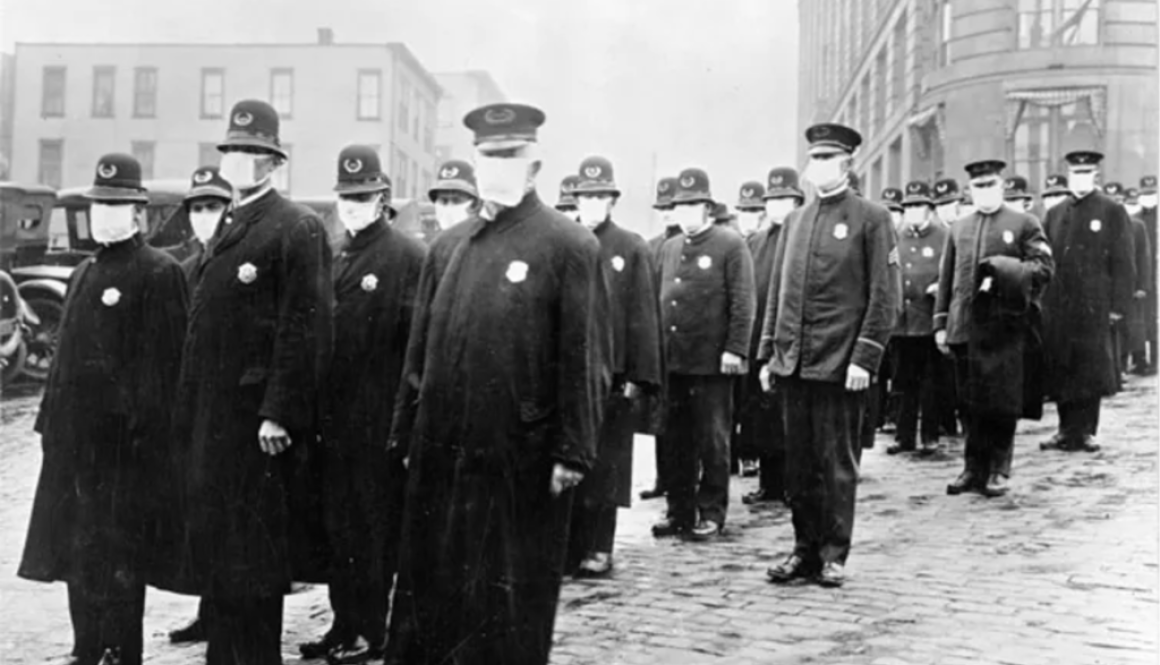
I’ve researched the history of the 1918 pandemic extensively. At that time, with no effective vaccine or drug therapies, communities across the country instituted a host of public health measures to slow the spread of a deadly influenza epidemic: They closed schools and businesses, banned public gatherings and isolated and quarantined those who were infected. Many communities recommended or required that citizens wear face masks in public – and this, not the onerous lockdowns, drew the most ire.
In mid-October of 1918, amidst a raging epidemic in the Northeast and rapidly growing outbreaks nationwide, the United States Public Health Service circulated leaflets recommending that all citizens wear a mask. The Red Cross took out newspaper ads encouraging their use and offered instructions on how to construct masks at home using gauze and cotton string. Some state health departments launched their own initiatives, most notably California, Utah and Washington.
Nationwide, posters presented mask-wearing as a civic duty – social responsibility had been embedded into the social fabric by a massive wartime federal propaganda campaign launched in early 1917 when the U.S. entered the Great War. San Francisco Mayor James Rolph announced that “conscience, patriotism and self-protection demand immediate and rigid compliance” with mask wearing. In nearby Oakland, Mayor John Davie stated that “it is sensible and patriotic, no matter what our personal beliefs may be, to safeguard our fellow citizens by joining in this practice” of wearing a mask.
Health officials understood that radically changing public behavior was a difficult undertaking, especially since many found masks uncomfortable to wear. Appeals to patriotism could go only so far. As one Sacramento official noted, people “must be forced to do the things that are for their best interests.” The Red Cross bluntly stated that “the man or woman or child who will not wear a mask now is a dangerous slacker.” Numerous communities, particularly across the West, imposed mandatory ordinances. Some sentenced scofflaws to short jail terms, and fines ranged from US$5 to $200.
Passing these ordinances was frequently a contentious affair. For example, it took several attempts for Sacramento’s health officer to convince city officials to enact the order. In Los Angeles, it was scuttled. A draft resolution in Portland, Oregon led to heated city council debate, with one official declaring the measure “autocratic and unconstitutional,” adding that “under no circumstances will I be muzzled like a hydrophobic dog.” It was voted down.
Utah’s board of health considered issuing a mandatory statewide mask order but decided against it, arguing that citizens would take false security in the effectiveness of masks and relax their vigilance. As the epidemic resurged, Oakland tabled its debate over a second mask order after the mayor angrily recounted his arrest in Sacramento for not wearing a mask. A prominent physician in attendance commented that “if a cave man should appear…he would think the masked citizens all lunatics.”
In places where mask orders were successfully implemented, noncompliance and outright defiance quickly became a problem. Many businesses, unwilling to turn away shoppers, wouldn’t bar unmasked customers from their stores. Workers complained that masks were too uncomfortable to wear all day. One Denver salesperson refused because she said her “nose went to sleep” every time she put one on. Another said she believed that “an authority higher than the Denver Department of Health was looking after her well-being.” As one local newspaper put it, the order to wear masks “was almost totally ignored by the people; in fact, the order was cause of mirth.” The rule was amended to apply only to streetcar conductors – who then threatened to strike. A walkout was averted when the city watered down the order yet again. Denver endured the remainder of the epidemic without any measures protecting public health.
In Seattle, streetcar conductors refused to turn away unmasked passengers. Noncompliance was so widespread in Oakland that officials deputized 300 War Service civilian volunteers to secure the names and addresses of violators so they could be charged. When a mask order went into effect in Sacramento, the police chief instructed officers to “Go out on the streets, and whenever you see a man without a mask, bring him in or send for the wagon.” Within 20 minutes, police stations were flooded with offenders. In San Francisco, there were so many arrests that the police chief warned city officials he was running out of jail cells. Judges and officers were forced to work late nights and weekends to clear the backlog of cases.
Many who were caught without masks thought they might get away with running an errand or commuting to work without being nabbed. In San Francisco, however, initial noncompliance turned to large-scale defiance when the city enacted a second mask ordinance in January 1919 as the epidemic spiked anew. Many decried what they viewed as an unconstitutional infringement of their civil liberties. On January 25, 1919, approximately 2,000 members of the “Anti-Mask League” packed the city’s old Dreamland Rink for a rally denouncing the mask ordinance and proposing ways to defeat it. Attendees included several prominent physicians and a member of the San Francisco Board of Supervisors.
It is difficult to ascertain the effectiveness of the masks used in 1918. Today, we have a growing body of evidence that well-constructed cloth face coverings are an effective tool in slowing the spread of COVID-19. It remains to be seen, however, whether Americans will maintain the widespread use of face masks as our current pandemic continues to unfold. Deeply entrenched ideals of individual freedom, the lack of cohesive messaging and leadership on mask wearing, and pervasive misinformation have proven to be major hindrances thus far, precisely when the crisis demands consensus and widespread compliance. This was certainly the case in many communities during the fall of 1918. That pandemic ultimately killed about 675,000 people in the U.S. Hopefully, history is not in the process of repeating itself today.
Originally published on Policy Options, October 19, 2020
Please, I implore you. Can we just retire the term resilience?
This might seem like a strange request, but I can’t muster the, uh, resilience to endure prolonged exposure to this “plastic word.”
German linguist Uwe Poerksen described the emergence of a plastic vocabulary that has become ubiquitous, so much so that these words are devoid of meaning. Resilience is a prime candidate.
Moulded for maximum appeal, plastic words crop up everywhere, from scientific to popular discourse. We are all supposed to know what these words mean. Upon closer view, however, it’s not exactly clear what they mean. As Poerksen explains in his book Plastic Words: The Tyranny of a Modern Language, they are the “everyday prison of perception. They are handy, and they open doors to enormous rooms. They infiltrate entire fields of reality. And they reorder that reality in their own image.”
Popularized by developmental psychologists who were trying to understand how children overcame disadvantage, the term “resilience” has penetrated every corner of public discourse. Resilience is that “silver lining,” the positive residue left from trauma and tragedy. We are exhorted to be or become resilient, to summon the inner strength to deal with what life has flung our way. Develop the capacity to deal with adversity and, presto, you can bounce back stronger than ever. Of course, it seems almost silly to oppose resilience. After all, what is the alternative? Getting stuck?
The COVID-19 pandemic has revved up the resilience industry. Kids who were forced out of school and confined to their homes in March are expected to return to class – in whatever form that takes – ready and eager to learn. Their parents are supposed to be resilient, too, there to help them adjust to the new normal, even if those same parents are struggling themselves – working from home if they can, or required to report to work if they are essential workers.
And the Trudeau government’s recent speech from the throne – titled “A Stronger and More Resilient Canada” – was all about “building back better,” borrowing a phrase from Democratic presidential candidate Joe Biden. In August, the federal government even announced its “Investing in Canada Infrastructure Program,” which allows provinces and territories to access funding for “pandemic-resilient infrastructure projects.” This would include supports for schools, hospitals, and walking paths – programs that would be worthy of public support in non-COVID-19 times.
What if resilience is just another way of saying “get over it”? What if a positive attitude is not enough to pull you out of poverty? What if dealing with hatred and racism is not made better by just not letting it get to you? What doesn’t kill you makes you stronger, right? It might not kill you, but it can harm you in ways that might make you feel like you would be better off dead.
Julie Lalonde, Ottawa author of the aptly titled Resilience is Futile, describes being stalked for several years by an ex-boyfriend. She says sexual assault survivors are ensnared in the “double bind” of resilience: “The few women who decided to report to police lived in a double bind. They had to look bad enough for their trauma to be taken seriously, but not be too much of a mess or else risk being seen as crazy and unstable. It wasn’t enough that women were subjected to discrimination, violence, and neglect, I realized. We also had to perform our trauma in a very precise way in order to get any semblance of justice.”
The resilience industry is rooted in an individual model of change, one that leaves untouched the structures and systems that are responsible for the trauma in the first place. Children growing up in under-served communities would not have to “overcome” their environments if their schools and neighbourhoods had the resources they deserved. Indigenous people would not need to become resilient in the face of colonial dispossession had they not been forced into residential schools or had their land occupied. As disability studies scholar Eli Clare reminds us, the language of “overcoming” is deeply ableist, as well, implying that people can will things away if they just work more or try harder.
The idea that recovery from trauma or disadvantage builds character is particularly odious because it marks certain communities as needing adversity to toughen them up while allowing others to simply go about their privileged lives.
Some commentators link the arrival of all things resilient with contemporary capitalism. “Neoliberal citizenship,” says Mark Neocleous, “is nothing if not a training in resilience as the new technology of the self: a training to withstand whatever crisis capital undergoes and whatever political measures the state carries out to save it.”
The idea that recovery from trauma or disadvantage builds character is particularly odious because it marks certain communities as needing adversity to toughen them up while allowing others to simply go about their privileged lives. The narratives that swirl around resilience often invoke stories of strength in the face of adversity, telegraphing that you, too, can shake off the cumulative cycle of disadvantage.
And resilience crosses the ideological divide: it serves progressive ideas of success “against the odds” as well as more conservative notions of individual grit and “pulling oneself up by the bootstraps.”
As New York Times book critic Parul Sehgal discussed in the wake of US campus protests to decry racism, resilience can devolve into a discourse of blame when it suggests people just need to toughen up: “What seems to me to get people through these kinds of trauma are other people. It is an ability and an opportunity to talk about one’s pain. It is an opportunity to be vulnerable and to change and dictate the course of one’s life.”
Resilience is even used to refer to structures that can withstand environmental catastrophe. Focusing on buildings that are tough enough to recover from weather-related calamities neatly sidesteps the real issue: climate change. Sustainable buildings are only as “sustainable” as the world in which they find themselves: a resilient building is no match for a world upended by the perils of climate change. Similarly, a resilient person is powerless in the face of structures that need to be dismantled, not reinforced.
It’s not surprising that many, including elected officials, take solace in narratives of resilience and recovery. They lift us out of the pit of despondency. But we need to collectively challenge some of these policy responses that are grounded in notions of resilience. These feel-good stories of “building back better” or “overcoming adversity” provide only temporary comfort. They mask problematic assumptions about the relative capacity of individuals to confront structures and conditions that are not of their own making.
^^^
This article first appeared on Policy Options and is republished here under a Creative Commons license.
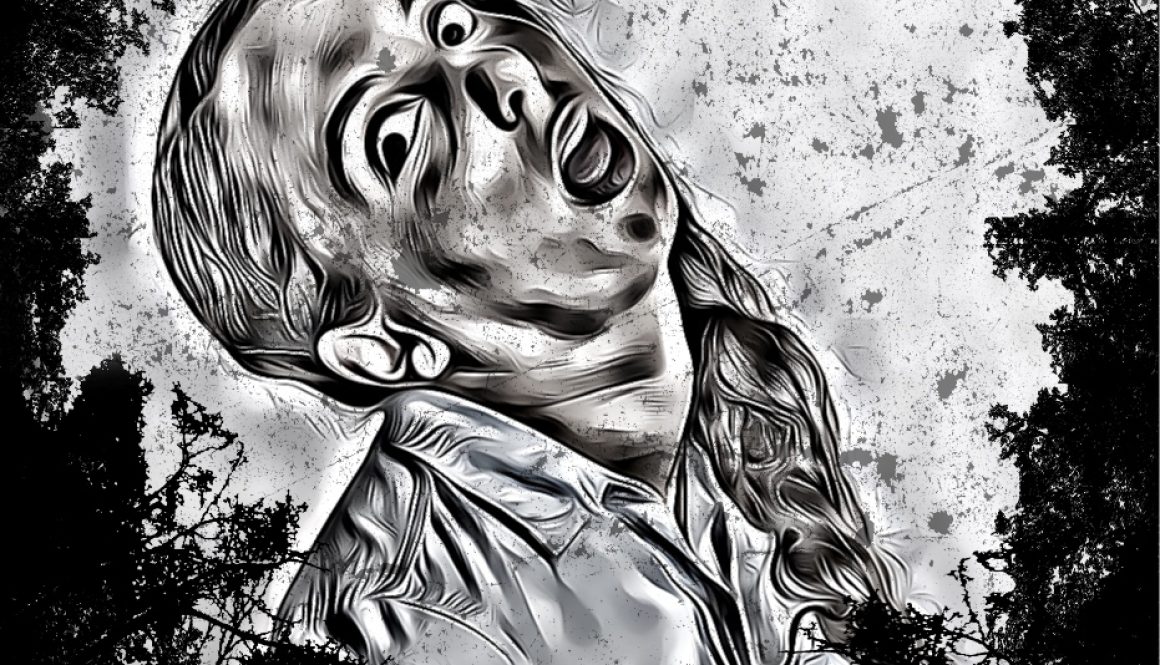
Image design by Steven S. Drachman from an image by Robin Higgins
[Editor’s Note: Read the entire story from the beginning!]
On his way home, Tucky stopped off for a pepperoni pie at Snappy Tomato. He figured he’d zone out with a six pack of Nitro Porter and a Hobbit move. As a plan for the evening, it was a poor substitute for what he really wanted after breaking up with Carla: a chance to talk out his hurt feelings with Mom or Dad.
Trouble was, he’d never met either of them. His name was a mishmash of data from the police report to Social Services: They’d found him inside a gas station washroom along Route 54 in Calloway County, Kentucky — wrapped in a towel and stuffed into a gym bag. “Tucky Calloway” was supposed to be a temporary moniker. But when years passed and no lonely couple felt lonely enough for the sullen, cranky boy, his childhood ran out at a series of three foster homes — and he was stuck with a GPS location for an identity.
His years since high school had teetered between desperate loneliness and an uncomfortable sense of belonging with a collection of taunting, domineering “friends.” As a consequence, his meager support network consisted most reliably of Gerd’s brother, Lukas Wrangel, the last and least toxic of his foster parents. Once he dropped out of community college, Tucky’s job at Gerd’s repair shop was the closest thing to a safe landing he could have hoped for.
Gerd himself, while not exactly paternal, had been generous enough to let Tucky live rent-free above his garage. “Free,” that is, at the cost of putting up with Gerd’s erratic swings between simmering rage and vodka-drenched sentimentality. But from Gerd’s perspective, Tucky was his cash cow. Word of mouth about the shy young man’s ingenious, reliable repairs had expanded the shop’s customer base considerably. In response, Tucky’s pay went up a few dollars above minimum wage — but that also earned him more nagging scrutiny, on Gerd’s “bad days.”
So, in a moment of searing grief, Tucky had no one to confide in. Lukas and Lola, his staunchly Christian foster mother, had never warmed up to Carla — not to mention everything she implied. All things considered, the idea of curling up with beer and comfort food was the only brand of therapy within reach. Combined with a film about triumphing over impossible odds, they seemed a more appealing option than punching his fists though his apartment’s one-quarter-inch sheetrock walls.
That is, until he remembered the box of junk back at Wrangel Repair & Thrift, especially that haunting, weird tablet. In fact, once the tablet was back in his thoughts, it refused to leave him in peace. But Tucky wasn’t ready to give up his sulk so fast. Instead, he made a half-hearted attempt to straighten up the scene of his final shouting match with Carla the day before. The match, that is, that immediately preceded the plate of spaghetti she threw at his head and the sound of her Adidas pounding down the rickety exterior stairs that led up to his apartment over Gerd’s garage.
There was pasta everywhere, but after an unusual effort of the will, he managed to get the last of it off the ugly, red Scotch plaid curtains on his living room windows. Beyond that, his energies gave out in a brief fit of crying over the girl he figured was probably his last chance for happiness. Yet on his way to the kitchen with a dustpan full of spaghetti, he had to wonder if his definition of happiness had any basis in any reality he could hope to inhabit.
All at once, a set of car lights that flashed by, on the road running past Gerd’s squat home, and made Tucky glance out his kitchen window. The car was going nowhere in particular, but what really caught his eye was the bright array of twinkling stars that stood out against the cloudless early fall sky. As he stood, fascinated by their distant glow, the heartsick twenty-something felt his spirits lift an inch or two.
Maybe there’s a better life out there somewhere, he allowed himself to think.
Then again, he still had to get through Monday night. With a sigh, Tucky shuffled back into his living room and plopped down on his brown corduroy upholstered couch. He snapped open a Nitro, flung his legs out on his scratched, pseudo-colonial coffee table and let his eyes flutter shut. A millisecond later, the bronze tablet appeared, emblazoned on his eyelids. Across its glowing milky-white screen, a stream of unfamiliar characters flowed past at a leisurely pace. Did they add up to sentences in code? Or was this some kind of Math he’d never heard of?
“Pretty lame for a guy with ‘so much potential’,” he mumbled.
Mr. Nagy, his Electrical Technology teacher at Cole Community College, had said he could be an electrical engineer. Carla had insisted that he could be a computer genius. But as Tucky looked around his messy living room, splattered with bootleg DVDs, discarded take-out cartons and cracked circuit boards, it seemed pretty clear that this was all he “could be.” Being anything else meant locking himself up in a classroom with nothing to do but listen — and he knew himself too well. Even if he took Mr. Nagy up on his offer to tutor him one-on-one, nights and weekends, “to work around his condition,” Tucky knew he’d just get bored again. His condition was this. No sense pretending he could change.
“Sorry guys,” he said to DVD player across the room. He sucked back some Nitro and took a second stab at relaxing his eyes.
There it was again! The glowing tablet floated behind his eyelids. He swung his feet onto his Navy-blue plush carpet, grabbed his car keys, pushed the door open and headed downstairs to the pavement. He fired up the Civic and sped off into the early evening, out onto the highway and over to the center of town.
But as he pulled up to the curb in front of Gerd’s shop, he almost cracked the taillights on the car parked in front of him. Why, on God’s green Earth, were three more large boxes piled up on the shop’s stoop? With the motor still running, Tucky crawled out the passenger side and jogged over to read the note attached to the top box.
Found these buried under the begonias this morning.
Starting to think my Olga was out of her head.
In the glare of his headlights, he felt his stomach tighten. The choice the components offered him was intriguing. He could smash the tablet and go back to moping over Carla — or try to work out Olga’s secret and maybe lift himself out of his WD-40-soaked rut. And yet … would life outside of that rut lead to more opportunity or deeper disappointment?
Already kinda close to the bottom, he told himself.
Tucky looked up again at the stars he’d seen from his window, which shone even brighter in the crisp night air. What, he wondered, was the risk? He rushed back to shut off the Civic, fished his shop keys out of his pocket and opened the top box. Nestled into a heap of identical components, one stood out: a reddish-brown sphere, offset by the same milky-white glow he’d seen on the tablet’s screen. As he let himself into the shop, and dragged the three boxes across the threshold, Tucky had to admit he’d never felt so excited — except maybe for that time with Carla out by Nolin Lake.
Mark Laporta is the author of Probability Shadow and Entropy Refraction, the first two novels in the science fiction series, Against the Glare of Darkness, which are available at a bookstore near you, on Amazon and at Barnes & Noble. He is also the author of Orbitals: Journeys to Future Worlds, a collection of short science fiction, which is available as an ebook.
Design from an original photograph by Mindaugus Victus
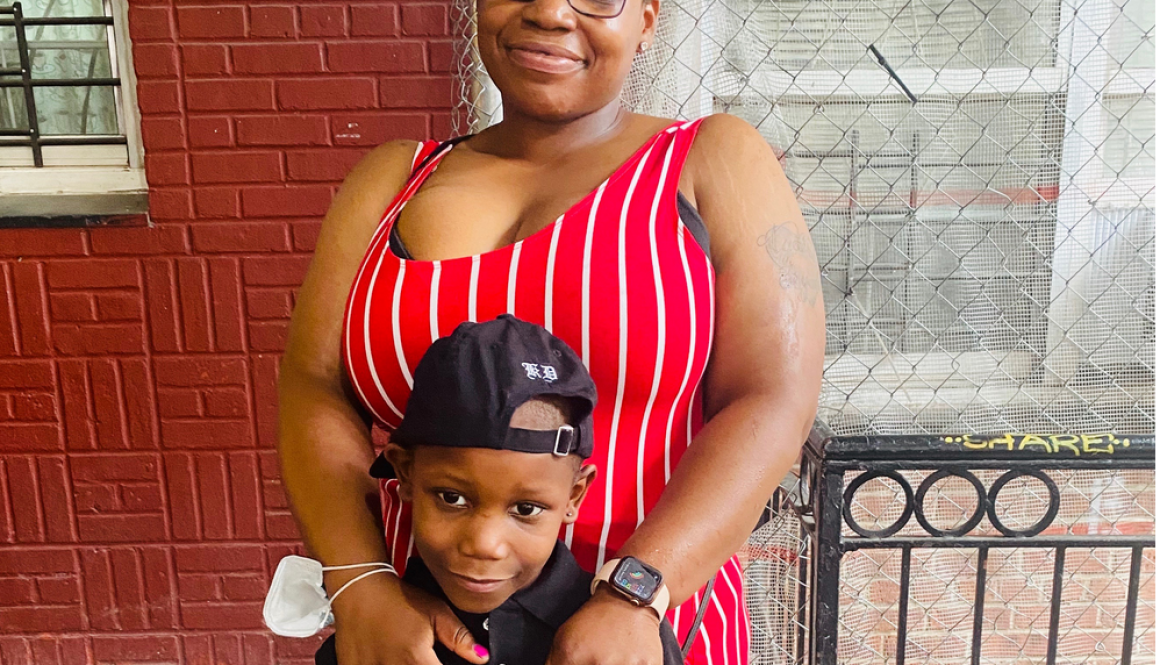
“When people make mistakes and then cover those mistakes up with lies upon lies, that’s when people get really hurt,” said Sherron Paige, whose 7-year-old son, Kyan, has grown up in a lead-tainted apartment in the Red Hook Houses.
Red Hook Houses resident Sherron Paige and her son, Kyan. | Courtesy of Sherron Paige
The day in July 2017 the doctor called Sherron Paige to tell her that her son, Kyan, had registered an alarming level of lead in his blood, the child was just 4 years old.
At the time, Paige had no way of knowing her son had become a very young victim of alleged deception by a city official.
The New York City Housing Authority previously certified that the Brooklyn apartment where Kyan had lived since birth had been cleaned of lead paint. A licensed NYCHA supervisor signed off on the job, THE CITY has learned.
That supervisor, however, had never been to the apartment in Red Hook Houses and never reviewed the inspection reports, according to the city Department of Investigation and sources familiar with the matter.
He’d simply signed paperwork certifying that an apartment he’d never seen was lead-free — exempting NYCHA from having to inspect the unit going forward as required by local law and federal regulations, according to the records and the sources.
The consequences became clear once Kyan’s doctor notified the city Department of Health & Mental Hygiene (DOHMH) that the child had registered a blood-lead level of 12 micrograms per deciliter — far above the cutoff of 5 micrograms deemed unsafe by the U.S. Centers for Disease Control and Prevention.
Courtesy of Sherron PaigeSherron Paige said her son, Kyan, was behind his peers in speech development.
DOHMH inspectors visited the apartment to check for the presence of lead paint following Kyan’s diagnosis. Using a handheld X-ray-like device known as an XRF analyzer, they discovered lead throughout the apartment NYCHA had declared safe, records reviewed by THE CITY show.
Elevated blood-lead levels are known to hamper the cognitive development of young children. Paige noted Kyan’s speech development was behind his age group and he has displayed behavioral issues.
“Sometimes people make mistakes and bad things happen. That’s life,” Paige told THE CITY. “But when people make mistakes and then cover those mistakes up with lies upon lies, that’s when people get really hurt. And that’s when people should pay the highest price.”
Barbara Brancaccio, a NYCHA spokesperson, declined to discuss NYCHA’s handling of lead paint inspections in the family’s apartment, stating, “Apartment specific information is not public. Additionally, this apartment is involved in pending litigation and NYCHA cannot comment.”
NYCHA Lies Hurt Kids
Over the last five years, evidence has surfaced of young NYCHA residents with dangerously high levels of lead in their blood. Year after year, NYCHA management deflected blame and downplayed the scope of the crisis.
Probes by the city Department of Investigation and the Manhattan U.S. Attorney revealed the authority failed to perform required lead paint inspections for years — and lied about it to federal authorities.
Last month, DOI found for the first time fraudulent actions by NYCHA personnel occurred in apartments where children were exposed to toxic lead paint.
DOI revealed the duplicity behind NYCHA’s push to exempt apartments like Kyan’s from lead inspection: top managers had for years used false signatures to obtain exemptions. Investigators determined this deceit occurred in at least 323 apartments, and they believed many more were affected.
And actual harm was done: DOI Commissioner Margaret Garnett said her investigators cross-referenced health and other records, and found that 19 children living in 18 of the 323 exempted apartments became lead poisoned.
Garnett and NYCHA declined to share the identities of those children. But THE CITY has learned that Kyan was one of them.
THE CITY also learned that two years ago, NYCHA was twice warned that the exemption program had serious problems, yet did little to address them.
Records reviewed and interviews conducted by THE CITY found:
In March 2018, while the false-signature scheme was underway, a NYCHA manager insisted to a Brooklyn tenant that her apartment had been officially deemed free of lead. State health inspectors later discovered lead paint inside the apartment.
In August 2018, DOI privately warned NYCHA to retest all its exempted apartments, disclosing that investigators had discovered problems with the program during an ongoing probe. NYCHA declined to do so.
Only now is NYCHA going back and re-testing the 323 apartments DOI falsely identified as eligible for exemption. Preliminary test results have already uncleared lead paint in five apartments NYCHA previously declared “cleared” of the toxin, THE CITY has learned.
For an apartment to make the exemption list, a NYCHA supervisor who holds a certificate from the U.S. Environmental Protection Agency (EPA) must inspect the unit and certify that it was properly cleaned of lead paint.
For years, two top managers of NYCHA’s lead paint unit forced supervisors with the required EPA training to sign off on apartments they had never actually visited, according to DOI.
“Our findings determined that between 2013 through 2018, for all of the exemptions obtained through abatement, there was no EPA-certified supervisor as is required by federal law,” Diane Struzzi, a DOI spokesperson, wrote in response to THE CITY’s questions.
“The total number of exemptions by abatement obtained during this period is likely greater than 323, but poor record keeping by NYCHA meant DOI could not determine the total number of exemptions obtained through abatement with certainty,” she added.
A History of Red Flags
All of this occurred while alarm bells were ringing all over about NYCHA’s failure to follow the law on lead paint inspections across its portfolio of 175,00 public housing apartments.
Lead paint was officially banned nationally in 1978. About 135,000 NYCHA apartments were built before that and likely are tainted by lead paint.
Local law requires all New York City landlords, including NYCHA, to inspect each apartment with a young child every year, while the U.S. Department of Housing & Urban Development (HUD) requires annual lead paint inspections of all public housing units — regardless of whether children live there.
NYCHA simply stopped performing all the required inspections in 2012, and continued an aggressive campaign to exempt hundreds of units from these required inspections.
Ben Fractenberg/THE CITYThe Red Hook Houses in Brooklyn, Nov. 4, 2020.
But by March 2016, news reports had raised questions about NYCHA’s lead paint program and revealed the existence of an investigation by the Manhattan U.S. attorney.
In response, Mayor Bill de Blasio assured reporters that NYCHA had “a very aggressive inspection and abatement program,” claiming, “Any time we find a problem we abate it.”
Weeks later, the mayor privately learned this was not true.
NYCHA managers told him that for years the authority had not, in fact, been performing the required inspections. De Blasio opted to keep that damning revelation secret from tenants and the taxpaying public.
That changed in November 2017 when the mayor was forced to acknowledge this failure when DOI released a report revealing what he already knew: NYCHA had been lying about its lead paint inspection practices for years.
Despite the release of DOI’s 2017 report, the false signature scheme to get apartments exempted went on as if nothing had happened, DOI officials confirmed to THE CITY.
In March 2018, state health officials launched random inspections of NYCHA apartments after Gov. Andrew Cuomo began criticizing living conditions in public housing. Soon the state discovered lead paint in 23 units — including three that had been exempted from inspection after being deemed “lead free” by NYCHA.
A “cleaned” apartment at the Berry Houses in Staten Island registered a level of 72 micrograms of lead per square foot. That’s well above the level of 40 deemed acceptable by the EPA.
The state also found lead paint at another exempted apartment in the Ingersoll Houses in Fort Greene, Brooklyn. The unit housed young children, court papers show.
‘Recklessly False Assurances’
In a lawsuit filed in 2018 by the Citywide Council of Presidents, a group of NYCHA tenant leaders, Ingersoll resident Devon Hunt — worried that her children had been exposed to lead — recounted how she’d tried in vain to get authority workers to check her apartment.
NYCHA managers, she said, told her that there would be no inspection because the authority had already determined there was no lead in her home.
Records show NYCHA obtained exemption from annual inspection in 2005 for Hunt’s entire building after some units were tested for lead. When state inspectors showed up, they found lead paint throughout Hunt’s apartment, the lawsuit alleged.
“Because of NYCHA’s failure to conduct legally required lead inspections, and its decision to ignore her valid complaints and provide her with recklessly false assurances, Ms. Hunt’s young children have been exposed to toxic lead for the past several years without her knowledge,” the suit read.
John Penney/ShutterstockThe Jacob Riis Houses in the East Village, Sept. 7, 2020.
Soon after the state Department of Health turned over its findings to NYCHA, another red flag about the exemption program popped up.
The warning came shortly after the Manhattan U.S. Attorney filed a report in June 2018 detailing years of failure by NYCHA to provide its 400,000 tenants with safe and healthy living conditions. NYCHA ultimately agreed to remedy all the problems uncovered by prosecutors under the watchful eye of a federal monitor.
In his report, the U.S. Attorney did not refer to the exemption program.
But in August 2018, in a letter to then-NYCHA Chair Stanley Brezenoff , Ralph Iannuzzi, the DOI inspector general overseeing NYCHA, privately warned that his investigators had uncovered “serious issues” with NYCHA’s lead paint program “that require immediate action.”
Iannuzzi suggested that Brezenoff order the retesting of all exempted apartments.
At the time, DOI had already discovered false signatures in 323 exempted units. But because the investigation was ongoing, Iannuzzi did not provide NYCHA with the detailed list.
A Whistleblower Emerges
NYCHA officials took a pass. In a November 2018 response to Iannuzzi, NYCHA noted that the city Department of Housing Preservation & Development (HPD) had to approve all exemptions from lead inspections and required a dust swipe showing a negative result.
Responding to DOI, NYCHA swore to HPD that each apartment had been properly cleaned — and that dust swipes had confirmed they were free of lead.
In a statement to THE CITY last week, DOI’s Struzzi wrote, “The abatement itself was deficient due to not having an EPA-certified supervisor on site” and noted that improperly done tests can give misleading results.
“So in our view, the negative dust-wipe tests immediately after the abatement was not sufficient to ensure future safety, given the lack of an EPA-certified supervisor on the original abatement,” wrote Struzzi.
Iannuzzi also implied there were questions about whether EPA-certified lead supervisors were actually overseeing these jobs. He suggested that NYCHA “accurately input the name” of the supervisor overseeing exemption jobs in its paperwork and “re-submit revised forms.”
In a November 2018 letter to Iannuzzi obtained by THE CITY, Brezenoff revealed that the housing authority was aware of the issue, writing that, “NYCHA is actively developing methods to effectively track supervisor presence at job sites.”
On Dec. 10, DOI made clear why it had made these suggestions: an EPA-certified lead paint supervisor had come forward as a whistleblower to say he’d been forced to sign off on dozens of lead paint inspections in which he’d played no role.
DOI found two other supervisors had done the same thing in at least 323 apartments. Two top managers of the lead unit have since been terminated, although no criminal charges have been brought.
‘There’s a Reckoning Coming’
In mid-June 2018, DOI raided a lead paint unit office at the Jacob Riis Houses in the Lower East Side. Investigators walked out with boxes of records and computer hard drives, and they began interviewing the unit’s staff. The false-signature scam suddenly stopped, DOI officials say.
In response to DOI’s latest report, NYCHA two weeks ago reversed course and began retesting the apartments investigators had advised be checked in 2018.
Almost immediately, the NYCHA officials turned up five apartments certified as free of lead that preliminary testing shows still contain lead paint, THE CITY has learned.
As for Sherron Paige and Kyan, late last year NYCHA settled a federal lawsuit filed on behalf of Paige with a $25,000 payment. Meanwhile, a state case filed on behalf of Kyan by her attorney Corey Stern remains active in Manhattan Supreme Court.
“I’m praying for those who did this to my family, and all of the other families, because there’s a reckoning coming,” Paige said.
THE CITY is an independent, nonprofit news outlet dedicated to hard-hitting reporting that serves the people of New York.
Following the Jan. 6 insurrectionary attack on the U.S. Capitol and on the country, the FBI has warned of violent actions being planned in all 50 states and D.C. nationwide next week. Last week’s assault, which was incited by Donald Trump, enabled by GOP officials and members of Congress, planned on social media, and buoyed by deeply entrenched white supremacy and Christian nationalism at the heart of our democratic dysfunctionality, were not attacks on any political party or ideology — they were attacks on all of us. The entire country has to be involved in responding to what could become a protracted violent conflict or, quite possibly, an insurgency. Meanwhile, historian Timothy Snyder warned of the need to prevent proto-fascism from becoming full-on fascism.
What happens over the next 10 days will set the tone for what happens over the next 10 months and 10 years. In the immediate term, the national response should focus on ensuring accountability and telling the truth about the election, exploiting divisions between those committed to democracy and those willing to destroy it, and preventing further violence from far-right extremist groups like the Proud Boys and QAnon. Longer term efforts require an honest reckoning with the white supremacist roots of our political malaise, addressing the toxic nature of polarization in this country fueled by social media platforms’ monetization of hate and division, and building and supporting movements capable of transforming our social, political and economic systems.
First, the politicians and officials who incited and enabled the attacks must be held accountable for their actions. Unless there are real consequences to engaging in illegal, dangerous or recklessly anti-democratic behavior, it will be impossible to reckon with our present and deter future attacks. Trump is a clear and present danger to the United States and should be removed from power and prevented from ever running for federal office again. The NAACP is organizing bipartisan support for Trump’s impeachment. Missouri Representative Cori Bush has filed a resolution calling for the expulsion of more than 100 Republican members of the House who voted against certification. Indivisible is mobilizing for the expulsion of members of Congress who supported the insurrection.
There are clear signs that the insurrection is backfiring and GOP enablers are paying a price. We need to learn from and exploit this backfire. Trump’s approval rating has plummeted to 33 percent and he was impeached Monday by the U.S. House for the second time. Major companies have suspended political contributions to members of Congress who voted against certifying the result of the election. A pro-Trump candidate for governor of New Jersey abruptly dropped his campaign. Republican Attorneys General who supported the election lawsuit are facing disciplinary complaints and the Republican Attorneys General association is distancing itself from robocalls urging supporters to go to D.C. to “fight” and overturn the election. Facebook and Twitter banned Trump and took down the accounts of over a thousand far-right groups while Google and Apple shut down Parler, a platform favored by extremists.
Mainstream media outlets should be encouraged to report on these fissures, defections, and divestments and explain their significance in defending democracy. Further economic and social pressure should target the media enablers of violence and violent extremism, which have profited immensely from spreading hatred and conspiracy theories. Prominent Evangelical and Catholic religious leaders, priests, and clergy who spread lies about the election being stolen from Trump should be persuaded and pressured to tell the truth and repent.
Faced with heightened risks of violence in Washington, D.C. and across the country this weekend and next week, it is critical to amplify the work of peacebuilders and invest in de-escalation and violence prevention trainings and capacity-building provided by groups like DC Peace Teams, Cure Violence, Nonviolent Peaceforce, Over Zero, and the TRUST Network. Activist groups have rightly assessed that encouraging people to take to the streets to confront Trump supporters and extremists is the wrong move — both for very serious health reasons and because they know that Trump and the far-right are desperate to make this a clash between opposing groups, rather than a one-sided attack on the country.
Many civic groups are promoting alternative plans for action. Indivisible, The Frontline and #ShutDownDC are planning dispersed nonviolent actions across the country and in the capital to demand impeachment and denounce white supremacy. These include banner drops over highways, car caravans and a #DontrentDC campaign calling on those who rent out apartments in D.C. to refrain from doing so from Jan. 17-20, when white supremacists will be back in town. In a clear victory for activists and a further sign of backfire from the violent insurrection, Airbnb has announced that it is cancelling all D.C. reservations.
Despots and extremist groups alike want people to feel afraid and helpless. They need to know that they will not succeed. In the upcoming week, a tactical option beyond telling people to stay home and avoid street confrontations would be to invite every American across the country — regardless of their race, political affiliation, or zip code — to participate in a synchronized act of national unity and democratic solidarity. The tactic of cacerolazo, or the banging of pots and pans in unison, has been used in places like Chile, Brazil, Turkey and elsewhere to unite people around struggles for freedom and justice. In the United States, it was used during the George Floyd protests and in response to the pandemic, as people in New York City and across the country banged pots and pans from their rooftops, balconies and porches to pay homage to the nurses, doctors and other essential works on the frontlines of the Covid response. It was a powerful and emotionally gripping act of togetherness.
What if, sometime between Jan. 17 and 20 (perhaps on Inauguration Day itself), every American were invited to honk horns and bang pots for a full minute, starting at the same time everywhere across the country? This trans-partisan, pro-democracy and pro-peace national action, if promoted by youth, workers, professional groups, business leaders, media outlets, artists and entertainers, would be a powerful, joyful antidote to the angry far-right shouting and violence. It would send a message that “we the people” will not tolerate violence and are committed to each other, our country and our future together.
Over the longer term, dialogue and direct action, nonviolent resistance and peacebuilding, will both be necessary to address deeply rooted violence and injustices in this country. It is telling that last week’s mob attack occurred right after the remarkable election in Georgia, a state with the second highest number of lynching in the country, that saw a Black pastor and a Jewish son of immigrants win and flip the U.S. Senate. Years of Black women-led organizing and powerful coalition-building in the state made the victory possible. Similarly last summer, following the murder of George Floyd and enabled by years of Black-led organizing, there were thousands of protests and demonstrations calling for an end to police brutality and systemic racism — the broadest and most persistent movement in U.S. history.
The forces that brought Americans together across political, racial, gender, generational and class divides to confront the legacy of slavery and Jim Crow authoritarianism — and to win improbable electoral victories — are those needed to transform the racist and anti-democratic structures and systems in this country. That includes mobilizing around the passage of state and federal legislation, like H.R. 1 and H.R. 4464 that are necessary to protect voting rights, dismantle systemic barriers to participation in the electoral process and chip away at structural minority-rule entrenchment.
At the same time, building broad-based coalitions and movements necessary to transform social and political systems in a deeply divided society is a huge challenge. While conflict, disagreements and issues-related polarization are normal and necessary, toxic polarization — in which the other side is seen as a monolithic enemy and an existential threat — is dangerous and cripples our ability to solve serious problems. Toxic polarization, which some have referred to as political sectarianism, encourages an extreme simplification of reality and the creation of an “us vs. them” framework where “out-party hate [is] more powerful than in-party love.” Making contact with anyone from the other side or making any sort of compromise are seen as a betrayals to your own side. The result is that there are huge incentives to adopting anti-democratic practices and tactics to advance electoral and political goals, ultimately undermining representative democracy.
There is no easy solution to toxic polarization. On the one hand, the rise of far-right extremist groups, backed by a faction of the GOP, is an existential threat to many fellow Americans, notably those who are Black and Brown. Four days after seditionist Sen. Ted Cruz defended Trump’s attempted coup and invoked the Compromise of 1877, which effectively disenfranchised African-Americans and created an apartheid system, Confederate flags paraded through the Capitol. Meanwhile, U.S. intelligence agencies have assessed far-right extremist groups as the greatest domestic terrorism threat.
Still, toxic polarization, which affects every aspect of our social and political lives, makes it difficult to collectively confront the structural sources of political sectarianism — like economic inequity and structural racism — and makes violence more likely.
Scholars and experts have recommended many potential interventions to address political sectarianism, ranging from creating awareness campaigns about partisan misperceptions and highlighting areas of agreement on key policy issues (like immigration reform and gun policy), to encouraging and acknowledging positive experiences with neighbors, friends and family who share opposing political viewpoints. They also suggest engaging with opinion leaders to stop the spread of polarizing narratives and encouraging restorative narratives, pressuring social media companies to end the commodification of hate and outrage, and creating incentives for politicians and other elites to decrease sectarian behaviors.
Support Us
Waging Nonviolence depends on your support. Become a sustaining member today and receive a gift of your choice.
These recommendations highlight the importance of making our analyses and narratives more nuanced, engaging in deep listening, highlighting collaborative problem-solving and civic engagement across partisan divisions, and building powerful coalitions and movements capable of building power and disincentivizing anti-democratic and anti-social policies and practices.
At this time of intersecting crises in the United States, there is a great need for the social justice, democracy and peacebuilding communities in the United States to come together and collaborate based on their comparative strengths. The peacebuilding community’s expertise in analyzing the roots of conflict and building inclusive processes, the social justice community’s ability to raise urgency and shift power, and the democracy community’s laser sharp focus on necessary structural reforms are all needed to move the country along a transformational path. Meanwhile, there are tremendous opportunities to learn from activists, organizers, and peacebuilders around the world who are challenging authoritarianism and building peace with justice in highly-divided societies.
While we face the threat of real violence in the coming days, if we can come together and work to address the roots of our deep divide it is possible to imagine a brighter future.
^^^
This article originally appeared in Waging Nonviolence.
My most embarrassing moment in Israel — nay, in my life — occurred one night when I was still working as night manager for the Plaza Hotel in Jerusalem.
We had specific duties — to work with the cashier to make sure his room charges for the previous day were correct — and, of course, if people checked in or out at night, we had to process them.
But otherwise, our main job was to stay awake. (I never slept but if one of the front-desk people finished his or her work and asked to be allowed to sleep for an hour or two, I usually said OK, although sleeping was forbidden.)
One night, I was sitting and talking with the hotel telephone operator — a young, pretty and pleasant woman who, during the day, was a law student at Hebrew University. (When she slept was a mystery.)
I don’t remember the topic of our discussion, but somehow what I had recently read about Jews from the Atlas Mountains in Morocco seemed apropos.
“These were very primitive people,” I parroted what I had read with an authoritative air. “They had never seen a toilet before and began drinking water from the toilet bowl when they first saw a modern bathroom.”
She had a sad, pleading look in her eyes when she said, “But Aaron, my family is from the Atlas Mountains.”
OMG! Had there been one, I would have gladly crawled into a hole and pulled the dirt over my head. I don’t recall what I said — I’m sure I apologized profusely but what apology could suffice for my egregious insult to this woman and her family?
Unfortunately, at least early on, many Israeli Ashkenazi (Western and Eastern European) Jews shared my ignorance and prejudices. In the 1950s and ’60s, hundreds of thousands of Sephardi (descendants of those expelled from Spain, Jews from southern European and the Middle East) Jews from the Arab world made their way — usually surreptitiously — to Israel to live. Many tended to see the rebirth of the Jewish state as a miracle. They were joyous to be able to leave their native lands where they had endured centuries of discrimination — and in the age of Zionism, sometimes violent attacks from their Muslim neighbors.
Often, they emerged from the airplanes rapturous, dancing and singing, so happy to be home. And then, sometimes officials from the Israeli government sprayed them with DDT.
The early arrivals came to a desperately poor Jewish state that had only recently defeated the Arab armies in the War of Independence and still was trying to absorb thousands of refugees from Nazi Europe — ravaged in body and spirit. So, the newer arrivals often were shunted off to camps of tents or shacks and neglected.
And, they faced bias and discrimination from the Ashkenazi establishment and from some ordinary Israelis.
The bad feelings between Sephardi and Ashkenazi Jews in Israel have not disappeared but have diminished. The very act of living in the Jewish state, surrounded by millions of people dedicated to your country’s destruction, has helped to bring Israel’s Jewish communities together. So has service in the IDF.
Members of the Sephardic community also are much better educated then were their parents and grandparents and thus able to compete successfully for better-paying jobs.
Most important is the wedding canopy. As more and more members of the two communities marry — like my oldest daughter Lauren — they, in effect, are resolving the problem.
^^^
Photo: Lauren and her husband Dror pose for a photo some 20 years ago. Their marriage in 1991 — like thousands of others between Sephardim and Ashkenazim in Israel — is helping to bridge the gap between the two communities.
Top image by Pontus Wellgraf.
Veteran journalistAaron Leibel writes for The Jerusalem Post and Washington Jewish Week. He is the author of the acclaimed memoir, Figs and Alligators: An American Immigrant’s Life in Israel in the 1970s and 1980s, available from Amazon in Kindle and paperback, Barnes and Noble, and at every local bookstore in the U.S. and Canada.






 Courtesy of Sherron Paige
 Ben Fractenberg/THE CITY
 John Penney/Shutterstock