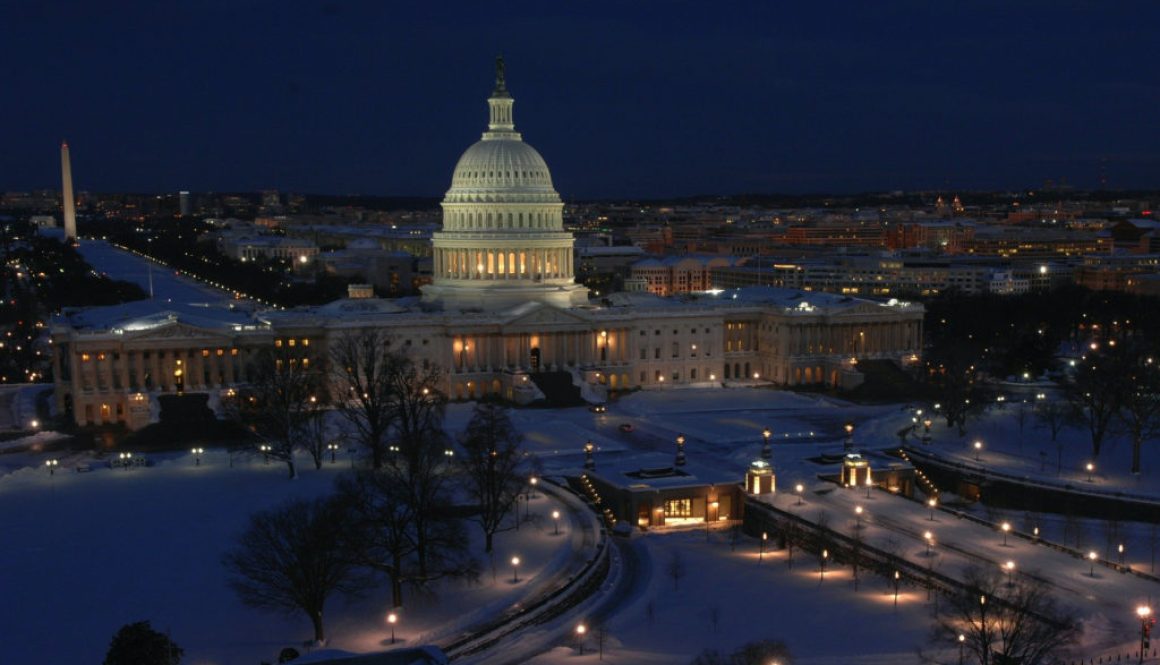
On Wednesday, we witnessed an attempted coup in the United States as a rally of pro-Trump militants breached the Capitol building and temporarily stopped a joint session of Congress from counting the presidential votes.
Donald Trump called for the protest, spoke at it and told his supporters to march to the Capitol. Fueled by weeks of his false claims of election fraud, they broke windows, scaled walls and looted House Speaker Nancy Pelosi’s office. Amid the chaos, two pipe bombs and a cooler of molotov cocktails were found, along with other weapons. One protester was shot and killed by Capitol police, and three others died, reportedly of medical conditions. Meanwhile, 14 police officers were injured by the rioters.
Choose Democracy was one of many organizations to quickly write to its followers to put these outrageous events in context. Founded this summer to prepare people to resist a potential coup, the whirlwind startup — where I served as trainings coordinator — had long predicted that if defeated at the polls, Donald Trump was unlikely to concede. However, his denial alone would not constitute an illegal power grab. What mattered would be what other people did, especially institutions like the military, police, the business community, government bureaucrats and the many other politicians involved in the electoral process.
As disturbing and dangerous as the coup attempt was, the pillars of our society largely stood and supported democracy. “We always said a coup needs legitimacy to be successful. If the goal of today’s seizure of the Capitol was to gain legitimacy, the action backfired spectacularly,” we explained in our letter on Wednesday evening. “This coup is not gaining traction or convincing the majority of lawmakers, particularly those required to certify election results.”
After fleeing the Capitol, Republican politicians quickly distanced themselves from the violence, even Sen. Ted Cruz, who had moments earlier fueled the flames of sedition by spreading Trump’s lies and demanding that Congress delay the vote count. Under fire for his role, Cruz issued a statement calling the attack on the Capitol “a despicable act of terrorism and a shocking assault on our democratic system.” Conservative Sen. Tom Cotton tweeted, “Violence and anarchy are unacceptable… This needs to end now.”
The Choose Democracy trainings always emphasized the importance of bi-partisan opposition to any coup attempt, and the reason for that swiftly appeared. As an afternoon Politico headline put it, “Trump world pleads with the president to condemn the storming of the Capitol.” Alyssa Farah, Trump’s former White House communications director, implored Trump, tweeting the truth that many loyalists had been dodging for weeks: “The Election was NOT stolen. We lost.” Meanwhile commentators like Piers Morgan called for Trump’s resignation, the NAACP demanded impeachment and the National Association of Manufacturers called for Vice President Mike Pence to institute the 25th Amendment, which allows the cabinet and vice president to remove the president from office.
After President-elect Joe Biden made a national speech demanding Trump unequivocally tell protesters to go home, Trump relented, though his video message was mixed at best. He called on his supporters to “peacefully go home” while praising their motives and repeating the lie that the election was stolen.
The swift backlash against the coup attempt could be felt within the Capitol, which police successfully cleared of protesters within a few hours. When Congress resumed the divisive vote count at 8 p.m., some of the Republicans who had planned to raise objections relented, moving more quickly to acknowledge Joe Biden’s victory than they originally planned. Even Trump ally Sen. Lindsay Graham declared, “enough is enough.” In the early hours of Thursday, Pence read the final count, affirming Joe Biden’s victory. Trump soon released a statement promising an “orderly transition” on Jan. 20.
While the backlash to the violent coup attempt may have turned the tide on denial of the election results, there were already many signs that the pillars of democracy were holding, despite the flagrant assault on them. Before the riot began on Wednesday, Pence signalled he would not and could not stop certification with a letter to Congress, as Trump had suggested. In recent days, all 10 living former Secretaries of Defense published a strongly-worded op-ed in the Washington Post warning against military involvement in settling the election. In a famously recorded phone call, Georgia’s Republican Secretary of State rebuffed Trump’s demand to “find” enough votes to change the state’s election result.
For weeks, Choose Democracy had been affirming the many local and bi-partisan election officials who were doing their jobs according to the law, sometimes in the face of death threats by Trump supporters. As the vote counting and certification proceeded, it became clear that the kind of national strikes or protests planned for an actual coup did not make sense in this situation, despite the president’s outrageous fraud claims and the growing number of supporters who believed them. Instead, the group encouraged anti-coup activists to call their local officials and continue to urge them to uphold the will of the voters, a strategy that began weeks before the election.
This logic held Wednesday afternoon and evening, even as the Choose Democracy letter acknowledged “the emotional weight of this moment” of an actual coup attempt. “Strategically we think this is a last gasp and the risks are huge if we simply tell people to rush into the streets,” we wrote. The reasons were simple. It was widely believed that Trump was looking for an excuse to declare martial law, and large anti-Trump protests could provide the pretext, even giving him an excuse to try to delay the inauguration. If any conflict occurred between Trump supporters and opponents, Trump would use that to bolster his own narrative. In fact, the right was already blaming the violence at the Capitol on antifa and other Trump opponents, against all evidence.
“This violent coup attempt appears to be backfiring on its perpetrators, and they seem to be losing both in the electoral process and in the sphere of public opinion,” Choose Democracy explained, urging supporters to stay home. “They look out of control. Tonight, the most effective action is to let the coup plotters expose how isolated and unsupported they are. Their actions are doing that.”
In fact, the protest at the Capitol had not been very large or well organized by D.C. standards. Similar protests around the country had revealed a movement bigger on bluster than support or strategy.
In addition to the danger of lies and a media echo-chamber that doesn’t challenge them, the attempted coup highlighted other serious issues, including the attitude of the police, which seemed shockingly unprepared and relatively unconcerned about the predominantly white mob that got through the barricades with relative ease. Some rioters even appeared to take selfies with the police charged with protecting the Capitol they were occupying. Remarkably few of the rioters were arrested when the Capitol was cleared in a largely nonviolent operation — a sharp contrast to the violent treatment of nonviolent Black Lives Matter protesters this summer. As our Thursday morning follow-up-letter noted, “The side-by-side images of previous Black protesters’ treatment versus the overwhelmingly white crowd of Trump supporters is breath-taking. It is an example of how racism plays into policing.”
Meanwhile, the role of social media is also coming under fire, as Twitter and Facebook froze Trump’s account under charges that they contributed to the violence and chaos by spreading Trump’s lies.
Sign Up for our Newsletter
We’ll send you a weekly email with the latest articles.
By far the most outstanding question is what will happen between now and Inauguration Day. Trump’s promise of a peaceful transition came as calls for his imminent removal grew, with even White House staff reportedly discussing the possibility of invoking the 25th Amendment. By Thursday morning, Choose Democracy was encouraging people to sign the NAACP’s petition for impeachment, which could preclude Trump from holding office again, while forcing Congress to take a stand on his treasonous behavior. This could be helpful in convincing at least some of the many Americans who believed his lies while also providing a forum to highlight the complicity of people like Cruz. As our Thursday morning letter noted, “We are glad they decried the violence yesterday. But they planted the seeds. When they talk about a stolen election or non-existent fraud, they are still watering them. We will not forget that.”
George Lakey, Choose Democracy’s lead trainer, noted in an email to his own followers on Wednesday night that the pillars may ultimately be strengthened by the failed coup attempt. “Trump overplayed his hand. As scary and sad as it is, this is a great last memory for Americans to have of his presidency; it helps inoculate against his leadership in the future.”
Stumbling around YouTube the other day, I happened on a scene from the 1954 movie version of Brigadoon.
I’ve always loved musicals. My mom got me started early, playing West Side Story, The Music Man, Bye Bye Birdie and more, on our turntable, and then, a few years later, Camelot, Cabaret and Oliver.
Those shows seem dated to me now. If not for Sondheim, I don’t know if I would be the devotee I am today, not just of his work, but that of his descendants, such as Jason Robert Brown, and Lynn Ahrens and Stephen Flaherty.
But meanwhile, back in our living room with the turntable, Brigadoon fell through the cracks; I only saw the 1954 movie on television much later. I’ve seen it once or even twice since then, and the YouTube clip revived some serious complaints I’ve wanted to file with the Musical Theater (I will not spell it “theatre”) Complaint Department for some years. There is no such thing, so I am grateful to have, at last, this modest platform.
Brigadoon has plot holes so big that, if the script were a colander, you couldn’t strain pasta in it. Not just plot holes, but seriously mixed and disturbing messages, and I mean, beyond the standard-issue notion that true love is destined, and lasts forever. “Lasting” is a particularly troubling concept in this case, as we’ll see.
It will help if you’re familiar with the story; if not, I hope this synopsis will suffice:
Tommy and Jeff are two thirty-something Americans who get lost while hunting in the Scottish Highlands. They stumble on a village called Brigadoon, which sounds like a cookie, but isn’t. Brigadoon isn’t on their map. The cookie isn’t in the store. There is no store. The villagers dress as if it’s the mid-18th century, and they sell — for it’s market day — only products available in the mid-18th century, which don’t include anything containing partially hydrogenated cottonseed oil. That’s my last attempt at cookie humor.
In the movie, Tommy and Jeff are played, respectively, by Gene Kelly and Van Johnson. It’s an understatement to say that Gene Kelly was one of the great dancers of his time. I’m bored by his pseudo-ballet numbers, but watching him tap dance, for me, is almost a religious experience. Here I’ll refer you to the production numbers “Good Morning” and “Moses Supposes” in Singing in the Rain.
Kelly and Van Johnson perform a not-quite-as-mesmerizing number in “Go Home with Bonnie Jean,” but time now for The Plot and Its Problems.
In the first act, Tommy falls in love with Fiona MacLaren, played in the film by Cyd Charisse. Jeff has something going on with her friend Meg, but it’s not clear what, since this is Hollywood in the 1950s, and it’s all very “a nudge is as good as a wink.” More importantly, though, we will learn that Fiona’s sister, Jean, will marry another villager, Charlie Dalrymple, that very night.
But why is everyone dressed like it’s Colonial Day at your fifth grader’s school? The big reveal comes when Jean’s fiancé arrives to sign the MacLaren family Bible, and Tommy sees that Fiona was born in 1722. That makes Fiona 200-something. Cyd Charisse is aging very well—just look at her neck!
Fiona takes Tommy and Jeff to see the town schoolmaster, Mr. Lundie, who explains: Two hundred years earlier the village of Brigadoon was being threatened by witches. These weren’t cool, Elizabeth Montgomery-as-Samantha Stevens witches, willing to give up a wide range of superpowers for the latest Frigidaire—no, these were witches “who were taking the folk away from God’s teachings and putting the devil into their souls.” Those are all the details he deems necessary to describe this existential threat.
So, two hundred years ago (or last Wednesday, depending on whom you speak to), the town minister, Mr. Forsythe, went out to a hill beyond Brigadoon, and made a deal with God: the town would disappear at night, for a hundred years, then reappear, but for one day only. Mr. Forsythe’s part of the bargain was that he would leave the town and never return.
Mr. Lundie frames this as a sacrifice, since Forsythe loved his parishioners so much, but my guess is that he owed money to a lot of them.
And by the way, since Mr. Forsythe couldn’t return to the town, how did the residents learn these details? Did he leave a note? Did he go out to that hill equipped with a quill pen and adequate ink?
But this last is a petty complaint. What concerns me most of all in this so-called miracle is the other part of Forsythe’s bargain, which is that no one who currently lives in Brigadoon can leave, like, ever. Apparently, they can go gather heather on the hill, and they must have nearby farms to be growing all the produce they sell at the weekly market, but there’s a curfew. Invisible electrified fences, maybe.
Those were more petty complaints. Now we get to the part that makes me angry. Harry Beaton, another villager, is in love with Fiona’s sister, Jean. Remember that Jean is to be married that night to someone else. Let’s give Harry the benefit of the doubt and say he’d look for another true love, given a few centuries to get over Jean. But how many available women are there to choose from? Brigadoon isn’t a major urban center. Jokes about dating apps are overly obvious, but something bugs me much more: Harry wanted to “go to the university and improve meself.” Now he can’t even do that! What kind of effing blessing is it to force a man to stay in a tiny town and watch the woman he loves start a family with someone else?
And by the way, just how are they going to start a family? A pregnancy is 280 days, give or take. That means that a baby conceived the night of this so-called “blessing” will be born in the 48th century.
But I doubt it would come to that, because it seems likely to me that in a day or two the Brigadooners will awaken to find themselves buried under luxury condos.
This is the kind of post I write that elicits comments like, “it’s a musical. Chillax.” And yes, at this point I might be overthinking, because I’m imagining a century in a world without Ambien. “Honey, I couldn’t fall asleep for fifteen years last night.”
When Mr. Lundie describes his nights (“like being carried away by shadowy arms”) he hears soft moans, and concludes that “many people are looking for a Brigadoon.” Harry Beaton wasn’t looking for a Brigadoon, and neither am I. An Airbnb—three nights, tops.
Postscript: I found the 1966 television version online and slogged through much of it. This adaptation made at least one welcome, if somewhat gruesome, change: instead of referring to a vague coven of witches, Mr. Lundie describes a time when accusations of witchcraft were being hurled around, and that neighbor was turning against neighbor (plus ça change, plus la meme chose, as the French say), and Mr. Forsythe himself was thrown into prison. He made his bargain with God while being chained to a wall, after such a false accusation, you know, as opposed to a justified accusation, of witchcraft. The miracle took place the day they hanged Mr. Forsythe as a wizard.
So I repent of my snarky comment about his possible gambling debts. I stand by the rest.
^^^
Donna Levin is the author of four novels, all of which are available from Chickadee Prince Books. Her latest novel, He Could Be Another Bill Gates, is available on Amazon, Barnes and Noble, or at the bookstore right across the street from your home. Please take a look.
In a way, it seems like yesterday, waking up to that horrible news, just one day after waking up to his new recording on our phones. A new record, “Blackstar,” came out on his birthday, and the next day he was gone. But it also seems like a lifetime ago, because of all the horrible things that have happened since.
A really moving remembrance in today’s New York Times:
It does feel as though things began to fall apart with Bowie’s death. World events slid from bad to worse, and from there it has all been one long downhill slalom that has exceeded the bounds of sense (and even satire) and avalanched into this: hateful violence, political chaos, insurrection and the grinding gruesomeness of the pandemic present.
And we’re also looking back at Steven S. Drachman’s musings a few years ago, in these pages, which made a similar point, even before the pandemic:
He stuck around to celebrate his birthday, release his last album, and then he departed the planet Earth the next day. The planet seemed to come unmoored from its orbit during the next twelve months without Bowie to anchor it. You know what I mean.
This week which marks the anniversary of Bowie’s birth and death, we’re celebrating David Bowie’s Berlin Trilogy – Low, “Heroes”, and Lodger – with a five-part series of music recorded in October 2018 at Brookfield Place. Each night opened with members of the versatile New York-based Wordless Music Orchestra performing works that Bowie was listening to at the time or that might have influenced his sound world. These “setting the context” works were followed by the all-star cast of musicians led by Shearwater’s Jonathan Meiberg who performed their arrangements of the three records.
In the years since his death, there is the usual attempt to rewrite his legacy, to smooth out the inevitable artistic failings, which were so rare in Bowie’s career. The worst, so far, was the attempt to re-do Bowie’s “Never Let Me Down” album, to re-position the blame. But it is important to remember Bowie as human, with at least a few misfires in a life of triumphs. Here are a few thoughts on that.
Finally, you can stream Bowie’s stage show, “Lazarus,” this weekend only. It’s a musical sequel to the science fiction film, The Man who Fell to Earth, which starred Bowie back in 1975, and was itself based on a novel by Walter Tevis, who wrote The Queen’s Gambit.
Behind the mud-splattered windows at the back of Wrangel Repair & Thrift, Tucky Calloway hunched over a busted radio. As usual, his workbench, an eight by five sheet of half-inch plywood slapped across two dinged-up, yellow sawhorses, was crammed with repair jobs — enough to keep him chained to it for weeks. That was a good thing. Now that Carla had walked out, the only place he’d rather be was flat on his back, asleep.
Lean and lanky, Tucky stood six-foot-two and, despite a lifetime of moodiness, managed to shamble around the back room with an unaffected grace that many a dancer might envy. His fire engine red hair, that had lately straggled down to shoulder-length, gave him the air of a Medieval wizard. It was an effect compounded by a pair of deep-set blue eyes that stared out at the world with a quizzical mix of insecurity and self-confidence.
Most days, Tucky worked until his long, calloused fingers ached. He had a knack for fixing anything with wires hanging out of it, and a generalized obsession with tinkering. A “Shop” course in high school and six months at Cole Community College had helped him pick up the basics. The rest he’d learned by riffling through the hundreds of back issues of Nuts & Volts and Popular Mechanics left behind by a disgruntled former employee. A dusty pile of magazines from the 1990s teetered on the brink of collapse, mere inches away from his left foot.
Just have to … listen to it, he told himself about the clock-radio in pieces on his workbench.
That’s how he usually spent the early morning hours, waiting for a device to tell him what it needed to revive. But this morning was different. Gerd Wrangel was out inspecting an estate sale seventy-five miles away in Cynthiana, and Tucky had the disagreeable task of dealing with his customers. At the moment, one of them was jamming on the shopfront counter bell like a Heavy Metal drummer.
Tucky switched off his soldering iron, wiped his sweaty hands on his jeans and scuffed his Timberlands out of his dark warren into the shop’s bright main room. A short, stocky man in his early sixties glared at him from behind the shop’s glass display case, in which a tempting array of refurbished toasters and CD players beckoned to savvy bargain hunters. With the morning sun bouncing off his shiny, bald head, the man looked like the personification of Hopping Mad. The blue Bic pen, parked behind his right ear, suggested a life-long intolerance for inefficiency. As Tucky walked in, the older man hefted a large supermarket box, bearing the blue, Kroger logo, up onto the shop’s main countertop.
“Took you long enough,” he said. “You got a girl back there?”
Tucky’s mouth curled up into a crooked smile.
“In your dreams, maybe,” he said.
He peered into the box, then reached for the printed intake pad that Gerd always used when a new “shipment” arrived. Though Tucky was itching to get back to work, the contents of the box had already aroused his curiosity — a rare event in his life. And no wonder. The carton originally intended for canned peas, was filled to the brim with a wide assortment of truly odd electronic components.
Tucky started asking the standard questions that Gerd had outlined on the sheet, but the more the bald man spoke, the more Tucky wanted to know. Turns out, the cantankerous older man was a widower who’d finally decided to clean out his deceased wife’s closets.
“Don’t ask me what they’re for,” said the widower. “Olga had all kinds of junk stowed away that I never knew about.”
Tucky ignored him, already preoccupied with the contents of the box, none of which he could identify. In fact, once he got his hands on a couple of pieces, it was hard to set them down again. But the shiny bald head on the other side of the counter drummed an insistent rhythm into the slightly cracked glass counter.
“Can you give me something for them or not?” he asked.
“Gerd,” said Tucky without looking up, “… he’ll have to call you after he’s looked these over. You have a phone?”
Drew muttered under his breath, but grabbed the Bic pen and scratched out an address and phone number on the back of one of Gerd’s dusty business cards. Tucky watched absently as the older man repositioned the pen and shuffled his stooped frame out to the sidewalk that ran along Highland Avenue. A second later, Tucky returned to the back room, with his eyes glued to the flat, bronze rectangle that rested at the bottom of the box. He set the box down on his bench, reached in and pulled the odd-looking thing out with trembling hands.
In the angled September sunlight that streamed in through the shop’s cracked windows, he could see it was a weird kind of tablet. At first, it looked as if a hobbyist had tried to build a cheap knock-off of an iPad. But a closer look revealed several quirky details. For starters, he’d never seen a tablet dotted with triangular buttons. Plus, the more he stared at it, the more the milky-white glow of it screen seemed to seep into his mind. It was almost as if he could feel the screen warming the inside of his skull.
He drew his breath through his front teeth and grabbed for the business card that his grouchy customer had left for him. “Drew Flaherty,” read the scrawled name. The address was only a 20-minute drive away.
Tucky glanced at the row of thirteen, perfectly synchronized clocks, hung with care along the south wall of the shop and gathered it was already 4:00 PM. Just how long, he wondered, had he been fiddling with the tablet?
Gotta get these parts for myself, he decided.
With Gerd out of town and business slow, he figured he might as well drive over now and pay the widower right away. Assuming, that is, he could get his pockmarked, Honda Civic started. At twelve years old, the slate blue used car, whose maintenance Tucky could barely afford, was one more thin thread connecting him to his sanity. Without a car … no, he didn’t even want to think about how awful his life would be.
As he drove out toward Worthville, Tucky felt his shoulders relax and his mind clear, the farther he got from the shop and the … the box. But clarity had its drawbacks, for his thoughts now flooded with Carla’s face, Carla’s voice, Carla’s sundress draped over the foot of his bed.
Good thing the old man had come along, he decided. He needed some way to take his mind off his abject misery. Though most people would agree that, at age twenty-four, one bad break-up didn’t mean that Tucky’s life was over, he wasn’t convinced. That very morning, his mind had revolved around a nauseating recurrent dream — the one where he jumped into the Ohio River and was chewed up by tiny sharks. But ever since … since the box … it felt like the dream was fading from memory. He had a mission now, didn’t he? He had to focus.
So as he pulled up to a small house along Route 467, Tucky squeezed his eyes tight and, at least for now, pushed Carla out of his mind. He opened his eyes again and studied the white, slate-roofed home with the mud-brown fencing around a narrow porch. Its oversized dormer window peeked out at him like a warning beacon or a sentinel. Or so it seemed, until he realized that this was just one of a cluster of buildings that faced the railroad tracks. It was, in other words, as reassuringly normal as it could possibly be. Why, he wondered, did it make the pit of his stomach tie up in knots? He climbed out of his Civic and crunched up the gravel driveway to the front porch, his legs trembling all the way. But with the sun already starting its lazy slouch towards the horizon, there was nothing for it but to rap on the screen door frame.
No answer. Normally, that would have been enough to discourage Tucky. But a new impetus, a force he’d never felt before, emboldened him to push his way through the front door into a small entryway. To his left, an interior door opened up to a compact kitchen. There sat Drew Flaherty, sound asleep at the kitchen table, a glass of red wine still clutched in one hand. Relief washed over Tucky as he tiptoed backwards and prepared to turn around. No use waking the old guy.
That is, until the broad heel of his Timberlands came down hard on the paws of Flaherty’s yellow Tom cat. The screeching and hollering that followed took quite a few minutes to settle down — until Tucky could convince the old man that he’d only come to pay for the components.
“Only fifteen bucks?” asked Drew.
“Twenty,” said Tucky. The way he figured it, he’d be buying one less movie ticket a week from now on. Later, based on his conversation with the widower, he realized he could probably have gotten away with less. Yet as the younger man pulled the Civic away from curbside, what stuck in his mind wasn’t the money.
“Haven’t been able to sleep since I dragged that damn box out of the closet.” Drew had told him. “Kept hearing a voice, a little like Olga’s … except it was talking some kind of gibberish.”
Mark Laporta is the author of Probability Shadow and Entropy Refraction, the first two novels in the science fiction series, Against the Glare of Darkness, which are available at a bookstore near you, on Amazon and at Barnes & Noble. He is also the author of Orbitals: Journeys to Future Worlds, a collection of short science fiction, which is available as an ebook.
TITLE IMAGE BY JULIUSH/PIXABAY; INTERIOR DESIGN BY STEVEN S. DRACHMAN FROM AN IMAGE BY UMBERTO SHAW/PEXELS
The envelope was addressed in a bold sprawling hand that barely left room for the seventy-five cent special delivery stamp in the upper right hand corner. It was a nice stamp—a blue one commemorating the fiftieth anniversary of Harvey’s first landing on Mars. Carl Keating tore it open. Inside was a single sheet of good paper, typewritten on one side. The message read:
Dear Mr. Keating; Must see you at once. Norman Hamlin
He’d barely slid the letter back in its wrapper when the desk phone rang. Automatically he pushed the view-plate to a respectful fifteen inches and threw in the video. The screen swirled for a moment in a milky blur, then abruptly a man’s head and shoulders jumped into focus. He was a lean, angular-faced man, with thin shoulders and thinner lips, which at the moment were set in a Lincolnish smile.
“I’m Dr. Hamlin,” the face in the screen announced. “You got my letter?”
Carl nodded. “I have your letter doctor, but I’m afraid you have the wrong man. I can’t imagine what you’d want to see ME about.”
The image on the screen expanded as Norman Hamlin leaned toward the view-plate. “You are Major Carl Keating, retired?” the mouth asked.
Carl pushed the instrument back hoping the other man would do the same. “Retired as of last Tuesday,” he said, “at the tender age of thirty-six. What’s on your mind, doctor?”
The mouth got bigger till it filled the entire screen. “Major Keating, would it be possible for you to come out to Long Island tonight?”
“It would not!”
“Please it’s….”
“Dr. Hamlin,” Carl said not bothering to keep the annoyance out of his voice, “in the first place I don’t even know who you are; in the second place I’m packing for a vacation in Paris; and in the third place if there’s anything I detest, it’s talking down someone’s throat. Now if you don’t mind….”
“Wait!” The image on the screen diminished, till over the narrow shoulders Carl could make out a book-lined study, and beyond that a sunken living room. “It’s important—very important.”
“So’s my vacation.”
“Suppose I were to make it worth while to postpone your vacation?”
“I’m afraid my while is worth more than you could offer,” Keating said bluntly.
“I can offer five thousand dollars,” Norman Hamlin said. “It’s yours just for coming out to Wading River tonight and listening to what I have to say.”
“You mean you’ll pay five thousand dollars just for the privilege of talking to me?”
Hamlin nodded. “You listen to what I tell you. Then, if you aren’t interested, you pick up your five thousand and leave. It’s as easy as that.”
Keating reached across the desk and scanned the envelope. “I have the address,” he said. “I’ll be right out.”
It was the peak of the rush hour when he left the apartment. Overhead, a congested swarm of copter traffic buzzed like an angry beehive. A block away was a monorail kiosk. Ever conscious of the strange feel of his new civvies, Keating entered it and boarded a Huntington express. From there it was only ten minutes to Wading River by copter-cab. Dr. Hamlin had left the lawn lights burning, and even before he’d paid his fare, was standing at his elbow. He extended a hand in greeting. “You made good time,” he said.
Keating gripped the other man’s hand. “You made a good offer.”
Hamlin gestured him through an opening in the dura-glass ell of the house. The room was a library, the same one he’d seen over Hamlin’s shoulder during the phone conversation. In the center of the book-bordered room was a rectangular table. A man sat at the head of it.
“Sit down,” the man said.
Carl sat down. The man at the head of the table was robust, almost to the point of flabbiness. He was probably in his late twenties, but the pink flush on his cheekbones and a pair of broad-arched eyebrows gave him a mannequin appearance.
“This is Mr. Stewart Ferguson,” Dr. Hamlin announced.
“Not THE Mr. Stewart Ferguson?”
“I take it then you’ve heard of him?”
Carl studied the man whimsically. “Yeah, I’ve heard of him,” he said. “All the way from here to Mars and back I’ve heard of him.”
Stewart Ferguson lit a cigarette. “Am I to understand, Mr. Keating, that you don’t approve of my so-called behavior?”
Carl shrugged. “Who am I to comment on your behavior? If I had your money I’d probably act the same way you do. Who doesn’t want to sleep with a video actress?”
Dr. Hamlin coughed. “There are times when perhaps the newspapers have exaggerated Mr. Ferguson’s escapades. Furthermore, I hardly think his private life is any concern of ours.”
“I’m not concerned,” Carl said. “If I’m being paid five thousand dollars to listen to an evening’s chatter I’d as soon listen to Ferguson’s autobiography as anything else … might even come down on my price a bit.”
Stewart Ferguson dug into his coat pocket and came up with a sheaf of bills. He threw them across the table. “That takes care of our agreement,” he said, “now suppose we get down to the business you’re being paid to listen to.”
Carl picked up the bills and rapped them across his knuckles. For just a moment he toyed with the idea of throwing them back in the playboy’s face. He didn’t. Not only was five thousand dollars a lot of money, but his curiosity was aroused. “I’m listening,” he said.
Norman Hamlin braced his bony elbows on the table and leaned toward him. “Mr. Keating, in the course of the three trips you made to Mars with the military, what was it that stood out foremost in your mind?”
“Men’s emotions vary,” Carl said carefully. “An architect would probably admire the beauty of the Martian cities, while a gourmet would savor the taste of candied encoms. Probably the thing that impressed me most was the friendliness of the people.”
Hamlin drummed his fingers on the table. “I see,” he said. “You’d say, then, it was a reasonably nice place to live?”
“Reasonably nice,” Carl agreed. “Certainly nicer than the science-fiction writers had pictured it.”
“Better than Earth?”
Carl shook his head. “Not as far as I’m concerned. My tastes run to sandy beaches and women with real eyelashes. That’s just my personal opinion you understand. There’s almost eighty-thousand people who disagree with me—I believe that was the latest migration figures.”
Hamlin thumped his pipe against the edge of the table. “I understand you’ve just returned from Venus, Mr. Keating. Can you give us a short briefing concerning your reactions to that planet?”
Carl eyed the man warily. “I’ll be as brief as possible. There’s been four landings on Venus in almost forty years. All these have been made by the military. That to me is a pretty substantial indication that no one would go there unless they were ordered to!”
Hamlin smiled. “I didn’t mean quite as brief as that, Mr. Keating. I had rather hoped you’d be a little more explicit.”
Carl frowned. “I find it a bit hard to understand just what you’re driving at Dr. Hamlin. After all, there’s been over a hundred books written on the subject. What can I add to the books? Maybe I could cram in a few more ghastly adjectives, but even then it wouldn’t explain what the place was really like. You’d have to go there to find that out.
“How can you explain to someone sitting in a comfortable drawing room, the terrors of plodding through a swamp, knee deep in green fog, and wondering when a forty foot reptile is going to sink its teeth into your leg. How can you explain the sheer mental fatigue of waiting for a needle-nosed scorpion to puncture your space jumper, knowing that the atmosphere right on the other side of your face-plate can kill you in thirty seconds. How do you explain an atmosphere of chlorine and ammonia for that matter—or a color. I say purple-brown to you and it don’t mean a thing. But look at the angry purple-brown landscape of Venus for two years like I did and you’d know what I mean.
“It’s a primitive planet, Dr. Hamlin. Right now, according to the geologists, Venus is just like the earth was ten million years ago. Life is forming on it—primitive life. Take the chowls, for example—you see replicas of them in every department store window. They look a little like teddy-bears, especially when they walk. Still they have ten fingers and ten toes. Archeologists tell us they’re humanoid. Yet only half-a-million years ago they crawled out of the oceans. Maybe in another two million years they’ll be living in houses instead of thatched hovels and pointing guns at people instead of running like a star-bound flame-buggy every time they hear a noise. But right now they’re scared. They’re out of their natural element and they’re scared, the same way our own Neanderthal man was scared before he found out how to fashion a rock-hammer.”
Dr. Hamlin lit his pipe. “You’re quite sure then, Mr. Keating, that man will never be able to live there?”
“Live there! Man can’t even breathe there! There’s less than one tenth of one percent oxygen in the air.”
Dr. Hamlin pressed his fingertips together. “Mr. Keating,” he said, “just how much do you know about the three men who were lost on the first Venus expedition?”
“Only what’s in the history books,” Carl said. “It’s more or less of a legend, how Edgerton, Rhind, and Mitchell, were separated from the main party and never seen again.”
“Died contributing to man’s conquest of space,” Ferguson said with mock drama.
“It wasn’t a pleasant death,” Carl said quickly. “I’d bet on that.”
“Mr. Keating,” Hamlin said, “do you have any ideas as to just why these three men should have disappeared at this time?”
Carl shook his head. “Could have been anything, I guess. They could have got lost and ran out of oxygen. They could have gotten snake bit. I wouldn’t know. The whole thing happened before I was born.”
II
Dr. Hamlin got up. “No, there was more to it than that. In spite of the fact that it happened almost forty years ago, I happen to know that the situation didn’t occur exactly as the history books would have you believe. The army, it is true covered up for them and made them heroes, but Edgerton, Mitchell, and Rhind, in reality, took off on their own. They took off without orders or permission, just a few hours before take-off-time, with nothing except a six week supply of oxygen, a portable air-blister, and a few supplies.”
Carl studied the man’s face. The story was true. In his cadet days, old spacemen had spilled the story too many times for him to doubt its authenticity. “Suppose you tell me what all this is getting at?” he hedged.
Hamlin crossed the room. From a desk drawer he removed a palm-sized photo-cartridge and inserted it in the video adaptor. The room lights dimmed as the three dimensional screen brightened, dancing in a kaleidoscope of color. The colors merged.
He was staring into a vivid reproduction of a Venusian landscape. The picture had been taken from a small hill. Below was the violet-brown monotony of a saroo forest, visible only in small islands, where the roof of the trees stabbed out from the swirling green fog. And beyond that, almost lost in the haze, was the outline of a pair of reddish-brown spires, that reared out of the jungle, rising, till they were lost in the ever present layer of upper clouds that shrouded the planet. It was an ugly scene—ugly, yet strangely beautiful.
The camera swiveled in a 180° arc. They were looking up the hill now—looking up to where the hill tore itself loose from the green-fog level, rising for perhaps half a mile, then disappearing in the white ocean overhead. Halfway up the hill was a cluster of flare trees, their purple-brown leaves drooping in the ammonia-soaked air, and underneath the trees, a house—not the blister-type oxygen tents used by the military, or the thatched hovels of the chowls, but a real earth-style house with a peaked roof and pillar supported porch. Abruptly, the picture widened into a sharp closeup, revealing an open doorway. A man—an earthman—stood framed in the threshold. He was a clean-shaven man, probably in his early twenties. Two other men slightly older, lolled in a pair of rustic chairs set on the open veranda. Apparently none of the men were aware of the camera that recorded their every move.
Carl was aware of his hands gripping the chair arms. Except for the weird backdrop of flare trees and raton vines that flanked the house, he might have been looking at a peaceful summer resort in the Canadian Rockies. But it wasn’t an earth picture. These men were on Venus lolling about in their shirt sleeves and breathing in the atmosphere of chlorine and ammonia that was sure to kill a man in thirty seconds!
It was trick photography. It had to be. Quickly, he flicked a look at Dr. Hamlin, then looked back at the screen. One of the men was elbowing himself out of the chair now. He walked to the edge of the porch railing and stared directly into the camera. There was something vaguely familiar about the man—about all the men.
Suddenly, Carl tensed forward on the edge of the chair, conscious of a cold icicle of movement that snaked the length of his spine. The picture on the screen flicked out, abruptly. The room lights were on again, and Stewart Ferguson was studying him with detached insolence.
“Well?” Ferguson asked.
Carl ignored him, and turned to Norman Hamlin. “Did I see what I think I saw?” he asked.
Hamlin nodded.
“But those men!”
“You recognized them?”
Carl swallowed, hard. The highball he’d had three hours before churned up in his throat. “Of course I recognize them,” he said thickly. “They’ve been commemorated on postage stamps and cut in stone at every spaceport in the country. But they’re dead! Been dead for forty years!”
Hamlin turned up his palms. “You saw the pictures,” he said evenly.
“Possibly the military has been deceiving us for forty years,” Ferguson drawled. “Maybe they only made up that story about the poisonous atmosphere.”
Keating felt a hot flush rise to the back of his neck. “That’s not true,” he said with obvious restraint. “I was there—for two long years I was on Venus, and it’s bad, every bit as bad as the army says it is. You’d have to smell the stuff yourself to know what I really mean. It’s so bad that even after you drop your jumper in the airlock and shower, the stuff follows you inside and stinks the ship up from here to Pluto and back again. The army’s not lying. Not about that they’re not!”
“How do you account for the photos then?”
“I don’t know,” Carl said wearily. “All I know is that for forty years, no man….” He stopped suddenly, as all at once the full enormity of the situation dawned on him. Those men on the screen. He’d recognized them of course from their pictures. But how about those pictures? The pictures he’d seen of Edgerton, Mitchell, and Rhind, were old pictures…. Pictures taken almost forty years ago!
As if from far away, Hamlin’s voice was droning in his ears. “Perhaps it’s not quite as ridiculous as you may think, Mr. Keating. There’s a widely recognized theory that the very air which gives us life, also gives us death. In fact, one of the chief reasons for the high migration to Mars is the fact that man’s life expectancy on that planet is almost thirty percent greater than on our own. Now let’s suppose that the three men who deserted the first Venus expedition had in some way found a way to breathe the air of that planet. Is it so inconceivable that the atmospheric content might be conducive to extremely high longevity—perhaps even immortality?”
Carl wanted to say something—anything. “When—when were these pictures taken?” he finally managed.
“Just a little over four months ago.”
The voice had an oddly nostalgic ring to it. Carl turned. The man had apparently entered the room unnoticed. He was a big block-shouldered man, with brown eyes and a mat of inky-black hair that all but covered a low sloping forehead. He could have passed for a cargo hand at the Montauk Spaceport, except that Carl knew different.
“No need to introduce myself, is there?” the man said.
Carl shook his head. To Hamlin he said: “Paul Spero just got back from Venus too. We were discharged together—as if you didn’t know.”
“You should have stuck around Keating,” Spero said. “Right after you left, I tied in with a three-day party. You missed out on a good time.”
“I’ll bet,” Carl said. “I take it that you were the one who brought back the pictures?”
Spero forced a grin that didn’t quite make the width of his mouth. “That’s right. While you and the rest of the crew were entertaining yourselves collecting fossils I did some research on my own.”
“Did it ever occur to you that the military might want these pictures?” Carl asked.
The other man made a noise with his nose. “Just what did the military ever do for me, Keating?” he asked “Fifteen years I spent as a crewman on every flame-buggy from here to Titan and back, and after all that, I get pensioned off a miserable second lieutenant.”
“You’ll have to admit,” Carl said, “there were times when your conduct fell something short of exemplary.”
Spero tossed him a sloppy salute. “Yes, Major,” he said with mock formality. Abruptly he strode over to where Carl was standing. “I don’t think you quite get it yet, Keating,” he said thickly. “Try using your imagination. Forget about the griping we did when we were stationed there. It’s different now. Edgerton, Mitchell and Rhind have found a way to breathe, and the secret of breathing is also the secret of immortality. Suppose I’d been sucker enough to turn this information over to the high brass? Inside of half-an-hour, those men would have been interrogated. Inside of a week, the information would have been radioed back to Terra. And by now, every one on this earth and his great maiden aunt would be selling their soul to get passage to Venus. And where do you think all this would leave us Keating? I’ll tell you where … we’d be right here sweating out a priority list long enough to stretch from here to Pluto and back!”
Carl studied the man’s face. “I take it then you didn’t talk to these men when you took the pictures?”
Spero shook his head. “No,” he said carefully. “At first I had all I could do to keep from running up to them, but then I figured that if they saw me, they’d know there was a spaceship on the planet. All kinds of things went through my head; one of them was that maybe they were sick of Venus and would try to make contact with the ship and spill their story. In the end, I just hid behind a clump of saroo trees and took the pictures.”
Carl let his gaze wander about the room. He had to think. Then, almost as if it had been prearranged, he found himself looking into a full-length mirror on the far wall. The reflection he saw wasn’t old—the hair, while slightly lighter at the temples, was still for the most part dark-brown. He had a good build too, and except for a few creases radiating from the corners of his eyes, his skin had the smooth sort of thickness that many men in their middle-thirties would have envied. He’d kept himself well. It would probably be fifteen or twenty years yet before the almost invisible lines in his cheeks and forehead would begin to widen into deep grooves. But it would happen. It would….
And it didn’t have to.
He knew what the proposition was now. He turned to Dr. Hamlin. “Let’s see if I have it figured,” he said. “You want to go to Venus and look for this fountain of youth. Ferguson’s financing the trip, and Spero is the Ponce de Leon who knows where to look. All you need is a pilot. Right?”
“Think it over carefully, Mr. Keating,” Hamlin said. “Don’t be hasty in your answer.”
Spero too had noticed the note of rejection in his voice. “You’d better grab the chance, Keating,” he said. “Right now I’ll admit I don’t like Venus anymore than you. But we’re going to change all that. Right after the migration starts there’ll be cities, and parks and railroads. And we’ll be the ones responsible for all of it. We’ll be heroes—not just for ten or twenty years, but forever!”
“Did I hear someone say forever?”
The voice had a resonant, almost musical pitch to it. It was deep and throaty, more like an adolescent boy’s voice than a woman’s. She was standing at the arched entrance to the library, one hand balanced on the jade statue flanking the threshold. She had finespun taffy-blonde hair and a complexion to match. She wore a gray-green krylon dress, the same color as her eyes. It looked good on her. A space jumper would have looked equally well.
“I don’t believe you’ve met my daughter,” Dr. Hamlin said. “Diane, this is Mr. Keating.”
Diane crossed the room. The pressure of her fingers was quick, and warm and suggestive. “Hello, Mr. Keating,” she said.
Carl was aware of mumbling something polite. Across the room, Stewart Ferguson had derricked himself out of the chair. Spero remained seated, caressing the girl with his sultry brown eyes.
Diane flicked an imaginary wisp of hair back from behind her ear. “Have you decided to join us, Mr. Keating?” she said.
“Us?”
She searched his face. “Why, yes. Didn’t Dad tell you there’d be five of us. After all, who’d want a slice of immortality more than a woman.”
“Immortality for a goddess,” Ferguson said blandly.
The soft, red mouth twitched almost imperceptibly. Then the brief look of annoyance was gone. “You will come, won’t you?” she said.
Keating avoided her eyes. Again he found his gaze wandering to the wall mirror; looking at his own face, coarse and ruddy looking against Diane’s soft white shoulder.
“Count me in,” he said quietly.
III
Keating opened his eyes slowly, dimly aware of the familiar throbbing headache and a dull racking pain around the chest. Hazy-looking behind a galaxy of dancing spots was the instrument panel. He shook his head sideways—hard. The spots dissolved and the big panel board jumped into focus. The ship was two hundred miles above the Montauk Spaceport. He flicked a glance over his shoulder, half expecting to see the familiar blue uniforms of his fellow crewmates. Instead he saw three men and a girl—a girl with long shapely legs and taffy-blonde hair.
So it was true then. It hadn’t been a dream after all.
After the passengers began to stir, he turned. “Have a nice sleep?” he asked.
Diane shot him a pale smile.
Stewart Ferguson pretended to applaud. “Splendid Captain,” he said contemptuously. “A momentous speech for a momentous occasion. Come, say something more for the history books!”
There was an awkward silence. Then Spero guffawed. Carl bit off the angry reply that jumped to his lips. “All right, I will,” he said. “How about someone brewing a pot of coffee?”
Diane got up and disappeared into the galley. Minutes later, she returned with a tray of containers. She stopped momentarily when Spero, leaning against one of the ports at the end of the companionway, said something to her, then abruptly, she quickened her pace. When she handed Carl the coffee her face was a deep scarlet.
Carl Keating stared vacantly out of the blister window watching the fleecy-white rim of the earth roll up toward them. The trip, less than one hour old, was already a hotbed of smoldering emotions. Worst of all, was the fact that things were almost sure to get worse before they got better. Under the best of conditions, space does strange things to individuals cramped together in the confines of a ship. Army records are crammed full of case histories where men, failing to adjust themselves to existing conditions, have reacted in ways which are probably best left in the files. But military men are schooled and conditioned for space, and while complete and mutual understanding seldom exists, there is usually, even as there was between Spero and himself, an unwritten live-and-let-live policy among crew members.
But they weren’t in the army anymore, and no one seemed more aware of it than Paul Spero. Never a model officer, Spero in his new-found freedom, had become almost unbearably obnoxious. Nor could he expect any cooperation from Stewart Ferguson. He could handle him, he hoped. All of which brought him to the big question. What about Diane?
It was probably a paradox that while the more unsavory military case histories were due to men being without women, the proximity of a long-legged taffy-blonde in this case was a factor more conducive to mutiny than harmony.
And curiously enough, it was Diane Hamlin herself, who came up with at least part of the answer. She was smart—whether or not she’d been around was a question to ponder over while staring into the star-studded blackness beyond the blister ports. But one thing was certain: the girl had an almost uncanny knowledge of the working’s of men’s minds, an insight of psychology which she applied diplomatically if not ruthlessly to all aboard.
With just the right amount of good-natured tolerance she either ignored or subtly evaded the bluntly-pointed remarks of Stewart Ferguson and deftly sidestepped the impulsive hands of Paul Spero. On several occasions when a crisis seemed imminent, she disappeared—always good-naturedly and on a new logical pretense—into the small cubbyhole to which she’d been assigned. So tactfully was all this accomplished that they’d already passed the halfway mark before Carl realized that he hadn’t spoken to her alone since during the preparations.
He was mildly surprised therefore, when while spelling Spero at the controls during the sleep period, he became suddenly aware of someone standing at his elbow. She was wearing a robins-egg-blue dressing robe, loose-fitting except around the curve of her breasts. She sat down in the co-pilot’s seat next to him.
“Mind if I keep you company awhile? I can’t seem to get to sleep.”
“A pleasure,” Carl said with genuine enthusiasm…. He stopped awkwardly, wondering what to say…. Impulsively, he ran his open hand across the width of the blister glass. “Want a hunk of space, baby. Say where to cut and I’ll slice it for you.”
She smiled a little. “You sound a little like Ferguson when you talk that way.”
Carl pretended to check the dials.
“Carl?”
On his forearm he could feel Diane’s fingers. He turned.
“What makes a man like that?”
He moved his shoulders. “I don’t know, unless it’s because he’s always been able to buy anything he’s ever wanted. As far as I know, there’s only been one thing he hasn’t been able to buy, and he’s working on that.”
“You mean immortality?”
Carl ignored the question. “Why ask me about Ferguson’s mind anyhow?” he asked suddenly. “You’re the psychologist of this expedition.” He watched her nibble on her lower lip for a moment, then went on: “You don’t have to admit it. I just want you to know you’ve been doing a good job. I don’t know how long you can keep it up or what happens after we get to Venus, but up till now you’ve been doing all right. There’s only one thing wrong with the setup as far as I can see, and that’s that this arm’s-length policy apparently applies to me as well as it does to everyone else. I know it’s necessary to the plan, and I know it’s a selfish argument, but it bothers me!”
She turned and faced him. For a moment it occurred to him she was angry, but when she spoke, her voice was soft, and deep, and lingering. “I’m sorry, Carl, but you can see why it has to be this way…. I mean—”
Carl leaned over suddenly and kissed her full on the lips. She didn’t pull away. Neither did she respond the way he’d have liked her to. After a brief interval he felt the pressure of her hand against his shoulder.
“Please Carl, not now.”
“When?”
She turned away. On the starboard port he could see the reflection of her finely-moulded face. She looked wistful, almost on the verge of tears.
“I don’t know, Carl,” she said wearily. “Maybe after we’re settled on Venus. Maybe after the migration starts.”
Keating hacked up a laugh. “Just what makes you so sure there’s going to be a migration, or for that matter any little men who never grow old as long as they have their daily diet of ammonia and chlorine?”
He watched her turn, felt her eyes bore into him. “You don’t believe it, do you?”
“I’m not sure,” Carl said carefully, “I want to believe it, only I’ve listened to so many bug yarns in my time it’s probably warped my sense of values. The whole thing just sounds too fantastic.”
“But the pictures?”
“The pictures were real enough,” Carl admitted. “I’d vouch for that. It’s just that if you’d ever caught a whiff of that stuff like I have, you’d know that no one could breathe it and stay alive for sixty seconds, much less forever.”
“What do you think we’ll find?”
Carl shrugged. “Who knows? Maybe the story’s true. Sometimes I find myself wondering what it would be like to be immortal—I mean after all the willful-wishing’s over with, and you get down to thinking about it in terms of ‘what’s-in-it-for-me.’ Most of us think of immortality as being something we could have on our own terms. But suppose everyone were immortal, the way they’ll be—or could be—after this so-called migration starts. How much will people have really changed. They’ll have just as many problems—bigger ones in fact, ’cause they’ll be living on what to me is just about the God-awfulest hunk of crud in the galaxy. And the only thing they’re getting in the way of compensation is the knowledge that these same troubles are going to go on forever.”
She was staring at him now—attentively with her lips slightly parted. “You feel this way, and you still agreed to come,” she said evenly. “Why?”
Carl forced a smile. “Like I said, maybe I can have it on my own terms. It’s a gamble, but if it pays off it’ll be worth it.”
Diane got up. “I’d best be getting back,” she said.
He watched her till she disappeared around the corner of the companionway. Then he fixed his gaze on the marble-sized disc to the right of Polaris.
“Immortality, and thou,” he murmured.
Carl Keating nosed the ship into a standard satellite maneuver, circling the planet twice before he cleaved into the unbroken ocean of ammonia clouds that shrouded the planet. Then they were falling—falling through a smoky whiteness that boiled against the portholes, settling in spots, and condensing into tiny rivulets that ran the length of the amber glass. The ship shuddered sharply three times as its powerful thrust engines reached out, challenging the herculean fingers of gravity; fighting them—fighting them to a draw. Then the misty ports cleared, and the ship settled with a gentle bump in the center of a broad meadow.
Not till after the controls had been checked, and the atomic reactor switch set to recharge, did he look at the passengers. They were standing in the companionway, their faces pressed against the ports. He crossed the control room and peered over the bony shoulder of Norman Hamlin.
Dismal-looking, even through the amber glass, the miserable panorama rolled away from them. A quarter-mile away, the meadow ended at the rim of a small ridge, beyond which a hill dipped down—down across the roof of a purple-brown saroo forest that merged with an abyss of swirling green fog that swallowed up the horizon. In the foreground, a few packing cases lay scattered about in front of a large white hemisphere topped by a radio antenna and American flag. It was all there, exactly the way it had been left by the military almost six months ago.
“That’s a permanent building,” Carl said to no one in particular. “Just before we evacuated, Colonel Brophy stocked it up with all our excess supplies, just on the chance someone might be crazy enough to come back here. We even left the separator running when we left. So take a good look at it, ’cause inside that bubble is the only breath of air on the whole planet.”
“Very nice of the military,” Ferguson commented dryly.
“Let’s hope we won’t have to use it long,” Dr. Hamlin said.
Carl looked out the port. Rain, that doused the planet almost twenty hours a day, had started to fall, settling in small puddles at the base of the ship and drenching the broad-leafed saroo trees.
“I wouldn’t bet on it,” he said.
As if in a trance, Diane continued to stare at the melancholy landscape. “It’s more that awful color than anything else,” she said finally. “It makes everything seem so angry looking. How about the rest of the planet? Is it all like this?”
“No,” Carl said, “it’s not all like this. That’s the trouble. This is one of the more livable spots. That’s why it was chosen by the military. Roughly ten percent of the planet lies above water, but out of that, only five percent of the terrain is in the visual belt.”
“I’ll play the straight man,” Ferguson said. “Tell us, Captain, what is the visual belt?”
“The visual belt represents the altitude from approximately three to four thousand feet above sea level,” Carl told him. “Below that you have the green ground haze you see over the tops of those trees, and above it is the ten-mile-thick layer of clouds that never lift. Both are so thick, that except around the fringe areas, you can’t even count your own fingers.”
“Nice place to take your girl for a walk,” Ferguson said, looking at Diane pointedly.
“Is anyone interested in what I think?” Spero said suddenly.
“Think away,” Carl said. “Who’s there to stop you?”
“That’s exactly what I’d like to talk about,” Spero said grimly. “It seems to me that for a fellow who left his rank back at the separation center, you’ve certainly been assuming a lot of authority around here.”
Carl felt a warm flush rising to his cheekbones. “We’ve been in space,” he said. “The pilot of a ship is responsible for the actions of everyone aboard.”
Spero jerked a thumb at the blister port. “I’ve got news for you, Keating,” he said. “We’re not IN space anymore, so you may consider yourself relieved of your authority. For five weeks now we’ve watched you swagger around the ship like the hero of a grade-B space-opera, and frankly I think we’re all a little sick of it!”
“Aren’t you dramatizing this a little heavy,” Diane said suddenly.
“Shut up!” Spero said harshly.
Stewart Ferguson sat down, folding his hands in his lap. “My, my,” he said. “A real live mutiny, just like one reads about. Tell me, when does Jack Jupiter come crashing through the lock-door?”
“I wasn’t aware that anyone in particular was in command,” Diane persisted, “but if you think we need someone, I’d suggest we take a vote.”
Spero grinned. “No, honey. We all know who your money’s riding on. That’s why you can forget all those dreams about you and Keating settling down in a saroo covered cottage for the next three or four thousand years. You see, I’ve got different plans.”
From the slash pocket of his tunic Spero suddenly whipped out a snub-nosed needle gun, waving it carelessly across the width of the cabin. He flicked a glance at Ferguson.
“Surprise,” he said. “Jack Jupiter just crashed the lock-door. I’m Jack Jupiter!”
“You’ll never get away with this,” Carl said.
The smile on Spero’s face broadened. “Oh, come Keating. How corny can you get? I have gotten away with it. Since I’m the only one who can lead you to immortality, what’s more natural than for me to take command? My first official act will be to detail you, Ferguson, and Dr. Hamlin to go outside and activate the blister. You’ll find space jumpers in the airlock. Diane and I will stay here and figure out a plan of action.”
Carl took a step forward. “I’m afraid we can’t go along with your plan,” he said quietly.
Spero leveled the lethal end of the weapon against his chest. “You’re acting stupidly, Keating. You know you can’t stop me, just as you know I’ll kill you if you try. You above all people should know that.”
There was a stagnant silence, during which Carl held his ground. Violently he was aware of the beating of his own heart. The tapping got louder as he watched Spero’s finger tighten on the trigger. Then suddenly he realized it wasn’t his heart. SOMEONE WAS TAPPING ON THE THICK GLASS INSIDE THE CONTROL ROOM.
Spero heard it, too. For a confused moment, his trigger-finger relaxed as he tried to flick a quick glance toward the source of the sound.
Then the world exploded in his face.
IV
Carl left Spero lying on the floor where he dropped him. Stopping only to scoop the gun off the floor, he ran to the control room. The tattoo on the glass stopped when he entered. A face peered in at him—a face curiously without emotion. It was a hairy-face, except around the eyes and mouth, where three patches of yellow skin peeked through, giving the appearance of three yellow bull’s eyes.
Carl stared at the creature, fascinated. In his entire stay on Venus, never had he observed a chowl at such close range. For perhaps five seconds the chowl stared back at him, then quickly bounded off the ship and disappeared toward the forest.
He turned. Diane, standing at the entrance to the control room was regarding him curiously. “They look almost human, don’t they?” she said.
“They are human,” Carl told her. “Humanoid anyhow according to the people who are supposed to know about these things. We don’t know too much about them really. They’re so timid, it’s a novelty to get within half-a-mile of them.”
“This one wasn’t.”
Carl scratched his head. “I know. It’s the first time I’ve ever got that close to one. I guess he didn’t know what a spaceship was. You notice he didn’t wait very long after he saw us through the window.”
“What are you going to do about Spero?” Diane asked suddenly.
Carl walked over to the gun cabinet where he poked around a moment, then returned with the key. “I don’t know,” he admitted. He placed both hands on the girl’s shoulders. “Just how much does this immortality really mean to you?”
Diane appeared to think about it a moment. “I’m not sure. I’m not sure at all. Sometimes I find myself wondering if I’m not more interested in finding out how it’s accomplished than I am in applying it to myself. Do you feel that way, too?”
Carl looked out the window.
“I’ve always felt that way,” he said.
Spero, aided by Dr. Hamlin, was just beginning to stir when they returned. He shook his head dazedly for a moment, then sat up massaging his jaw.
Keating regarded him with a questioning stare. “What do you think we should do with you?” he asked bluntly.
Spero patted his pockets and came up with a cigarette. After it had been lighted, he blew the smoke in Carl’s direction. “If you were smart, you’d kill me,” he said. “Only you’re not smart. You know you won’t, and I know you won’t. So suppose we all relax and stop trying to build up suspense.”
Carl dropped his hand inside his pocket, allowing his grip to tighten around the butt of the needle gun. “What makes you so sure I won’t kill you?” he said. “I could, you know. The fact you know where Edgerton and his cronies are wouldn’t stop me. I could probably find them myself if I wanted to. And I’m not even sure that I want to.”
Spero took a drag on the cigarette and derricked himself to his feet. “I wasn’t thinking of that,” he said quietly. “I just happen to know that you haven’t got it in you to kill a man in cold blood, Keating. I could do it but not you. You got too many principles. The worst you could bring yourself to do, Keating, would be to put it up to a vote. And if it came to that, everyone here—probably you included—would vote to let me off on the promise that I wouldn’t do it again. Go ahead, put it to a vote. See if I’m not right.”
Keating let his eyes wander across the cabin…. To Stewart Ferguson, white-looking, and curiously without comment…. To Diane, outraged amazement on her face—but still a woman. And to Norman Hamlin, wondering what made the man tick—but still a doctor. He looked back at Spero, blowing small curls of smoke at the ceiling.
No, he didn’t have to take a vote.
Impulsively, he waved the gun in the direction of the cubbyhole where Diane had been sleeping. “Get in there,” he said tightly.
Spero stubbed out the cigarette, swiveled a tight-lipped smile across each member of the party, then shrugged his shoulders and shuffled into the room.
Carl locked the door and stuck the key in his pocket along with the key to the gun case. While neither of the locks were built for durability, at least Spero would have to make a noise opening them.
To the others he said: “I’d suggest we make our future plans without figuring on Spero’s cooperation.”
“But how can we,” Dr. Hamlin said. “We’ll have to find Edgerton, Mitchell and Rhind first. They’re the only ones who know the answer to what we’re after.”
“The secret of immortality is nothing more than the secret of breathing the air here,” Carl said crisply. “Let’s not kid ourselves about that.”
“Well, what is the secret?” Hamlin said impatiently. “I’m sure I haven’t the slightest idea.”
Carl studied the man intently.
“Haven’t you?”
Diane shot him an odd look.
“What’s that supposed to mean?” Hamlin said hotly.
Keating ignored the question and jerked a finger at the window. “Suppose we leave Spero here and go over and activate the blister. It’s much more comfortable. It’ll be a nice change after being cramped up here for six weeks.”
“Suppose you explain that statement first?” Hamlin said.
“There’s jumpers in the airlock,” Carl went on. “I’ll explain after we’re settled over there. Who knows, maybe by that time I’ll be ready to apologize.”
“I certainly hope so,” Hamlin mumbled. “I can’t understand what’s got into everyone all of a sudden.”
“This way,” Carl said.
Inside the lock, he helped each member of the party into a jumper and adjusted the air valves. When everything was in order, he pressed a switch, and the lock-door hissed open.
Another moment, and they were wading through the purple-brown, ankle-deep slosh of Venus. The blister-building was only about three hundred yards from the ship, but the rain—coming down in torrents now—had turned the ground into a soft-slimy ooze that was sometimes knee deep.
Carl led the way, shouting instructions through the speaker-unit encased in his helmet. Once when Diane fell, he went back and helped her to her feet. Through the helmet glass, he could see her face for a moment. Then she jerked her arm free and plodded on. Behind him he heard Stewart Ferguson swear.
It took a full twenty minutes to reach the building. It was big. Two hundred feet in diameter at the base, it sloped out of the sea of mud like a giant stemless mushroom. Carl led the party around the base to the far side where the lock-door was situated. Then he stopped.
The rest of the party had caught up with him now. They stood in a restless semi-circle in front of the great doors. From behind mud-splattered face-plates, three pairs of eyes were regarding him curiously. He didn’t answer their solemn stare. Instead he continued to stare at the great lock-doors.
They were open.
For a full minute he stared into the darkness, then he touched the switch of his helmet lamp. The beam, seemingly thick enough to walk on, stabbed into the cave-like interior. He went in. First, he’d have to get the pumps working. Then, after the lethal gases had been pumped out, start the separator motors. Even then, the place wouldn’t be livable for three weeks. He swore.
Abruptly, from behind him, he became aware of three flickering beams of light. Diane and the two men were following him inside. He turned, waving his arms backward. “Stay back!” he called. “Wait till I get the lights working.”
He watched them stop.
And then, the lights WERE working. They came on all at once, illuminating the big structure with dazzling brilliancy. From behind him, he was aware of the staccato crackle of a squawk-box being readied for use. Then, like a bass drum in a brick tunnel, a voice boomed out of the stillness:
“Welcome! Welcome to Venus!”
He stepped back, trying to peer over the row of packing cases. The voice had originated from the control room at the far end of the building. He flinched when something touched the sleeve of his jumper, then relaxed when he saw Diane peering at him through a mud-stained face-plate. The men had joined him, too, looking at him and shifting from one foot to the other.
The squawk-box was silent now. Impulsively, Carl allowed his gloved hand to brush against the butt of the needle pistol holstered in the webbed-belt of his jumper.
“The gun won’t be necessary, I assure you. I’m unarmed!”
The speaker stood at the far end of a corridor of wooden cases, spotlighted in the glow of an overhead lamp. He was a young man, with close-cropped sandy-blonde hair. He wore a blue spaceman’s uniform—obviously salvaged from one of the cases.
He remained motionless a moment, like a man waiting for the press photographers to finish, then walked slowly toward them, his bare hand extended in greeting.
“I’m Raymond Edgerton,” the man said.
Awkwardly, Carl grasped the bare hand with the thick glove of his jumper. “I know,” he said. He was suddenly at a loss for words. What DID one say at a time like this? Certainly not the time-worn Dr. Livingston cliche.
Stewart Ferguson said it anyhow.
Carl studied the man carefully, watching the rise and fall of his breathing. The man WAS breathing—breathing the lethal gases that should kill him in thirty seconds.
“You find it hard to believe, don’t you?” Edgerton said suddenly.
Carl nodded. “I have a nephew who collects stamps,” he heard himself saying. “He has one with your picture on it. It’s a rarity now, ’cause it’s almost forty years old, but the picture on the stamp looks just like you—just like you do NOW!”
“How is it done Mr. Edgerton?” Diane asked pointedly. “Why is it that you can breathe this air when it kills everyone else?”
Edgerton’s eyes narrowed when he heard the voice. Then he leaned over and peered into the mud-stained face-plate. He smiled. “I’ll be damned,” he said. “A woman. A real live woman! Pretty too.”
“How is it done?” Diane persisted.
Edgerton’s grin faded. He turned to Carl. “You mean you don’t know?”
Carl eyed the man, his lips set in an aggravating silence. Then: “Yes, I know. Or at least I think I know. Furthermore, Dr. Hamlin knows too. He’s known all the time. Obviously, this girl is the only one who’s still in the dark. I think it’s about time someone told her.”
“Wait!” Dr. Hamlin said.
“Say, what’s this all about?” Edgerton said suddenly. “Where’s Paul Spero anyhow? Rhind and Mitchell are waiting!”
Carl flicked a look at Diane, then turned back to her father. “Are you going to tell her? Or should I?”
“Tell me what?” Diane said. “How does he know about Paul Spero? Spero told us….”
V
“Spero told us a lot of things,” Carl said thickly. “He told us he’d taken pictures without speaking to anyone. It served his purpose better to keep us in the dark about how this immortality thing was really worked until after we got here. After that, he figured he’d take over and we’d have to go along with him whether we liked it or not. Furthermore, Ferguson and your father were in on it from the beginning, weren’t you?”
“Please,” Dr. Hamlin said nervously, “it’s not near as bad as you’re making it out to be. It’s only a minor adjustment.”
“Minor adjustment!” Carl grasped the arm of Diane’s jumper, pulling her along with him through the long corridors of boxes. At the far end of the structure, he found what he was searching for. Three boxes—slitted in front like a zoo cage. And inside the boxes, peering at them through sad yellow-rimmed eyes—were three chowls.
“There’s the answer to your immortality,” Carl said grimly. “Rhind and Mitchell were both doctors—surgeons. Do you get it now?”
Raymond Edgerton and Norman Hamlin had joined them now. “Mr. Keating,” Edgerton said, “I’m sure if you were a doctor, you wouldn’t be so squeamish about a thing like this. After all, what’s a simple operation?”
“Simple operation!”
Carl reached over clamping his gloved hands on Edgerton’s shoulders. Quickly, he raked the steel-tipped fingers of both hands down the man’s back. There was a tearing noise, as the open-collared shirt ripped apart at the seams, revealing a broad fleshy back—smooth-looking except for where an angry gash dipped in a deep U between the shoulder blades.
He jerked his thumb back to where the chowls were chattering restlessly in their cages. “In case you don’t know it,” he said, “chowls are humanoid. They’re the only things on this planet with any sign of intelligence. Killing them’s not only murder. It’s worse than murder. It’s genocide! All that has to happen is for this story to get back to Terra, and you’ll have every quack who can wield a scalpel up here cutting the lungs out of these poor creatures!”
Alongside him, he was aware of Diane getting sick inside her helmet. Ferguson coughed.
“Since you were apparently aware of this all the time, Keating, just why did you come along?” Ferguson asked.
“I wasn’t aware of it all along. It wasn’t till I saw Dr. Hamlin nursing Spero’s jaw that I began to wonder why he wanted a doctor along in the first place. He needed you to finance the trip, and he needed me to pilot the ship. But why Dr. Hamlin unless there was some need for a surgeon? Then I remembered the chowls, and everything began to fall into place.”
Ferguson sat down on one of the wooden cases. “As usual Keating, you’re not being very logical. As a matter of fact, he didn’t need the good doctor at all. He had two doctors right here. Remember?”
Carl nodded. “Yes, I remember,” he said grimly. “That was the part of the puzzle that didn’t fit. But now I think I’ve even got the answer to that.”
“Do tell?”
“Yes, I’ll tell you,” Carl said ruthlessly. “It was because with all the build-up these would-be-gods gave you about this immortality gimmick, they were sick to death of it. They were sick of the loneliness, sick of the rain, sick of the color of purple. In short, they were sick of this foul planet and were willing to trade it in for whatever the earth had to offer them! That’s where Dr. Hamlin came in.”
Doggedly, Carl spun on Edgerton, trying to draw the tatters of his shirt back across his back.
“Who’s lungs were you going to take, Mr. Edgerton? Mine, or Stewart Ferguson’s?”
He was aware of Diane pulling on his arm. He turned to the two men in the mud-splattered jumpers. “We’re leaving for Terra in an hour,” he said crisply. “Are you coming, or staying?”
Ferguson and Hamlin stared at each other.
“Make up your mind!”
Abruptly, Dr. Hamlin walked over to where Diane was standing. “I’m an old man,” he said. “All I have back on Earth is twenty years at the most. Stay with me, Diane?”
Breathlessly, Carl watched the girl—watched her shake her head, slowly. “How about you?” he asked Ferguson.
For a long moment, Ferguson appeared undecided. Then he looked at Dr. Hamlin. “I’m in trouble back home,” he mumbled. “Bad trouble. They’re going to find out about it any day, if they haven’t found out already…. I—I’d better stay.”
With Diane grasping his arm, Carl started down the long corridor of packing cases toward the open lock-door.
“I’m sorry it turned out this way,” he said. “As soon as we ready the ship I’ll go back and talk to them again. Maybe they’ll change their minds.”
Diane didn’t answer. Instead she turned a last backward glance toward her father. It was a long glance. Too long. He was aware of her steel-tipped fingers digging into the sleeve of his jumper. He wheeled. Ten feet away, standing in a niche between the wooden cases, was a man. He wore a regulation space jumper and helmet, and was regarding them curiously over the barrel of a Westinghouse-chain-rifle. The man spoke:
“I’m interrupting something, I hope,” he said evenly.
The man was Paul Spero.
Carl eyed the man warily. Diane choked out a heavy gasp.
“You should have killed me back in the ship like I suggested,” Spero said smugly. “Now I’m going to have to kill you instead.”
Carl flicked a quick look at Diane. “What about her? Are you planning to kill her too?”
The overhead light sparkled briefly across the rifle barrel as Spero snapped the weapon to his shoulder. Across the sights he said: “Diane will stay here with me. That’s the way I planned it and that’s how it’ll be.”
“I know I’m interfering with your plans,” Carl said with mock-concern, “but I don’t think she is. Not unless she wants to of course.”
From behind the face-plate, Spero flashed a double row of teeth. “Stop stalling for time, Keating. You had your chance on the ship, and you muffed it. Now it’s my turn!”
Carl waited—waited while Spero’s gloved hand tightened against the trigger-switch. The bolt coil snapped back. There was a dull click—nothing else….
“Did you really think I’d be stupid enough to leave you alone with a case full of live guns?” Keating said thinly.
Bewildered, Spero snapped the rifle down to chest level, fumbling awkwardly with the trigger assembly.
“It won’t work,” Carl said indulgently. “Before we left the ship I removed the anodes from every gun in the case. It’s an old army trick, in case you haven’t heard.”
With Spero glaring at him, Carl allowed his arm to brush against his own needle gun. He didn’t bother to draw.
“I think your friends are waiting for you,” he said.
Back in the control room, Carl went through the motions of readying the ship for take-off. Back in the galley he could hear Diane sobbing softly.
Idly, he glanced out of the amber blister ports toward the big sphere-like structure that rose out of the sea of purple mud. It looked evil, and ominous-looking against the rain-sodden backdrop of the saroo forest.
Then from the edge of the tree line, moving shapes suddenly began to make an appearance. He rubbed his eyes. There were hundreds—no, thousands of them. Slowly and curiously they poured out of the rain-soaked forest, deliberately converging on the open lock-doors of the huge, white building. Some were carrying sticks, some stones, some nothing. It was as if the mystic forces of evolution had chosen this exact moment to endow the chowls with an emotion hitherto lacking in their makeup. Call it hate; call it self-preservation; call it anything you like, it was something they hadn’t had before, yet needed badly.
Quickly, he bit off the half-formed cry that rose to his throat. Diane was still back in the galley. He was glad she wasn’t watching. Actually there was no need for her to know about it ever.
Silently he made a vow never to tell her—even as a few moments ago they’d both vowed to keep another secret: The secret that could spell the life or death of an entire planet.
^^^
[From Project Gutenberg. Transcriber’s Note: This etext was produced from Planet Stories November 1953. Extensive research did not uncover any evidence that the U.S. copyright on this publication was renewed.]
The holidays are here, and among the many treats of the season are chocolate and hot cocoa. While these traditions provide a hefty dose of sugar, there’s a bittersweet side to chocolate’s history, too.
This year, at Stratford Hall Plantation in Westmoreland County, Virginia, a plantation museum where, as a historian, I work as the director of programming and education, we ushered in the holiday season with a chocolate program. We highlighted Colonial chocolate-making and its historical ties to American slavery.
This sober look into our nation’s past helps illuminate those whose labor and contributions have been long ignored, and examines the darker attributes of this favorite sweet. There is no better place to set in context the history of chocolate and slavery than at a plantation where cocoa was processed and served by enslaved laborers.
Beginning as early as the 17th century, cocoa was shipped into the Colonies, and by the early 1700s, Boston, Newport, New York and Philadelphia were processing cocoa into chocolate to export and to sell domestically. Chocolate was popular in the coffeehouse culture and was processed for sale and consumption by enslaved laborers in the North.
Farther south, in Virginia, cocoa was becoming a hot commodity as well, and was so popular that it is estimated that approximately one-third of Virginia’s elite was consuming cocoa in some form or another. For the wealthy, this treat was sipped multiple times a week; for others it was out of reach. At Stratford Hall, Dontavius Williams demonstrates Colonial chocolate-making as Caesar would have done it.
On plantations throughout the Colonies, during the 18th century, cocoa was making its way into the kitchens and onto the tables of the most wealthy families. The art of chocolate-making – roasting beans, grinding pods onto a stone over a small flame – was a labor-intensive task. An enslaved cook would have had to roast the cocoa beans on the open hearth, shell them by hand, grind the nibs on a heated chocolate stone, and then scrape the raw cocoa, add milk or water, cinnamon, nutmeg or vanilla, and serve it piping hot.
Christmas contrast
One of the first chocolatiers in the Colonies was an enslaved cook named Caesar. Born in 1732, Caesar was the chef at Stratford Hall, the home of the Lees of Virginia, and in his kitchen sat one of only three chocolate stones in the Colony. The other two were located at the governor’s palace and at the Carter family estate, belonging to one of the wealthiest families in Virginia.
Caesar was responsible for cooking multiple meals a day for the Lees and any free person who came to visit. He was talented, cooking elaborate and refined meals for Virginia’s gentry. He also learned the art of making chocolate. It is unknown where or how he learned this art. His predecessor, an indentured Englishman named Richard Mynatt who cooked for the Lees during the 1750s, may have learned chocolate-making from other cooks in Virginia and passed it on to Caesar. Or perhaps the Lees, with their obsession with culinary arts, took Caesar to watch the art at one of the coffeehouses in Williamsburg, or even at the governor’s palace.
Chocolate and Christmas had a unique relationship to enslaved cooks throughout the Colonies. While the special treat sweetened the season for the white families, the enslaved communities living and laboring in field quarters had a very different experience on Christmas.
The work was oppressive in the plantation kitchens at Christmas time. The field laborers were typically given the day off, while those working in the big house kitchen and as domestic laborers were expected to work around the clock to ensure a perfect holiday for the white family. The biggest task at hand was to cook and serve Christmas dinner, and chocolate was a favorite addition to the three-course formal dinner.
Caesar would have had to direct the execution of such a feast. Oyster stew, meat pies, roasted pheasant, puddings, roasted suckling pig and Virginia ham are some of the many dishes that would be served in just one course. The night would finish with the sipping of chocolate: toasted, ground and spiced by Caesar, and served in sipping cups made specifically for drinking chocolate.
Stress and fear during holidays
But it is Caesar’s art of chocolate-making that gives his story distinction. As one of the Colony’s earliest chocolatiers, his status as an enslaved African American puts his story on the map of American culinary history.
Decades before the two well-known enslaved chefs, Monticello’s James Hemings and George Washington’s Chef Hercules, became known for their culinary skills, Caesar was running one of the Colonies’ most prestigious kitchens inside of Stratford Hall, and making chocolate for the Lees and their guests.
Caesar lived in the kitchen, and his son, Caesar Jr., lived nearby and was the postillion – a formal position dedicated to riding the horses that drew the carriages. When Christmas came, Caesar may have had his son help out in the kitchen along with other enslaved cooks and waiters.
The stress of cooking the most important dinner of the year was combined with the fear of what was to come on Jan. 1. New Year’s Day was commonly known as heartbreak day, when enslaved folks would be sold to pay off debts or rented out to a different plantation. Jan. 1 represented an impending doom, and the separation of families and loved ones.
One can imagine, after cooking a lavish three-course meal, that Caesar, as he transitioned to the grinding of chocolate for the Lees to sip, worried about the sadness that would soon take over the community.
Caesar disappeared from the records by the end of the 18th century. By 1800, his son Caesar Jr. was still owned by the Lees, but as that year ended, Christmas came and went, and Caesar Jr. was put up for collateral by Henry Lee for payment of his debts.
The world Caesar lived in was one fueled by the Columbian Exchange, which was built from enslaved labor and rich with culinary delights: pineapples, Madeira wine, port, champagne, coffee, sugar and cocoa beans. These items traveled from plantation to dining room via the Atlantic trade, and were central to securing the reputation of Virginia’s plantation elite. The more exotic and delicious the food, the more domestic fame one would reap.
Having cocoa delivered directly to your home, and having a chocolatier in the kitchen, were exceptional. It was through Caesar’s culinary arts that Stratford Hall became well-known throughout Colonial Virginia as a culinary destination.
Here are some images from a year that will forever link us as New Yorkers — offering glimpses into a city again surviving by finding connections even amid heartbreak and isolation.
Hundreds of Bellevue healthcare workers held a rally outside the hospital in solidarity with people protesting the death of George Floyd, June 4, 2020. | Ben Fractenberg/THE CITY
Every new year starts with hope. The measure of where we are as a city is whether the year ends with it.
After a year like 2020 — not that there’s been another like this — we’re left with no choice but to look ahead even as we grapple with unprecedented losses, reckonings and dire challenges.
Here are some images from a year that will forever link us as New Yorkers — offering glimpses into a city once again surviving by forging connections even amid heartbreak and isolation.
Weeks before the coronavirus reach New York, Mayor Bill de Blasio started 2020 with an ambitious agenda to help small businesses, boost graduation rates and provide more affordable housing, during his State of The City address at the Museum of Natural History.
By spring the Brooklyn Hospital Center was forced to create a mobile morgue inside a refrigerated truck after being overwhelmed with sick patients during the start of the coronavirus outbreak.
Queens residents waited in long lines to get tested at Elmhurst Hospital in early April.
A socially distant birthday message aimed to cheer up an Inwood resident at the start of quarantine.
In Corona, New Yorkers waited on a blocks-long line to collect food from a church during coronavirus outbreak in late April. The neighborhood, filled with essential workers, was one of the hardest hit early in the pandemic.
A man crosses 42nd Street in an eerily-empty midtown.
Signs of the times popped up all around town.
Joseph Friday isolated in his Bronx home after losing his mother and brother to the virus.
Upper Manhattan resident Carla Zanoni found a creative way to hug friends and family.
“My mother told me she’s proud to have me as a daughter,” Kerr said. “I’m young but I’ve already achieved something a lot of people in my family never got the chance too.”
Hundreds of protesters packed into the plaza at Brooklyn’s Barclays Center at the start of the racial justice protests ignited by the death George Floyd at the hands of Minneapolis police.
Dr. Damilola Idowu took part in a moment of silence for Floyd outside Bellevue Hospital.
Residents gathered food to give away during a block party on St. John’s Place in Prospect Heights.
Tonya Gonzalez helped kids cool down on an open street in Williamsburg during a sizzling summer day.
People enjoyed outdoor dining along Orchard Street on the Lower East Side.
Voters waited in line at P.S. 168 in The Bronx on Election Day.
Harlem residents danced and banged pots while singing “Na Na Hey Hey Kiss Him Goodbye” after Joe Biden was declared the winner of the 2020 presidential election.
Nurses at Montefiore Medical Center in The Bronx protested a lack of protective equipment as the second wave of the virus spread across the city.
Two people found a way to have a safe meeting in the East Village.
Restaurant workers rallied in Times Square, calling on state leaders to provide more support through the long winter.
Nurse Sandra Lindsay became the first person in the country to get the coronavirus vaccine after receiving a shot at the Long Island Jewish Medical Center in Queens.
^^^
THE CITY is an independent, nonprofit news outlet dedicated to hard-hitting reporting that serves the people of New York.