January 20, 2021: Well, everything seems to be fine now. It’s been half a day, and so far, no abusive tweets from the new administration. So we are cautiously optimistic about tone.
Some people are sad, some people are happy. To the sad, we sympathize. Those of us who voted Biden will not gloat. Those of us who voted Trump will not lash out. One day, the tide will turn again. Joe the Plumber might be elected president in 2024. Or Joe Piscopo. Or Danny Bonaduce. So we will see how that goes. Could be OK. Might be bad. Some people would love it.
We could probably use less politics right now, less screaming at each other. It is easier to say that when our candidate has won. But whoever you voted for, we appreciate your readership, we don’t think there is anything funny about your pain. We’ve all been angry. At least all Americans have that in common. If you are looking for things that unite us, still, there is that. We have all been very very angry.
So for at least the next week, no politics at all. Maybe for much longer.
So what is there to write about, now?
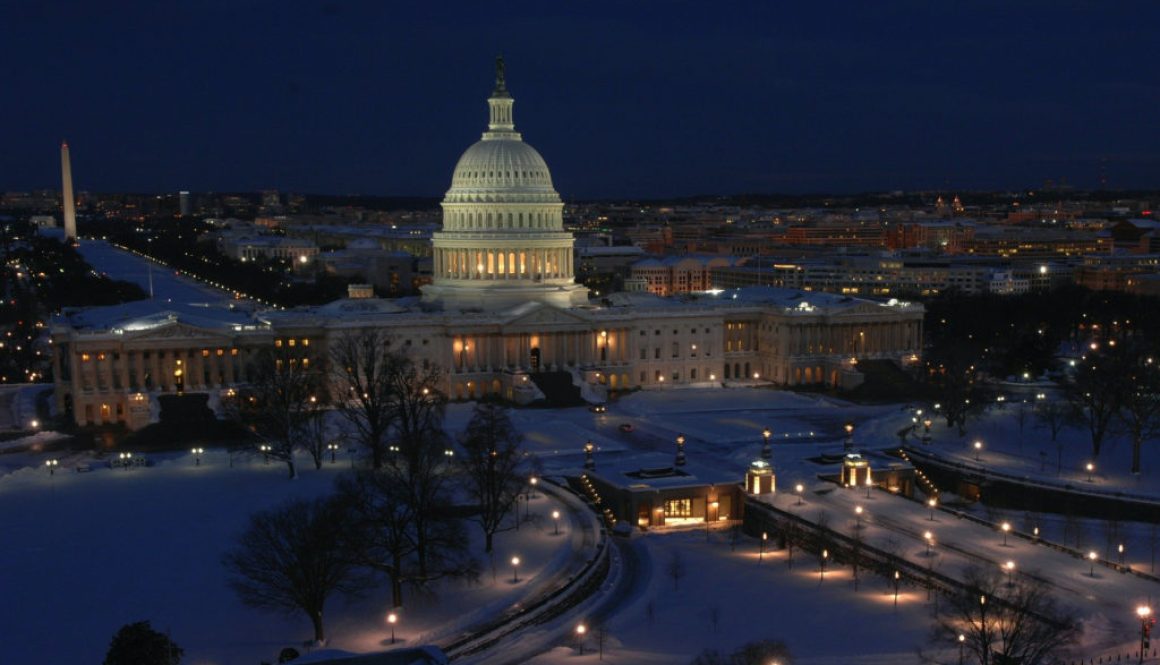
We will publish pretty photos from around the world. See above, for example. Isn’t that pretty? (Gosh, it probably makes you feel peaceful, even if you are yearning.) We will publish more stuff like that, pretty and free stock photos. Doesn’t cost us anything, so why not?
We will rediscover humorous 19th century rhyming couplets. Or, at least, we will try. We will look. Cannot guarantee that we will rediscover anything, but we will try. We will write about AJR, Mannix reruns and “Bertha the Siberian Cheesehound.” Who among us does not love funny Siberian cheesehounds? Who among us doesn’t love AJR? Who can honestly say that they don’t love AJR?
But no politics, till at least one week from today. Maybe longer.
Originally published on Policy Options, October 19, 2020
Please, I implore you. Can we just retire the term resilience?
This might seem like a strange request, but I can’t muster the, uh, resilience to endure prolonged exposure to this “plastic word.”
German linguist Uwe Poerksen described the emergence of a plastic vocabulary that has become ubiquitous, so much so that these words are devoid of meaning. Resilience is a prime candidate.
Moulded for maximum appeal, plastic words crop up everywhere, from scientific to popular discourse. We are all supposed to know what these words mean. Upon closer view, however, it’s not exactly clear what they mean. As Poerksen explains in his book Plastic Words: The Tyranny of a Modern Language, they are the “everyday prison of perception. They are handy, and they open doors to enormous rooms. They infiltrate entire fields of reality. And they reorder that reality in their own image.”
Popularized by developmental psychologists who were trying to understand how children overcame disadvantage, the term “resilience” has penetrated every corner of public discourse. Resilience is that “silver lining,” the positive residue left from trauma and tragedy. We are exhorted to be or become resilient, to summon the inner strength to deal with what life has flung our way. Develop the capacity to deal with adversity and, presto, you can bounce back stronger than ever. Of course, it seems almost silly to oppose resilience. After all, what is the alternative? Getting stuck?
The COVID-19 pandemic has revved up the resilience industry. Kids who were forced out of school and confined to their homes in March are expected to return to class – in whatever form that takes – ready and eager to learn. Their parents are supposed to be resilient, too, there to help them adjust to the new normal, even if those same parents are struggling themselves – working from home if they can, or required to report to work if they are essential workers.
And the Trudeau government’s recent speech from the throne – titled “A Stronger and More Resilient Canada” – was all about “building back better,” borrowing a phrase from Democratic presidential candidate Joe Biden. In August, the federal government even announced its “Investing in Canada Infrastructure Program,” which allows provinces and territories to access funding for “pandemic-resilient infrastructure projects.” This would include supports for schools, hospitals, and walking paths – programs that would be worthy of public support in non-COVID-19 times.
What if resilience is just another way of saying “get over it”? What if a positive attitude is not enough to pull you out of poverty? What if dealing with hatred and racism is not made better by just not letting it get to you? What doesn’t kill you makes you stronger, right? It might not kill you, but it can harm you in ways that might make you feel like you would be better off dead.
Julie Lalonde, Ottawa author of the aptly titled Resilience is Futile, describes being stalked for several years by an ex-boyfriend. She says sexual assault survivors are ensnared in the “double bind” of resilience: “The few women who decided to report to police lived in a double bind. They had to look bad enough for their trauma to be taken seriously, but not be too much of a mess or else risk being seen as crazy and unstable. It wasn’t enough that women were subjected to discrimination, violence, and neglect, I realized. We also had to perform our trauma in a very precise way in order to get any semblance of justice.”
The resilience industry is rooted in an individual model of change, one that leaves untouched the structures and systems that are responsible for the trauma in the first place. Children growing up in under-served communities would not have to “overcome” their environments if their schools and neighbourhoods had the resources they deserved. Indigenous people would not need to become resilient in the face of colonial dispossession had they not been forced into residential schools or had their land occupied. As disability studies scholar Eli Clare reminds us, the language of “overcoming” is deeply ableist, as well, implying that people can will things away if they just work more or try harder.
The idea that recovery from trauma or disadvantage builds character is particularly odious because it marks certain communities as needing adversity to toughen them up while allowing others to simply go about their privileged lives.
Some commentators link the arrival of all things resilient with contemporary capitalism. “Neoliberal citizenship,” says Mark Neocleous, “is nothing if not a training in resilience as the new technology of the self: a training to withstand whatever crisis capital undergoes and whatever political measures the state carries out to save it.”
The idea that recovery from trauma or disadvantage builds character is particularly odious because it marks certain communities as needing adversity to toughen them up while allowing others to simply go about their privileged lives. The narratives that swirl around resilience often invoke stories of strength in the face of adversity, telegraphing that you, too, can shake off the cumulative cycle of disadvantage.
And resilience crosses the ideological divide: it serves progressive ideas of success “against the odds” as well as more conservative notions of individual grit and “pulling oneself up by the bootstraps.”
As New York Times book critic Parul Sehgal discussed in the wake of US campus protests to decry racism, resilience can devolve into a discourse of blame when it suggests people just need to toughen up: “What seems to me to get people through these kinds of trauma are other people. It is an ability and an opportunity to talk about one’s pain. It is an opportunity to be vulnerable and to change and dictate the course of one’s life.”
Resilience is even used to refer to structures that can withstand environmental catastrophe. Focusing on buildings that are tough enough to recover from weather-related calamities neatly sidesteps the real issue: climate change. Sustainable buildings are only as “sustainable” as the world in which they find themselves: a resilient building is no match for a world upended by the perils of climate change. Similarly, a resilient person is powerless in the face of structures that need to be dismantled, not reinforced.
It’s not surprising that many, including elected officials, take solace in narratives of resilience and recovery. They lift us out of the pit of despondency. But we need to collectively challenge some of these policy responses that are grounded in notions of resilience. These feel-good stories of “building back better” or “overcoming adversity” provide only temporary comfort. They mask problematic assumptions about the relative capacity of individuals to confront structures and conditions that are not of their own making.
^^^
This article first appeared on Policy Options and is republished here under a Creative Commons license.
Image design by Steven S. Drachman from an image by Robin Higgins
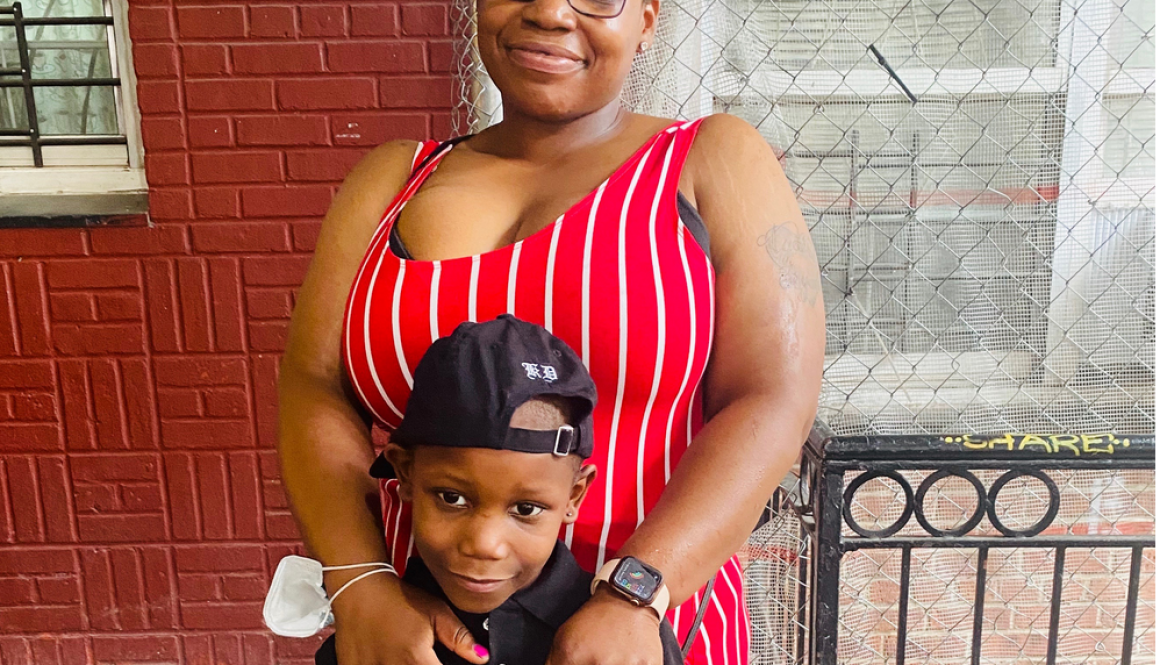
“When people make mistakes and then cover those mistakes up with lies upon lies, that’s when people get really hurt,” said Sherron Paige, whose 7-year-old son, Kyan, has grown up in a lead-tainted apartment in the Red Hook Houses.
Red Hook Houses resident Sherron Paige and her son, Kyan. | Courtesy of Sherron Paige
The day in July 2017 the doctor called Sherron Paige to tell her that her son, Kyan, had registered an alarming level of lead in his blood, the child was just 4 years old.
At the time, Paige had no way of knowing her son had become a very young victim of alleged deception by a city official.
The New York City Housing Authority previously certified that the Brooklyn apartment where Kyan had lived since birth had been cleaned of lead paint. A licensed NYCHA supervisor signed off on the job, THE CITY has learned.
That supervisor, however, had never been to the apartment in Red Hook Houses and never reviewed the inspection reports, according to the city Department of Investigation and sources familiar with the matter.
He’d simply signed paperwork certifying that an apartment he’d never seen was lead-free — exempting NYCHA from having to inspect the unit going forward as required by local law and federal regulations, according to the records and the sources.
The consequences became clear once Kyan’s doctor notified the city Department of Health & Mental Hygiene (DOHMH) that the child had registered a blood-lead level of 12 micrograms per deciliter — far above the cutoff of 5 micrograms deemed unsafe by the U.S. Centers for Disease Control and Prevention.
Courtesy of Sherron PaigeSherron Paige said her son, Kyan, was behind his peers in speech development.
DOHMH inspectors visited the apartment to check for the presence of lead paint following Kyan’s diagnosis. Using a handheld X-ray-like device known as an XRF analyzer, they discovered lead throughout the apartment NYCHA had declared safe, records reviewed by THE CITY show.
Elevated blood-lead levels are known to hamper the cognitive development of young children. Paige noted Kyan’s speech development was behind his age group and he has displayed behavioral issues.
“Sometimes people make mistakes and bad things happen. That’s life,” Paige told THE CITY. “But when people make mistakes and then cover those mistakes up with lies upon lies, that’s when people get really hurt. And that’s when people should pay the highest price.”
Barbara Brancaccio, a NYCHA spokesperson, declined to discuss NYCHA’s handling of lead paint inspections in the family’s apartment, stating, “Apartment specific information is not public. Additionally, this apartment is involved in pending litigation and NYCHA cannot comment.”
NYCHA Lies Hurt Kids
Over the last five years, evidence has surfaced of young NYCHA residents with dangerously high levels of lead in their blood. Year after year, NYCHA management deflected blame and downplayed the scope of the crisis.
Probes by the city Department of Investigation and the Manhattan U.S. Attorney revealed the authority failed to perform required lead paint inspections for years — and lied about it to federal authorities.
Last month, DOI found for the first time fraudulent actions by NYCHA personnel occurred in apartments where children were exposed to toxic lead paint.
DOI revealed the duplicity behind NYCHA’s push to exempt apartments like Kyan’s from lead inspection: top managers had for years used false signatures to obtain exemptions. Investigators determined this deceit occurred in at least 323 apartments, and they believed many more were affected.
And actual harm was done: DOI Commissioner Margaret Garnett said her investigators cross-referenced health and other records, and found that 19 children living in 18 of the 323 exempted apartments became lead poisoned.
Garnett and NYCHA declined to share the identities of those children. But THE CITY has learned that Kyan was one of them.
THE CITY also learned that two years ago, NYCHA was twice warned that the exemption program had serious problems, yet did little to address them.
Records reviewed and interviews conducted by THE CITY found:
In March 2018, while the false-signature scheme was underway, a NYCHA manager insisted to a Brooklyn tenant that her apartment had been officially deemed free of lead. State health inspectors later discovered lead paint inside the apartment.
In August 2018, DOI privately warned NYCHA to retest all its exempted apartments, disclosing that investigators had discovered problems with the program during an ongoing probe. NYCHA declined to do so.
Only now is NYCHA going back and re-testing the 323 apartments DOI falsely identified as eligible for exemption. Preliminary test results have already uncleared lead paint in five apartments NYCHA previously declared “cleared” of the toxin, THE CITY has learned.
For an apartment to make the exemption list, a NYCHA supervisor who holds a certificate from the U.S. Environmental Protection Agency (EPA) must inspect the unit and certify that it was properly cleaned of lead paint.
For years, two top managers of NYCHA’s lead paint unit forced supervisors with the required EPA training to sign off on apartments they had never actually visited, according to DOI.
“Our findings determined that between 2013 through 2018, for all of the exemptions obtained through abatement, there was no EPA-certified supervisor as is required by federal law,” Diane Struzzi, a DOI spokesperson, wrote in response to THE CITY’s questions.
“The total number of exemptions by abatement obtained during this period is likely greater than 323, but poor record keeping by NYCHA meant DOI could not determine the total number of exemptions obtained through abatement with certainty,” she added.
A History of Red Flags
All of this occurred while alarm bells were ringing all over about NYCHA’s failure to follow the law on lead paint inspections across its portfolio of 175,00 public housing apartments.
Lead paint was officially banned nationally in 1978. About 135,000 NYCHA apartments were built before that and likely are tainted by lead paint.
Local law requires all New York City landlords, including NYCHA, to inspect each apartment with a young child every year, while the U.S. Department of Housing & Urban Development (HUD) requires annual lead paint inspections of all public housing units — regardless of whether children live there.
NYCHA simply stopped performing all the required inspections in 2012, and continued an aggressive campaign to exempt hundreds of units from these required inspections.
Ben Fractenberg/THE CITYThe Red Hook Houses in Brooklyn, Nov. 4, 2020.
But by March 2016, news reports had raised questions about NYCHA’s lead paint program and revealed the existence of an investigation by the Manhattan U.S. attorney.
In response, Mayor Bill de Blasio assured reporters that NYCHA had “a very aggressive inspection and abatement program,” claiming, “Any time we find a problem we abate it.”
Weeks later, the mayor privately learned this was not true.
NYCHA managers told him that for years the authority had not, in fact, been performing the required inspections. De Blasio opted to keep that damning revelation secret from tenants and the taxpaying public.
That changed in November 2017 when the mayor was forced to acknowledge this failure when DOI released a report revealing what he already knew: NYCHA had been lying about its lead paint inspection practices for years.
Despite the release of DOI’s 2017 report, the false signature scheme to get apartments exempted went on as if nothing had happened, DOI officials confirmed to THE CITY.
In March 2018, state health officials launched random inspections of NYCHA apartments after Gov. Andrew Cuomo began criticizing living conditions in public housing. Soon the state discovered lead paint in 23 units — including three that had been exempted from inspection after being deemed “lead free” by NYCHA.
A “cleaned” apartment at the Berry Houses in Staten Island registered a level of 72 micrograms of lead per square foot. That’s well above the level of 40 deemed acceptable by the EPA.
The state also found lead paint at another exempted apartment in the Ingersoll Houses in Fort Greene, Brooklyn. The unit housed young children, court papers show.
‘Recklessly False Assurances’
In a lawsuit filed in 2018 by the Citywide Council of Presidents, a group of NYCHA tenant leaders, Ingersoll resident Devon Hunt — worried that her children had been exposed to lead — recounted how she’d tried in vain to get authority workers to check her apartment.
NYCHA managers, she said, told her that there would be no inspection because the authority had already determined there was no lead in her home.
Records show NYCHA obtained exemption from annual inspection in 2005 for Hunt’s entire building after some units were tested for lead. When state inspectors showed up, they found lead paint throughout Hunt’s apartment, the lawsuit alleged.
“Because of NYCHA’s failure to conduct legally required lead inspections, and its decision to ignore her valid complaints and provide her with recklessly false assurances, Ms. Hunt’s young children have been exposed to toxic lead for the past several years without her knowledge,” the suit read.
John Penney/ShutterstockThe Jacob Riis Houses in the East Village, Sept. 7, 2020.
Soon after the state Department of Health turned over its findings to NYCHA, another red flag about the exemption program popped up.
The warning came shortly after the Manhattan U.S. Attorney filed a report in June 2018 detailing years of failure by NYCHA to provide its 400,000 tenants with safe and healthy living conditions. NYCHA ultimately agreed to remedy all the problems uncovered by prosecutors under the watchful eye of a federal monitor.
In his report, the U.S. Attorney did not refer to the exemption program.
But in August 2018, in a letter to then-NYCHA Chair Stanley Brezenoff , Ralph Iannuzzi, the DOI inspector general overseeing NYCHA, privately warned that his investigators had uncovered “serious issues” with NYCHA’s lead paint program “that require immediate action.”
Iannuzzi suggested that Brezenoff order the retesting of all exempted apartments.
At the time, DOI had already discovered false signatures in 323 exempted units. But because the investigation was ongoing, Iannuzzi did not provide NYCHA with the detailed list.
A Whistleblower Emerges
NYCHA officials took a pass. In a November 2018 response to Iannuzzi, NYCHA noted that the city Department of Housing Preservation & Development (HPD) had to approve all exemptions from lead inspections and required a dust swipe showing a negative result.
Responding to DOI, NYCHA swore to HPD that each apartment had been properly cleaned — and that dust swipes had confirmed they were free of lead.
In a statement to THE CITY last week, DOI’s Struzzi wrote, “The abatement itself was deficient due to not having an EPA-certified supervisor on site” and noted that improperly done tests can give misleading results.
“So in our view, the negative dust-wipe tests immediately after the abatement was not sufficient to ensure future safety, given the lack of an EPA-certified supervisor on the original abatement,” wrote Struzzi.
Iannuzzi also implied there were questions about whether EPA-certified lead supervisors were actually overseeing these jobs. He suggested that NYCHA “accurately input the name” of the supervisor overseeing exemption jobs in its paperwork and “re-submit revised forms.”
In a November 2018 letter to Iannuzzi obtained by THE CITY, Brezenoff revealed that the housing authority was aware of the issue, writing that, “NYCHA is actively developing methods to effectively track supervisor presence at job sites.”
On Dec. 10, DOI made clear why it had made these suggestions: an EPA-certified lead paint supervisor had come forward as a whistleblower to say he’d been forced to sign off on dozens of lead paint inspections in which he’d played no role.
DOI found two other supervisors had done the same thing in at least 323 apartments. Two top managers of the lead unit have since been terminated, although no criminal charges have been brought.
‘There’s a Reckoning Coming’
In mid-June 2018, DOI raided a lead paint unit office at the Jacob Riis Houses in the Lower East Side. Investigators walked out with boxes of records and computer hard drives, and they began interviewing the unit’s staff. The false-signature scam suddenly stopped, DOI officials say.
In response to DOI’s latest report, NYCHA two weeks ago reversed course and began retesting the apartments investigators had advised be checked in 2018.
Almost immediately, the NYCHA officials turned up five apartments certified as free of lead that preliminary testing shows still contain lead paint, THE CITY has learned.
As for Sherron Paige and Kyan, late last year NYCHA settled a federal lawsuit filed on behalf of Paige with a $25,000 payment. Meanwhile, a state case filed on behalf of Kyan by her attorney Corey Stern remains active in Manhattan Supreme Court.
“I’m praying for those who did this to my family, and all of the other families, because there’s a reckoning coming,” Paige said.
THE CITY is an independent, nonprofit news outlet dedicated to hard-hitting reporting that serves the people of New York.
Following the Jan. 6 insurrectionary attack on the U.S. Capitol and on the country, the FBI has warned of violent actions being planned in all 50 states and D.C. nationwide next week. Last week’s assault, which was incited by Donald Trump, enabled by GOP officials and members of Congress, planned on social media, and buoyed by deeply entrenched white supremacy and Christian nationalism at the heart of our democratic dysfunctionality, were not attacks on any political party or ideology — they were attacks on all of us. The entire country has to be involved in responding to what could become a protracted violent conflict or, quite possibly, an insurgency. Meanwhile, historian Timothy Snyder warned of the need to prevent proto-fascism from becoming full-on fascism.
What happens over the next 10 days will set the tone for what happens over the next 10 months and 10 years. In the immediate term, the national response should focus on ensuring accountability and telling the truth about the election, exploiting divisions between those committed to democracy and those willing to destroy it, and preventing further violence from far-right extremist groups like the Proud Boys and QAnon. Longer term efforts require an honest reckoning with the white supremacist roots of our political malaise, addressing the toxic nature of polarization in this country fueled by social media platforms’ monetization of hate and division, and building and supporting movements capable of transforming our social, political and economic systems.
First, the politicians and officials who incited and enabled the attacks must be held accountable for their actions. Unless there are real consequences to engaging in illegal, dangerous or recklessly anti-democratic behavior, it will be impossible to reckon with our present and deter future attacks. Trump is a clear and present danger to the United States and should be removed from power and prevented from ever running for federal office again. The NAACP is organizing bipartisan support for Trump’s impeachment. Missouri Representative Cori Bush has filed a resolution calling for the expulsion of more than 100 Republican members of the House who voted against certification. Indivisible is mobilizing for the expulsion of members of Congress who supported the insurrection.
There are clear signs that the insurrection is backfiring and GOP enablers are paying a price. We need to learn from and exploit this backfire. Trump’s approval rating has plummeted to 33 percent and he was impeached Monday by the U.S. House for the second time. Major companies have suspended political contributions to members of Congress who voted against certifying the result of the election. A pro-Trump candidate for governor of New Jersey abruptly dropped his campaign. Republican Attorneys General who supported the election lawsuit are facing disciplinary complaints and the Republican Attorneys General association is distancing itself from robocalls urging supporters to go to D.C. to “fight” and overturn the election. Facebook and Twitter banned Trump and took down the accounts of over a thousand far-right groups while Google and Apple shut down Parler, a platform favored by extremists.
Mainstream media outlets should be encouraged to report on these fissures, defections, and divestments and explain their significance in defending democracy. Further economic and social pressure should target the media enablers of violence and violent extremism, which have profited immensely from spreading hatred and conspiracy theories. Prominent Evangelical and Catholic religious leaders, priests, and clergy who spread lies about the election being stolen from Trump should be persuaded and pressured to tell the truth and repent.
Faced with heightened risks of violence in Washington, D.C. and across the country this weekend and next week, it is critical to amplify the work of peacebuilders and invest in de-escalation and violence prevention trainings and capacity-building provided by groups like DC Peace Teams, Cure Violence, Nonviolent Peaceforce, Over Zero, and the TRUST Network. Activist groups have rightly assessed that encouraging people to take to the streets to confront Trump supporters and extremists is the wrong move — both for very serious health reasons and because they know that Trump and the far-right are desperate to make this a clash between opposing groups, rather than a one-sided attack on the country.
Many civic groups are promoting alternative plans for action. Indivisible, The Frontline and #ShutDownDC are planning dispersed nonviolent actions across the country and in the capital to demand impeachment and denounce white supremacy. These include banner drops over highways, car caravans and a #DontrentDC campaign calling on those who rent out apartments in D.C. to refrain from doing so from Jan. 17-20, when white supremacists will be back in town. In a clear victory for activists and a further sign of backfire from the violent insurrection, Airbnb has announced that it is cancelling all D.C. reservations.
Despots and extremist groups alike want people to feel afraid and helpless. They need to know that they will not succeed. In the upcoming week, a tactical option beyond telling people to stay home and avoid street confrontations would be to invite every American across the country — regardless of their race, political affiliation, or zip code — to participate in a synchronized act of national unity and democratic solidarity. The tactic of cacerolazo, or the banging of pots and pans in unison, has been used in places like Chile, Brazil, Turkey and elsewhere to unite people around struggles for freedom and justice. In the United States, it was used during the George Floyd protests and in response to the pandemic, as people in New York City and across the country banged pots and pans from their rooftops, balconies and porches to pay homage to the nurses, doctors and other essential works on the frontlines of the Covid response. It was a powerful and emotionally gripping act of togetherness.
What if, sometime between Jan. 17 and 20 (perhaps on Inauguration Day itself), every American were invited to honk horns and bang pots for a full minute, starting at the same time everywhere across the country? This trans-partisan, pro-democracy and pro-peace national action, if promoted by youth, workers, professional groups, business leaders, media outlets, artists and entertainers, would be a powerful, joyful antidote to the angry far-right shouting and violence. It would send a message that “we the people” will not tolerate violence and are committed to each other, our country and our future together.
Over the longer term, dialogue and direct action, nonviolent resistance and peacebuilding, will both be necessary to address deeply rooted violence and injustices in this country. It is telling that last week’s mob attack occurred right after the remarkable election in Georgia, a state with the second highest number of lynching in the country, that saw a Black pastor and a Jewish son of immigrants win and flip the U.S. Senate. Years of Black women-led organizing and powerful coalition-building in the state made the victory possible. Similarly last summer, following the murder of George Floyd and enabled by years of Black-led organizing, there were thousands of protests and demonstrations calling for an end to police brutality and systemic racism — the broadest and most persistent movement in U.S. history.
The forces that brought Americans together across political, racial, gender, generational and class divides to confront the legacy of slavery and Jim Crow authoritarianism — and to win improbable electoral victories — are those needed to transform the racist and anti-democratic structures and systems in this country. That includes mobilizing around the passage of state and federal legislation, like H.R. 1 and H.R. 4464 that are necessary to protect voting rights, dismantle systemic barriers to participation in the electoral process and chip away at structural minority-rule entrenchment.
At the same time, building broad-based coalitions and movements necessary to transform social and political systems in a deeply divided society is a huge challenge. While conflict, disagreements and issues-related polarization are normal and necessary, toxic polarization — in which the other side is seen as a monolithic enemy and an existential threat — is dangerous and cripples our ability to solve serious problems. Toxic polarization, which some have referred to as political sectarianism, encourages an extreme simplification of reality and the creation of an “us vs. them” framework where “out-party hate [is] more powerful than in-party love.” Making contact with anyone from the other side or making any sort of compromise are seen as a betrayals to your own side. The result is that there are huge incentives to adopting anti-democratic practices and tactics to advance electoral and political goals, ultimately undermining representative democracy.
There is no easy solution to toxic polarization. On the one hand, the rise of far-right extremist groups, backed by a faction of the GOP, is an existential threat to many fellow Americans, notably those who are Black and Brown. Four days after seditionist Sen. Ted Cruz defended Trump’s attempted coup and invoked the Compromise of 1877, which effectively disenfranchised African-Americans and created an apartheid system, Confederate flags paraded through the Capitol. Meanwhile, U.S. intelligence agencies have assessed far-right extremist groups as the greatest domestic terrorism threat.
Still, toxic polarization, which affects every aspect of our social and political lives, makes it difficult to collectively confront the structural sources of political sectarianism — like economic inequity and structural racism — and makes violence more likely.
Scholars and experts have recommended many potential interventions to address political sectarianism, ranging from creating awareness campaigns about partisan misperceptions and highlighting areas of agreement on key policy issues (like immigration reform and gun policy), to encouraging and acknowledging positive experiences with neighbors, friends and family who share opposing political viewpoints. They also suggest engaging with opinion leaders to stop the spread of polarizing narratives and encouraging restorative narratives, pressuring social media companies to end the commodification of hate and outrage, and creating incentives for politicians and other elites to decrease sectarian behaviors.
Support Us
Waging Nonviolence depends on your support. Become a sustaining member today and receive a gift of your choice.
These recommendations highlight the importance of making our analyses and narratives more nuanced, engaging in deep listening, highlighting collaborative problem-solving and civic engagement across partisan divisions, and building powerful coalitions and movements capable of building power and disincentivizing anti-democratic and anti-social policies and practices.
At this time of intersecting crises in the United States, there is a great need for the social justice, democracy and peacebuilding communities in the United States to come together and collaborate based on their comparative strengths. The peacebuilding community’s expertise in analyzing the roots of conflict and building inclusive processes, the social justice community’s ability to raise urgency and shift power, and the democracy community’s laser sharp focus on necessary structural reforms are all needed to move the country along a transformational path. Meanwhile, there are tremendous opportunities to learn from activists, organizers, and peacebuilders around the world who are challenging authoritarianism and building peace with justice in highly-divided societies.
While we face the threat of real violence in the coming days, if we can come together and work to address the roots of our deep divide it is possible to imagine a brighter future.
^^^
This article originally appeared in Waging Nonviolence.
On Wednesday, we witnessed an attempted coup in the United States as a rally of pro-Trump militants breached the Capitol building and temporarily stopped a joint session of Congress from counting the presidential votes.
Donald Trump called for the protest, spoke at it and told his supporters to march to the Capitol. Fueled by weeks of his false claims of election fraud, they broke windows, scaled walls and looted House Speaker Nancy Pelosi’s office. Amid the chaos, two pipe bombs and a cooler of molotov cocktails were found, along with other weapons. One protester was shot and killed by Capitol police, and three others died, reportedly of medical conditions. Meanwhile, 14 police officers were injured by the rioters.
Choose Democracy was one of many organizations to quickly write to its followers to put these outrageous events in context. Founded this summer to prepare people to resist a potential coup, the whirlwind startup — where I served as trainings coordinator — had long predicted that if defeated at the polls, Donald Trump was unlikely to concede. However, his denial alone would not constitute an illegal power grab. What mattered would be what other people did, especially institutions like the military, police, the business community, government bureaucrats and the many other politicians involved in the electoral process.
As disturbing and dangerous as the coup attempt was, the pillars of our society largely stood and supported democracy. “We always said a coup needs legitimacy to be successful. If the goal of today’s seizure of the Capitol was to gain legitimacy, the action backfired spectacularly,” we explained in our letter on Wednesday evening. “This coup is not gaining traction or convincing the majority of lawmakers, particularly those required to certify election results.”
After fleeing the Capitol, Republican politicians quickly distanced themselves from the violence, even Sen. Ted Cruz, who had moments earlier fueled the flames of sedition by spreading Trump’s lies and demanding that Congress delay the vote count. Under fire for his role, Cruz issued a statement calling the attack on the Capitol “a despicable act of terrorism and a shocking assault on our democratic system.” Conservative Sen. Tom Cotton tweeted, “Violence and anarchy are unacceptable… This needs to end now.”
The Choose Democracy trainings always emphasized the importance of bi-partisan opposition to any coup attempt, and the reason for that swiftly appeared. As an afternoon Politico headline put it, “Trump world pleads with the president to condemn the storming of the Capitol.” Alyssa Farah, Trump’s former White House communications director, implored Trump, tweeting the truth that many loyalists had been dodging for weeks: “The Election was NOT stolen. We lost.” Meanwhile commentators like Piers Morgan called for Trump’s resignation, the NAACP demanded impeachment and the National Association of Manufacturers called for Vice President Mike Pence to institute the 25th Amendment, which allows the cabinet and vice president to remove the president from office.
After President-elect Joe Biden made a national speech demanding Trump unequivocally tell protesters to go home, Trump relented, though his video message was mixed at best. He called on his supporters to “peacefully go home” while praising their motives and repeating the lie that the election was stolen.
The swift backlash against the coup attempt could be felt within the Capitol, which police successfully cleared of protesters within a few hours. When Congress resumed the divisive vote count at 8 p.m., some of the Republicans who had planned to raise objections relented, moving more quickly to acknowledge Joe Biden’s victory than they originally planned. Even Trump ally Sen. Lindsay Graham declared, “enough is enough.” In the early hours of Thursday, Pence read the final count, affirming Joe Biden’s victory. Trump soon released a statement promising an “orderly transition” on Jan. 20.
While the backlash to the violent coup attempt may have turned the tide on denial of the election results, there were already many signs that the pillars of democracy were holding, despite the flagrant assault on them. Before the riot began on Wednesday, Pence signalled he would not and could not stop certification with a letter to Congress, as Trump had suggested. In recent days, all 10 living former Secretaries of Defense published a strongly-worded op-ed in the Washington Post warning against military involvement in settling the election. In a famously recorded phone call, Georgia’s Republican Secretary of State rebuffed Trump’s demand to “find” enough votes to change the state’s election result.
For weeks, Choose Democracy had been affirming the many local and bi-partisan election officials who were doing their jobs according to the law, sometimes in the face of death threats by Trump supporters. As the vote counting and certification proceeded, it became clear that the kind of national strikes or protests planned for an actual coup did not make sense in this situation, despite the president’s outrageous fraud claims and the growing number of supporters who believed them. Instead, the group encouraged anti-coup activists to call their local officials and continue to urge them to uphold the will of the voters, a strategy that began weeks before the election.
This logic held Wednesday afternoon and evening, even as the Choose Democracy letter acknowledged “the emotional weight of this moment” of an actual coup attempt. “Strategically we think this is a last gasp and the risks are huge if we simply tell people to rush into the streets,” we wrote. The reasons were simple. It was widely believed that Trump was looking for an excuse to declare martial law, and large anti-Trump protests could provide the pretext, even giving him an excuse to try to delay the inauguration. If any conflict occurred between Trump supporters and opponents, Trump would use that to bolster his own narrative. In fact, the right was already blaming the violence at the Capitol on antifa and other Trump opponents, against all evidence.
“This violent coup attempt appears to be backfiring on its perpetrators, and they seem to be losing both in the electoral process and in the sphere of public opinion,” Choose Democracy explained, urging supporters to stay home. “They look out of control. Tonight, the most effective action is to let the coup plotters expose how isolated and unsupported they are. Their actions are doing that.”
In fact, the protest at the Capitol had not been very large or well organized by D.C. standards. Similar protests around the country had revealed a movement bigger on bluster than support or strategy.
In addition to the danger of lies and a media echo-chamber that doesn’t challenge them, the attempted coup highlighted other serious issues, including the attitude of the police, which seemed shockingly unprepared and relatively unconcerned about the predominantly white mob that got through the barricades with relative ease. Some rioters even appeared to take selfies with the police charged with protecting the Capitol they were occupying. Remarkably few of the rioters were arrested when the Capitol was cleared in a largely nonviolent operation — a sharp contrast to the violent treatment of nonviolent Black Lives Matter protesters this summer. As our Thursday morning follow-up-letter noted, “The side-by-side images of previous Black protesters’ treatment versus the overwhelmingly white crowd of Trump supporters is breath-taking. It is an example of how racism plays into policing.”
Meanwhile, the role of social media is also coming under fire, as Twitter and Facebook froze Trump’s account under charges that they contributed to the violence and chaos by spreading Trump’s lies.
Sign Up for our Newsletter
We’ll send you a weekly email with the latest articles.
By far the most outstanding question is what will happen between now and Inauguration Day. Trump’s promise of a peaceful transition came as calls for his imminent removal grew, with even White House staff reportedly discussing the possibility of invoking the 25th Amendment. By Thursday morning, Choose Democracy was encouraging people to sign the NAACP’s petition for impeachment, which could preclude Trump from holding office again, while forcing Congress to take a stand on his treasonous behavior. This could be helpful in convincing at least some of the many Americans who believed his lies while also providing a forum to highlight the complicity of people like Cruz. As our Thursday morning letter noted, “We are glad they decried the violence yesterday. But they planted the seeds. When they talk about a stolen election or non-existent fraud, they are still watering them. We will not forget that.”
George Lakey, Choose Democracy’s lead trainer, noted in an email to his own followers on Wednesday night that the pillars may ultimately be strengthened by the failed coup attempt. “Trump overplayed his hand. As scary and sad as it is, this is a great last memory for Americans to have of his presidency; it helps inoculate against his leadership in the future.”
Three in four Israelis believe that there is a connection between pollution and global warming and that their government needs to act to deal with the problem.
Some 72 percent of respondents said that climate change endangers humanity. Almost 80 percent say they are willing to separate trash for recycling if the bin is close to their home, and 45 percent are willing to cut back on travel in private vehicles to reduce air pollution.
Israeli Arabs are more concerned about air pollution (72 percent) than are non-Orthodox Israeli Jews (64 percent) and Orthodox Jewish Israelis (38 percent).
Nonetheless, climate change is not a big factor in national elections, as only 30 percent of those polled say climate change affects their vote for Knesset (Parliament) members.
The survey was carried out by the Israel Democracy Institute.
— Aaron Leibel
^^^
Veteran journalistAaron Leibel writes for The Jerusalem Post and Washington Jewish week. He is the author of the acclaimed memoir, Figs and Alligators: An American Immigrant’s Life in Israel in the 1970s and 1980s, available from Amazon in Kindle and paperback, Barnes and Noble, and at every local bookstore in the U.S. and Canada.
John Kerry helped bring the world into the Paris climate agreement and expanded America’s reputation as a climate leader. That reputation is now in tatters, and President-elect Joe Biden is asking Kerry to rebuild it again – this time as climate envoy, a position Biden plans to include in the National Security Council.
It won’t be easy, but Kerry’s decades of experience and the international relationships he developed as a senator and secretary of state may give him a chance of making real progress, especially if that work is conducted in the spirit of mending relationships rather than “naming and shaming” other countries.
The international community, meanwhile, largely moved forward. Many countries and regions have pledged to move their economies toward “net zero” greenhouse gas emissions by the middle of the century, including China, the European Union, South Korea and Japan. An increasing number of cities and states have set similar goals. Trump’s hard-line stance may have actually emboldened some, notably China, to make such announcements.
Getting those pledges implemented is what matters now, and that will require leadership, detailed planning and careful diplomacy. The U.N. climate conference in November 2021 will be special. It will be the first time countries will evaluate their progress on the Paris Agreement, and they will be expected to strengthen their commitments. Biden has already signaled that he will bring the U.S. back into the agreement as soon as he takes office.
As energypolicy experts who have been involved in international climate policy for over two decades, we have watched how countries responded to U.S. involvement, and how their views of America’s ability to lead the world dimmed over the past four years.
The U.S. is the second largest greenhouse gas emitter worldwide after China. It is also the largest emitter historically. Concrete domestic action to reduce those emissions will be critical to regaining trust and standing on the global stage.
In the U.S. under a Biden administration, long-term national climate legislation will depend on who controls the Senate, and that won’t be clear until after two run-off elections in Georgia in January.
But there is no shortage of ideas for ways Biden could still take action even if his proposals are blocked in Congress. For example, he could use executive orders and direct government agencies to tighten regulations on greenhouse gas emissions; increase research and development in clean energy technologies; and empower states to exceed national standards, as California did in the past with auto emission standards. A focus on a just and equitable transition for communities and people affected by the decline of fossil fuels will also be key to creating a sustainable transition.
The U.S. position as the world’s largest oil and gas producer and consumer creates political challenges for any administration. U.S. forays into European energy security are often treated with suspicion. Recently, France blocked a multi-billion dollar contract to buy U.S. liquefied natural gas because of concerns about limited emissions regulations in Texas.
Strengthening cooperation and partnerships with like-minded countries will be critical to bring about a transition to cleaner energy as well as sustainability in agriculture, forestry, water and other sectors of the global economy.
How the world recovers from COVID-19’s economic damage could help drive a lasting shift in the global energy mix.
Nearly one-third of Europe’s US$2 trillion economic relief package involves investments that are also good for the climate. The European Union is also strengthening its 2030 climate targets, though each country’s energy and climate plans will be critical for successfully implementing them. The Biden plan – including a $2 trillion commitment to developing sustainable energy and infrastructure – is aligned with a global energy transition, but its implementation is also uncertain.
Once Biden takes office, Kerry will be joining ongoing high-level discussions on the energy transition at the U.N. General Assembly and other gatherings of international leaders. With the U.S. no longer obstructing work on climate issues, the G-7 and G-20 have more potential for progress on energy and climate.
Lots of technical details still need to be worked out, including international trade frameworks and standards that can help countries lower greenhouse gas emissions enough to keep global warming in check. Carbon pricing and carbon border adjustment taxes, which create incentive for companies to reduce emissions, may be part of it. A consistent and comprehensive set of national energy transition plans will also be needed.
The global shift to clean energy will also have geopolitical implications for countries and regions, and this will have a profound impact on wider international relations. Kerry, with his experience as secretary of state in the Obama administration, and Biden’s plan to make the climate envoy position part of the National Security Council, may help mend these relations. In doing so, the U.S. may again join the wider community of countries willing to lead.




 Courtesy of Sherron Paige
 Ben Fractenberg/THE CITY
 John Penney/Shutterstock