
Spring in the Pandemic City
 From Brighton Beach (above) to Staten Island (left), it was a beautiful Spring weekend in the Pandemic City. One could even glimpse a few people, off in the distance.

From Brighton Beach (above) to Staten Island (left), it was a beautiful Spring weekend in the Pandemic City. One could even glimpse a few people, off in the distance.

We’ve interviewed some interesting writers and artists in Audere, and if you’ve never heard of some of them, then this is the opportunity to learn more.
We interviewed the idiosyncratic filmmaker Kevin Schreck, who made his name with a great documentary on the animator Richard Williams (more on him here); the screenwriter Chen Drachman, on her new film that imagines a family’s Passover secret that will change history; Leonardo DiCaprio (the actor), whose long-ago (probably) earliest interview surfaced in these pages; the great, pseudonymous and anonymous novelist, Torsten Krol, who granted his first interview in many years to Audere, and so many of the great Chickadee Prince authors, like the post-war novelist Jay Greenfield, legal-thriller writer Ed Rucker, poet-novelist Pen Pearson, Donna Levin, the author of contemporary women’s fiction featuring characters on the autism spectrum, and even an interview with Steven s. Drachman’s fictional character, Watt O’Hugh.
We also featured a series of lively political debates between novelist Alon Preiss, on the left, and iconoclastic conservative Alan Levy, on the right.
Take a look.
Image by Suju/Pixabay
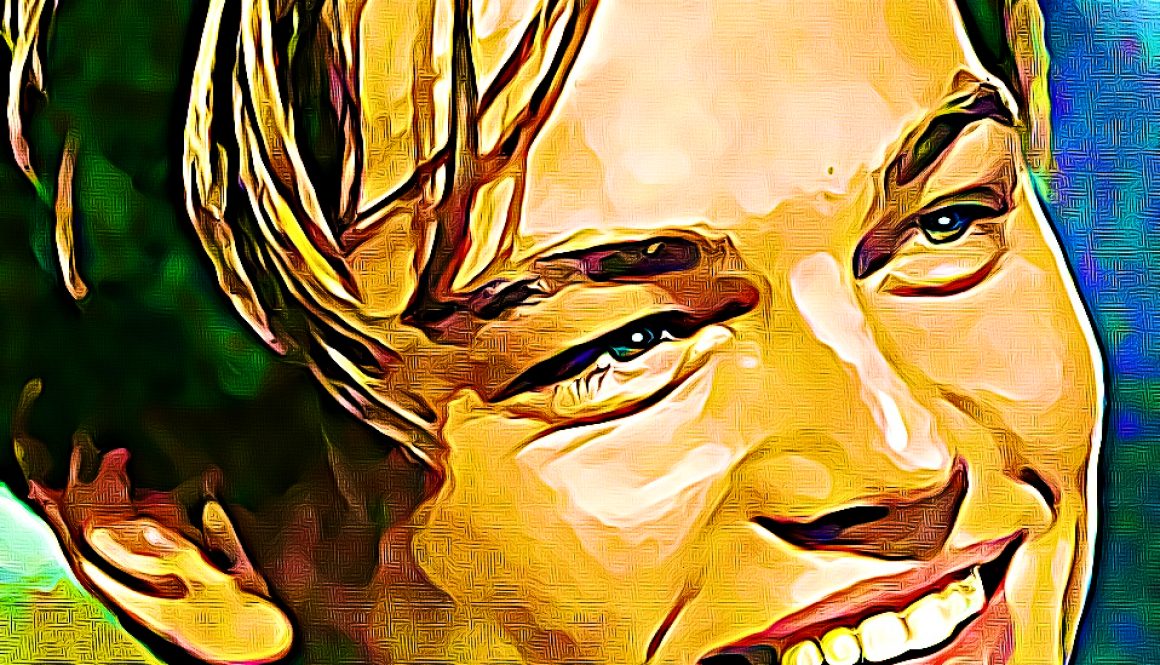
In the early 1990s, Steven S. Drachman wrote a feature story about the film version of This Boy’s Life, by Tobias Wolfe. One of the great coming-of-age stories, This Boy’s Life details Wolfe’s not entirely noble childhood, his close relationship with his resourceful mother, and how he survives when she makes the mistake of moving to the small industrial town of Concrete, WA, to marry a buffoon named Dwight.
Writes Drachman: “The film was being made with Wolfe’s participation and filmed in part in Concrete itself, on the very streets described in the book, which I thought was an intriguing collision of art and life. The film starred Robert De Niro as Dwight, and Ellen Barkin as Wolfe’s mother, and a teenage kid in the film with whom I was completely unfamiliar – the titular ‘Boy’ – a seventeen-year-old weightily named ‘Leonardo DiCaprio’. He had previously played a secondary part on a canceled ABC sitcom that I didn’t watch. But Barkin told me, ‘It really is Leonardo’s film; the truth is, Bob and I have support roles … Leonardo holds the film together beautifully,’ and the director, Michael Caton-Jones, confidently insisted that DiCaprio was the real deal, a genuine find and fated to be a star.
“De Niro, interrupting all-nighters editing A Bronx Tale to speak with me, was tired and grumpy (and who could blame him?); Barkin was cheerful and friendly; and the unknown DiCaprio, in what seems to have been his first interview, was inarticulate, wet-behind-the-ears and frequently apologetic. I liked him.
“When Sunday came, I was startled to discover that De Niro, Barkin and DiCaprio had been cut from the article without my knowledge.”
Since then, of course, DiCaprio has had an illustrious career, which has included (among other things) his role in Sam Raimi’s “weird western”, The Quick and the Dead.
For the 20th anniversary of that great-interview-that-almost-was, Drachman dusted off the transcript and published it on his blog for the first time, and here it is again, for your edification. It’s been edited significantly, and some of the questions have been rearranged.
SSD: When did you start acting?
LDC: Three and a half years ago. … I always wanted to, but I got turned off to it when I was ten, because I went to an agency and they said I had the wrong haircut. Had us all in line like cattle, and said, “No, you’re out, you have the wrong haircut,” and I said, well, shit, is this what it’s all about? This sucks.
How old are you?
Me? I’m eighteen. Almost – no, just turning 18, just in like 10 days.
What have you done before?
I did Growing Pains, the series. For a year. Right now, I’m up here doing a movie called Gilbert Grape.
How did you get involved in This Boy’s Life?
Ahh. I auditioned. [laughs] Well, I auditioned like many times, like five or six times I believe it was, and I remember coming in for a reading for another part just to read with another kid for another part… Then that day I got the part. I wasn’t aware that like they were looking at me. So I guess it was sort of good.
Did you meet Tobias Wolfe?
He came [to the set] with his mother and I talked with him for a while. He looked at [my] hair and said, “Wow, that’s exactly like it was when I was a kid. That’s great, cool.” … It was interesting seeing his reaction to how I was, if I looked anything like him, if the period pieces around the neighborhood were right, if I was, you know, if I was going to be worthy. [laughs]
The way Robert De Niro prepared for the role is that he flew down and met with Tobias Wolfe’s mother and found all these little details about what the real Dwight would have done. Did you have any inclination to do that with the real Tobias Wolfe?
I mean, he’s a grown man now. If I met with him as a kid that would be completely different ….
Some of Tobias Wolfe’s step-brothers and step-sisters still live in Concrete, and were extras in the film. Did you talk to them at all?
I talked to them for five minutes. Saw some pictures they had of what Tobias Wolfe looked like. And he did look similar to me. Not when he was grown up. But, you know, as a young kid, I saw a lot of goofiness that I have. A lot of, you know, just kid, just kid kid kid kid-ness.
You’re not a kid! You’re almost a legal adult.
Well, I’m not [a kid] by age. But I still [laughs] – I’m still a kid …. You’re an adult sometimes, but you love to be a kid sometimes. The way it is now, I like being a kid, still.
What was it like acting with De Niro? Did any of the hostility between the characters carry over to your relationship when the camera was off?
It’s amazing to watch him be Robert De Niro for a second and then pop right into Dwight. I want to use a fancy word here, but I can’t. … Doing a scene with him, he always made sure that I wasn’t being too affected by it in real life, he was always are you ok, are you ok after some of the scenes were done, but when we got into it, we got into it, and you know, I didn’t have any fear in me while off the set, but when we did it, he scared me, and it comes off good in the movie.
Is the movie different from your expectations at all?
[S]eeing the movie was just fantastic, watching all this work and time that everyone spent and that I spent doing it on screen and little things that you’re worried about, things where like Oh shit, I don’t think I nailed it in that scene, and then watching it onscreen and seeing that it’s all ok. All these nervous little things you have about certain scenes or certain ways you did things, that it’s all ok onscreen. It may not always be like that, but in this movie it was, because I was just blown away by how great it was.
What was it like filming in the real Concrete? What was the mood of the town?
It was sort of eerie noticing that, you know, this is where he was so depressed and going crazy in this little town, and then you look at the town and you say, you know, I could see how he would have been feeling that way.
You know you’re going to be doing a lot more interviews, before the movie comes out, right?
Yeah. I suppose so.
Are you looking forward to that?
I’ll take ‘em how it comes; I’m not gonna plan on it or plan my approach or anything, but you know, it’ll turn out ok, because I’ll just tell the truth.
It must be very exciting. Good luck with it.
Thanks a lot, man. Sorry, I’m sort of out of it today.
That’s all right. I know you put in long grueling hours on a movie set.
Yeah, I do. Almost every day. But pain is temporary, film is forever, as [director] Michael [Caton-Jones] always says, which are words to live by.
Good luck becoming a big star.
Who knows? It could or could not happen. It’s one of those things. But hopefully I’ll be an actor, which is what I’m most concerned about. Not a star.
^^^
Steven S. Drachman is the author of The Strange and Astounding Memoirs of Watt O’Hugh the Third, which is available in paperback from your local bookstore, Amazon and Barnes & Noble; it is also available as a Kindle e-book.
Image
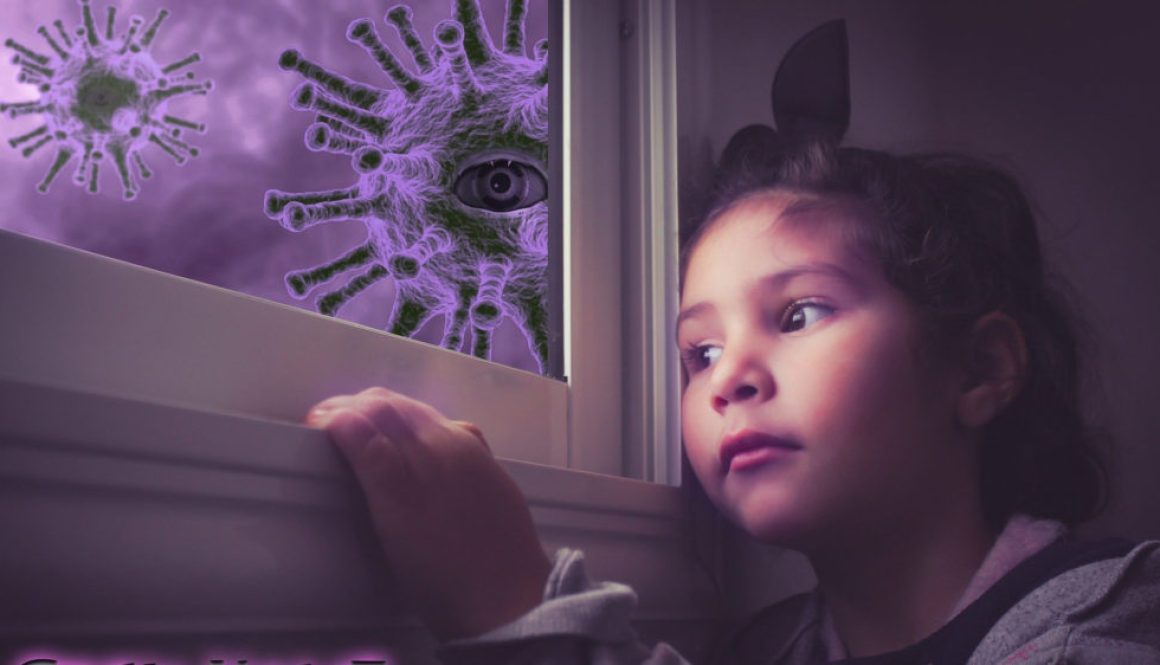
Here are a couple of things about Covid, which occurred to me, during these endless days inside.
I have seen various articles that have tried to put a positive spin on the coronavirus era. As I noted last time, a poet has rhapsodized about the wonderful ways she thinks the world will change. (I disagree, but she is entitled to her opinion.) Then there are the articles about personal growth, “things I learned about myself during lockdown,” a sort of grotesque bit of navel-gazing by those of us lucky enough to be safely quarantined while our fellow citizens are out there dying.
So in that spirit, here are the only things I learned about myself during lockdown:
The Parks and Recreation coronavirus special made me cry. I was lost the moment it began, and I realized that the credits were unchanged from its network run. I am not sure what made it so tremendously moving. They are not really my friends, after all.
I really hate Jared Kushner, maybe more than he deserves.
What is bizarrely off-putting is that, unlike Trump or Trump’s sons, Jared is a striver.
He is incompetent, but he wants a portfolio of tasks.
He wants to solve the Middle East problem. (Like my colleague Steven Drachman, and with about the same level of success.)
He volunteers to solve Covid.
He is bad at all of it, sure. But he keeps diving in, obliviously, that weird face filled with wide-eyed eagerness.
Why should this make me hate him so much? I really don’t understand it.
But I do hate him, our Jared.
Throughout Trump’s life, he has never had to do anything more than announce that his most recent failure was a smashing success. No one really paid enough attention to catch on.
He seems, truly, to believe in this. Who should have expected his approach to Covid to be any different?
I have not seen much written about the weather, but since the Covid crisis began, it has really gotten unseasonably cold. Last week, it even snowed. It’s not just a couple of days of this, but it has been weeks. Anyone have an explanation?
The one positive of the Covid lockdown is that the awful guy on the fourth floor fled New York for his country home.
Now he is back. Oh well.
^^^
Alon Preiss is the author of In Love With Alice (2017). Available NOW from Amazon, Barnes & Noble or from ANY BOOKSTORE IN ANY TOWN OR CITY IN AMERICA
Illustration by Enrique Lopez Garre /Pixabay
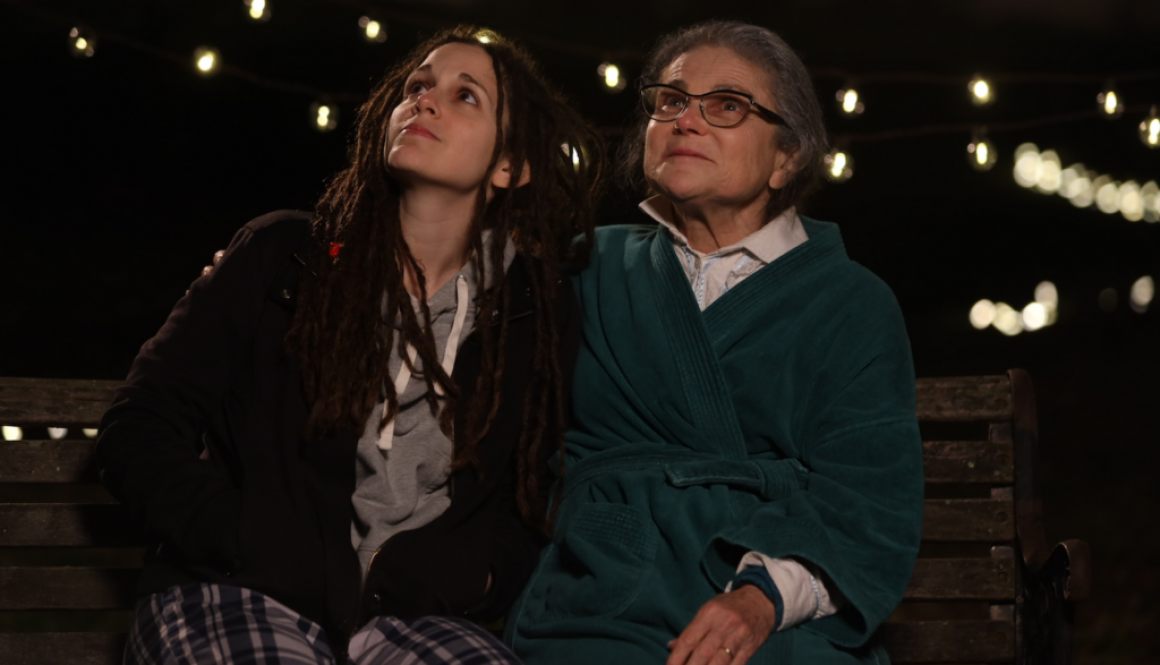
Chen Drachman, a New Yorker and actress who originally hails from Holon, Israel, is the writer of The Book of Ruth, a short film starring Tovah Feldshuh (and directed by Becca Roth), about a woman, her granddaughter, and a Passover Seder that reveals an astonishing, long-hidden family secret. Ruth has been featured in The Jerusalem Post, Jewcy, Maariv and many other outlets, and has been accepted to a number of upcoming festivals, such as the deadCenter Film Festival, on June 11.
Chen Drachman answered questions from Audere’s Steven S. Drachman, who is no relation, believe it or not.
Chen Drachman: It’s very surreal. It’s one of those experiences that you really have to distance yourself from, and kind of understand in retrospect. You work towards something for so long and it finally exists. There was definitely a sense of “now what? What do I do now?” But it’s also the fact that most of the meaningful things caused by the making of this film are still to come, you know? We worked hard to make it, and then we made it, and then we waited and waited, and now it’s time to send this child into the world and see what it becomes. I’m excited, curious and terrified all at the same time.
Honestly, it’s just been lovely to get into these festivals, to know they had a choice, and they chose your thing. We make something, we obviously think it’s good, we’re biased of course, but also, why would we waste all that time, energy, and money if we think otherwise? And then someone else comes and says, “I like it.” It’s a wonderful thing. I have this weird relationship with my art, where once something is out there, there’s a little bit of detachment. Meaning that if someone dislikes something I created, I don’t get insulted personally, I get insulted for the creation itself. So it’s almost like looking at it from the side and thinking – “oh, film, people like you! Good for you film! You go film!”
Cleaned the house where we filmed, haha. Which included, among other things, carrying a metal bench at 1 AM to a waterfront with no lights. It sure was interesting!
The day after I still had a ton of aftermath logistics to deal with, but I’m pretty sure after that I just slept like a jet lagged person. And then of course came the aforementioned existential crisis!
The Drachman side (David Drachman, my paternal grandpa) arrived from Poland, via concentration camps, of course, then Germany, then Belgium, and then on a ship during Aliyah Bet.
I moved to NYC about a decade ago to study musical theater at the American Musical and Dramatic Academy, a field that is not huge in Israel, though progress has been made in the decade since I left! And I really am in love with New York, so I was very happy to stay and start the process of building my career as an actor and a writer in the city and the industry that I love.
I am slightly fearful to answer that question because of spoilers! But I’ll say this – there was a study that was released around Passover 2015 with some newfound facts about historical events. One publication made a grammatical error in a sentence when they reported the story, and this extra punctuation changed the meaning of the sentence entirely and created a bit of a ‘what-if’ scenario in my head, and that was the spark that eventually became our story.
I think I sent Tovah the script 3 years ago, maybe even before that. She liked it, but we were in no place financially to make it happen. I then went and saw her do a talk with Rachel Bloom at a SAG Foundation event, said hello, checked in. We did do a live reading at the Manhattan JCC a year before the shoot, too. So Tovah and myself kept in touch on and off, until my director, Becca Roth and myself managed to secure the funds with a crowdfunding campaign and the support of incredible people. Then our producer, Caitlin Gold, came on board as well, and 3.5 months later we shot the thing! You gotta love how something can take forever, and then all of a sudden everything happens so quickly!
There are so many moving parts to these things, and I can give you a whole spiel about the importance of funding for the arts and lack thereof, but the short answer is – money.
Tell us about one or two interesting examples about the process (what “tiny shot” had to go and why?)
This one is hard!
Okay I have what you’re looking for!
There was a whole scene which we shot in a den-like room. It was very lovely and tender, but it didn’t fit the pace of the final cut. The biggest bummer? That scene featured real photos of Becca’s and mine’s grandparents. I really wanted my grandparents to be a part of the movie, especially since none of them are with us anymore, but that sadly was not to be!
Our lead character was supposed to have Ehlers–Danlos syndromes (EDS) which is a connective tissue disorder, and we even talked to the EDS Support Organization in the UK for some advice and research for authenticity. They were so very excited to hear about the film, and have that representation on screen, but it was only mentioned in one sentence, which again, we took out for pace, and it made me really sad because I knew how happy they were about it!
What can you do? These things always happen.
Everything is such a precedent! You know the Yiddish proverb “A man makes a plan and god laughs?” Well, you work on a movie for 5 years, get your big moment, boom, pandemic!
Of course I’m very lucky and fortunate and this is nothing compared to what others are currently facing, but the film industry shut down completely, and festivals of course are at a loss as well. Many postponed, many cancelled, some moved online. They all do the best they can to benefit the filmmakers, especially first timers such as myself.
Sadly, nothing can replace showing up to a festival, which also means getting to travel to new places, and meet people, and do Q&As, but the staffs of the festivals we’ve been accepted into have been incredible and accommodating, and they’re definitely making lemonade. It’s not an ideal year to release a film, to say the least, but this has also been fascinating. The human mind gets very creative during a crisis, so we’ll have to wait and see. I’m hopeful we’ll be able to attend festivals in person in the second half of 2020 and early 2021.
Our world premiere will take place on June 11th, as part of the deadCenter Film Festival, which was moved online. On the plus side, that means that no matter where you are, you can attend and watch our film. Please do!
^^^
Chen Drachman is a writer and actress; you can learn more about her work on The Book of Ruth’s website.
Steven S. Drachman is the author of The Strange and Astounding Memoirs of Watt O’Hugh the Third, which is available in paperback from your local bookstore, Amazon and Barnes & Noble; it is also available as a Kindle e-book.
Image: Chen Drachman and Tovah Feldshuh
[Editor’s note: read the entire story from the beginning.]
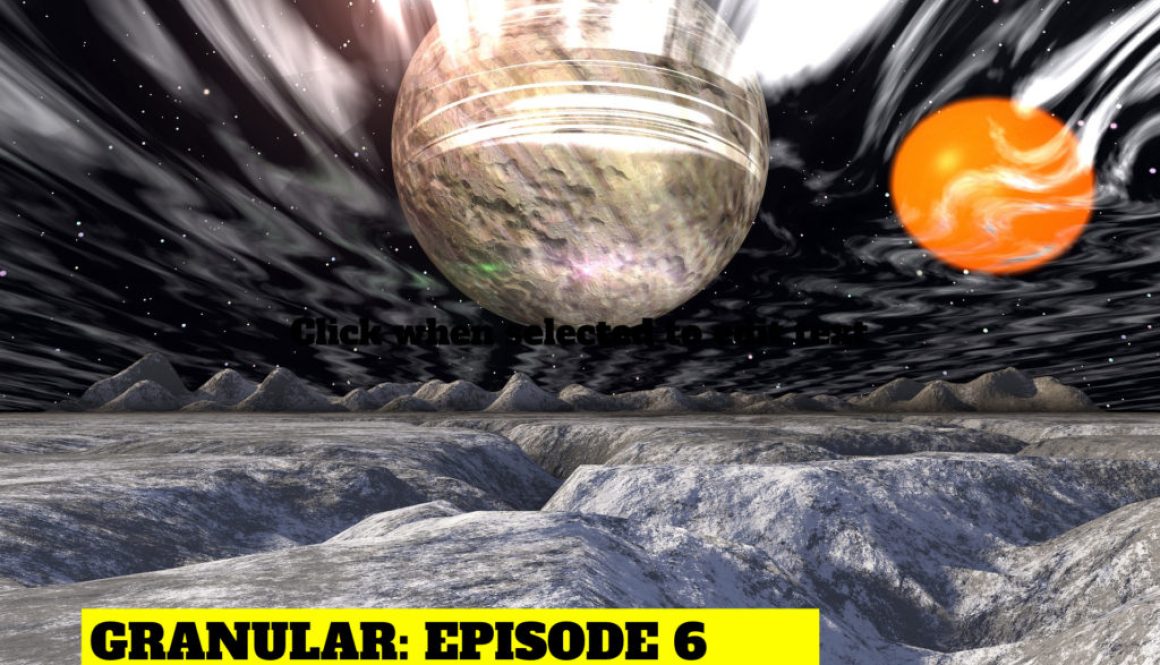
Two weeks into his stay at Haliak Central Social Rehabilitation Center, Zach had fallen into a dismal routine. Awakened minutes after the lunar colony’s artificial sunrise, he was given twenty minutes for personal hygiene, a fresh, olive green sweatsuit and a breakfast selected from “the human menu.” Next, he was hustled off to a session of light exercise and, after a half-hour rest period, he faced a tedious round of psychological counseling.
Given the gravity of his charges and the rapid conviction he’d received in defiance of interstellar law, the local authorities expected him to acknowledge his crime. From the Crelenk point of view, this ought to have been obvious to any sentient who, like Zach, had freely confessed to murder.
That was where the point of contention lay. Zach’s confession had consisted of a document he’d apparently signed in a drugged stupor while in the care of Dalamacras. That was aside from the lack of due process — at least as the term was understood by human society. No wonder Zach’s prison counseling had rapidly devolved into a deft game of gas lighting, in which the phrase “are you sure?” was a recurring feature.
Owing to Zach’s disciplined mind, he was still some distance away from cracking ─ though that was partly due to the Crelenk’s attitude toward him. For the time being, in deference to his potential value to the State, Zach’s captors gave him a fair amount of leeway. Yet as he soon discovered, stubbornness would eventually be his undoing. One bright morning, after breakfast, the prison Warden laid things out for him in stark terms. If Zach accepted the official story of his crime, he could keep his mind intact. But if he continued to resist, he’d feel the full force of Crelenk social engineering.
In a gesture of ritualized compassion for his tortured soul, Crelenk psychiatrists would erase his mind and fill its empty canvas with a complete set of implanted memories. After his recovery, as a ward of the state, he’d carry out tasks too menial to justify their wear and tear on expensive androids. By contrast, if he cooperated with authorities and issued a public statement of remorse, he’d buy himself a position in the Crelenk Science Corps.
All the same, the Warden’s stern warning had been delivered with remarkable restraint. In fact, the only saving grace in the midst of Zach’s devastating loss of liberty was the benign attitude the Crelenk took toward the incarcerated. Though his was a textbook case of judicial malfeasance, once he was in the prison system, he was treated with muted dignity, referred to as “Dr. Griffin,” and subjected to none of the harrowing violence or petty humiliations that still occasionally cropped up in human detention centers. The Warden had even gone so far as to leave Zach’s comstreamer intact, and merely blocked incoming and outgoing signals, for fear of damaging his valuable mind.
All told, the Crelenk’s light touch gave Zach a precious gift: the mental space to strategize. While he had no prospect of “busting out,” he did have the comfort of working out a few if-then formulae on the off chance that he received help from the outside. Other than that, he entertained a vague sense of hope even if, as each day passed, it dimmed a little more.
But surely, he told himself, he must still have advocates. What about Altov and his peers in the Physics Department back home? What of the AI Adjudicator’s report and his blatant abduction from Bohr University campus without a warrant? Yet, as Zach been forced to realize, his cherished assumptions about the world outside Academia had been based on nothing. He now had ample evidence that his rights were only as solid as they were expedient.
Worse, the longer he stayed out of circulation, the more his only claim to exceptional treatment, i.e., his accomplishments in Temporal Physics, would lose its value. Brilliant as he might be, without access to the latest data, he could only maintain a faded imitation of his former stature, as he carried out fanciful “thought experiments” to pass the time.
It was in that frame of mind a month later that his resolve began to weaken. By then, the droning insistence of his male Crelenk psychologist had been replaced by the gentle persuasion of a female human therapist. His mood gradually shifted until, in his latest session, he veered dangerously close to conceding defeat. That night, exhausted, he lay alone in his darkened cell.
No advantage to resisting, he told himself. Not if no one else cares. Crelenk science is science, and they’re hardly destined for galactic domination.
He’d been on the verge of wondering what the harm would be in helping the aliens, until he remembered Dalamacras’ condescending snipes during his first captivity. Serving the Crelenk would be one thing. But what if it netted out to helping the Alegarli? No doubt the “bee people” had a distinct hegemonic agenda. Zach’s advances in any branch of his field would be farmed out immediately for practical applications of the most pernicious kind.
But what was he thinking? The accidental disruption of space-time caused by Ultramat’s poorly regulated latency fields was weapon enough for any killer. If the phenomenon that he’d witnessed in Loor TreVal’s living room could be modulated with pin-point precision and at varying distances, it would be more than enough to bring down the mightiest military forces in the Cosmic Consortium. For that reason alone, he finally realized, he must continue to resist. And now, finally, after several hours of manic non-sleep, the clarity of his resolve enabled him to drift off into a soothing….
The urgent chirp of his comstreamer forced him to sit bolt upright. Someone had broken through! Yet instead of a live voice, he heard the throb of pretentious music, followed by an echoing announcement:
“Breaking News!”
A second later a familiar voice cut in as the music faded out.
“Dr. Griffin,” said the voice. “It’s Paula Altenberg at the Sidereal Chronical. Is this a good time to speak?”
From Paula’s official tone, Zach concluded that this was hardly the rescue call he’d hoped for. It was a carefully brokered interview opportunity, granted by the Haliak Colonial Governor to give the appearance of “cooperation with the interstellar community.” But that didn’t make the sound of Paula’s voice any less delicious.
“Yes,” he said. “Though I would have preferred a bit of advanced notice.”
Listening intently, Zach didn’t fail to notice the slight lilt that entered into Paula’s reply.
“Sorry about that, Dr. Griffin,” she said. “Obtaining permission across multiple interstellar authorities proved more difficult than my service anticipated. However, I hope you’ll consider answering a few questions for our subscribers.”
Zach agreed, with a touch of amused magnanimity that he hoped Paula picked up on. If so, it had no effect on her incisive interview. Was he aware, she asked, of the official protest filed jointly by Bohr University and WorldGov of his conviction without trial? Had he really confessed to the murder of Loor TreVal?
Zach’s answer to the first question was “no,” and he added a note of thanks for everyone in the human sphere who was working on his behalf. What he didn’t let on was his skepticism that WorldGov’s protest was more than pro forma posturing. Would his government really stick its neck out in the competitive interstellar political arena to defend a lone physicist ─ who had yet to cement his reputation? As to Paula’s second question, Zach recognized in it perhaps his last chance to proclaim his innocence before such a huge audience.
“The Crelenk’s say I signed a confession,” he said. “But I have no memory of it.’
“Interesting,” said Paula. “So your assertion is that the murder charge is fraudulent?”
“It’s not ‘my assertion,’” said Zach. “It’s a matter of fact. I did not kill Loor TreVal.”
“That’s news in the making,” said Paula. “You’ve just heard Dr. Griffin proclaim his innocence for the first time. Now, if you can, I need to confirm something for my audience. We have reports that less than seven rotations before your incarceration in Haliak Central Social Rehabilitation Center, you disappeared from Bohr University without notice. Are those reports true? And if so, where did you go?”
Zach breathed deep and tried to address the dilemma spread out before him. While this would have been the perfect opportunity to expose Dalamacras, he had plenty of reason not to tell the whole truth. With no corroborating evidence, his account would be taken as a desperate lie, concocted by a convicted killer. Besides, any mention of Dalamacras would surely have resulted in mind erasure or death. He decided to play it safe.
“I wish I knew,” he said. “My last memory before waking up in prison was walking down a flight of stairs in the Physics Department Annex at Bohr University.”
“Were you assaulted? Drugged?” asked Paula. “Dr. Griffin, the public has a right to know.”
“I … I can’t be sure what to tell them,” said Zach.
“Can’t be sure of the facts?” asked Paula. “Or can’t be sure what the outcome will be of revealing them?”
Zach gulped. His next answer could have life or death consequences. And yet there had to be some way to get his message across.
“I … sorry, I’m afraid I don’t understand the question,’ he said.
“Hmm,” said Paula. “That’s surprising, coming from someone so highly regarded for his intellectual prowess. Is it fair to say that prison life has taken a toll on you?”
“Yes,” said Zach. “I’ve been having nightmares.”
“Really?” said Paula. “As a final thought, would you care to elaborate?”
“It will sound crazy, I know,” said Zach. “But I keep having the same dream that … that I’m being held captive by a member of the Alegarli.”
“Fascinating,” said Paula. “Well that’s all the time we have. I’ll have to leave it to our psychologists to make what they will of your nightmare. Thank you, Dr. Griffin. And good luck with your legal appeal.”
“Thank you for listening,” said Zach.
Again the throbbing theme music returned, over which Paula said.
“And that concludes our interview with….”
Zach was only too relieved to have the sound cut off. But he had painfully little time to enjoy the ensuing silence. Within seconds his cell was flooded with light and two Crelenk prison guards stormed in. The first guard through the threshold, who wore the equivalent of a Lieutenant’s uniform, fairly growled at him.
“Griffin Zach Doctor.” she said. “You will accompany.”
Zach stood up and let the two guards hustle him out of his cell and down the corridor, one on each arm. They led him first past familiar sections of the prison, then made an abrupt turn to a maglev lift he’d never seen in use. Five floors up, the lift doors opened onto a suite of spacious offices, decorated in High Crelenk style ─ a glittery mash-up of texture and materials that made Zach wince.
Need sunglasses, he told himself.
The two prison guards marched him into the waiting room of Warden Geel NaJor and stood stock still until a young Crelenk male crept out of the Warden’s office and motioned to Zach.
“You will enter,” he said.
Zach looked up at the guards, who stood at a curious, four-legged form of “attention,” and took their indifference for a signal to follow the young Crelenk. A moment later he was standing in front of a dark neowood desk. Behind it sat an unusually corpulent Crelenk, dressed in a uniform as ill-fitting as it was gaudy. Light from the Warden’s large windows glinted sharply off his brassy buttons.
“Griffin Zach Doctor,” he said. “It has come to our attention that there may have occurred certain irregularities in the processing of your case. You will sit, please.”
His head spinning, Zach perched as well as he could on a bright yellow octagon opposite the Warden’s desk.
“What irregularities?” he asked.
“It is not in my recollection,” said the Warden, “that I to you the permission to speak have given.”
To Zach’s raised eyebrows, Warden NaJor apologized for the misunderstanding and told him that a proper trial would be held “in the future not too distant.” Until then, he was to remain on Haliak and reside in temporary quarters, paid for by WorldGov. He would also be assigned human legal counsel.
“Do not be interpreting this as an … an exoneration,” said NaJor. “You are still under the suspicion. But you have also received the wrong and to that we offer apologizing.”
“Thank you,” said Zach.
“You will exit with Harris Colin, your legal counselor. But first there is someone who wants a word with you.”
Out of the corner of his eye, Zach saw a patch of air appear to blur and then acquire a hint of color. A few seconds later, the blur had resolved itself into a holojection. It was Dalamacras, who appeared every bit as menacing as the last time Zach had seen him.
“That was quite masterful,” said the Alegarli. “You managed to say nothing at all in your interview and yet still rewrite the script for the time being.”
“Don’t know what you mean,” said Zach. “I just told the truth. I don’t remember signing a confession and that bit about the nightmares is also true. Except you look much better in person.”
“Again,” said Dalamacras, “it pains me to see you waste your exquisite mind on such drivel. However, you have chosen your path and bought yourself a temporary respite from the … from the festivities. Your bill, however, is still due and you will pay it. If you’re smart, you’ll avoid all further contact with the press. I won’t be so forgiving next time ─ simply because I’ll have nothing left to lose.”
It was probably for the best that the holojection switched off before Zach could sputter out his sarcastic reply.
“Mr. Harris waits for you outside of my office,” said Warden Najol. “He will help you make the necessary arrangements for your resettlement.”
Without so much as a hand signal, the Warden turned his attention to a large quantum tablet at his left. Not knowing what else to do, Zach stood, gave the portly Crelenk a short bow and headed for the office door, which the Warden’s assistant seemed only too eager to push open for him. Preoccupied with trying to absorb what he’d just heard, it took Zach a few seconds to see the emaciated human waiting for him, dressed in an exquisitely tailored suit of the finest Dolanthian wool. Despite the elegant get-up, Zach recognized his face at once.
“Craig?” he asked. “What are you….’
The man in the suit put a finger to his lips and led Zach by the elbow out of the Warden’s waiting room, into the prison’s main hall, out through its central doors and down to the polyslate tiles that lined Kolaar Boulevard. As Zach couldn’t help noticing, Craig’s previously blue hair was now a natural shade of brown.
“The less anyone hears that name, the better,” he said.
“But which one is the real you?” asked Zach.
“On Haliak I’m Colin Harris,” said Zach’s new legal counsel. “The real Rynerson’s dead, so it hardly matters.”
“Hardly?” asked Zach. “Would you mind explaining….”
So-called “Colin Harris” stopped dead and shook Zach by the shoulders.
“Listen carefully,” he said. “You’re in so much superheated plasma right now that I could melt a bar of titanium on your forehead. So make up your mind. You either focus on what matters or you’ll be picking up leaves in Haliak’s municipal parks before the cycle is over.”
Zach stared at Colin a moment, then nodded. The two of them set off toward Zach’s temporary quarters, a small residence hotel at the edge of town.
“You bought yourself time,” said Colin. “But don’t think you’re in the clear.”
Zach’s eyes widened and he stopped short. He pointed to a small park bench to their left, which was now enveloped in a large patch of sparkling, shimmery air.
“Neither are you,” he said. “Nobody’s in the clear now.”
^^^
Mark Laporta is the acclaimed author of the Changing Hearts of Ixdahan Daherek series and the new novel, Probability Shadow, published by Chickadee Prince Books, available now in paperback or ebook on Amazon, Barnes & Noble or at a bookstore near you.
Illustration by 8013345 / Pixabay
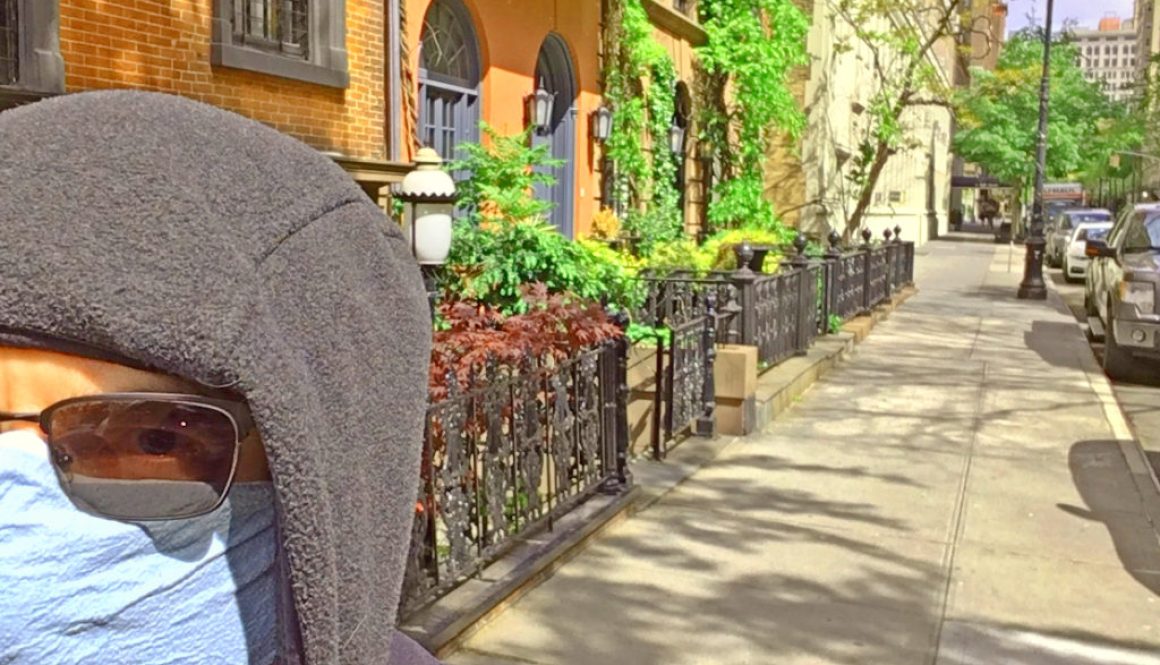
Today, May 9, 2020, it looked like a beautiful day in Greenwich Village, New York, and, at least from a distance, you could forget about the pandemic. The sun was shining, the flowers and trees were blooming.
But it was only 45 degrees, unseasonably cold, the streets were nearly empty, there were plenty of parking spaces, and the rare faces were masked. And then it started to snow. On May 9.