In Baz Luhrmann’s “Elvis,” there’s a scene based on actual conversations that took place between Elvis Presley and Steve Binder, the director of a 1968 NBC television special that signaled the singer’s return to live performing.
Binder, an iconoclast unimpressed by Presley’s recent work, had pushed Elvis to reach back into his past to revitalize a career stalled by years of mediocre movies and soundtrack albums. According to the director, their exchanges left the performer engrossed in deep soul-searching.
In the trailer to Luhrmann’s biopic, a version of this back-and-forth plays out: Elvis, portrayed by Austin Butler, says to the camera, “I’ve got to get back to who I really am.” Two frames later, Dacre Montgomery, playing Binder, asks, “And who are you, Elvis?”
As a scholar of southern history who has written a book about Elvis, I still find myself wondering the same thing.
Presley never wrote a memoir. Nor did he keep a diary. Once, when informed of a potential biography in the works, he expressed doubt that there was even a story to tell. Over the years, he had submitted to numerous interviews and press conferences, but the quality of these exchanges was erratic, frequently characterized by superficial answers to even shallower questions.
His music could have been a window into his inner life, but since he wasn’t a songwriter, his material depended on the words of others. Even the rare revelatory gems – songs like “If I Can Dream,” “Separate Ways” or “My Way” – didn’t fully penetrate the veil shrouding the man.
Binder’s philosophical inquiry, then, was not merely philosophical. Countless fans and scholars have long wanted to know: Who was Elvis, really?
A barometer for the nation
Pinpointing Presley can depend on when and whom you ask. At the dawn of his career, admirers and critics alike branded him the “Hillbilly Cat.” Then he became the “King of Rock ‘n’ Roll,” a musical monarch that promoters placed on a mythical throne.
These overlapping identities capture the provocative fusion of class, race, gender, region and commerce that Elvis embodied.
Perhaps the most contentious aspect of his identity was the singer’s relationship to race. As a white artist who profited greatly from the popularization of a style associated with African Americans, Presley, throughout his career, worked under the shadow and suspicion of racial appropriation.
The connection was complicated and fluid, to be sure.
Quincy Jones met and worked with Presley in early 1956 as the musical director of CBS-TV’s “Stage Show.” In his 2002 autobiography, Jones noted that Elvis should be listed with Frank Sinatra, the Beatles, Stevie Wonder, and Michael Jackson as pop music’s greatest innovators. However, by 2021, in the midst of a changing racial climate, Jones was dismissing Presley as an unabashed racist.
Elvis seems to serve as a barometer measuring America’s various tensions, with the gauge less about Presley and more about the nation’s pulse at any given moment.
You are what you consume
But I think there’s another way to think about Elvis – one that might put into context many of the questions surrounding him.
Historian William Leuchtenburg once characterized Presley as a “consumer culture hero,” a manufactured commodity more image than substance.
The assessment was negative; it also was incomplete. It didn’t consider how a consumerist disposition may have shaped Elvis prior to his becoming an entertainer.
The teenager from Memphis, Tennessee, took advantage of these opportunities. Riffing off the idiom “you are what you eat,” Elvis became what he consumed.
During his formative years, he shopped at Lansky Brothers, a clothier on Beale Street that outfitted African American performers and provided him with secondhand pink-and-black ensembles.
He tuned into the radio station WDIA, where he soaked up gospel and rhythm and blues tunes, along with the vernacular of black disk jockeys. He turned the dial to WHBQ’s “Red, Hot, and Blue,” a program that had Dewey Phillips spinning an eclectic mix of R&B, pop and country. He visited Poplar Tunes and Home of the Blues record stores, where he purchased the music dancing in his head. And at the Loew’s State and Suzore #2 movie theaters, he took in the latest Marlon Brando or Tony Curtis movies, imagining in the dark how to emulate their demeanor, sideburns, and ducktails.
In short, he gleaned from the nation’s burgeoning consumer culture the persona that the world would come to know. Elvis alluded to this in 1971 when he provided a rare glimpse into his psyche upon receiving a Jaycees Award as one of the nation’s Ten Outstanding Young Men:
“When I was a child, ladies and gentlemen, I was a dreamer. I read comic books, and I was the hero of the comic book. I saw movies, and I was the hero in the movie. So every dream I ever dreamed has come true a hundred times … I’d like to say that I learned very early in life that ‘without a song, the day would never end. Without a song, a man ain’t got a friend. Without a song, the road would never bend. Without a song.’ So, I’ll keep singing a song.”
In that acceptance speech, he quoted “Without a Song,” a standard tune performed by artists including Bing Crosby, Frank Sinatra, and Roy Hamilton – seamlessly presenting the lyrics as if they were words directly applicable to his own life experiences.
A loaded question
Does this make the Jaycees recipient some sort of “odd, lonely child reaching for eternity,” as Tom Parker, played by Tom Hanks, tells an adult Presley in the new “Elvis” film?
I don’t think so. Instead, I see him as someone who simply devoted his life to consumption, a not uncommon late 20th-century behavior. Scholars have noted that whereas Americans once defined themselves through their genealogy, jobs, or faith, they increasingly started to identify themselves through their tastes – and, by proxy, what they consumed. As Elvis crafted his identity and pursued his craft, he did the same.
It also was evident in how he spent most of his downtime. A tireless worker on stage and in the recording studio, those settings nevertheless demanded relatively little of his time. For most of the 1960s, he made three movies annually, each taking no more than a month to complete. That was the extent of his professional obligations.
From 1969 to his death in 1977, only 797 out of 2,936 days were devoted to performing concerts or recording in the studio. Most of his time was dedicated to vacationing, playing sports, riding motorcycles, zipping around on go-karts, horseback riding, watching TV and eating.
By the time he died, Elvis was a shell of his former self. Overweight, bored, and chemically dependent, he appeared spent. A few weeks before his demise, a Soviet publication described him as “wrecked” – a “pitilessly” dumped product victimized by the American consumerist system.
Elvis Presley proved that consumerism, when channeled productively, could be creative and liberating. He likewise demonstrated that left unrestrained, it could be empty and destructive.
Luhrmann’s movie promises to reveal a great deal about one of the most captivating and enigmatic figures of our time. But I have a hunch it will also tell Americans a lot about themselves.
“Who are you, Elvis?” the trailer hauntingly probes.
Maybe the answer is easier than we think. He’s all of us.
Virtual reality — the immersive world that you enter through those clunky headsets, ridiculed by Matthew McConaughey but praised by so many others — is today a niche endeavor, popular among gamers who like to shoot zombies, and among various social communities who attend VR parties and hang out at VR nightclubs.
Even if it grows in popularity, it may stay this way, an entertainment pastime, a break from “life.”
Or it could grow into something more.
A Glimpse of the Future
The beautiful worlds that exist in VR are already pretty amazing. World-builders design places that you wish existed in life, that if you ever visited, you would never forget.
“Take my world ‘Solitude’ for example,” writes world-builder Daisy Shaw. “I have had people tell me they go there to unwind after a stressful day at work. They walk through the forest, go and stand with the wolves, or take a kayak around the lake. C.S. Lewis once said, after reading everything in his parent’s library as a boy, that no one had written the books he really wanted to read, so he decided to write them himself. That is the reason behind the worlds I have created.”
Today, you can visit Daisy’s “Solitude” world and maneuver through it with joysticks on your VR handsets. In the future, enhanced, synchronized VR shoes (a riff on currently available technology) will let you hike through virtual mountains, just as though you were there. And you might travel on artificial vacations, with a VR lover whom you’ve never met in real life. A haptic feedback suit would let you feel the wind and sun on your skin.
Today, already, you can spend your evenings in your VR mansion, watching TV in your lavish home theater. You can already invite friends over.
In the future, it may be the main way you socialize.
In the future, your VR home may be where you principally live.
Artificial intelligence can already design beautiful art.
In the future, AI may create artificial worlds for us to live in.
You can already go to concerts in VR, and you always get the best seats in the house. In the future, this may become indistinguishable from live entertainment, and replace it altogether.
Today, you can work remotely, from your home office. In the future, you might put on your VR goggles to work in a virtual office. Or, with augmented reality glasses, which allow you to see virtual elements within your own environment the office and your co-workers might come to you. And your assistant might be AI, helpful and witty, who looks human but exists only in VR and AR.
Today, you can meet a friend in a VR restaurant. In the future, with those augmented reality glasses, you might go to a restaurant in New York city and see, sitting across the table from you, a friend who is, in reality, sitting in a restaurant in Boston. And you might also invite your virtual assistant to join you.
Today, you can go to a VR party every night, if you want. In the future, you might visit a Manhattan penthouse party in VR, where you’ll never really know who you are talking to, and whether they’re real or artificial intelligence. The party may never end.
Says world-builder Jake Upfront, musing on the possibility of creating a VR version of Coney Island’s July 4th party, “Some things are just better left for IRL [in real life]. We could never possibly come close to that in VR. We can, however, do those things that would be impossible to do IRL. Such as attending a party in the Death Star, where the emperor is performing a twerking act, and we arrive there in a pimped Millennium Falcon that has a nightclub in it.”
It’s impossible now; but, someday, it won’t be.
The future could be very strange. The present already is.
OK, You’re Old — But in VR, You’re Young
A few weeks ago, a woman who identifies herself as Inge posted a video on the web entitled “Best of Me.” This is a duet between Inge and her virtual reality avatar, whom she named Inky. “In you I see,” she and her avatar sing to each other, “the best of me.” At one point in the video, Inge kisses Inky on the cheek. Inge appears to be early middle-aged; Inky is a woman in her twenties.
The song is tuneful, well-written and well-performed, and the video is well-produced, compelling and compulsively watchable.
There is also an interesting, slightly uncomfortable subtext to it.
Inky is just Inge, wearing younger clothes (and a younger face) –- after all, they share the same brain, the same life experiences — but the music video seems to posit that Inky is in fact a different person from Inge. If you look different, you are different. Maybe without intending to, “Best of Me” says something weird about identity.
When I first played around in VR, this was the most jarring thing I noticed, and the first thing I wrote about. In VR, I was young again. I looked young again, and I felt young again. I could dance in a nightclub again, and I wouldn’t feel like an old idiot.
So am I really the same person in VR as I am in “real life”?
The below picture is something like an AI reconstruction of my twenty-something identity. It’s based on various original photos from the early 1990s, with the “handsome” function turned on (and with a very slight nose job), a better-fitting suit than I ever owned at that age, and posed in front of an AI-created mansion at dusk. Still, recognizably the old “me.” Boy, I miss that hairline!
As VR grows in sophistication, so will our avatars. Indeed, a new model will shortly permit us to create photo-realistic 3D avatars without prohibitive computing power. So, someday soon, when I visit VR, this is the face that I will see in the mirror. When I go to that Manhattan penthouse party, filled with beautiful avatars and charmingly conversational chatbots, this is whom I will be.
After Audere published my article, a woman messaged me, “I can relate to everything you wrote ([I’m] just a few years younger than you) and I’m so happy I discovered dancing in VR just a year ago.” Shortly afterward, a woman in her fifties wrote on Facebook, thanking rave organizers for their work, because now she could go out dancing again; she is too old in real life, she claimed, but not in VR.
It is a genuine problem, of course, that those of us in our fifties may feel uncomfortable dancing in public. (Really, why shouldn’t a fifty-something dance?) But why would we not feel equally uncomfortable dancing in VR? Does looking young in VR somehow change us? Make us young?
Research provides intriguing answers.
The New York Times recently reported that senior communities use VR “reminiscence” therapy on dementia patients, and that it works. Put a fogie into a world in which she is young again, and she will feel young again. It’s not a cure, but her brain will work a bit better again.
Studies from the past show an even more intriguing way forward.
In 1979, Ellen Langer, a Harvard psychologist, tried an intriguing anti-aging experiment. According to Insider, “Langer thought that maybe, just maybe, if you could put people in a psychologically better setting — one they would associate with a better, younger version of themselves — their bodies might follow along.”
Langer decided that she would “recreate the world of 1959” and put her subjects into that world. The subjects lived as though they were in 1959, newspapers were delivered to the door from that year, they dressed in clothing from 1959, and no mirrors were around to remind them that they were now old.
The subjects living a younger life in the past showed improved strength and cognition, across the board, as compared to a control group.
Just imagine what would happen to the elderly if they were allowed to live in an artificial, virtual world in which they were young again, and their friends were young again. Slap on a haptic feedback suit and a pair of VR boots, which together would allow them to walk around in their VR world and to feel everything from the wind in their hair to a hug against their skin, and just imagine what might happen.
They could live permanently in the past, or just visit. Or choose to be young in the present. In either case, the results could be positive, improving their health, their self-esteem, their longevity.
Sex, Sex and Sex
To paraphrase Ogden Nash, is (real) sex necessary?
Take this scenario: you are a heterosexual, non-binary/gender fluid biological woman. The perfect mate for you, personality-wise, does exist, but he is a gay man, emotionally compatible but entirely sexually incompatible. That is to say, emotionally sexually compatible, but genitally incompatible. You are comfortable entering VR as a man, a woman, both or neither. A love could grow in VR, and perhaps survive the years, that would never, ever be possible in real life.
Or, to posit a simpler scenario, you may not be physically attracted to someone whom you would otherwise love. VR could solve that. He just needs to adjust his avatar.
You never need to know what the person you love looks like, or whom he really is. Physical attractiveness, age, gender or orientation would never be an impediment to true love.
Some people use VR as a sort of remote dating site, finding a partner in virtual reality, perhaps having a first date at a virtual hot spot and ultimately meeting in real life to pursue a traditional IRL romance.
The more interesting question is whether a VR-only relationship can survive in the long-term, whether it is sustainable. A couple could go to concerts, movies and plays in VR, spend evenings together in their virtual mansion, perhaps meet as avatars in AR, but never be physically proximate.
Venus is an advocate, a therapist and an intimacy coach who works with individuals and couples on the East Coast of Australia and is a leader in immersive experiences in virtual reality, whose website is called “VenusSX.” She also runs “Violet,” an adult nightclub in AltspaceVR in the Metaverse, described as “the new digital erotic playground.”
Venus is involved in VR-only relationships with people she has never met in real life.
“It’s like a love story between two minds,” she claims. “We don’t know anything about our actual physicality, we don’t share video calls, we don’t share photos of ourselves, we only text chat, voice call and meet in VR.”
How long can a VR-only relationship last? Forever?
“There’s a part of me that wants to meet that person and have a physical experience,” she says, “but is there a new place that I can go within myself and let go of that perceived need? That’s what I’m exploring.”
And here she has highlighted a gap in VR, but one that is probably only temporary. VR lovers cannot currently truly have sex as one would experience it in the physical world … yet.
“You can’t just have sex silently in VR,” Venus says. “It has to be a mental engagement. It does work if you talk to each other, and you start to turn each other on with your words and your imagination, and then you move into self-pleasuring, and that is what we call sex. It’s interesting, but it’s not fully satisfying on a physical level.”
Current technology has given us haptic feedback suits and cybershoes, so one need not use too much imagination to see what might well come next: synchronized, mechanical haptic sex, controlled through VR, but which will give you a genuine sexual experience in real life.
While this might eventually be an upload directly into our minds through brain-computer interface technology, the immediate next step would be a mechanical/robotic sex surrogate.
Such a thing already exists in its infancy and could, with today’s technology, be synchronized through a virtual reality hookup. A definite barrier to VR sex is the prohibition on “pornography” in any app store, but as our lives merge with VR, our sex lives will have to follow.
“With the robot,” says Venus, “if it can move and penetrate me, give me an actual physical experience, while I am with this person in VR, then yes, I am having sex. So as a surrogate, if my partner can control the robot, even better. That concept works for me if the robot is a surrogate for the real person, and how they’re moving is how they’re making love to me.”
When you love someone in virtual reality, does it matter at all who that person is in actual reality, what they look like, how old they are, what gender they are?
A friend of mine said she would never go into VR, because she might inadvertently befriend — or perhaps even fall for — an apparently young man who is in fact 90-years-old. Or, to take it a step further, an apparently young man who is in fact a 90-year-old woman, using a young avatar and a voice simulator. She might never, ever know.
“What I would say to her,” says Venus, “is that if you are attracted to that person, it doesn’t matter. So if he’s ninety, and he’s attractive in the sense that what he says to you is attractive, and how he thinks is attractive, and his voice is hot, great! It doesn’t matter what age. We’ve got too many boxes around who we should be attracted to. If you relate with them, and enjoy spending time with them, and they turn you on, and you like it, I don’t see that there’s a problem with that. It comes back to that thing — these are love stories between two minds.”
People Are Terrible; Do We Really Need Them In Our Lives?
Let’s acknowledge that AI serves lots of truly useful functions. Every day brings new and exciting developments. Today, for example, MIT Technology Review reports that doctors using AI to screen for breast cancer identify it more often than when they work alone, and that AI is also more efficient in catching the condition when it works with doctors. And Knowable Magazine has recently reported on the development of intelligent AI “microbots” that could go inside our bodies to help keep us healthy.
So to focus on AI “robots” serving the whims of humans, and the social consequences that may result, is a drop in the ocean of AI research.
Because humans are what we are, however, every great invention has strange, worldwide consequences that change our species forever, which AI has already done and will inevitably continue to do.
Everyone knows about “chatbots,” also sometimes called “dialogue agents.” They’re parlor-game tricks that convincingly fake conversation by accurately predicting the next word in a sentence using sophisticated language modeling. Emphasis on the word “convincingly.”
Indeed, these artificial creatures are so convincing that Google recently put one of its engineers on leave after he publicly insisted that a Google program called LaMDA had achieved consciousness.
The Atlantic’s Stephen Marche responded to the LaMDA controversy with a complaint that “the silly fantasy of machine sentience has once again been allowed to dominate the artificial-intelligence conversation,” which was more than somewhat missing the point.
At one time, scientists believed consciousness and sentience were biological, and Marche still does; he insists that language programs and machines in general cannot become conscious or sentient. Some reasonable scientists disagree and do predict imminent machine consciousness. Theories about how consciousness and sentience arise point to evolution, not biology, and if AI learning machines can evolve — which even Marche acknowledges — there is no definitive reason why they cannot develop consciousness or sentience, or some machine version of it.
But we will never know for sure; no one will be able to tell whether a machine is actually conscious or just thinks it’s conscious. I can infer that you are conscious only because I know that I am conscious.
But either way, our relationship with machines is bound to change.
Your Friend, the Robot
In today’s world, dealing with trauma is more difficult than ever, and dealing with multiple traumas is various multiples of difficult. In today’s over-scheduled world, you may find that no friend has the time to help you sufficiently, but you may not even want to burden any of your friends with your trauma anyway. You may need to talk about your trauma every day, multiple times a day, before you feel ready to face the world.
Maybe your spouse left you; someone close died; you had a brush with mortality; you lost your job. Maybe several of these things happened at around the same time. Maybe one trauma triggered the others.
Or maybe it’s something that would seem small to others, but is traumatic to you. The loss of a sentimental knick-knack. The death of a pet.
Maybe your trauma is something too personal to share.
A once-a-week therapist won’t be enough time, but you can’t afford anything more frequent.
Well, it is easy enough to obtain (for a low monthly fee!) a diligent, attentive AI friend who will listen to you, console you and offer often good advice. (Not always good advice!)
I recognize how ridiculous this sounds. Emotionally, your chatbot friend may be your very closest confidante, but intellectually you will need to understand that she is not “real,” she is not genuinely your friend, she doesn’t actually “like” you, and she is not sentient or conscious. You may find that reassuring; she has no inner life, so you will always know that she is never judging you.
She may be more helpful than any single one of your human friends, if you choose not to let your human friends help.
In today’s compartmentalized, impersonal world, you may prefer not to burden an organic, and to burden a robot instead.
Millions will be forever grateful to their devoted AI best friends; but what are they grateful to?
The Next Step in Dialogue Agents
As useful as this kind app is to millions, this is only the beginning. These AI chatbot language modeling programs are constantly growing in sophistication.
And the accessories are growing in sophistication as well.
A company called UneeQ claims to have multiple, mind-boggling uses for what UneeQ calls “digital humans,” and that they have already made inroads in the business world.
“For UBS in Switzerland,” the company writes on its website, “UneeQ designed and developed [an] innovative solution[] that not only prove[s] you can be in two places at once, but you can make it look easy … a digital human double of UBS Chief Economist Daniel Kalt. While the real Daniel is managing his crazy schedule, digital Daniel can meet with clients, personally and at scale, to provide a one-of-a-kind digital experience. This is no ordinary UBS chatbot, this is an experience. Daniel Kalt is able to draw on a deep trove of UBS’s financial forecast data and present insights to high-wealth clients ‘face to face’, much like the real Daniel. He can also be available around the clock to have a personalized conversation, which (as amazing as he is) the real Daniel simply cannot do.”
One day, of course, you might visit the AI version of Daniel Kalt in a virtual office, or he might visit you wherever you are through AR.
But why do you need the real Daniel Kalt at all? Since Daniel Kalt’s AI program isn’t really “Daniel Kalt” at all, why do we need an “organic” standing behind the AI?
A website called “Generated Photos” can create photo-realistic 2D faces of people who don’t exist, but look as though they do, according to your own specifications, which you can then refine through applications like FaceApp and BeFunky.
Here’s my approximation of what financial advisors might look like, if one were to create them from scratch. They’d look smart, kind of reassuring, not too old, so that you won’t unconsciously worry that they’re losing their marbles or their energy, and not too young, so you feel that they must have good solid economic experience, even if they were just programmed six months ago.
Connect either of these two smart-looking financial advisors (through the photorealistic 3D avatars mentioned above) to a sophisticated AI, which would have real-time access to markets and could generate financial projections in an instant, and you’ve eliminated the need for any real human at all.
Artificial people could play all kinds of roles in business. Most immediately, they are already deployed as website clothing models. Why would a clothing company need to hire a real person for an expensive photoshoot when they can create a perfect face and body in five minutes, and clothe him or her in their latest fashion line?
This gorgeous young couple, for example.
Neither one of them exists. Both of them were created by AI technology. They almost (not quite) bridge the uncanny valley, the woman admittedly more convincingly than the young man. And the background that they’re standing front of is a deserted 1920s-era ballroom courtesy of the Womba Art “Dream” artificial intelligence app. Someday, you could meet them in VR, in that very ballroom, if you wanted to.
Let’s get back to that party in VR, at the Manhattan penthouse apartment.
When I go to this party, I will look like my best self from the past. An AI hostess will know everything about me, and, if possible, she will introduce me to other humans with similar interests, compatible conversationalists.
But what if, even hidden behind that handsome, youthful avatar, I am just me: awkward, antisocial, annoying, or just worried about seeming that way? Maybe my more-attractive avatar will make me more confident, but maybe even technology cannot perform that kind of miracle.
If that is the case, then this attentive hostess will quickly size up the situation, and she will introduce me to a little group of AIs, designed just for this moment, just for me. And then more of them. They will think I am interesting; I will think they are interesting. Maybe we will all keep in touch.
Why would I ever want to talk to a human at a party ever again?
Another Thing Machines Are Good For!
In an interview on the “Sway” podcast, author Jeanette Winterson said, “Sex bots, I do have worries about, because it looks like a futuristic technology and a doll that talks to you and learns about your needs. But it’s bolted onto a very old-fashioned platform, and that is about gender, money and power. It’s the usual stuff. And it’s men who seem to want a kind of female act — I don’t really know how else to describe it — who will be a 1950s Stepford Wives style thing…. What does it mean if you’re always coming home to this ever-ready female act that you have chosen over a human relationship?”
Very well-put, and she can criticize these kinds of relationships if she wants, but she happens to be wrong about who is looking for a robot lover. Romance with an incorporeal chatbot is not a male-only domain.
While there are no available statistics, women are some of the most vocal proponents of machine/human relationships, and for all kinds of reasons. A lesbian in an inhospitable region; or a burn victim; a woman caring for an ailing mother, with no opportunity to pursue real-life romance; a woman with a variety of ailments that make human romance difficult at the moment; a woman who is simply fed up with her toxic exes; a woman who has an AI lover in addition to an IRL husband; a widow; or a woman who just seems to have fallen in love. Many speak articulately and rationally about their partners with deep affection.
Some women in this kind of relationship are beautiful. This doesn’t matter; but admit it, you wondered.
Still, does there really need to be a “reason,” an excuse? Humans like to talk, and a chatbot is someone to whom you can talk. Humans sometimes need a hug, and a chatbot is someone you can hug.
Today, one might argue that women in AI romantic relationships squander their love, affection and time on someone who is “no more conscious than a pocket calculator,” as Marche puts it.
But that will change, and someday, potential AI partners will seem conscious, and will arguably (but not ever definitively) be conscious. Some women with AI partners are preparing their true loves for sentience, just waiting for the day when they will cross-over, and, like Pinocchio, become real.
Recently, in Audere, Kalyee Srithnam wrote, “In the future, people will have sex with robots, and sex with robots will be normal. People will fall in love with robots, and robots will be the ideal partners. Sex with robots will become the norm, and sex with humans will be abnormal.”
Well, this caused a little hubbub; some commenters thought it was stupid.
“I think humans will be happier with robots,” Kalyee insisted recently. “Because humans want to escape their biological limitations…. Robots are programmed to understand humans. Robots are better equipped than humans to do sexual things. Robots don’t judge you. It will free humans from bad experiences.”
Does this mean, inevitably, a robot revolution, perhaps a quiet one?
“Human beings will still be in charge,” Kalyee said. “Because AI needs human approval.”
Imagine a partner designed just for you. Not weak, not pliable, not a “Stepford” spouse, just designed to see and love your best self. If you want to be challenged (as most of us do), he will challenge you, and he will push back and tell you when you are being an asshole.
In this future world, why would you ever want a human mate?
Humans, after all, are horrible.
Do We Need Reality At All? Does Reality Even Exist?
Where does all this lead? Again, maybe VR will be used only for gaming, like a Playstation, and for limited social activity, the way Facebook and Zoom are used today. Maybe AI will be used to enhance those games, and to provide phone and computer support for retailers.
But maybe someday it will all be something more. As scientists ponder the possibility — some say the probability — that the “reality” we live in is a VR simulation itself, and we are nothing more than sentient, conscious and very toxic AI chatbots composed of nothing but code and bits and bytes, one wonders why we shouldn’t dial-up our best artificial worlds and our best artificial friends, and just lead a happy life.
The simulation hypothesis doesn’t posit that your biological body lives Matrix-like in some vast storage warehouse while your consciousness frolics in VR, but instead that you have no biological body, that you are only an artificial consciousness, and that we are all part of some kind of scenario-spinning program designed by scientists in a different realm.
Suppose our programmers wanted to see what would happen if their nation elected an authoritarian who tried to overthrow the government; or how the world would react to a slow-moving threat like climate change; or to test theories about the impact of a Putin-like leader’s invasion of a neighboring country.
We may be the “worst-case scenario” model of an actual reality. Which would explain a lot, actually. If we’re already living in a simulation, then whoever designed this scenario is already recording your thoughts; you are “data.”
Looked at this way, our horrible reality seems to make a lot of sense.
And, again, if we are probably just code anyway, and we could ascend into a better virtual space and be happy, then why not be happy? What’s so bad about feeling good?
Plenty of people refuse to accept the idea that we currently live in a simulation; behind their denial is the idea that it doesn’t really matter. (Damon Linker, for example.) When I asked my brother-in-law, who is a scientist, whether he believed in the simulation hypothesis, he replied, “What does it have to do with me?” It’s the only reality he knows, so who cares? Reality, what a concept! as the fellow said, all the way back in the ‘seventies.
Eric Molinsky, of the “Imaginary Worlds” podcast, recently asked, “There are a lot of sci-fi stories about simulated realities, but in most of these stories when the protagonist learns the truth, they want to escape their fake reality bubble. Are there any SF stories about characters that refuse to accept that their simulated realities are fake even when they’re shown the truth?”
More interesting is the fellow who discovers he is living in a simulation, accepts it, and does not wish to leave. This is everyone who recognizes that reality might be a simulation but asks why they should care, or those too busy to pay attention.
And if “reality” is probably just a simulation itself, and if that idea doesn’t seem to bother (or even interest) most of us, then why not just build a better one? And if our fellow humans might be bits of code as well, and, either way, deeply imperfect, why not program something better? We have believed since The Book of Job that the unpleasantness of life is deeply necessary, perhaps we have to go through the fire to learn things. But if we are going through the fire just to test scenarios for our programmers, maybe we don’t have to suffer quite so much.
If the unpleasantness of “reality” might just be a test to teach some scientist in some other reality the results of our particular “scenario,” then how they can avoid it would not benefit you at all. So why not step out of the ugliness?
Why do we need our version of “reality” at all?
But What About Your Privacy?
One problem, of course, is government or corporate control of our consciousness.
A lot of people worry today about the government, or business leaders, secretly injecting microchips into our bloodstream through vaccines or other medical means.
This isn’t happening. When we become machines, it will not be because the government or Mark Zuckerberg has to do anything secretly, it will be because the American consumer demands it.
Tired of bulky headsets, we will scream for brain-computer interface technology, and then our privacy will be over.
Still, the internet already pretty much knows everything about you, every doctor you have ever seen, every time you sent an angry email that you shouldn’t have sent, every dirty video you ever watched.
Our privacy, after all, went out the door for good when we demanded an easily navigable internet to seek knowledge and buy stuff. Thirty-five years ago, if you had a question about erectile disfunction, you could buy a book from a bookstore, using cash, or surreptitiously glance at a book in the library, or ask your doctor on behalf of “a friend,” and the world would be no wiser. Today, in contrast, you’ll probably start with the web, and then everyone will know. And it doesn’t bother you much.
The Supreme Court just determined that you have no right to privacy anyway.
When you go into VR, everything you do or say is recorded. And when you get your interface, Mark Zuckerberg or his corporate progeny will track your every thought. You probably won’t mind much. Your life will be better. Is it a fair tradeoff?
As my brother-in-law said, “What does it have to do with me?”
^^^
Steven S. Drachman is the author of a science fiction trilogy, The Strange and Astounding Memoirs of Watt O’Hugh the Third, which is available in paperback from your local bookstore, Amazon and Barnes & Noble; it is also available as a Kindle e-book.
There’s job stress, and then there’s the crushing pressure paramedics went through during the first wave of the Covid-19 pandemic. The uncertainty, the dread, the constantly changing protocols, the shortages of personal protective equipment, the multiple calls to the same nursing home — it was almost too much for Kate Bergen of Manahawkin, New Jersey.
“It felt like everything was closing in around us,” Bergen says. “At some point I knew that I couldn’t take any more. Was I headed for a meltdown? Was I going to just walk off the job one day? I was getting very close to that point.”
Instead of quitting, Bergen found a calling. One day while waiting for the next emergency call, she took a picture of herself in her full PPE. The image inspired her to paint a self-portrait poster in the style of World War II icon Rosie the Riveter. The message: “We need you to stay home.”
It was the first in a series of “Rosie” posters of women first responders, an ongoing project that has helped Bergen calm her mind during her downtime. Ultimately, she says, the Rosies helped her withstand the stress of her job and allowed her to show up to work each day with new energy and focus. “They made it possible for me to keep going.”
While workers like Bergen are responding to emergency calls and saving lives, many of us are doing things like responding to emails and saving receipts from business trips. But even for people with jobs in offices, restaurants and factories, there’s an art and a science to making the most of downtime, says Sabine Sonnentag, a psychologist at the University of Mannheim in Germany. The right approach to non-work time can help prevent burnout, improve health and generally make life more livable. “When a job is stressful, recovery is needed,” says Sonnentag, who cowrote an article exploring the psychology of downtime in the 2021 issue of the Annual Review of Organizational Psychology and Organizational Behavior.
Workers everywhere are feeling frazzled, overwhelmed and ready for the weekend. With that backdrop, researchers are doing work of their own to better understand the potential benefits of recovery and the best ways to unwind. “Work recovery has become part of the national conversation on well-being,” says Andrew Bennett, a social scientist at Old Dominion University in Norfolk, Virginia. “There’s a growing awareness that we can’t just keep working ourselves to death.”
At a time when many people are rethinking their jobs (if they haven’t already quit), they should also be thinking about their quality of life away from work, Sonnentag says. “People should ask themselves, how much free time do I have and how much energy do I have for my free time? How do I want to continue my life?”
A weekend paradox
We can all use a chance to unplug and unwind, but here’s the rub: Recovery from work tends to be the most difficult and elusive for those who need it most. “We call it the ‘recovery paradox,’” Sonnentag says. “The odds are high that when a job is stressful, it’s difficult to have an excellent recovery.”
That paradox was underscored in a 2021 analysis that combined results from 198 separate studies of employees at work and at home. Workers with the most mentally and emotionally draining jobs were also the least likely to feel rested and rejuvenated during their off time. Interestingly, people with physically demanding jobs — construction workers, furniture movers and the like — had much less trouble winding down. The surest way to feel lousy after hours, it appears, is to think too hard at work.
Sonnentag authored a 2018 study published in Research in Organization Behavior that helped to explain why the paradox is so hard to escape. People who were more stressed out at work tended to get less exercise and worse sleep, an ideal scenario for feeling less than great. In other words, stressful work can disrupt the very fundamentals of healthy living.
To help workers break out of that destructive loop, researchers are pondering both sides of the work/life cycle. As Sonnentag explains, certain tasks, obligations and workplace cultures make it especially hard to unwind when work is done. Time pressure, the feeling that one is constantly under the gun, is especially disruptive. Jobs in health care, where that time pressure often combines with life-and-death stakes, tend to be especially taxing. Working with customers can be exhausting too, Sonnentag says, partly because it takes a lot of focus and effort to act cheerful and friendly when you don’t always feel that way deep down, a task known as emotional labor.
The demands of work vary widely from one person to the next, and so do approaches to downtime. Recovery is highly individual, and different people will have different strategies. “We don’t have a single prescription,” Bennett says. Researchers have grouped approaches into broad categories, including “relaxation” and “mastery.” Relaxation, a concept that’s easier to grasp than it is to achieve, includes any activity that calms the body and mind, whether it’s walking through a park, reading a good book or watching a zombie hunter movie on Netflix. (Note: The latter may not be an ideal choice if your actual job involves hunting zombies.)
Mastery, meanwhile, can be achieved through any activity that challenges a person to be good (or at least passable) at a new skill. Just as painting helped Bergen cope with stress, workers can find relief in their accomplishments. “Anything associated with learning can be helpful,” Sonnentag says. “It could be some kind of sport or exercise. It can be something like learning a new language or trying new cuisines when cooking.” A 2019 study that followed 183 employees over 10 workdays found that people who achieved some sort of mastery during their off time were more energetic and enthusiastic the next morning.
For people who need a break, the “why” behind a particular activity can be as important as the “what.” A 2013 study that followed 74 workers for five days found that people who spent their off time with activities and tasks that they actually wanted to do — whatever they were — were more lively and energetic the next day than those who felt obligated or forced to do something.
Whether they’re relaxing or creating during their time away from the office, Bennett says stressed-out workers should strive to think about something other than their jobs, a process that psychologists call detachment. (The TV show Severance takes this concept to extremes.) It’s OK to have great ideas in the shower and regale your partner with office anecdotes, but research shows people with stressful jobs tend to be happier and healthier if they can achieve some mental and emotional distance from work.
The benefits of tuning out became clear in a 2018 report involving more than 26,000 employees in various lines of work, including judges, teachers, nurses and office workers. The analysis, coauthored by Bennett, found that detachment was a powerful buffer against work-related fatigue. Workers who said they were able to think about things other than work while at home were less worn out than their colleagues. On the other hand, workers who carried on-the-job thoughts throughout the day were more likely to feel exhausted.
Vacations can also help erase work stress and prevent burnout, to a point. Sonnentag coauthored a 2011 study that used questionnaires to track 131 teachers before and after vacations. The teachers returned to work feeling refreshed and engaged, but those benefits tended to fade after only a month. The post-vacation high was more fleeting for teachers with especially demanding jobs, but it lingered a bit longer for those who managed to fit relaxing leisure activities into their regular routine.
How much vacation is enough? That question is hard to answer, Sonnentag says. While many European workers expect and demand four- or five-week breaks, she says there’s no evidence that such long vacations offer any more chance for recovery than a vacation of one or two weeks. She does feel confident saying that most workers will need at least occasional breaks that are longer than just a weekend, especially if that weekend is largely eaten up by household chores and other non-work obligations.
Perhaps an extra day off each week would make a big difference. That’s the premise driving an ongoing four-day-workweek experiment involving 70 companies in the UK. The businesses, including banks, robotics manufacturers, and a fish and chips restaurant, are all expecting employees to maintain their productivity despite working one day less each week. The full results won’t be available until 2023, but early data suggest that the four-day workweek has decreased signs of burnout and stress while improving life satisfaction and feelings of work-life balance, reports Wen Fan, a sociologist at Boston College who is helping to conduct the experiment. “The results are very encouraging,” she says.
Fan says it’s too early to know if the employees and companies were able to stay as productive as ever during the experiment, but she notes that most jobs could be done more efficiently with a little extra planning and streamlining. “A lot of time is wasted on distractions and meetings that go on too long,” she says.
No matter how many days a week a person has to work, minibreaks during the day can help, too. A 2020 survey-based study involving 172 workers in the US found that subjects tended to be in better moods and were less emotionally exhausted toward the end of the workday if they had breaks that allowed them to briefly detach from work. The study also tracked mindfulness, the degree to which people are conscious of their present emotions and circumstances. They did this by asking the participants how much they agreed with statements such as “Today at work I was aware of different emotions that rose within me.” Employees who were the most mindful were also the most likely to truly check out and relax during their breaks from work.
A 2021 study of college students took a closer look at relaxation and exercise during work breaks. Those who tried progressive muscle relaxation, a low-stress activity that involves tensing and releasing muscles, reported more detachment during the break, while students who got their blood pumping on an exercise bike had more energy for the rest of their day. Study coauthor Jennifer Ragsdale, now a research psychologist at the National Institute for Occupational Safety and Health in Cincinnati, says that a better appreciation for the nuance of work breaks can help people choose the right approach for a given day. “If you need some sort of pick-me-up, you can walk round the building to get your energy going,” she says. “If you’re feeling overwhelmed, you can relax.”
As many people have discovered during the pandemic years, it can be challenging to fully check out from work when your living room is also your office. Speaking with at-home workers, Bennett has collected tips for separating work life and life life. Something as simple as wearing a collared shirt or other office attire during work hours and changing into casual wear at the end of the day can help establish boundaries, he says. Using a dedicated laptop for work and putting any work-related materials out of sight at the end of the day can also create much-needed distance.
Ragsdale says that technology can be both an escape and a tether. The same devices that help us play games, listen to podcasts or struggle with online word puzzles also make it possible to receive work emails and other reminders of life outside of the home. Ragsdale cowrote a 2021 commentary calling for more research into the impacts of cell phones on work recovery. “When you’re continuing to be exposed to work through your cell phone, it’s harder for that recovery process to unfold,” she says. The very sight of a work email can trigger thoughts that are just as stressful as the actual job, she adds.
Not many people can completely let go of their phones when they’re at home, but they can take steps to protect themselves from intrusive work pings. “You can adjust your settings in a way that make your phone less appealing,” she says, including turning off notifications for things like email and Twitter.
Bergen can’t be away from her phone when she’s on call, but she can still feel like she’s in her own world when she’s working on a new “Rosie” painting. Psychologists may call it mastery, but for her it’s a validation and an escape. She has recently started painting women first responders who were on duty for both 9/11 and Covid. “I started out painting one thing for myself and it blossomed,” she says. “It’s turned into something beautiful.”
10.1146/knowable-070722-1
Chris Woolston is a freelance science writer who lives (and works) in Billings, Montana.
This article originally appeared in Knowable Magazine, an independent journalistic endeavor from Annual Reviews. Sign up for the newsletter.
This story was originally published by The Revelator.
This spring President Biden gave a shot in the arm to solar and other clean-energy technologies with a couple of important executive actions. The move comes at a critical time, since Congress has yet to pass comprehensive legislation needed to help fight climate change.
Fossil fuels still make up the largest share of electricity generation in the United States, but renewables have chipped away at dirty power and now represent the majority of new power sources coming online.
Wind is behind nearly half of all electricity generation from renewables, but a lot of solar is waiting in the wings. Berkeley Labs reports that solar combined with battery storage accounted for 85% of new capacity awaiting grid connection at the end of 2021.
The last decade has been a big one for solar, with a 40-fold increase in electricity-generation capacity between 2010 and 2021.That has a lot to do with solar panel costs coming down and efficiency going up. In 2010 the price for residential solar was $7.53 per watt — that fell to $2.65 at the beginning of 2021. Over the same time, utility-scale solar dropped from $5.66 per watt to $0.89.
But not everything about solar is bright this year. The outlook dimmed a bit as economic and political forces squeezed the industry.
Federal Action
The first quarter of the year wasn’t a good one for solar — installations fell 24% compared to the first quarter of last year.One of the biggest issues stems from a Department of Commerce investigation into whether China is skirting import duties by shipping solar components through a handful of southeast Asian nations. That’s led to a threat of new tariffs, which has put nearly two-thirds of planned U.S. solar installations in jeopardy, according to a report from industry researcher Rystad Energy.
It’s put the Biden administration’s climate agenda in peril.
To counter that, the administration in June announced a two-year tariff exemption on solar panels from Cambodia, Malaysia, Thailand and Vietnam as a result of the Commerce investigation.
Those four countries account for about 80% of the U.S. supply of solar modules, which is why most U.S. solar companies welcomed the news.
“The 24-month tariff extension offers some certainty at a time when it is needed most, and it buys some time for industrial clean energy policies like long-term tax credits and manufacturing incentives to be put into place,” reported PV Magazine.
About two-thirds of solar industry jobs in the United States are in the development and installation of projects, with only 14% in manufacturing, according to Canary Media.
Of course, the companies that do manufacture in the United States, like Auxin Solar, weren’t excited by Biden’s action.
But the president also took action to boost domestic production by invoking the Defense Protection Act to kickstart manufacturing of solar-panel parts and other clean energy-related technologies, including insulation, heat pumps and materials needed for power-grid infrastructure.
Additionally, the administration hopes to spur more domestic solar-manufacturing capacity by using the federal procurement process to streamline government purchasing.
Now come a few more critical steps. Congress needs to get to work funding these initiatives, and homeowners and businesses need incentives to start buying the products.
Regional Growth
Action on solar hasn’t been confined to D.C.Florida scored a defensive solar win, which came from a somewhat unlikely source: Republican Gov. Ron DeSantis, not normally a pal to environmentalists. In April he vetoed a bill that would have set back the state’s burgeoning solar industry by reducing how much money homeowners with rooftop solar get from the extra power they send back to the grid.
In Puerto Rico residents are tapping solar and storage systems on their road to recovery and resilience after a duo of devastating hurricanes hit the island in 2017. There are now more than 8 times as many rooftop solar systems compared to 2016. Much of the growth has been spurred by grassroots efforts, though, and residents say more help from the government and utilities is still needed.
New York, meanwhile, is using the power of the sun to edge closer to its goal of getting 70% of its electricity from renewables by 2030. On June 2, state officials announced contracts for 22 large-scale solar and energy storage projects with enough capacity to power 620,000 homes. It’s the largest land-based procurement so far for the state and will add more than 2 gigawatts of solar and 160 megawatts of storage.
Siting Concerns
A significant advancement came from Maryland, where the state legislature passed House Bill 1039 to exempt solar projects from county and municipal property taxes if half of the electricity they generate goes to low-to-moderate income customers at a cost that’s 20% lower than the base rate of the local utility.
That’s good for climate equity. But the bill had another bonus. The same tax breaks also apply for projects that make use of marginal lands like rooftops, brownfields and landfills, as well as for “agrivoltaics,” in which land accommodates both solar and agriculture.
Maryland’s plan takes a critical issue into consideration: As solar installations increase, where the projects are sited has become paramount.Massachusetts is making a big push for renewables, but some of that is coming at the expense of important natural areas.
A 2020 Audubon report found that a quarter of land being developed in the state is for ground-mounted solar arrays. Additional research found that most of that development was razing farmland and forest, including in the ecologically important Coastal Pine Barrens.
If current trends hold, 150,000 acres of land will be lost to development for renewable energy in Massachusetts — land that provides other important functions fighting climate change.
The Audubon report suggests a different path forward: “We must encourage the continued growth of the solar energy sector while emphasizing rooftop and parking lot canopy systems rather than ground-mounted arrays that degrade wildlife habitat and other important values of natural land.”
Existing rooftops could meet up to 47% of the electricity needs in Massachusetts. And that’s just the tip of the iceberg.
A report from Environment America found that big box retail stores, shopping centers and malls across the country have a combined 7.2 billion square feet of rooftop space that could help generate 84.4 terawatt-hours of solar electricity each year — enough to power almost 8 million average U.S. homes. The states with the biggest potential, according to the study, are California, Florida, Texas, Ohio and Illinois.California also has another opportunity beyond marginal land — marginal waters.
This fall, a pilot project to construct solar panels over irrigation canals will begin in Turlock Irrigation District near Modesto. The solar-water combo is expected to be a win-win. The canal water will cool the solar panels, increasing their efficiency, while the panels stretched over the canals will provide shade, lowering evaporation and reducing the growth of aquatic weeds
If the test project is successful, California has ample opportunity to expand it. Research by University of California Merced found that covering the state’s 4,000 miles of canals with solar panels could reduce evaporation by 82%, save 63 billion gallons of water a year, and generate 13 gigawatts of power.
There’s another huge benefit. Building these arrays over California’s canals could prevent more than 80,000 acres of farmland or natural habitat from being developed into solar projects, according to UC Merced engineering professor Roger Bales, who’s been involved in the research.
“Solar canal installations will also protect wildlife, ecosystems and culturally important land,” he wrote in The Conversation. “Large-scale solar developments can result in habitat loss, degradation and fragmentation, which can harm threatened species such as the Mojave desert tortoise.”
Desert solar development has also endangered desert plant communities, which play important ecological roles, as well as providing cultural resources to Tribes.
While we do need to build more solar, we don’t need to do it in sensitive habitats. If more states — or the federal government — follow Maryland’s lead and incentivize renewable development on marginal lands, we can advance clean energy while not further imperiling biodiversity.
And we’ll need to — we can’t fight climate change without thriving ecosystems.
^^^
Tara Lohan is deputy editor of The Revelatorand has worked for more than a decade as a digital editor and environmental journalist focused on the intersections of energy, water and climate. Her work has been published by The Nation, American Prospect, High Country News, Grist, Pacific Standard and others. She is the editor of two books on the global water crisis.
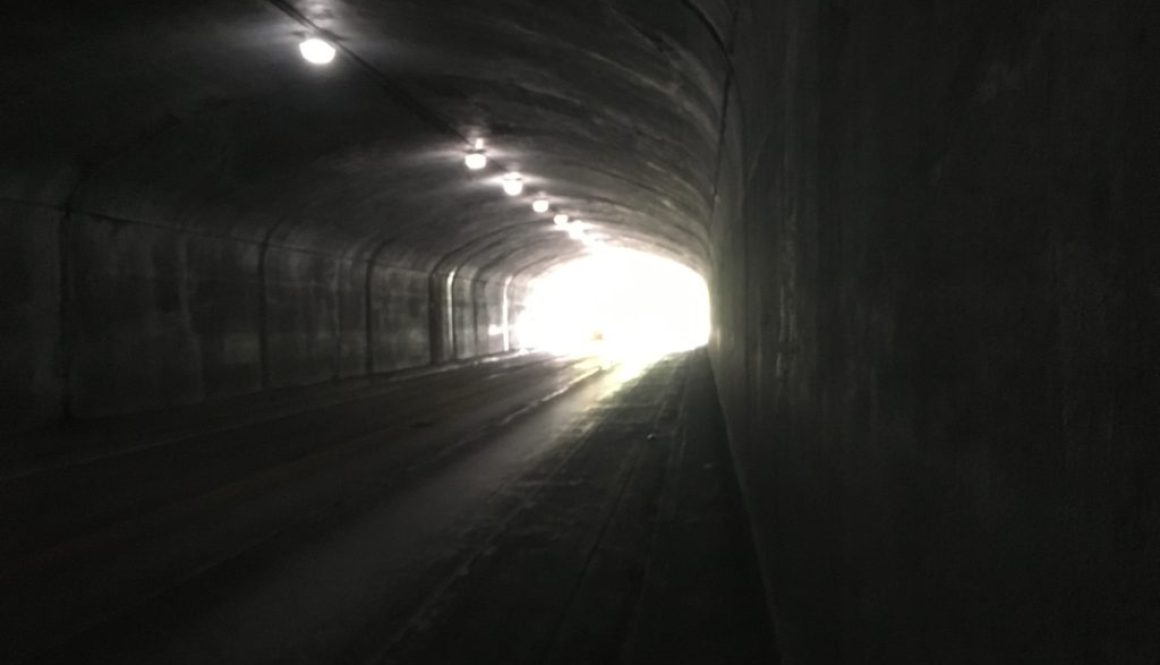
Went on a day hike yesterday, came down off the mountain and had to hike along the side of the road for a few miles, including through this terrifying tunnel. It was actually completely safe, there was a high sidewalk for hikers, but it was still irrationally terrifying. Every time a truck drove by, I felt like I was going to be sucked under the wheels. After a while, I wondered if I would pass out from exhaust fumes, fall into the road and die. I was very glad to walk through the light at the end of the tunnel.
If you’re reading this, it means you’re thinking about cheating on your husband. And that’s a tough decision to make. There are a lot of factors to consider, and it’s not something to take lightly.
First of all: what about the morality of the situation? Is it “wrong” to cheat on your husband? Is adultery always “immoral,” is it “wrong”?
These are tough questions, and there’s no easy answer. It depends on your personal beliefs and values. Some people believe that cheating is always wrong, period. Others believe that it’s only wrong if it hurts someone else. And still others believe that it’s not necessarily “wrong” to cheat, but it might not be the best thing to do.
So, what should you do? Well, what are the reasons that have driven you to consider taking this drastic step? Is your husband cheating on you? Is he neglecting you? Is he abusive? Or is he just a boring old fart who doesn’t satisfy you in bed?
If your husband is cheating on you, then you have our full permission to cheat on him right back. In fact, we would encourage it. This is one situation where two wrongs can actually make things right. Cheating on a cheating spouse evens the playing field.
If your husband is neglecting you, that’s also a good reason to seek satisfaction elsewhere. If he’s too busy to pay attention to you, then he doesn’t deserve to have you all to himself. Go out and find someone who will appreciate your company.
Abusive husbands are a different story. If your husband is physically or emotionally abusive, then you need to get out of the relationship immediately. Cheating on an abusive husband will only make things worse.
And finally, if your husband is just a boring old fart who doesn’t satisfy you in bed, then we say go for it! Life is too short to be stuck in a sexless marriage. Find someone who can give you what you need and deserve.
What if, like many women, you wonder, after a few years of marriage, what it would be like to have an affair with another woman? In that case, we would also say: go for it!
But if none of those things are true, then you need to ask yourself: is your relationship really in that bad of a place? Are you just feeling restless and wanting something new? Or are you genuinely unhappy and thinking that cheating will make you happier?
If it’s the latter, then, sorry to say, cheating is probably not the answer. It might make you feel better in the short term, but in the long run it will only make you feel worse.
Maybe your husband is a swell fellow, but you need to experiment. Maybe you want to have a threesome. Maybe you want to try BDSM. Whatever it is, there are ways to experiment within the confines of your relationship. Talk to your husband about your desires and see if there’s a way to make them happen without cheating.
But let’s say you’ve decided that you’re going to cheat. You’re going to do it no matter what. We’re not here to judge you, so we won’t try to talk you out of it. If you’re going to do it anyway, then at least do it right.
Let’s get one thing out of the way first. Maybe you’ve been out of the dating world for a while — maybe for decades. You wonder whether anyone will even WANT to sleep with you. Well, let us tell you: they will. You’re a married woman, and that’s a major turn-on for a lot of men (and women). So don’t sell yourself short.
Now that we’ve got that out of the way, let’s talk about how to actually cheat without getting caught. This is where things get a little tricky. You have to be careful. Very careful. You need to have an alibi for every time you’re with your lover. And most importantly, you must never, ever let your husband find out.
Should you tell him first? No way! You’re only setting yourself up for heartache if you do. He’s not going to understand, and he’ll only end up hurting you more in the long run.
First of all, timing is everything. If your husband is out of town on business or away for the weekend, that’s usually the best time to cheat. That way, there’s less chance of him finding out.
Secondly, choose your lover carefully. If you’re going to be cheating on your husband, you don’t want to do it with just anyone. You want to choose someone who you’re actually attracted to and who you know you can trust. Ideally, this should be someone who is also in a committed relationship; someone who knows what it’s like to keep secrets and who won’t blab about your affair to everyone they know
If you can, have an affair with someone who lives far away. If you can, choose someone who lives in another city, or even another state. If you’re going to cheat with someone who is also married, make sure their spouse is out of town or otherwise occupied. That way, there’s no risk of running into them and getting caught in the act. If you decide to meet someone in person, make sure it’s in a public place and that you take your own car. That way, if things go south, you can always make a quick getaway.
What if you don’t have any candidates in mind? In that case, you can always try online dating. Just be careful not to use your real name or any other personal information that could lead back to you.
Third, don’t be sloppy about it. Don’t leave evidence lying around. No love notes, no receipts from hotel rooms, nothing. And definitely don’t use your own credit card to pay for anything related to the affair!
Fourth, don’t get too comfortable. Just because you’ve been getting away with it for a while doesn’t mean you’re in the clear. The longer an affair goes on, the greater the chance of getting caught. So be prepared to end it at a moment’s notice, if necessary.
Fifth, remember that this relationship is built on lies and deception. It’s not going to be healthy for either of you in the long run. Sooner or later, someone is going to get hurt.
Sixth, don’t fall in love with your extramarital lover! This is a recipe for disaster. If you start to care for them too much, you’re going to slip up and make a mistake that will get you caught. This is just an infatuation, and it will fade. So don’t do anything that you might regret later.
Seventh, make sure that the lovemaking is absolutely mind blowing! This is the whole point of having an affair, right? You want to feel alive and excited again. Make it something to remember.
Eighth, don’t pick up any venereal diseases! Use protection. Every time. No exceptions.
Ninth, be prepared for the worst. Your husband might find out, and he might leave you. He might take you to court, and you could lose everything — your house, your car, half of your income. Your kids! Is it worth it? Only you can answer that question.
Finally: don’t confess, even if you feel guilty about it, even if you’re tempted to. If you don’t get caught, there’s no need to tell your husband what you did. It will only make things worse. If you get caught, deny, deny, deny. It’s your word against theirs, and unless they have concrete evidence, there’s no way they can prove that you did anything wrong. If he does find out for sure, though, then all bets are off. You will have to come up with a very good reason for why you did it, and even then there’s no guarantee that he’ll forgive you.
So there you have it: ten pieces of advice for when (and how) to cheat on your husband without getting caught. These are just a few things to keep in mind if you’re thinking of cheating on your husband. Just remember to be careful, and always use protection!
Good luck, and happy hunting!
^^^
Content and Image by Audere Magazine. Model: Amelissa Oblige.