[Editor’s Note: This week, NFL Commissioner Roger Goodell announced that the NFL has “moved on” from Colin Kaepernick, the great QB who dared to speak out about violence against African-Americans. At Audere, some of us feel that the blacklisting of Colin Kaepernick is a tragedy and an outrage, and many others agree. In the Atlantic, Jemele Hill wrote, “The league’s clumsy treatment of Kaepernick only showed what the quarterback’s supporters have been saying all along: The NFL is unwilling to tolerate black athletes’ outrage, outspokenness, and desire to exercise their power — even though all three are entirely justified.” The late Alan N. Levy, the novelist, who wrote columns for Audere and The Times of Israel, would not have agreed. As it happens, he wrote his very last column on the subject of Colin Kaepernic, just days before his death. We didn’t publish this at the time. But given the newsworthiness of the subject this week, and our personal respect for Alan, we are publishing it now. This column doesn’t reflect the opinion of Audere Magazine or Chickadee Prince Books. As much as we may disagree with his ideas here, he deserves to make his view known.]
Alan N. Levy: If we’re going to put one of these sort-of-look-alike gentlemen on a pedestal, please let it be the guy on the left [see above]. Ironically, this nation is great, and not because of the likes of Abraham Lincoln.
Surely he was a great president, and yes he had a way with words … any doubts, any newbies? Read the Gettysburg Address, one of the most profoundly written and moving speeches in the history of mankind. And, oh, by the way, the guy on the right carried the Union to a victory over the Confederacy in a bloody civil war that left more than 620,000 dead. Colin, now THAT was a Super Bowl.
No, Colin, this nation is great because of you. Not because of your position on things, and certainly not because you choose to show complete disrespect for this nation by kneeling while our national anthem is being played. And certainly not because of your questionable skill set or your mediocre gridiron accomplishments. This nation is great because we tolerate you, we listen to you, we allow you the right to free speech that more than 400,000 marked graves at Arlington National Cemetery have assured you. We tolerate you, and we tolerate anarchists. We tolerate the American Nazi Party moronic zealots and the Socialists, who, at least in my view, represent the North and South poles in a polarized nation.
So you don’t like the Betsy Ross flag. And you don’t like this and you don’t like that. Then work to change things. Become a force to be reckoned with, within whichever political party you may choose. We each have the power to exercise influence, we each have the ability to share our passion with others and transform thought processes and lives. Be more than a protestor; that’s all I ask.
Many years ago, I was a Service Director at a dealership in Atlanta. A customer pulled onto the service lane, and one of our porters greeted him before a Service Consultant could do so. The porter walked up to the customer, said something, and then shook his hand. When the customer walked inside, he very politely asked the Service Consultant if he might first have a word with me. The man was ushered into my office, and he closed the door.
I suggested he take a seat, and he replied that he preferred to stand. It was then that I noticed the anger seething within him, preparing to boil over.
He said, “Sir, I come from an impoverished childhood. But I realized at a very early age that the only salvation I had, the only thing that might pull me out of the ghetto, was an education. My Master’s Degree is from Georgia Tech, I have a loving family, and I am blessed to be able to assist my mother now, in return for all those years we struggled so mightily. I am a vice-president of a company here in Atlanta, and your porter, that poorly-trained young man, and I blame you for all this, sir, had the audacity to greet me outside with his version of a ghetto handshake and some sophomoric quip that he assumes has created a bond between us.”
As he turned to leave my office, he added, ”And please don’t insult me by assuming I’m just another average customer who’s complaining in order to get a free service here or a token discount. I intend to pay my bill, in full, but I shall never return.”
Embarrassment completely engulfed me. I’m a Jew, I comprehend prejudice and social injustice. I seethe at bigotry and the arrogant assumption that a people decides another group is inferior. In German, the word associated with that concept is “niedermenschen,” one of the most disparaging terms in that language. I contemplated joining that outraged man in the customer lounge, in order to explain that I grew up in a one-room apartment and that my parents’ bed dropped down from a wall. Of course, I didn’t do that, because the chasm between us would have widened. My personal contact with prejudice is primarily historical in nature, with few, although highly unpleasant, direct personal encounters. The black man in our society and his experience with prejudice is not only direct, but is normally a daily occurrence.
Can a white man like me possibly comprehend what moves Colin Kaepernick? Not completely, because the two of us grew up in different sides of this nation. But did I catch a glimpse of that, in the intensity of the man before me in my office that morning? Yes, I did.
Colin, you may think it a victory to convince Nike to cease sale of sneakers with a circle of stars on their label, but it was not. That’s not the way to change the world or to eliminate bigotry and prejudice in this nation.
Do better than to merely protest, Colin. One man can do great things.
Just look to Lincoln as the man you should aspire to be.
And if you ponder how to begin your journey within the law, of course, your battle cry is already there.
Just do it.
^^^
Alan N. Levy, who died in 2019, was a political columnist at Audere and blogger at The Times of Israel, and the author of The Tenth Plague, an acclaimed geo-political thriller that focuses on a future with a nuclear-armed Iran, published in September from Chickadee Prince Books. The book is available right now in paperback at your local bookstore, from Amazon and B&N, and also on Kindle.
I can still visit the Sumptuary Restaurant on Third Avenue in the East 20s, and eat delicious roast duck in a beautiful and whimsical dining room. (The Sumptuary Restaurant was fairly inexpensive although elegant, in keeping with its name, which the owners insisted denoted the right of all members of the public to a luxurious enjoyment, within appropriate limits.) Downstairs, they served only potatoes.
The next day, I could visit E-Wok, the great Taiwanese restaurant with the terrible pun for a name, where the waiters will light the burners in the middle of our table and make us something that they called “Stony Wok,” a weird soup with tarot root and quail eggs, and other stuff, which I don’t remember.
It was all there in 1987, when I lived on East 29th Street, but it isn’t there anymore.
In this other universe, I could bring my kids there, who would still be little (or who maybe could be little every once in a while), and they’d read the latest Wonder Kids book, and I’d read my copy of Islands Magazine. (I was a charter subscriber to Islands, a great magazine which now survives only as a kind of tacky online listicle, a pale shadow of its former, elaborate, thoughtful and beautifully illustrated self.) We could go see a movie in Chinatown, at the Music Palace Theater, or at the strange theater right under the train tracks. Remember that place?
In the evening, I could catch a band at CBGBs, if the Village Voice said there was something good to hear, listen to some jazz at the West End on Broadway (the West End, which opened in 1911, provided booze and shelter to Ginsburg and Kerouac – who could have imagined that it would ever close?) or bang on some cans at the extremely odd Landmark Pub in Park Slope.
I guess things change.
***
Oblivioni is a blog about “Obscure or Overlooked Books, Movies, People, Television, Artwork and Whatever.” Read more here.
I first saw Robyn Hitchcock in Manhattan sometime in the early or mid-1980s; maybe it was at the Peppermint Lounge. If so, it was before 1985 (when the joint finally shut down for good). I know that Mike Chandler and his band, The Raunch Hands, were the opening act, because that’s who I came to see. But I left, that night, as a devoted Hitchcockian.
So it was nice to see Hitchcock perform on Thursday in Brooklyn at a club called Murmrr. (Well, it’s a pretend club called Murmrr. It was really the sanctuary of a huge old shul, but everyone mostly pretended it wasn’t a shul.) Tanya Donelly was originally slated to open, but she cancelled due to laryngitis, and as a result, fans got twice as much Hitchcock.
In the many many years since it became clear that he would never be a household name, Hitchcock has built an enthusiastic cult, which is based as much on his off-kilter personality and stream of consciousness narration as it is on his catchy folk-new-wavy tunes. His instructions to “Justin” in the sound-booth were amusingly bizarre (“Justin,” he urged at one point, “for this next song, make me sound like an asparagus”), as were his rambling disquisitions on death and his one-eyed cat, Tubby, who, if you believe Hitchcock, is charged with delivering his latest music single to fans in an antique airplane.
His singing was really particularly strong (especially on The Lizard), and he dusted off pared-down versions of old favorites like “The Man Who Invented Himself,” “Balloon Man” and “One Long Pair of Eyes,” but he also highlighted his terrific new song, Sunday Never Comes from the terrific new movie, Juliet, Naked. He and his partner, the charming and talented Emma Swift, also teamed up effectively for a few Dylan standards at the end of the show.
It seems to me that if back in 1984 Hitchcock had achieved the success of, say, Howard Jones, his work today, and his relationship with his fans, could not possibly be as interesting as it is. He’s a musician who still matters.
The Final Season of The Good Place: Is it Stupid, or Deceptively Brilliant?
“Let’s hope our early success makes up for the embarrassing mess we’ve become, like Facebook, or America.” — Eleanor Shelstrop
Spoilers for Season 1 and the Final Season of the Good Place Follow
Oh for the days when a TV critic could actually write about a TV show without having to warn his audience that he might actually say something about the show.
Spoiler alert! The Mary Tyler Moore Show is about Mary Richards, a TV producer in Minneapolis. The anchorman, Ted, is kind of stupid.
You really cannot say anything about The Good Place without spoiling it.
So here we go. In Season 1, the truly terrible Eleanor arrives in Heaven, and it soon becomes clear that she’s been mistaken for another Eleanor Shelstrop, who was a real saint. Panicked, Eleanor desperately tries to become good, soliciting the help of Chidi, a professor of philosophy. But by the end of Season 1, Eleanor realizes that this isn’t the good place at all. It’s the bad place, and it’s all been a terrifically clever kind of punishment – Hell is Hell only because of the terrible people there.
A muddled final season? Or are they setting us up?
By the final season (the first half of the season ended this past Thursday, competing with Hitchcock’s show), the show’s creators have posited that in today’s interconnected world, it is in fact impossible to be good, and that even judging any of us is terrible unfair. So the show’s characters have made a bet with the Overlords of the Hereafter: deposit a random assortment of humans into the show’s quaint streetscape, and if, sheltered from the moral quandaries of the mortal world, they quickly improve ethically, then the human race will be saved from destruction.
This idea is, indeed, completely inconsistent with the message of Season One.
Furthermore, if one believes (as religions generally do) that the mortal world’s quandaries are in fact the very test that will decide whether one gets into the Good Place, then removing the test and depositing a bunch of wretches into Heaven – skipping the test and going straight to the reward – really makes no sense at all. And from a psychological perspective, if you tell those very wretches that they’re in Heaven (that, in fact, they’re not wretched at all, they’re good), then why would they wish to improve morally?
At any rate, it’s been a boring, redundant and philosophically muddled half-season. One hopes it will improve when it returns in January.
A celebration of … North Korea? Really?
Model City Pyongyang, by Cristiano Bianchi and Kristina Drapic, is a terrific book of photography, a survey of what turns out to be the incredibly beautiful capital of North Korea. One does not need to be a “fan” of totalitarian despotism to admire the artistry here and to wonder, after all, what is the real story: how did one of the poorest, most isolated countries in the world accomplish such artistic feats of engineering?
Still a mysterious place
Is there something we do not know?
While the sites have mostly been swept clear of citizens for the photographs (how I would like to have seen the beautiful Mangyongdae Children’s Palace swarming with tykes!) there is clearly some kind of interesting life going on in this city of 3 million.
The facts do suggest some weird, completely isolated but not-entirely-unsuccessful economy in the Hermit Kingdom; we learn that a trolley token costs 5 won per trip, and that the North Korean won is worth one-nine-thousandth of a dollar. Each trolley trip in the capital city, in other words, costs a tiny fraction of a penny, and keeps the city humming.
A weird, fascinating and still-unexplored place.
^^^
Image of Mirae Scientists Street, from Model City Pyongyang.
Frank King was best known as the creator of “Gasoline Alley,” one of the earliest comic strips, and one that is still going strong after more than 100 years. But before that, he was the creator of numerous comics that lasted around a year, or even less. He began with “Jonah, a Whale for Trouble,” which ran for just a little over two months, in late 1910, in The Chicago Tribune, followed by the frog-themed “Young Teddy” (1911 to 1912), “Hi-Hopper,” (February to December 1914), “The Boy Animal Trainer,” “Here Comes Motorcycle Mike,” and so on. In 1915, he introduced this comic strip, “Bobby Make-Believe” (not to be confused with the later “Billy Make-Believe”) which concerned the heroic daydreams of a Calvin-like boy. When the more successful “Gasoline Alley” took off, King dropped “Bobby,” and it was quickly forgotten.
You know, please be forewarned: Like other strips of its time (but actually a bit moreso), “Bobby Make-Believe” could not avoid racism, but it continues to have its fans and defenders to this day. Anyway, here it is.
We first became aware of Kevin Schreck from his documentary Persistence of Vision, the story of Richard Williams’ three-decades-long effort to make his animated masterpiece, The Thief and the Cobbler. Schreck’s documentary, which recounted Williams’ loss of control over his work, was such an impressive piece of storytelling, and it was so dramatically unlikely, it could have been a great piece of fiction. (The critics agreed; the film received the sort of sweeping acclaim more seasoned filmmakers could only dream of.) Along with The Recobbled Cut, Garrett Gilchrist’s fan reconstruction, Schreck’s work helped bring attention and acclaim to a lost masterpiece. Since then, Schreck has filmed Tangent Realms: The Worlds of C.M. Kösemen, about the artist and paleontologist (among other things), and is presently trying to fund a new film, a process that has proved more complicated and expensive than expected.
AUDERE: You’re currently raising money for your documentary about Enongo Lumumba-Kasongo, a Philadelphia-based rapper. How did you come across her, and why do you think her story makes a great movie?
SCHRECK: I was actually going to see a rapper who I had known about since middle school perform in Manhattan, and saw that he had several openers before his set. I figured I’m already paying for the ticket, and might as well see as much as I could with an open mind. Most of the artists were nerdy white guys who looked like me and who embraced that identity and had a comedic angle to their sets, which was great and all. But the very first performer of the evening was this woman who went by the stage name “Sammus.” She was rapping about not seeing enough faces that looked like hers in the cartoons, movies, and video games she consumed as a child in the 1980s and 1990s. The second verse was a cappella, and she had tears streaming down her face, and was yelling at the top of her lungs. She had something to say, and EVERYBODY in the audience listened. But it wasn’t just the subject matter that was evocative; it was her very presence. Her set wasn’t a phony, performative sort of thing; this was raw, visceral, honest, and she was baring herself to all of us. She was completely sincere, and she was a real artist. We were all blown away. I told her that night that she was the best part of the evening. She was extremely humble and grateful, even a little shy, which surprised me, but was also a relief, I think. So the more I read about her, the more it turned out that she had a very compelling backstory, one that was simultaneously specific and complicated, but also had all of these very universal, relatable qualities.
Williams himself, with his obsessions, was a great dramatic character. What is it about Enongo that makes her a great character for a film?
Like most people, once you get to know them, you really can’t distill Enongo down to just a few labels. She’s a Black woman, she’s a first-generation American, a daughter of West African immigrants, she’s a musician who produces her own beats, while also a scholar striving to attain her doctorate at Cornell, and she loves video games and cartoons. She has mental health battles, financial concerns, anxieties about being herself, living as an artist, etc. Every anecdote and story that she shared, whether in a song or in an interview, I knew someone close to me who had experienced something extremely similar, and even multiple experiences that I personally related to, even though we come from different upbringings. So her story instantly connected to me, and had these tangible, universal truths. Like the ideas that eventually become projects of mine, Sammus was someone I couldn’t shake. I just became more and more fascinated the more I learned. The more I got to know Sammus the rapper, the more I began to learn about Enongo the person.
It seems that one of the big barriers to finishing your film is raising money for the animation. Why was it important to include animation in this film?
Enongo herself is a spectacular orator and storyteller. We shot over seven hours of interviews in just a few days during our first month of filming, and this became the backbone of what the story could be. But film is ultimately a visual medium, and while Enongo has all of these important, essential anecdotes about growing up as the only Black girl in school in Upstate New York or grappling with depression and anxiety or her worries about the future, we didn’t really have a visual record that illustrated those vital aspects of her narrative. With documentary filmmaking, you go in, see what pieces you have, see what’s missing, and try to arrange a sort of Frankenstein’s monster out of all of these disparate parts to make one cohesive, visual story. But we were lacking visuals for some of these really pivotal sections of her story. The opposite of the documentary filmmaking puzzle is a process in which you have complete control over the visuals, and that’s animation.
Did you have any hesitation in making your movie part-“cartoon”?
I love animation, but I was initially very hesitant to use it, partly because I knew it would make the film significantly more expensive, and partly because I have rarely seen animation used in live-action documentaries that was very effective. For me, it often feels very hokey and slapped on, like it was an after-thought added in desperation with little care applied to it. But you can do anything in animation, so there’s no reason not to try to make something special. It was very clear that we needed to include these sections about Enongo’s past and internal thoughts in the film to make it work. Even though most of the movie is live-action and follows her on the road and working on her next album and performing, we needed to know who she was and where she came from. So these ten or so minutes of animation constitute a small fraction of the film, but they are absolutely essential, and this animation allows us to get to a cinematic, emotional truth that was completely unattainable in live-action documentary footage because we now had complete control over the medium. As a result, the film is now twice as expensive as before, but ten times better. It does not work without the animation.
Why was it important to you that the animators be Black women?
My first priority when hiring anyone is always to find talent, and the talent I was after was people who could make hand-drawn, frame-by-frame animation. I didn’t want to go with any tweening or CG modeling; I wanted that authentic, handmade quality that truly felt like drawings coming to life. The second priority was whether or not those talented at that style of animation were available. I knew there were tons of immensely talented animators who could work freelance on this project, but I also knew that this had to be a passion project for everyone onboard. I didn’t want this to just be a gig to pay bills; I really needed some creative guidance and wisdom from whoever I was going to hire to help bring Enongo’s story to life in a very personal, honest way. I knew right from the start of making the film that it was important to get people who understood Enongo’s journey, and also that here was this artist who makes a big point to uplift and provide opportunities for Black women and people of color in her work and messages, and it would be hypocritical to her values and to my own values not try to walk the walk as best as we could. I had already experienced this while filming with Sammus on tour, too. When we would hire freelance camera operators, the best footage came from the cinematographers who didn’t necessarily have the fanciest gear or the longest resume, but from the cinematographers who understood the subject matter, cared about the subject matter, and did their very best to show that they were capable of making this project as good as it could be. And more often than not, those people were Black or women or people of color. They were literally the best for the job because they did the best on the job, and those were the people that I would rehire.
Therefore, I wanted to try the same when animation started to become a necessity.
Where did you find all these animation collaborators?
Just to see what I might find, as an experiment, I would casually ask friends if they knew any Black women in animation. Some didn’t, some did. But there were TONS of them. There was hardly any shortage of them to be found. I found our entire crew in about two or three nights of casual Internet searching. They’re out there, and their work is superb. And I wasn’t about to hire just anyone who was a Black woman animator; they had to fit all of our criteria: they had to be skillful at the style we were trying to achieve, they had to be available, and they had to really care about the subject matter. That last part was essential, because they weren’t just going to make drawings move as animators; they would also have to pitch their visualized story to me, draft the storyboards, design characters, props, and environments. They essentially had to make their own short animated film nestled inside of a bigger documentary project, and that kind of work isn’t just a gig, it’s a real commitment.
Do you think matters that you, the director of the movie, is neither Black nor female?
I’m just some dorky white guy from Minnesota, so while I relate to a lot of Enongo’s journey, I don’t know exactly what it was like to have the experiences she had. It’s good to be humble to that reality, but it’s also wise to collaborate with folks who know something about these experiences. These animators truly related to the material, and were kind of cast as such like actors are to a role. Each animator is working on a chapter of Enongo’s life that they personally connect with: the artists who found inspiration and refuge in video games during childhood are working on sequences about that; the artists who have dealt with mental health and trauma are bringing those sections to life; the artists who grapple with balancing academia and art and family in their lives much like Enongo are animating and boarding those scenes. They are putting themselves into the story while telling our protagonist’s story, and I needed that authenticity to make it work. It’s not just in animation on Enongo; women and people of color and especially Black women are our crew’s majority throughout the film, in cinematography, production, music, even outreach and fundraising. They have proven that they are the best for the job, and I am immensely humbled and fortunate to have this opportunity to collaborate with these talented artists and storytellers. They get it and they can do it.
Your films, so far, seem designed to give attention to otherwise obscure artists, or obscure art. While Richard Williams was not himself obscure, you chose the most obscure thing about his life – his unfinished film – rather than his many moments of triumph.
I’ve actually rarely thought of these artists as obscure. I suppose their relative obscurity is an afterthought for me. The creative process and its trials and tribulations certainly appeal to me, but my goal is always to tell a good story, and that all boils down to the human element. So whether an artist is famous or not doesn’t matter to me. Of course, the subjects I typically focus on have been artists, usually because their craft is an entry point into their narratives, and because I’m a fan of their work. But it’s what their art tries to achieve — whether through animation, painting, or music — and what it tries to say about the human condition or just their own personal dreams and desires and anxieties that matters to me.
Look at this another way – Persistence of Vision was really acclaimed, it got a lot of attention. You might have taken those accolades and approached someone already-known, and try to get some money from Amazon or Netflix for a higher profile documentary, rather than C.M. Kösemen. Did you consciously choose not to make a documentary about a more celebrated artist?
Documentaries that are just pure celebrations (basically advertisements) of somebody really bore me, and I find them insulting to the subject onscreen and to the audience watching it. I want to know that person and find out what makes them who they are, which in turn makes their art even more special. That’s where it goes beyond becoming a fawning, myopic, fanboy’s tribute to an artist and instead hopefully becomes the kind of movie that I would much rather see and therefore make: a well-rounded, accurate character portrait of a human being who is certainly remarkable, but also as complicated and complex and human as we all are.
It has seemed to many people that you and Garrett Gilchrist managed to change the way Richard Williams, already a great artist when you made your movie, will forever be viewed by cinema historians. How has that impacted your own choice of subject matter?
I don’t think it has impacted my work much at all, to be honest. Maybe it should have for financial reasons! But there are plenty of documentaries out there about the Beatles or Elvis or whatever. I don’t need to contribute to that discourse, however lucrative it might be. I want to tell a good story, and I think I’ve found that even if my subjects work in different art forms than me or grew up during different times or on different continents than me or if they look different from me, I wind up making movies about people that I relate to in some way. With Persistence of Vision, I recognized that Richard Williams was a genius of animation, but also feared becoming that obsessive over a singular project like he did. In the case of Tangent Realms, Memo was almost like my long-lost Turkish brother, who had all of these fascinations with science and nature and history and mythology, but was ultimately finding something about himself in that process, which is something I could connect with. As for Enongo, she’s like this multifaceted, complex microcosm of what it is to be a hardworking, creative millennial at this point in time in early 21st-Century America, so even though we look different and had different upbringings, we do have at least some things in common that struck me on a very tangible, personal level.
Is your life plan to make masterpieces about other geniuses, or is there a next step, in which your own voice and views will take center stage in your work?
My movies are portraits of people, first and foremost, and I guess they’re additionally usually about artists and outsiders and dreamers and people who are maybe a little self-destructive or their own biggest critic but are the person who is doing most of the work to get where they want to be. But those descriptions are not criticisms of them; they’re compliments. Who wants to watch a movie or hear a story about a boring, ordinary person who aspires to being very little, has few ambitions in life, and coasts along smoothly, and then dies? I can’t relate to that. Ultimately, I guess that means I’m sort of making films about myself, in some convoluted way. So I don’t really need to literally put myself in my movies, thank goodness. That can be a really exhausting, arrogant trope, anyway. No need to do that if your subject is already interesting.
I was a little surprised to learn that an acclaimed filmmaker like you needs to go out and get a job, rather than just making films. Why is that?! Do you think there should be more government funding for the kind of thing you do?
The Canadians really seem to have it figured out with the NFB up there, but when I was at festivals in Vancouver and Toronto, the artists would opine that it ain’t like the old days anymore. I don’t really know the politics of it to comment on that. But I can say it’s a curse of sorts that filmmaking is virtually the most expensive art form. Practically all filmmakers need to have a day job or make a bunch of work just to stay afloat, and they still beg for money regardless; they just don’t all beg on social media for money like I and others have to in addition to having a job! They keep that secret because that aspect of filmmaking is not very glamorous, but it’s essential to the process.
Is the issue filmmaking itself, or the kinds of movies you want to make?
This is part of why Martin Scorsese had these grievances about superhero movies dominating our media landscape: there’s less money and space for other, smaller, more unique projects as a result. It wasn’t merely an aesthetic argument; it was a practical argument. You gotta have a franchise, you gotta have merchandising, you gotta have a familiar property that executives will comfortably throw money at, because they don’t want to gamble on anything new or different. It’s not just Scorsese, either. For every Edward Scissorhands or Corpse Bride or Frankenweenie Tim Burton has made, he’s had to make a Batman or a Charlie and the Chocolate Factory or an Alice in Wonderland to convince those with the cash to allow him to make those passion projects.
But there are filmmakers with wide audiences, who can make smaller movies on a budget, and who don’t want to make Marvel movies.
Even these “mid-budget” filmmakers like John Waters or John Carpenter — who have massive cult followings and are very economical — have basically said they can’t make the movies they want to make anymore because there’s no room or money for it, so they now pursue lives in their later years as authors or musicians, respectively — art forms that are a lot less expensive than filmmaking. I’m sure those guys could make a killing on Indiegogo with their fan bases if they wanted. Jan Svankmajer used crowdsourcing for his final film. But it’s hard. Making a documentary about an enormously-talented rapper who doesn’t have millions of followers on Instagram or Twitter and also has beautiful, original, hand-drawn animation is not easy to make, and we need people who want to see that kind of content to help make it happen.
How long can you keep working this way?
Werner Herzog once said the average lifespan of a person as a filmmaker is about 10-15 years, and then they burn out and give up and just settle on a life with an ordinary job because the money isn’t there and it’s exhausting. I’m well-past the 10-year mark, getting closer to 15 years now. I don’t think I’m going to burn out anytime soon, but if someone told me I could never make another film again, I guess a sort of unofficial trilogy of feature-length documentaries about artists is a pretty good run. It wouldn’t make me happy, though. I might evolve in another direction as a filmmaker, not out of lack of interest in these themes, but because there are so many stories to tell. Maybe make films about science or nature or more global issues, rather than just character studies or artists. But I’ve also told myself that each film would be less intense and easier to make than the last, and that turned out to be a major miscalculation.
Will you keep making documentaries?
Thankfully, documentaries are cheaper to produce than narrative features, but they’re still a lot of money (especially if you discover you need original animation halfway through production). I used to think after every film I made, even the shorts I made as a teenager, that this would be the last one, because I spent all this time and energy and these resources, and I have zero ideas following it. Now, I have more ideas than ever before. You just need to convince others that these dreams are worth fighting for. We’re all in it together.
^^^
If you wish, you may contribute to the Enongo documentary here.
Oblivioni: I finally got a chance to watch all the episodes on DVD of the great old failed space sitcom, Quark, which lasted a few episodes back in the late 1970s. (A strange phenomenon: all late boomers, teens in 1977, remember this show. What human of my age didn’t watch Quark when he was a kid? If 1970s teenagers actually had an impact on Nielson ratings, Quark, When Things Were Rotten, and Kolchak the Night Stalker would have been the biggest hits around.)
What is a vegeton?
I didn’t remember the show too clearly, which was about an intergalactic garbage ship, commanded by Adam Quark, played by Richard Benjamin. I did remember that there were a couple of pretty, “scantily-clad” (as we said in the 1970s) clones, and I remembered that there was a funny plant who was a member of the crew.
I couldn’t have told you anything else about the funny plant. I didn’t remember the name of the actor who played the funny plant, or whatever happened to him. I vaguely remembered that, in one episode, the funny plant taught a beautiful woman how to “pollinate,” and that this was hilarious, but I didn’t remember what the act of pollination entailed, or why it was so amusing.
Well, the plant was named “Ficus Fendorota,” played by an actor named Richard Kelton, and WOW, what a funny plant he was. (A “vegeton,” to be exact, but I remembered only a funny, funny plant.) My recollection of him, though, got mixed up with Mork, so I remembered some kind of unrestrained wackiness. In reality, his performance was a beautiful, subtle thing to see, a graceful portrayal, and the driest of wit, equal parts Spock (minus the human half) and Garrison Keillor. What would a plant really be like, if a plant could talk, and walk, and work alongside humans? Morally, plants are neutral, and Ficus Fendorota was decidedly morally neutral, neither good nor bad; but who doesn’t love plants? As Ficus, Kelton embodied morally neutral lovableness.
Grace and earnestness
There was a kind of earnest curiosity to Ficus that would never quite spill over into emotion. No one could ever quite reach him, and while he intellectually understood why his human crew loved him, he couldn’t share it, or even want to.
“Are we have a warm moment, Captain?” Ficus asks Captain Quark, after a particularly close call.
“Yes, Ficus, we are,” Quark responds.
“Good,” Ficus replies. “I know you like those.”
On another occasion, Ficus finds himself in an unexpected dalliance with a galactic villainess named Princess Libido (who was played by Joan van Ark). Ficus explains that vegetons lack any sense of romance, but that they do “pollinate”; well, the Princess is game, to say the least, and she joins Ficus in some rather ridiculous role-play. Finding herself on the floor of her space ship next to Ficus, her arms and legs waving in the air, the princess finally asks, “What do we do now?”
“Now,” Ficus replies guilelessly, “we wait for the bee!”
I am not sure how that reads, in black and white, on a computer screen, but uttered with Ficus’s trademark sincerity, it brings down the house.
An ascendant career and early tragedy
In spite of Quark’s cancellation, Kelton’s career was ascendant, and he was quickly signed to a major role on a major miniseries, NBC’s Centennial, where a stupid on-set accident killed him. He died at the age of 35; had he lived, he would today be 76, and he’d be Hollywood royalty.
Look, someone else can write an elegy to Johnny Carson’s legacy. You know, Carson entertained millions for decades, we all know what his legacy is. So at Oblivioni, we prefer to remember Richard Kelton.
I met British poet Charlotte Mew (1869-1928) as a Master’s candidate in search of the subject for her critical thesis. When I came across Mew’s strangely familiar poems, I should have suspected that Mew’s life would influence mine long after I defended my thesis, which I titled ‘The Erotic Female Voice of Charlotte Mew.’
Twenty years and an eight-hour flight later, I knelt in Hampstead Cemetery to place wild flowers on Mew’s grave while I chastised myself. Everything connecting my life with Mew’s had transpired as if it were fated. Thus I should have trusted that I would find her grave among a hodgepodge of headstones despite the odds against it, and I should have brought a single red rose, a motif in Mew’s poems, to properly memorialize Mew’s life and its haunting of my own.
Charlotte Mew’s journey took her through the sunset of Queen Victoria’s reign, World War I, and the dawning of a modern age, where she rose to fame in 1920s London, while my journey as a lover of Mew’s poems and a professor of creative writing at NSU led me to write ‘Bloomsbury’s Late Rose,’ a novel dramatizing Mew’s remarkable life.
I advise creative writing students to think outside the box when it comes to publishing. There are as many avenues to publication as there are writers. Begin by asking every author you meet about his or her path. When you learn about a path that resonates with you, follow it.
For instance, while I was still drafting ‘Bloomsbury’s Late Rose,’ I asked Karen Babine (‘All the Wild Hungers’) about her path, and she told me about the literary agent who found a publisher for her first book, ‘Water and What It Knows.’ When I finished my novel, I queried him. He replied and asked to read my book, and within a week, he agreed to agent my novel.
It’s just as important to be flexible. If one path leads nowhere, try another path. And keep writing and honing your craft while pursuing your publishing breakthrough.
Bloomsbury’s Late Rose, Pen Pearson’s novel about Charlotte Mew, is available in paperback and ebook at Amazon, B&N, all over the web, and at your favorite local bookstore. This piece first appeared on the NSU website.

 Alan N. Levy: If we’re going to put one of these sort-of-look-alike gentlemen on a pedestal, please let it be the guy on the left [see above]. Ironically, this nation is great, and not because of the likes of Abraham Lincoln.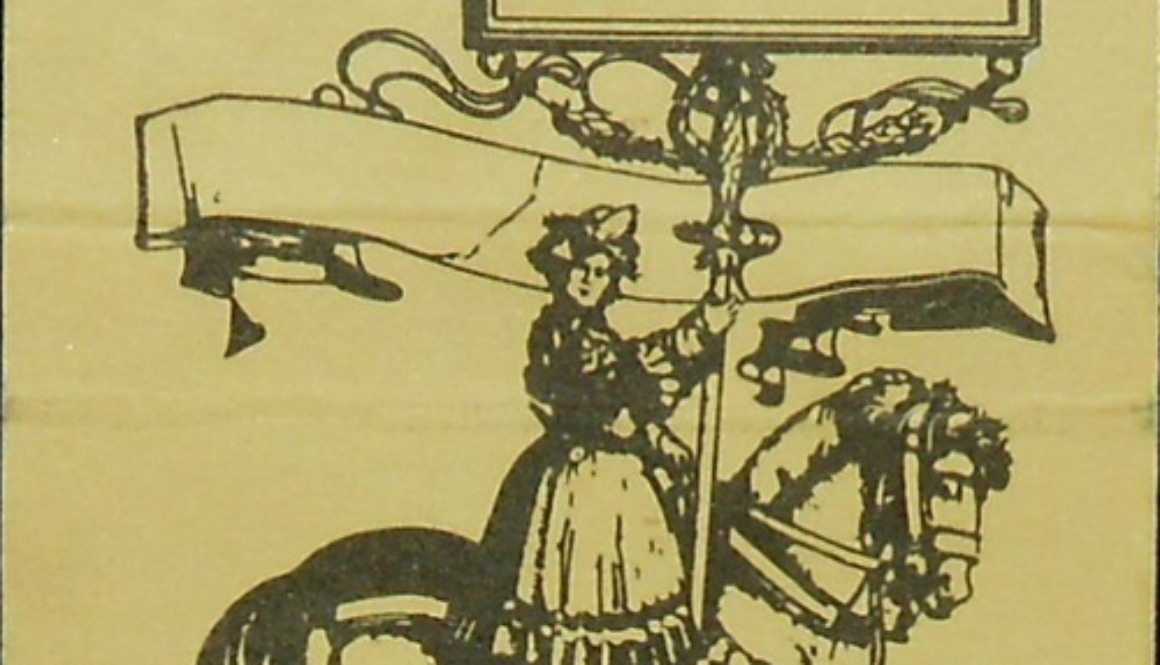
 There are things that are gone, which I miss.
 I first saw Robyn Hitchcock in Manhattan sometime in the early or mid-1980s; maybe it was at the Peppermint Lounge. If so, it was before 1985 (when the joint finally shut down for good). I know that Mike Chandler and his band, The Raunch Hands, were the opening act, because that’s who I came to see. But I left, that night, as a devoted Hitchcockian.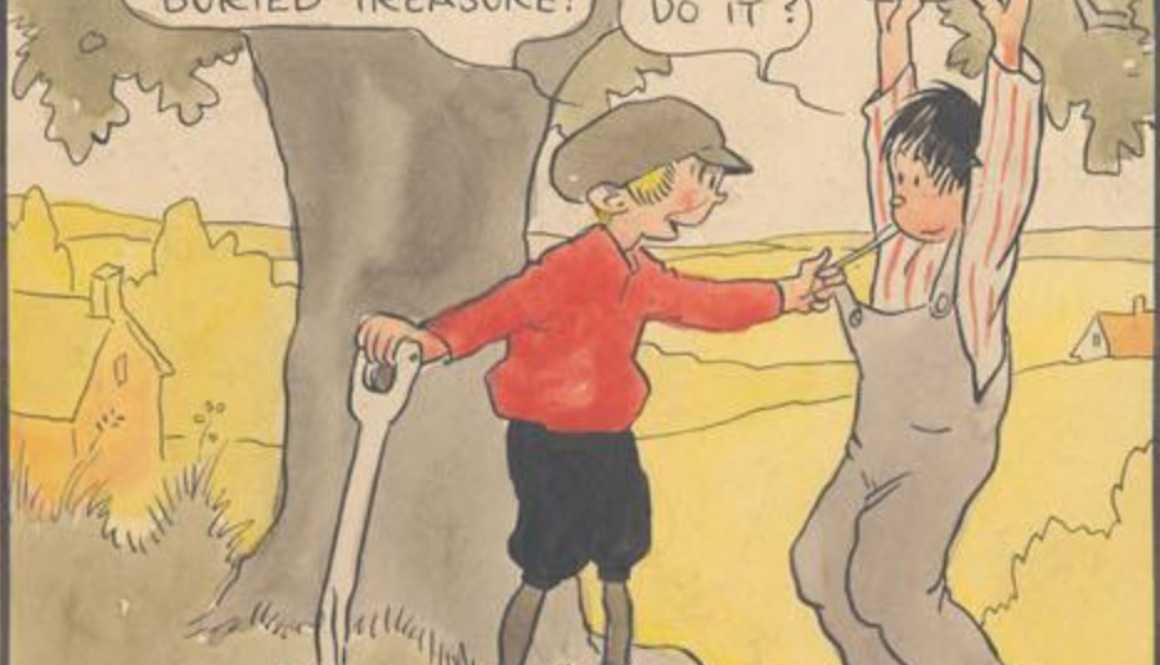
 Frank King was best known as the creator of “Gasoline Alley,” one of the earliest comic strips, and one that is still going strong after more than 100 years. But before that, he was the creator of numerous comics that lasted around a year, or even less. He began with “Jonah, a Whale for Trouble,” which ran for just a little over two months, in late 1910, in The Chicago Tribune, followed by the frog-themed “Young Teddy” (1911 to 1912), “Hi-Hopper,” (February to December 1914), “The Boy Animal Trainer,” “Here Comes Motorcycle Mike,” and so on. In 1915, he introduced this comic strip, “Bobby Make-Believe” (not to be confused with the later “Billy Make-Believe”) which concerned the heroic daydreams of a Calvin-like boy. When the more successful “Gasoline Alley” took off, King dropped “Bobby,” and it was quickly forgotten.


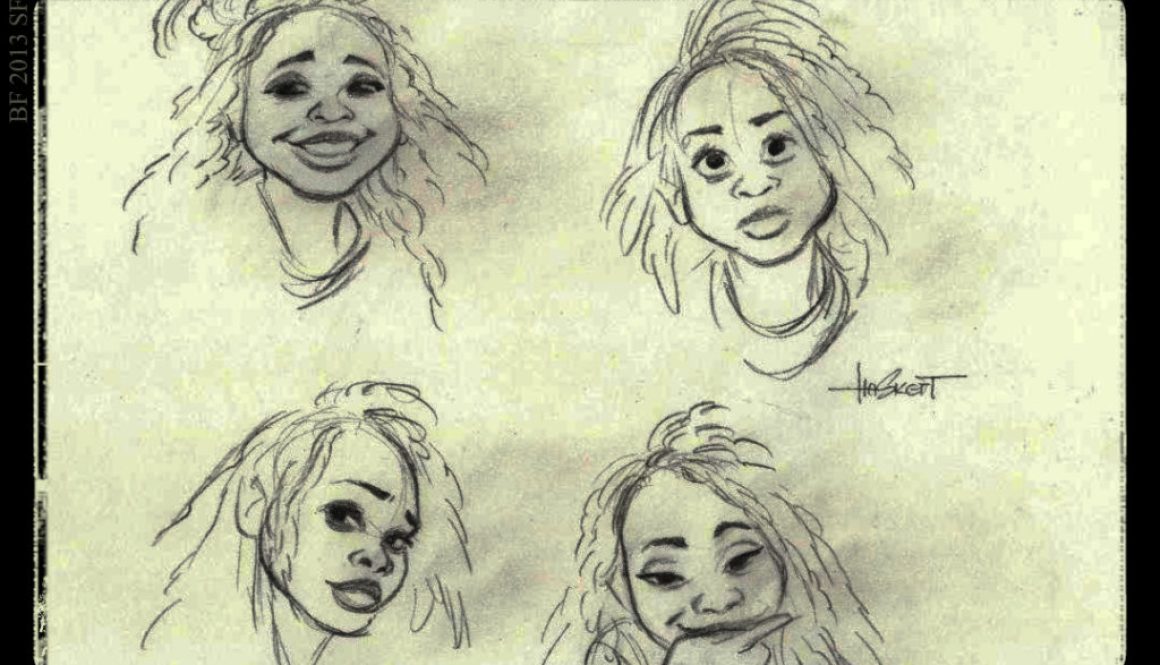

 Williams himself, with his obsessions, was a great dramatic character. What is it about Enongo that makes her a great character for a film?
 Did you have any hesitation in making your movie part-“cartoon”?
 Oblivioni: I finally got a chance to watch all the episodes on DVD of the great old failed space sitcom, Quark, which lasted a few episodes back in the late 1970s. (A strange phenomenon: all late boomers, teens in 1977, remember this show. What human of my age didn’t watch Quark when he was a kid? If 1970s teenagers actually had an impact on Nielson ratings, Quark, When Things Were Rotten, and Kolchak the Night Stalker would have been the biggest hits around.)