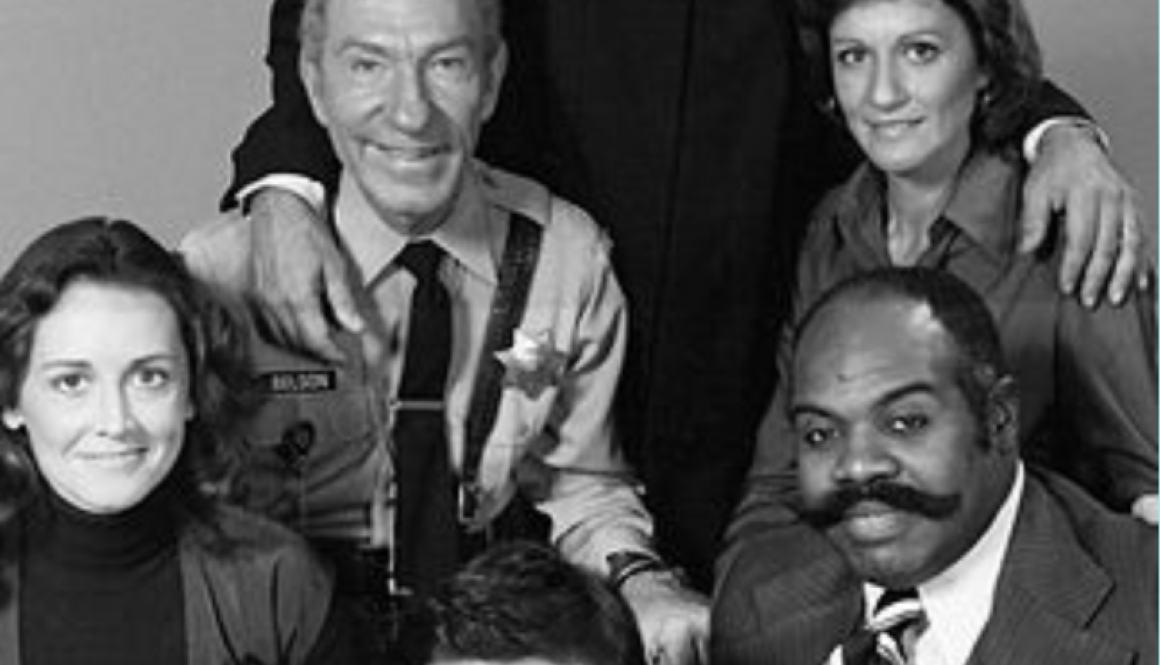
I don’t really remember much about Michael Constantine, but one vivid memory is worth relating.
When I was a kid, I saw him on some episodes of Room 222, which played in reruns on Baltimore’s Channel 45, and which I could see from Bethesda only when the wind blew our aerial antenna in that direction. (The antenna was supposed to be operated remotely from our living room, but the dial busted, and we were left at the mercy of the wind when my dad balked at paying to repair it.)
But I remember him mostly, and more vividly, from Sirota’s Court, a sitcom that ran for thirteen weeks from late 1976 to early 1977, which I watched when I had decided to be a lawyer, and I thought watching lawyer shows was good preparation. That year, I believe, I also enjoyed Kaz, Eddie Capra and The Paper Chase. So I was pretty much all set.
Sirota’s Court was notable for airing the first TV episode about marriage equality that I had ever seen, and possibly the first episode on that subject ever shown on a network program.
On the show, two young men appear in court and ask Judge Sirota to marry them.
I watched this show during its initial run, and I have not seen it since. I remember the judge agonizing over his decision. It was an especially memorable episode for me, because the issue was not played strictly for laughs, it was treated with the gravity that it deserved, and I really had never seen something like that on television before.
I don’t remember how it ended, but Wikipedia and other online sources say that the judge performed the marriage ceremony, which would have made legal history if it weren’t fiction (and television history, if anyone were watching).
So Michael Constantine officiated over the very first gay marriage on television. I don’t know anything about his politics, but it seems to me that the show would not have aired without his agreement.
“Times have changed” is the apt, if clichéd phrase regarding Gershwin’s music. While it appears to have always been praised and vilified in equal measure, the basis for these opposing positions has mutated. In a musical world where eclecticism is celebrated, Gershwin’s wide range of largely unassimilated influences feels more “normal.”
His shifts from a little bit of this to a little bit of that are no longer seen as liabilities that signal a lack of discipline or of the ability to sustain a coherent esthetic. Likewise, any composer who wants to take pride in creating a “third stream” of musical discourse, has to get in line behind the Brooklyn-born composer, originally of rapid-fire Broadway hits.
Cultural Appropriation
Yet paradoxically, Gershwin’s gleeful adoption of “vernacular styles” may also chafe against this century’s concept of cultural appropriation. Although I’d argue that, in many ways, Gershwin’s tuneful send-ups of popular styles are fairly sanitized and superficial, you need look no farther than “Porgy and Bess” to find a thorny patch of ethical and esthetic issues I doubt will ever be resolved.
After all, if Gershwin wanted to raise social consciousness, he could as easily have written an opera about the very real underclass of poor white Americans in Appalachia. This alternative “Appalachian Spring” would have offered plenty of folk music traditions of its own to borrow, if borrow he must.
But, of course, appropriation is appropriation, and the real issue is this: If you prize your source material, why choose to adulterate it with oboes, divided strings and Wagner tubas? It’s a question addressable to hundreds of pieces entitled “____ian Dances,” “____ian Rhapsody” or “Suite ____ian.”
And yet, some of these pieces have musical merit. I’m certainly not ready to throw out all of Dvořák on that basis. So where do responsible listeners draw the line? Is it enough to acknowledge that any composers we appreciate were inhabitants of their own time? In a case like Gershwin’s “Cuban Overture” of 1934, (https://tinyurl.com/osppdpzh) need I cringe, just so I can excuse myself for admitting that the piece is often captivating?
True to form, the Overture’s perspective on what’s “Cuban” is riddled with stereotypes. We’re served, I’m sure, a mere patina of mismatched Cuban folk, dance and pop elements, skillfully applied to many of Gershwin’s signature moves. On one level. there’s something unintentionally comic about the composer’s insouciance.
ADVERTISEMENT
Unstoppable inspiration
But it would be a mistake to substitute easy cynicism for a nuanced hearing of this lighthearted work. Because beneath the Overture’s slightly silly surface, you can hear Gershwin’s imagination stretching a little farther than perhaps it had before, in terms of sonority and rhythm.
After the first few measures its clear that this is no facile transcription of Xavier Cugat, not to mention Ricky Riccardo. From his awkward beginnings in “Rhapsody in Blue,” a work he didn’t orchestrate, Gershwin now shades over into the outskirts of Debussyville, on the way to fulfilling completely unrelated musical goals.
Regardless, in the unstoppable flow of his inspiration, Gershwin’s talent is unmistakable. It’s easy for jaded elders from a later time to opine about the gifts that greater maturity might have brought to his sense of form. But the wealth of ideas and the sure handling of sonority on a moment-to-moment basis are as startling now as they were 87 years ago. Like the tablecloth of Italian folklore that supplies its owner with abundant meals on command, Gershwin produces textures, melodies and rhythms like magic.
Yes, the result sometimes reminds me of a child’s fascination with soap bubbles. But what Gershwin’s output lacks in seriousness, it makes up for in authenticity, musicality and originality. The word “inimitable” is overused, but I defy anyone to come up with convincing ersatz Gershwin. That’s because, undergirding the fireworks, wisecracking, sentimentality and giddy tunefulness is a rare type of intellectual rigor.
Pan-Americanism
Understanding the origin of the work requires us to reconstruct the short-lived “pan-Americanism” that thrived in the 1930s, though it strangely never encompassed Canada. For a time, a small minority of cultural leaders looked to an infusion of “authentic” culture to do wonders for the pasty-faced USA.
And in that context, a comparison of the “Cuban Overture” to Copland’s “El Salón México” is telling. Keeping in mind that the two composers are reasonably close to polar opposites, it’s no surprise that Copland’s approach to his appropriated material is utterly different from Gershwin’s. Even so, the definition of “Mexican” or “Cuban” in either composer’s mind was likely far out of line with that of an actual resident of either country.
On more familiar ground for Gershwin was his “Variations on ‘I Got Rhythm’,” another in his series of pieces for solo piano and orchestra. Ironically, a recording of the work introduced by the composer shows how his limited worldview infiltrated even such an innocuous work. A little way into his spoken introduction to the piece, you can hear him allude to his “Chinese Variation,” including a passage that imitates “out of tune” Chinese flutes “as they always are.” What can you do? (For better sound quality, you might prefer to listen to the piece here.)
Regardless, here is the composer’s trademark playful sliding in and out of tonality that seems to draw back the curtain on an acoustical illusion more often revered than understood. I’m sure that many classical musicians see this as “stylistic disunity.” But to misunderstand this is to miss the central aspect of Gershwin’s musical language — the systematic avoidance of a fixed point of reference to his thematic materials.
I’d argue that, this avoidance strategy is itself more central to anyone of Gershwin’s instrumental works than any particular theme. It’s the intellectual underpinning that keeps even his more exuberant music from being a shallow showcase of flashy effects.
Or is it just the soul of the bright boy who never fell out of love with shocking his elders? Trouble is, the intensity of the composer’s response to his musical ideas and their progress is too intense, too driven, too sensual for that. Of course, underlying all the second-guessing that goes into most discussion of Gershwin is his dual citizenship in classical space and musical theatre. Would liking Gershwin’s antics knock us off the pedestal of purity forever?
Times have changed, but I still see the asterisk after his name. Never mind. The only question I have is whether, given just a few more years, he might have veered away from writing music “based on” other music and simply opened up the floodgates of his imagination. Or would he have remained, essentially, like a potter, always seeking a good supply of “clay”?
^^^
Mark Laporta is a musician, composer and novelist. His new novel, Entropy Refraction, published by Chickadee Prince Books, is available in paperback at a bookstore near you, from Amazon, Barnes and Noble, or on Kindle. Or listen to his musical compositions here.
The story of the career of the Smothers Brothers is a sad one.
The brothers, Tom and Dick (real last name Smothers) started out as combination folk-singing comedy duo, back in the 50s, when folk singing became trendy-mainstream with Peter, Paul and Mary, The Kingston Trio, and others I’m simply too young to remember. Honest.
They got their big breaks right here in the City by the Bay, San Francisco, at The Purple Onion and The Hungry I, comedy-music clubs where Bob Newhart, Phyllis Diller and He Who Must No Longer Be Named (Woody Allen) also got their starts. Proud to be a native San Franciscan, I am. Born in Oakland, but I can fake it.
I became a Smothers Brothers fan when I saw the pilot of their short-lived TV show, cleverly named The Smothers Brothers Show. I saw it because in those days there were four channels, and that was including the educational one. I had just turned eleven; I had parked myself in front of the television set six years earlier and rarely moved. I spent Saturdays watching Laurel and Hardy and The Three Stooges movies from the 40s, even though I didn’t think any of them were funny. More on that in a mo.
In the half-hour sitcom, Tom and Dick, also played brothers, but the premise was that older brother Tommy had drowned in a naval accident and was now returned to earth as an angel.
Okay, first, whence all these movies/television shows in which people die and become angels? It’s a really nice idea, one that I would happily sign up for, but if you read your Judeo-Christian scripture, you’ll see that angels are immortal beings that have always existed. Touched by an Angel, got it right, if on the sappy side.
That didn’t stop me from developing a huge crush on the Smothers Bros. It had nothing to do with them-as-them. For as long as I can remember, I’ve had a fascination with any depiction of an afterlife. I watched every single episode of Touched by an Angel, and most of Highway to Heaven, despite the particularly flawed scripts of the latter.
The angel show was cancelled, but my devotion remained. My parents didn’t understand it, but it wasn’t anywhere close to the weirdest thing about me, so they let it pass.
I don’t remember which of their (the Smothers Brothers, not my parents’) albums I bought first, but I bought them all, and listened to them at night on my turntable. If you’ve never had the pleasure, they combined their folk singing with this template: Dick introduces a song, or starts singing a song, and Tommy interrupts. This launches an argument, often centering around Tommy’s accusation: “Mom always liked you best.” One of their better-known, and early routines was their take on “I Talk to the Trees,” from the musical Paint Your Wagon. (If you’ve seen Clint Eastwood sing it in the movie version, you’ve had an even better laugh.) Tommy points out that talking to trees is stupid, and off they go.
Their routines aren’t funny now. I don’t hold that against them. I have a theory (I have a lot of theories, some more persuasive than others) that comedy simply doesn’t age well. The Marx Brothers aren’t funny anymore. If you see a Marx Brothers movie and laugh, it’s nostalgia that moves you. Is Harpo chasing a woman while tooting his little horn amusing in the slightest? No, it’s offensive. Groucho baiting Margaret Dumont? Let’s go back further: any belly laughs in Jonathan Swift? Not a one, and he was the John Mulaney of the 18th Century. You might appreciate his satire, but I dare you to chuckle.
The Smothers Brothers were funny in their day. Funny, and talented enough that a few years after the failure of the ill-conceived sitcom (it didn’t allow either of them to sing, and they sang beautifully) they got their own variety show, The Smothers Brothers Comedy Hour.
From the beginning, the Comedy Hour gave airtime to performers who were controversial, like Pete Seeger (his first appearance since he’d been blacklisted as a Commie), and Harry Belafonte (controversial because he wasn’t white). Then they started getting irreverent. They made oblique references to pot smoking. They spoke out against the war in Vietnam.
They got cancelled.
CBS said it was because they ignored a clause in their contract that required them to provide the censors with a script ten days in advance.
Four years later, the Smothers won a lawsuit against the network. It was what they call a Pyrrhic victory. (How the hell do I know why? Look it up.) They were off the air. The one-season revival of the show in the late 80s sailed under my radar.
They paved the way for political satire, but it led them to a cliff. The most scandalous sketch of the show (possibly David Steinberg’s faux sermon about Moses) wouldn’t cause an audience member of Saturday Night Live to shift in their seat today. And if fart jokes make you laugh, Family Guy has you covered.
Does that mean that if we have the Brothers S to thank for SNL, we have to blame them for Family Guy? No, that’s not what I came to say at all. Where have you been all this time?
The basis for the Smothers’ comedy was that Tommy was slow. Mentally challenged. Developmentally disabled. The “R” word. He stammered, searched for words, then mispronounced them. How hilarious is that?
Cancel culture has run amok. Lin-Manuel Miranda, one of the most admired composer-lyricists of our time, has to grovel to his fans, apologizing for less-than-perfect casting in the movie adaptation of In the Heights.
Imagine the blowback against a comedy duo in which one makes fun of the other for his (sorry, their) disability. That’s not cancel culture; that’s humanity.
I just came from watching the Smothers on YouTube, doing a routine called “I Am a Pilot.” Tommy’s “slowness” has morphed into something much more guileful. I still love them.
^^^
Donna Levin is the author of four novels, all of which are available from Chickadee Prince Books. Her latest novel, He Could Be Another Bill Gates, is available on Amazon, Barnes and Noble, or at the bookstore right across the street from your home. Please take a look.
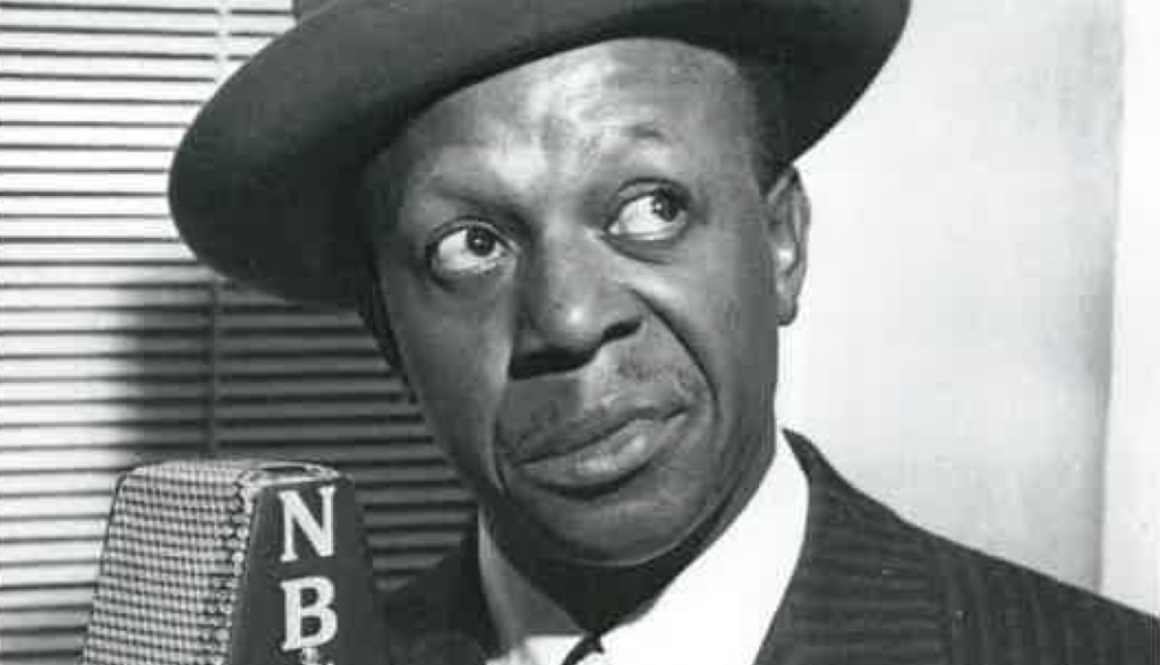
Eighty-one years ago, history was made in Harlem when the first elaborate Hollywood film premiere was held in the cultural capital of Black America. Paramount touted “Hollywood goes to Harlem!” as the studio sponsored twin world premieres of the film Buck Benny Rides Again — one at its flagship Paramount Theater in Manhattan (breaking all previous box office records), and the other held on the night before, on April 23, 1940, at the Loew’s Victoria Theater, a 2,400 seat picture palace located on 125th Street in Harlem, adjacent to the Apollo.
A conquering hero
Eddie “Rochester” Anderson, Jack Benny’s co-star in everything but actual billing, was given the “hail the conquering hero” treatment—an estimated 150,000 people lined the streets as Anderson and dignitaries paraded to the theater. Jack Benny, radio cast members, film director Mark Sandrich and Benny’s comic nemesis Fred Allen all appeared on stage to praise him. Anderson was honored with receptions at the Savoy Ballroom and the Theresa Hotel, and lauded by the nation’s black press.
Anderson’s role in the film as Jack’s valet “Rochester” carried over from radio, featuring witty retorts to the Boss’s egotistical vanities, croaked out in his distinctive, raspy voice. The role positioned him as one of the most prominent African-American performers of the era, despite—and because of—racial attitudes of the day.
Buck Benny was among the highest grossing movies of the year at the American box office in 1940. Throughout the nation, movie theaters billed the film on marquees as co-starring Benny and “Rochester.” In many theaters, especially African-American theaters in the South and across the nation, the billing put “Rochester’s” name first above the title. Anderson and Benny were named to the Schomburg Center Honor Roll for Race Relations for their public efforts to foster interracial understanding.
A new civil rights struggle
This moment before World War II further raised the consciousness of a young generation of African-Americans to fight for civil rights, while racist white backlash coalesced to further limit black entertainers in American popular media. Anderson’s success caused him to be hailed as being a harbinger of a “new day” in interracial amity and new possibilities for black artistic, social, and economic achievement.
Recent commemorations of the 80th anniversaries of the release of several of classical Hollywood’s most iconic films include an exhibit at the University of Texas’s Ransom Center Archives on “The Making of Gone with the Wind.” Inescapable in discussion of GWTW’s impact is analysis of the shameful prohibitions in Atlanta, the South, and much of the nation against honoring the performance of actress Hattie McDaniel, who won an Oscar as Best Supporting Actress for her role as Mammy.
Depictions of black characters in the novel and film were the subject of continuing sharp criticism in the black community. Complicating the story of racism, racial attitudes and restrictive limits on representations of African-Americans in film and popular entertainment media in this era, however, is Anderson’s radio-fueled stardom.
A middle-aged dancer, singer, and comic who’d forged a regional career in West Coast vaudeville and mostly un-credited servant roles in Hollywood films, Anderson rocketed to stardom due to his role on Jack Benny’s Jell-O program, one of the top-rated comedy-variety programs on radio. It took the “inter-media” mixture of the two rival entertainment forms of film and broadcasting, along with the input of different decision makers (NBC, sponsor Jell-O, show creator and star Benny, Paramount director Mark Sandrich) to create this interstitial space to foster Anderson’s fame.
“Rochester” Speaks Truth to Power
Anderson’s “Rochester” role in his first years on Jack Benny’s radio program (1937-1938) had contained heavy doses of minstrel stereotypes—stealing, dice-playing, superstitions—but from the beginning the denigratory characteristics were counterbalanced by the character’s quick wit and irreverence for Benny’s authority, accentuated by his inimitable voice and the wonderful timing of his pert retorts and disgruntled, disbelieving “Come now!” Rochester critiqued Benny’s every order and decision, with an informality of interracial interaction unusual in radio or film depictions of the day.
The radio show writers gave Rochester all the punchlines in his interactions with Benny. His lively bumptiousness raised his character above other, more stereotypical black characters. Rochester could appeal to a wide variety of listeners, as Mel Ely suggests of Amos n Andy. He always remained a loyal servant and had to follow Benny’s orders, so he was palatable to those listeners most resistant to social change. Yet, in a small way, Rochester spoke truth to power, and he was portrayed by an actual African-American actor, so he gained sympathy and affection among many black listeners.
Paramount had sought to translate Jack Benny’s radio popularity into film success for several years, but it was the creative ideas of Mark Sandrich that finally brought success. During the production of his first Benny movie, Man About Town (1939), Sandrich increasingly expanded Anderson’s small role to showcase the strong comic chemistry between Jack and Rochester. Its June 1939 premiere in Benny’s hometown, Waukegan, IL, drew 100,000 spectators to parades and radio broadcasts, and reviewers unanimously praised Anderson for “stealing the film” from Benny. While high-brow critics ranted that both these films were uncinematic, no more than filmed radio broadcasts, the public delighted in seeing the popular characters interact on screen.
Destroying the old myths
The success of Eddie Anderson’s co-starred films with Jack Benny fueled optimistic hopes in the black press that prejudiced racial attitudes could be softening in the white South. Rochester was hopefully opening a wedge to destroy the old myths that racist Southern whites refused to watch black performers, the myths to which film and radio producers so stubbornly clung. The Pittsburgh Courier lauded Anderson as a “goodwill ambassador” bringing a message of respectability and equality to whites in Hollywood and across the nation.
Eddie Anderson was perfectly positioned in 1940, through a stardom that merged radio and film, to represent that optimistic hope that perhaps race relations and opportunities for blacks were improving. The hurtful representations of blacks in the mass media of the past could finally be put aside, The California Eagle optimistically argued in an editorial:
…two years ago American became conscious of a new thought in Negro comedy. It was really a revolution, for Jack Benny’s impudent butler-valet-chauffer, “Rochester Van Jones” said all the things which a fifty year tradition of the stage proclaimed that American audiences will not accept from a black man. Time and again, “Rochester” outwitted his employer, and the nation’s radio audiences rocked with mirth. Finally, “Rochester’ appeared with [Benny] in a motion picture – a picture in which he consumed just as footage as the star. The nation’s movie audiences rocked with mirth. So, it may well be that “Rochester” has given colored entertainers a new day and a new dignity on screen and radio.
Eddie Anderson’s cross-media and cross-racial stardom was very real in the U.S. popular media between 1940 and 1943. Unfortunately, a series of unforeseen events, and the growing political and social racial strife in the nation during the war, curtailed Anderson’s film career.
The later backlash
Paramount director Sandrich tired of the Benny-Anderson series, while Benny was lured to Warner Bros and 20th Century Fox studios to appear in adaptations of recent Broadway comic plays. MGM attempted to build Anderson into a more prominent star, featuring him in its all-star black cast dramatic-musical production of Cabin in the Sky (Minnelli) with Lena Horne. Cabin was released in Summer 1943, just as race riots erupted in Detroit and other manufacturing and military base cities over labor strife. Timid film exhibitors did not promote Anderson’s film or his stardom for fear of sparking violence in their theatres.
Racist white backlash against blacks gaining footholds of integration and prominence in American public life began spreading across the South, and Anderson’s subsequent appearance in Brewster’s Millions (Dwan 1945) caused the film to be banned in Memphis for its portrayal of pleasant interracial interactions. Film producers no longer were willing to take a chance on him.
Anderson remained a major supporting character on the Jack Benny radio show in the postwar period and on Benny’s subsequent television program, and he remained beloved by white audiences. However, by war’s end, a new generation of vocal African American media critics increasingly called the entertainment media to task for their narrow depictions of African-African characters as servants and buffoons, Aunt Jemimas and Uncle Toms.
Despite his popularity, the black press considered Eddie Anderson a symbol of outmoded representations, and it reduced coverage of him to a minimum in the latter half of the 1940s.
Health problems dogged Anderson in the 1950s, and he ceased making the personal appearance tours to black theatre and nightclubs which had cemented his stardom in the African-American community. Although he remained the highest paid black performer on radio and television through the late 1950s, and a key member of the Jack Benny ensemble, the bright hopes of Eddie Anderson’s 1940 stardom were eclipsed.
^^^
Kathy Fuller-Seeley teaches media history at the University of Texas at Austin. She’s the author of “Jack Benny and the Golden Age of Radio Comedy” (University of California Press) and a new series “Jack Benny’s Lost Radio Broadcasts” (BearManor Media). Portions of this article have appeared in other forms, including in The University of British Columbia’s Film Journal.
Six years ago, someone at Chickadee Prince Books, the small press in Brooklyn, thought it was a great time for a return to the golden age of radio drama, and further thought that The Strange and Astounding Memoirs of Watt O’Hugh the Third seemed to fit the bill. Steven S. Drachman’s novels, a weird mélange of Western, sci-fi and historical fantasy about a sardonic and embittered Western gunman in the 1870s who finds himself at war against a worldwide, supernatural conspiracy, could be exactly the sort of knowing throwback to appeal to real fans of old radio serials and also pull in a new generation of listeners. (And sell some books.)
So Drachman wrote two pilot scripts, and Chickadee Prince hired a producer, Jacob Simsky (not his real name), to oversee whatever production of a dramatic radio show might entail.
Simsky arranged auditions, from which he chose Anthony Tether to portray Watt, the novels’ eponymous Time Roamer and 1870s outlaw gunman; and Emily Dalton as Emelina, sharpshooter extraordinaire, Wild West show star and practitioner of the dark arts. Tether would also lend his voice to various supporting roles.
Simsky spent many months in early 2016 working on the first two episodes. But after the recording sessions, Simsky suddenly disappeared. He stopped returning phone calls. He had left town, the recordings vanished with him, and he declined to honor requests to return them.
With radio dramas clogging the podcast market by early 2017, Chickadee Prince determined that they would expend no new money to re-record the programs. And that, it seemed, was that.
Except that during the pandemic, Tether kept thinking about what might have been. He reached out to Drachman in late 2020 and urged him to pick up the project again. Drachman tracked down the fugitive Simsky and pleaded with him to send the recordings, and this time he did, other than a few lost scenes.
A new producer, Danielle Wu, came onboard, Tether recorded the few bits that had been lost, from his home, and Wu spliced the whole thing together, adding sound effects and music by Derek K. Miller.
At long last the Watt O’Hugh radio show went on the air. You can listen to the first episode on Apple Podcasts and Spotify.
Recently, Drachman, Tether and Dalton spoke to Audere about their experience with the radio show, and its long and winding road. The conversation has been edited for clarity.
Audere: Tell us about the character you play on the show.
Anthony: His name is Watt O’Hugh, he’s a time-roaming cowboy. He has some renown, but he is a pretty self-deprecating character, which is really what I like about him. He downplays a lot of his legend, and I think it’s cool. He’s a great character. He was a quite a challenge, because I am the voice of Watt O’Hugh when he’s old and in his prime, so I had to kind of change up who he was, depending upon what aspect of his life I was acting out. So it was very interesting. The older Watt O’Hugh has a lot more time to think and to reflect, so he’s a little slower, and he’s a lot smarter I guess you could say. The younger Watt O’Hugh, you know, I really wanted to make sure that I got this cowboy thing down, this very strong character who doesn’t hesitate. He’s a man of action, so I really want to make sure I played that up.
Audere: Emily, what did you make of your character?
Emily: Emelina, she’s someone who is a very flawed but very bright gem, in my mind. She’s tried her best and made tons of mistakes, but at the end of the day she’s just trying to find a way to be happy, which is something I can definitely relate to. I think she’s really regretful about her past, and she dives into this entertainment world as a way to create a perfected version of herself. She’s hard, and tough, but funny and I think really intelligent. She’s full of surprises, and I don’t think she really knows where she’s going, just where she is now.
Audere: The music is really modern. Steven, what’s the story behind that?
Drachman: Watt moves through time, his musical taste isn’t limited to the 1870s! The music on the show is by Derek K. Miller, a musician who died in 2011, and his widow graciously permitted us to use his music in the show. Derek became quite famous for his last blog post, which was published after he died. His final blog post was so brave, so beautifully written and moving, and Derek avoided superstition and false hope. The character of Watt, as a time roamer, sees his own death and begins writing out his memoir, and Derek’s work reminded me of that. If the show does nothing more than bring some more attention to Derek K. Miller’s music, which is really beautiful and accomplished, it would all be worth it.
Audere: What have you all been up to during the six years since the show was originally recorded?
Anthony: Holy shit, has it been six years? I’ve been acting. I’ve been doing many other things especially because of the pandemic. I was lucky enough to land a starring role in [Starlit], this small independent feature film that landed in a few film festivals, and the pandemic killed that, which was great (sarcasm). And yes, I’m also kind of like Watt O’Hugh in the sense that I downplay my successes, isn’t that funny? I also landed this really great Smithsonian documentary called Pocahontas beyond the Myth, playing Captain John Smith. It was shot on location in Jamestown, it is fascinating, and I was really proud to be a part of that project.
Audere: Emily, what have you been up to?
Emily: Oh my gosh, too much! I’ve been writing, directing, and performing tons of short plays with companies as well as building my own work during the pandemic with a virtual theatre, From the Couch Theatre. I’ve done a couple commercials and industrials which has been very cool. I did a 5-month nationwide tour with National Players out of Olney, Maryland, which was totally life changing and just so so cool! I got to play Viola in Twelfth Night, one of my absolute favorites. In August, I’ll be in a brand-new play, “Time is On Our Side” by R. Eric Thomas, playing one of the main characters, Annie, who is a queer podcaster in Philadelphia. She’s going through some big changes understanding her family and her experience of queer history. It’s something that I know will be super challenging but in, like, the tastiest way. I’m super excited to dig into the role.
Audere: What’s your most indelible memory of your time working on the show?
Anthony: I think it was recording in [Jacob’s] apartment with just a shitload of traffic in the background and thinking there’s no way the mic is not picking this up. That’s one of the most memorable moments. Then we then moved to a studio, and I almost quite literally lost my mind, because I was playing about five or six different characters. I was struggling with them all at once, and it was pretty wild.
Audere: Emily, what do you remember most?
Emily: Just getting to know everyone! I loved working with Anthony, and getting to be in the studio doing the recording. It was one of my first voiceover experiences, and I just loved every minute. Super fun.
Drachman: I just tried to stay out of everyone’s way. I didn’t want to impose my vision on the thing. But I remember coming by after the final recording session and spending some time with Emily, Anthony and [Jacob]. It was especially weird how much they both even look exactly like Watt and Emelina. Of course, that’s not required for a radio show, but it almost made me wish we were making a TV series instead!
Audere: Now that the show is finally on the air where do you hope it goes?
Emily: I’m not sure! It would be amazing if it could be picked up and performed kind of like the “Thrilling Adventure Hour” podcast, where we do live shows that are recorded as podcasts. I’ve always found those kind of shows so fun to listen to, and they have that element of live theatre that I’m used to. So hopefully it’ll grow like that!
Anthony: Oh my God, I really hope we can record this trilogy. Holy cow. I would love for this to gain traction online, I would love for there to be some sort of a cult following behind it. I think that would be fantastic, that would be such a dream come true for me. I love these books, and I would hate to not play Watt O’Hugh more. I need to be Watt O’Hugh more. It was so so much fun, the little bit that we recorded, so please support this podcast. It’s a wild ride, it’s a great story and so well written. You will not be disappointed.
A wildly prolific composer of works in nearly every medium of Western music, Toru Takemitsu achieved more in his sixty-six years than many a composer could during a much longer lifespan. But unlike Carl Czerny, Camille Saint-Saens or, for that matter, Darius Milhaud, his output was not the result of a musicorrhea that led to hundreds of carbon-copy, forgettable works.
Instead, though each piece shares several distinctive traits, it also sounds like a fresh exploration of a few core trains of thought. That makes sense historically, in that Takemitsu lived at the tail end of what was is quaintly named an “experimental music” era. Although I understand the intent, to reconsider the very definition of Western music, what strikes me funny is the immature way the movement insisted on calling attention to a basic function of every creative act.
That is, I can’t think of a single composer worth mentioning who didn’t tamper, tinker, rejigger, realign, explore, innovate and strike out for passages unknown. They did it as a matter of course, with no expectation of receiving a merit badge. Yet for me the ultimate irony of this term is how quickly it slipped into a set of rigid protocols. Hence in the first few measures of many of his works you can hear tropes exploited by other composers.
It’s the same phenomenon I encountered during nearly thirty years in advertising. One is encouraged to “think outside the box,” as long as that thinking is pulled directly from the “outside-the-box” box. Real revolutions that don’t conform to the revolution template are subject to stern rebuke.
But if Takemitsu briefly held the aspiration to “experiment,” it’s clear from his voluminous output that he shook off the pompous trappings of High Modernism early on. And, as exemplified by “A Flock Descends into the Pentagonal Garden” (1977), whatever he absorbed from his fellow experimenters he synthesized in a fresh, memorable way.
Although I suppose that “Garden” qualifies as a “middle period” work chronologically, I’m not sure the composer’s evolution necessarily fell into neat stages. He seems instead to have followed his nose. His music changed as his interests changed. And yet, after surveying several of his pieces, it’s safe to say he worked within a sound ideal he formulated fairly early on. Whether this or that piece has more “influence from Japanese music,” appears to me to be a matter of far less concern than the attempt to create in integrated sound world out of a disparate set of acoustical elements.
Another common thread is Takemitsu’s rhythm. His music seems to float or, like the imaginary birds in his title, to alight only briefly before taking off again. In “Garden,” he achieves part of that feeling with sustained chords of fairly complex sonority that shimmer a bit, due to tiny changes in their make up over time. And, blessedly, for a composer with an interest in indigenous traditions, no fatuous quotations from “folk music” intrude on the work’s effortless, twelve-minute motion.
Yet the piece is not without clichés of its own. The brass build-up/cross fade to strings/fade out at the end is tantamount to the late-20th century’s V-I cadence. Otherwise, the eye-roll count is relatively low in this regard. And at least, if there are a few too many “chords dissolving into the mist,” pizzicatos emerging against a soupy background or, everybody’s favorite, the big, monster brass chord, they are merely passing lapses.
Regarding the latter, while it’s tempting for a composer with a large orchestra to “go big,” it’s fairly obvious that an authentic musical climax must result from an accumulation of smaller tensions over time. A big blast that isn’t earned is either a tantrum or an item on a fastidious composer’s checklist that he or she is impatient to check off.
_____________________________
ADVERTISEMENT
________________________________________________
But allowing for differences in taste, there’s much more to enjoy and admire in “Garden” than to gripe about. Chief among these is the evident modesty of the work and, by-and-large, its expression of genuine emotion. For while Takemitsu isn’t above at touch of sensationalism here and there, “Garden” proceeds with a welcome seriousness of purpose. Welcome, in the sense that, from the first few gestures, there seems to be a good reason to listen on. The man had something in mind, though for the life of me, I don’t see how it could have been a flock of birds.
Rather, aside from what might be a few instances of superficial word-painting, the title seems more appropriately a loose metaphor. On the other hand, a detailed online analysis that I stumbled on works hard to disabuse me of that delusion https://tinyurl.com/RHAGYE and includes several interesting biographical details which, if true, confirm what the music tells us: The composer was a contemplative soul, very sensitive to nuance, open to influence and, essentially, “a poet.”
Yet whether a pentatonic scale determines much of the music seems irrelevant, in the sense that, if that’s what you’re thinking about while listening, you’re missing the music altogether. For me, the core of the piece is its mood, tone and “sonic envelope” for lack of a less deplorable term. It is the ebb and flow of sound densities and, as I’ve already mentioned, the artful floating sensation. In that sense, a more appropriate title might be “Delicate Hot Air Balloon Ascending.”
In the end, for my money, the real antecedent to this work is not a series of obscure biographical details, but Debussy’s “Jeux.” The unacknowledged lessons that countless card-carrying Modernists have taken from Debussy’s late ballet are legion, for all that they are consistently buried under the ballet’s titillating subject matter. “Garden” is another example of Debussy’s profound influence, down to the very premise of the work’s moment-to-moment continuity.
Far more than any ideology, philosophy, “experiment,” or dreamscape, it’s the idea that musical form is not necessarily a function of codified repetitions, even in the guise of Lisztian transformation. Instead, musical form, like human emotion and sensory input, can be associative and, paradoxically, clearer for being vague in a very specific way.
From the outset, the prevalence of sustained notes, against which wails a plaintive oboe, sets the pace for a work that rarely rises above the level of a hoarse whisper, especially as it progresses. And progress it does. For if the logic is associative, it is still based on logical connections — as difficult as it might be to pin them down. On a simpler level, the oboe in this piece functions a bit like the clarinet toward the beginning of Bartók’s politically incorrect “Miraculous Mandarin,” almost like a narrator.
Yet it soon relinquishes that role as other instruments and, really, sound-complexes take precedence.
Silence also factors in as a structural determinant, defining the end of one mood and the start of another.
That is, until the oboe returns, now surrounded and amplified by a more intricate environment, including a harp-flute doubling that feels like a direct lift from “Jeux,” not that it matters. From that point on, Takemitsu’s own ear dominates, to create a sensitive flickering that no amount of ideology, nor thumbing through an orchestration handbook could produce. That’s because, it’s more than orchestration, but a way of hearing, thinking and feeling.
And there, I believe, is where the composer’s significance rests: in his ability to combine sound, intellect and emotion in a seamless, shimmering array of sensations for which the word “music,” while still apt, also feels inadequate. “Garden,” is something different — a window into a worldview in the process of formation.
^^^
Mark Laporta is a musician, composer and novelist.His novel, Probability Shadow, is published by Chickadee Prince Books, and is available in paperback or ebook on Amazon, Barnes & Noble or at a bookstore near you. Or listen to his musical compositions here.
[Listen to this bonus “City of Refuge” episode or read the following article adapted from the transcript.]
As the world shuts down amid this terrifying pandemic, it’s hard to know what to do — or, just simply, how to be. I’ve tried reading news story after news story and scrolling endlessly through Twitter, but neither have left me feeling any more enlightened.
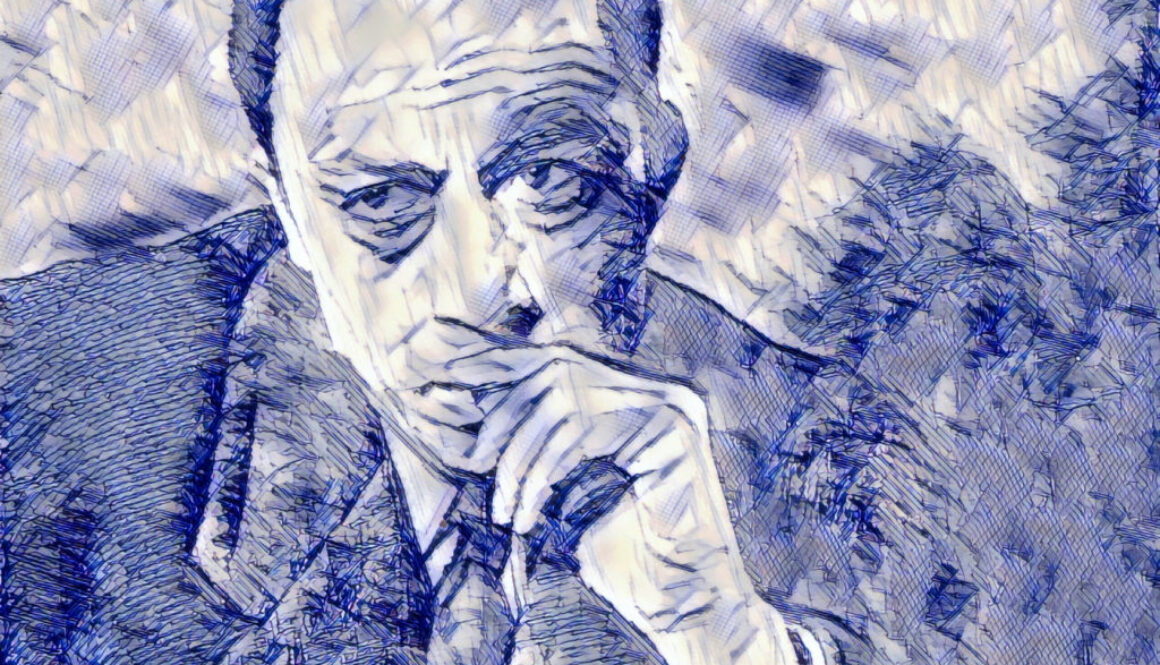
The only thing that’s proven helpful thus far is a 73-year-old novel that’s been on my reading list for several years now: Albert Camus’ “The Plague.”
Although written during World War II — and intended as an allegory for the Nazi occupation of France — this classic novel feels immediately relevant. A disease that spreads from animals to humans wreaks havoc on an unprepared population, one that is too wrapped up in itself and its economic dealings to take the threat seriously at first. Meanwhile, self-interested politicians delay making important decisions. Eventually, when denial no longer works, there are quarantines, supply shortages, fake remedies, issues with masks and, of course, mounting deaths. If not for the fact that the plague only ravishes a single town — instead of the entire world — it would seem almost perfectly prescient.
Nevertheless, the novel resonates in other ways, such as with its theme of exile and isolation. Camus actually introduces it even before the plague arrives, as a comment on modern life in general. The quarantines only make this sense of isolation more acute — something that no doubt feels familiar and will only sink in further once we are fully bored with streaming movies and video chats.
Ultimately, as the novel unfolds, Camus shows us that it’s possible to break out of this depression — even in a moment of crisis — by depicting a kind of active resistance to the plague that fosters solidarity and compassion, with a focus on saving lives.
While I’m far from the first to find this classic so insightful and relevant in our current moment of crisis, I doubt few have had it near the top of their reading list for as long as me. The reason for that is my recently completed 10-part podcast series “City of Refuge,” which tells the little-known story of a cluster of French villages on a remote plateau that rescued 5,000 refugees during World War II.
All throughout my research, Albert Camus and “The Plague” kept popping up. It was mainly as just a side note, because, as it happens, the famous French-Algerian author wrote much of the novel while living on the plateau in one of those courageous villages. He was, in essence, completely surrounded by people doing everything they could to save the lives of those in need.
I was never quite sure how, or whether, to mention this interesting fact in my series. And now I’m glad I didn’t merely mention it, because it’s deserving of a deeper dive. So, what follows is an examination of Albert Camus’ “The Plague” and the real-life nonviolent history that helped shape its timely, and timeless, message.
Albert Camus left his native Algeria in the summer of 1943 with the plan of spending the winter in the mountains of France. He had contracted tuberculosis in both of his lungs, and his doctor prescribed the fresh air as part of his treatment. Camus’ wife, Francine, knew of the perfect place — a quiet, sparsely populated plateau in south-central France, where she had often vacationed as a child.
Once they were settled into a boarding house — only two miles from the village of Le Chambon, the center of the plateau’s nonviolent resistance — Camus and his wife enjoyed the rest of their summer together. Then, in the fall, Francine returned to her teaching position in Algeria. Camus soon decided to join her, as the war was worsening and getting home seemed like a good idea. But just as he had made plans to hop a steamer back to Algeria, the Allies invaded North Africa.
It was November 7, 1942, and with the Nazis quickly responding to the invasion by occupying Southern France, Camus was now trapped. Days later, in his notebook, he drove the point home further, writing down the phrase “Like rats!”
It isn’t surprising he made this analogy. Rats were on his mind a lot in those days. They were the harbinger of death in the novel he had begun working on a year earlier — a novel that would, of course, become the acclaimed “La Peste” or “The Plague.” At this early stage, however, Camus was far from settled on a title. Not only did most of the work lie ahead of him, but the next 14-15 months he would spend on the plateau — exposed to its unique culture of resistance and rescue — would have a serious impact on the novel. Surprisingly, this fact isn’t widely discussed.
“Many of the biographers assumed that Camus didn’t know anything about what was going on on the plateau,” said Patrick Henry, author of “We Only Know Men,” the first book to truly explore Camus’ time on the plateau. “[They] never did their homework.”
In other words, Camus’ biographers weren’t in contact with the plateau’s local historians and researchers to the degree that Henry was. In fact, it was thanks to one of those contacts that he was able to interview an old friend of Camus’ — a Jewish French Algerian named André Chouraqui, who lived on the plateau during the war.
“Camus used to go to his house, and they would eat Algerian food and talk,” Henry said. “He was a specialist on the Bible, and he talked to Camus about the plague and the significance of the plague in the Hebrew Bible.”
Importantly, Chouraqui did clandestine work for the Jewish relief organization Œuvre de Secours aux Enfants, or OSE. “City of Refuge” listeners will recognize it as the organization Jewish rescuer Madeleine Dreyfus worked with. In fact, after she was arrested, it was Chouraqui who took over her duties of bringing refugee children to the plateau and hiding them. Learning this naturally made Henry wonder how much Camus knew about the rescue operation being conducted on the plateau.
“André Chouraqui wrote and told me, ‘Of course Camus knew everything that was going on,’” Henry explained. In fact, it would have been hard for him to miss — as, according to Henry, “There were actually Jews living in the same boarding house where Camus was living.”
Given how ubiquitous the rescue operation was on the plateau by this point, the next obvious question was whether or not Camus knew André Trocmé, the plateau’s charismatic pastor who lived in Le Chambon and was one of the driving forces behind the rescue effort.
Chouraqui told Henry that “Albert Camus had always known about the resistance that Pastors [Edouard] Theis and Trocmé conducted in Le Chambon,” but wasn’t sure Camus knew André Trocmé personally.
Nelly Hewett, André Trocmé’s daughter, confirmed this when I spoke to her. She said that although her parents never met Camus, “They knew of Chouraqui and he knew of them.” She also mentioned Pierre Fayol, the Jewish leader of the plateau’s armed resistance.
“They all were friends those guys. Fayol visited with my dad. Chouraqui visited with my dad. They had an inner group of which my dad was not a part. But they respected my dad’s work.”
Henry did some more digging and found that Fayol mentioned Camus in his memoir several times, noting that they often listened to the BBC together. This meant that Camus was plugged into all aspects of resistance on the plateau. That said, it’s important to note that resistance armies didn’t start popping up in France until around the time Camus arrived on the plateau, about midway through the war. The nonviolent resistance in Le Chambon and the surrounding area, on the other hand, had been going on for a couple of years already. Nevertheless, Fayol was respectful of its mission.
“On the plateau, there was very little killing going on,” Henry said. “Trocmé and Fayol were working together because they knew that, if they attacked, the Germans would bomb the place or kill people and the whole rescue mission would be destroyed. There wasn’t a great question of violence on the plateau.”
‘A greatness that I don’t have’
Realizing that Camus was apprised of these goings on, Henry began to see “The Plague” in a new light.
“Once I got that, it was like the key to the novel,” he said. “Let me read the novel now with everything I know about Le Chambon, and see what connections I can make.”
For starters, at just the surface level, there was the obvious allegory to the Occupation.
“In France the Germans were considered like a plague,” Henry explained, adding that they were called “la peste brune,” or “the brown plague,” because of their brown uniforms.
Although the idea of the allegory is well-established, it’s not always been appreciated by critics. Jean-Paul Sartre and other French thinkers were upset with Camus for comparing Nazism to a nonhuman phenomenon that was unrelated to human evil and therefore out of our control. But Camus’ plague was a stand-in for more than fascism. It was also a symbol for what he considered to be, more broadly, our culture of death — which he saw on all sides of the political spectrum, from the wealthy conservative establishment to the revolutionary dictatorships of the left. As a result, existential Marxists like Sartre were already primed to take issue with Camus and his novel. According to Henry, Sartre’s magazine Les Temps Modernes called it “boy scout morality” — really denigrating it in the worst way.
While the Marxists saw Camus as a pacifist, his actual views were a bit more complicated. We’ll explore that more momentarily. But first, let’s continue to examine the other connections between “The Plague” and the plateau — namely how some of the characters in the book resemble real people Camus knew or heard about.
One such character is Joseph Grand, a sort of secondary character who the narrator at one point refers to as the hero. But that comes with a bit of a qualification. Since Camus didn’t find the concept of heroism appealing, he has his narrator say that if there were a hero, it would be Grand because he’s just an ordinary man who did the right thing without thinking about it or seeking recognition.
“That’s the guy who is living right next to Camus,” Henry noted, referring to a scene in the 1989 documentary “Weapons of the Spirit,” where Director Pierre Sauvage interviews Camus’ real-life neighbor on the plateau, a man named Émile Grand. Whether the character in the novel is meant to be him it’s hard to say. More broadly, the Grand character seems to be a strong representation of the plateau’s rescuers at large. As André Trocmé’s wife, Magda, once said, “None of us thought that we were heroes. We were just people trying to do our best.”
In “The Plague” resistance is depicted through what are called “sanitary squads,” a sort of civilian-based defense against the death-dealing pathogen. Notably, they are created and organized by a rather idiosyncratic pacifist character named Jean Tarrou, who shares a few commonalities with Camus himself — aside from his rhyming last name.
“Camus was against killing,” Henry explained. “He waged war against the death penalty in France. His father saw an execution and came home and vomited. Camus heard the story about his father, and he tells the it in ‘The Plague.’”
More specifically, the character of Tarrou tells it. Only, instead of Tarrou’s father witnessing the execution, his father is actually the prosecutor demanding the death penalty. Tarrou explains that he saw his father’s state-sanctioned blood lust and decided to run away. At first, he joins various leftist struggles against oppression. Eventually, though, he comes to the realization that because these struggles sometimes involved killing to achieve their means he was fighting against an unjust system without bringing a just one into existence. Because of this, Tarrou says, “I had the plague already, long before I came to this town.” In short, he’s noting Camus’ broader use of the plague as a metaphor for humanity’s self-destructive qualities.
As Camus saw it, there is only one thing you can do with this knowledge: Become what he called “a rebel,” or someone who stands up for life and solidarity. In the novel, Tarrou explains his philosophy by saying, “There are pestilences and there are victims, and it’s up to us, so far as possible, not to join forces with the pestilences.”
For this reason, Henry describes Tarrou as “the ideal total nonviolent person.”
At one point in the novel, Tarrou lays out his basic formulation on pacifism, saying, “I decided to reject everything which directly or indirectly, for good reasons or for bad, kills. I definitely refuse to kill.”
It’s such a perfectly stated position on pacifism, and yet Camus himself was not an absolute pacifist. For all the nonviolence imagery in the novel, Camus saw violence as both “unavoidable and unjustifiable.” In fact, while writing to a friend nearly a decade after the war, he said: “I studied the theory of nonviolence, and I’m not far from concluding that it represents a truth worthy of being taught by example, but to do so one would need a greatness that I don’t have.”
However, Camus does let his character Tarrou have it.
“Tarrou has the greatness, and it links to Trocmé, who believes that one must resist violence but only with ‘the weapons of the spirit,’” Henry said.
At the same time, however, Tarrou has key differences with André Trocmé — namely religion. Tarrou says he wants to become a saint without God. But André Trocmé, a Protestant minister, was absolutely a man of God. Interestingly, though, his wife Magda was not religious and therefore, in many ways, embodied this idea of a secular saint.
“Mother always said that she really didn’t believe in God — the God that was usually a ‘He’ and was the head of the world and solving the problems,” Hewitt said. “But she had everything else that made her a Christian. All the qualities, all the generosity.”
So, if Tarrou was a match for anyone on the plateau at that time, it was almost certainly Magda Trocmé. That said, as I mentioned earlier, the Tarrou character is closer to Camus himself than any other real person.
According to the acclaimed theologian and writer Thomas Merton, Camus had a hard time accepting nonviolence because of how much he associated it with Christianity, which he largely rejected and saw as pushing a kind of self-interested do-nothing nonviolence. This is unfortunate, Merton argues, because it led Camus to overlook authentic nonviolence, which in many ways mirrors the kind of active resistance he clearly admired.
Ultimately, in Merton’s assessment, Camus didn’t like to offer precise doctrines or absolute formulas. He was quite reasonably — like any activist today — not wanting to preach or prescribe from a position of privilege. So, according to Merton, “at the risk of seeming inconclusive,” Camus “does not prescribe a method or tactic.”
Nevertheless, it’s not hard to read between the lines of “The Plague” and see what kind of resistance Camus is getting at.
“Camus is recognizing the nonviolent struggle for saving human lives,” Henry said. “Stopping people from getting infected, etc.”
In fact, the one instance of “revolutionary violence” that appears in the novel fails to achieve anything. It happens when a few armed men attack the gates of the town, trying to break out. They exchange fire with security forces, leading to a few deaths. This only really succeeds in sparking a wave of looting, that in turn led to martial law and executions. But, as Camus notes, there were so many deaths from the plague at this point, nobody cared — they were “a mere drop in the ocean.”
This isn’t to say Camus isn’t sympathetic to the stress and anxiety that led to the violence and lawlessness. We relate to one of his characters, a journalist named Raymond Rambert, who — like Camus — is an outsider, trapped in this place and separated from his wife. Rambert tries to escape by securing clearance papers through an illicit underground network. But along the way he has a change of heart and decides to stay, joining the sanitary squads and aiding the struggle to defeat the plague.
“That’s what happened to Camus,” Henry explained. “He tried to get out, and then he didn’t go out. And just like the character in the novel, he believes that he belongs there. And it is his duty to be part of the Resistance.”
In the fall of 1943, after more than a year on the plateau — witnessing active resistance to the Nazi agenda — Camus moved to Paris, where he became co-editor of Combat, the underground resistance newspaper. Even then, however, rescue work remained on his mind. He even tried to help hide a Jewish woman he met by writing a letter to Pierre Fayol back on the plateau saying “I’m sending someone to you who has a hereditary infection.”
“Camus knew what was happening,” Henry said. “He was sending a Jew to be protected there in Le Chambon.”
‘Fashion an art of living in times of catastrophe’
There’s one last character in “The Plague” worth exploring, and he’s probably the most important, as he’s also the novel’s narrator. His name is Bernard Rieux, and he is the town’s doctor. (Incidentally, there was a similarly named real-life Dr. Riou in Le Chambon during that time.) He is in many ways a different side of the same coin as Tarrou.
When Tarrou says he wants to become “a saint without God,” Rieux says he just wants “to be a man.” Tarrou then responds by saying, “Yes, we’re both after the same thing, but I’m less ambitious.” It’s a rather telling bit of self-deprecating humor through which Camus is letting us know that Tarrou’s pursuit of secular sainthood and Rieux’s pursuit of being a decent person are basically the same thing.
However, if there is a difference in the labels, it could be argued that by the end of the novel, it is Tarrou who becomes a man and Dr. Rieux who becomes a “saint without God.” Whereas Tarrou gets out of his head a bit and starts living not as an outsider, but in solidarity with his fellow citizens, Dr. Rieux is tested and never comes up short. He just continues to cure the sick and relieve human suffering. Notably, he is a healer, a term that Tarrou seems to equate with the saints. Most importantly, though, both characters have no desire to prove anything — and this is the quality that ties them back to the people of the plateau.
“Weapons of the Spirit” Director Pierre Sauvage underscored this connection in his film, noting this passage from the novel: “For those of our townspeople who were then risking their lives, the decision they had to make was simply whether or not they were in the midst of a plague and whether or not it was necessary to struggle against it. The essential thing was to save the largest number of people from dying. The only way to do this was to fight the plague. There was nothing admirable about this attitude. It was merely logical.”
Ultimately, it’s the message of “The Plague” — not the characters or the type of resistance depicted — that’s in sync with what happened on the plateau during the war. When accepting the Nobel Prize for literature in 1957, a decade after “The Plague” came out, Camus essentially summed up that message, saying, he wanted people to “fashion an art of living in times of catastrophe, to be reborn by fighting openly against the death instinct at work in our society.”
Camus himself, however, did not live much longer. It was only a few years later, in 1960, that he died in a car crash at the age of 47. Despite having accomplished so much at a relatively young age, there are those who think even bigger things were in the works.
“Camus was going somewhere,” Henry said. “Some say Camus was on the road to a religious conversion, but it could have been a conversion to something where he would be able to accept total nonviolence.”
This is not hard to imagine. After all, as Merton noted, Camus oftentimes spoke like a pacifist and, in practice, came very close to the nonviolent position. Much like ardent pacifist André Trocmé, Camus spoke out against revenge killings after the Germans had been defeated. He also was one of the first to condemn the bombing of Hiroshima, calling it “the ultimate phase of barbarism” in human history.
Whether or not he was headed toward some kind of personal conversion to total nonviolence isn’t really the point. It merely underscores that Camus was one of the few leading international voices of his time willing to consider its merits. In fact, he reportedly attended a conference on peace and peacemaking in Le Chambon shortly after the war. It was organized by none other than André Trocmé and attended by pacifist leaders from around the world.
According to Henry, “He was sitting in the back of the room and made some remark about people getting together to talk about these things is wonderful.”
Ultimately, what drew Camus to nonviolence — at least the kind practiced on the plateau during the war — is the focus on saving, not harming, lives.
“On the plateau he recognizes that nonviolence is a great way of saving Jews,” Henry said. “The Jews that were saved during the Holocaust were not saved by confronting the Nazis with violence. They always got killed when they did that. They couldn’t defeat this machine.”
In short, Camus saw something special happening on this tiny, isolated plateau where he was stuck for part of the war, and he drew inspiration from it to produce a singular work of art that offers empowering lessons on how to act in moments of crisis. Viewed from our current position, in the middle of this pandemic, it’s quite simple.
“When you leave it at the level of the microbe, it’s not complicated today,” Henry said. “We don’t have to kill anybody. We have to remain decent.”
Even then, however, the plague is never fully defeated. As Camus’ character Dr. Rieux notes on the final page of the novel, after the city overcomes the outbreak, “The plague bacillus never dies or disappears for good.” It lies dormant, until the day it rouses up its rats again and sends them forth to die in some unsuspecting place.
For that reason, we must never forget how to fight it — whether it comes in the form of a pathogen, fascism or some other cynical, destructive force. As the stories of the plateau and “The Plague” tell us, we are going to need solidarity, compassion and a steadfast commitment to saving lives.
In the words of Camus, “What’s true of all the evils in the world is true of plague as well. It helps men to rise above themselves.”