Bitcoin’s value reached an all-time high after Tesla announced it had bought $1.5 billion worth of the cryptocurrency. After its launch in early 2009, Bitcoin has gone through a lot of ups and downs. Some of its biggest price swings were in 2017 and 2018, when a steep rise followed by an 84 percent decline brought plenty of hype and headlines. After a quiet period, the last three months of 2020 saw yet another sharp rise as the currency’s value more than tripled—and it’s still climbing.
Not surprisingly, more and more investors are now jumping on what can still seem like a techy, trendy bandwagon. In an economy where governments are printing money hand over fist, people want a more secure place to put their assets. In addition to prevailing economic uncertainty, many institutional investors are dipping their toes into the cryptocurrency, and even PayPal began offering customers the ability to buy Bitcoin late last year. Elon Musk’s repeated endorsement of the cryptocurrency hasn’t hurt, either. Some even believe digital currencies like Bitcoin are the future of money.
But intertwined with Bitcoin’s more speculative potential (as an asset or currency) is an important feature many investors may miss: its power to protect human rights and stand against tyranny.
In a new video for Reason magazine, Alex Gladstein, chief strategy officer at the Human Rights Foundation, explains why the cryptocurrency is an inalienable tool for preserving freedom, and how it’s being used by people in different parts of the world to do so.
Money makes the world go ’round, and as such, it’s a perfect tool for surveillance and control. The decline of cash in many societies and its replacement with digital payment methods means we’ve all but kissed financial privacy goodbye; all of our digital transactions are logged and kept on record for years.
In most democratic countries this doesn’t tend to come with consequences much more intrusive than targeted ads. But for the more than four billion people living under authoritarian regimes, it’s a different story.
Their governments can—and do—freeze peoples’ bank accounts, shut down ATMs, decide who gets cut off from financial services, and even seize private funds. Actions like these are often targeted at individuals labeled as problematic: activists, dissidents, union leaders, critics of the ruling party, intellectuals, and the like. Cutting off access to money is a quick-and-dirty way to immobilize people, not to mention wreak havoc when it’s done on a large scale.
If only there was a monetary system not controlled by a central bank, untouchable by governments, where value could be transmitted without corruption or interference and unaffected by international borders.
[Editor’s Note: Read the entire story from the beginning!]
Running through the framework that had finally manifested itself in Gerd’s back room was a network of the thinnest components that were linked together in chains. Once again, the reddish-brown sphere seemed to beckon. Based on nothing else but gut instinct, Tucky twisted the sphere’s top half a full three turns until the entire super structure glowed with a holographic depiction of a tight-fitting skin, built up from a mesh of impossibly dense microfibers. He cocked his head to one side.
“Now what?” he asked. “Where am I going to find that … that shell?”
Once again Olga’s voice broke in on his consciousness, sounding distant and strangely ethereal. Tucky turned his head to see her stand, or rather float over him.
“The ship will find what it needs,” she said. “It will construct its own skin from all available resources.”
Instantly, a small section of the rear half of the framework began to glow and a silver serving tray hanging on the opposite wall began to vaporize, its molecules streaming across the room to the exact spot on the framework that had begun glowing. Before long, the tray had vanished, its silver deposited precisely along one tightly-woven stretch of the structure. Out of the corner of his eye, Tucky saw two more sections of the framework begin to glow. First a glass vase and then the copper wire lying next to it, were also gradually vaporized and assimilated into the framework. Olga floated down to floor level and gave him a powerful shove toward the shop’s door.
“Get out!” she said.
“But I want to see,” said Tucky.
The lovely young woman fixed his eyes in a searing gaze, until he wondered if they would actually catch fire. She shoved him toward the door again, even harder than before.
“You didn’t hear me,” she said. “All available resources. That includes you.”
Tucky’s eyes opened wide, and he turned to rush out of the shop, but not before grabbing the tablet off the workbench.
“Leave that,” shouted Olga, “it’s of no use to you!”
Tucky ignored her, and ran out to the sidewalk, the tablet clenched in a white-knuckle grip.
“Drop it!” he heard Olga shout again, from the shop’s threshold.
“You don’t understand,” he shouted back. “If I lose this device, I’ll have no proof! Nothing to prove what I’ve accomplished.”
And in that moment, as he heard himself call the tablet a “device,” Inga’s words finally made sense. With astonishing speed, Olga ran up to him and tugged at the tablet with both hands.
“We can go anywhere together, my sweet baby,” she said. “Once the ship is complete, we can fly to the farthest reaches of the universe, but I need that to make a few minor adjustments before….”
Tucky’s torso shuddered as he felt her influence growing stronger. Even so, the sight of the alien ship assimilating material from Gerd’s shop at a faster and faster pace spurred him to action. In spite of his unmitigated lust for Olga, he growled fiercely, pushed her aside with all his strength and ran down the sidewalk toward the Ohio River. He stabbed at his Samsung Galaxy until he found one of Inga’s messages, then held the cracked screen up to his ear, as it replayed her voicemail. He hoped, the farther he got from Olga, that Inga’s voice would help him summon the will to…
“… smash it with a blunt object….” Inge’s voice rang out of his phone. “Smash it….”
Despite the intensity of Olga’s presence in his mind, which grew more irresistible by the second, he forced himself down the slope to the water, his eyes searching this way and that for a stone large enough to….
There! There! There!
He smashed the tablet into the side of a large metal oil drum, probably rolled there by a pack of bored teenagers looking for another pointless rite of passage. A rite of passage leading to this, he realized, as he stood there, a so-called adult, fleeing for his life from a woman who may or may not even exist.
Now as the tablet lay smashed, twisted and drained of power at his feet, he felt his mind clear for the first time since … since … he opened that first Kroger box back at Wrangel Repair & Thrift a week earlier. His jaw clenched, he stomped the tablet’s cracked fragments down into the mud, then shuffled as many dead leaves as he could find over their remains. His breath ragged, he gazed out over the river and tried to remember what he’d been thinking on Monday morning, before Drew Flaherty had inadvertently turned his life upside down. As soon as his breathing settled, he crept back to the sidewalk and peered along the street at Gerd’s shop.
Seconds later it was gone, imploded by Olga’s ship in its final phase of assimilation. What would the people of Carrollton say to that, he wondered? But as he made his way slowly along the sidewalk, he could see the destruction of Wrangel Repair & Thrift had gone unnoticed. There in its place stood the graceful outlines of the ship, gradually camouflaging itself until it was now a perfect replica of the shop it had just absorbed.
As he stared, slack-jawed, Tucky’s point-blank astonishment was interrupted by his Samsung’s ringtone. When he picked up, Inga Gestirn’s voice on the other end sounded calm and confident. As if from a distance, he heard himself answer.
“Yeah, ” he said, “Sure, I can meet you there.”
But the moment the call ended, his stomach clenched at the thought of returning to what used to be an ordinary store front. Would Olga be there, ready to cast him into a universe of unimaginable torment?
Yet the memory of Inga’s voice egged him on, soothing his frayed nerves, until he stood at the driver’s side of his slate blue Honda Civic. Though he dared not enter the shop, he had the distinct impression that Olga was gone. Dazed, he stared transfixed at his car through normal eyes, for the first time in a week — unabashedly grateful for the buoyant, fluffy clouds reflected in its windshield.
A few hours later, Tucky winced as he squeezed himself out of the Civic, his back muscles complaining from his long hours hunched over the tablet. Out in the cool autumn air at twilight, however, the pain began to fade. The rustling of dry leaves to his left, made him turn his head. He saw Inga Gestirn leaning casually against a blue Toyota Prius, her frail body tucked into a wrinkled, fleece-lined safari jacket, and a pair of worn khakis, tucked incongruously into a pair of snake-skin cowboy boots. From her broad leather belt dangled two narrow LED flashlights.
Never big on social skills, Tucky wasted no time in greetings or a show of gratitude.
“Why here?” he asked.
Without saying a word, Inga took him by the hand and led him to the nearby opening of a deserted grotto. She stopped short and searched his eyes for understanding.
“Before we go any farther,” she said, “I have to apologize. I should have warned you.”
Tucky looked away.
“You tried,” he said. “I was just too far gone.”
Inga hung her head, then looked up at him, shading her eyes against the sunset at his back.
“The device,” she said. “You have no idea the trouble you’ve caused.”
Tucky felt a lump in his throat as he followed her into the mouth of the nearest cave.
“Didn’t mean to,” he said. “Never got so interested in anything before. Most things kinda bore me. Probably why I’ve never amounted to much.”
The elderly woman sat herself down on one of the smoother boulders that lay near the cave opening.
“Listen to me,” she said softly, “The animus can only build on what it finds in its victim. Somewhere in there is a brilliant engineer.”
She stood up and handed him one of the two LED flashlights clipped to her belt and pushed him gently into the cave. Inside, the shimmering effect of its phosphorescent walls almost made him lose his balance. Inga led him slowly down a long, narrow passageway, then into a much larger chamber, whose ceiling arched up nearly twenty-five feet. Once his eyes adjusted to the chamber, his attention was riveted on the gracefully curving rock formation just off to his right.
“Reveal,” said Inga.
Tucky’s eyes widened as the rock formation blurred and rearranged itself into a perfect likeness of the ship he had inadvertently built with Olga.
“This is the original of the one the animus helped you build out of my poor Olga’s spare parts,” said Inga, wistfully.
“You knew her?” asked Tucky.
“She was my daughter. And my prisoner,” said Inga. “Except I didn’t have the heart to strand her here with that thing. Come on, I’ll show you what you built.”
As Inga waved her other hand over a contact in the side of her ship, a curved panel opened, revealing an interior jammed with instrumentation and a short row of passenger seats. As they stepped inside, a glow of milky white light suffused the ship’s cabin. Tucky stared, open mouthed while Inga described her original mission: To deliver a deadly prisoner into exile, her only child, who had become the victim of a parasitical mentality.
“What you experienced was only Stage One,” she explained. “If you’d followed the creature into space, it would have merged with you completely.”
Once they realized the imminent danger posed by the animus, Inga’s team had captured Olga. Surgeons acted quickly, limiting the parasite’s access to key areas of Olga’s brain. The operation, they reasoned, would leave the young woman slow-witted, but functional enough for life on a simpler world. Inga was to transport her to Earth and leave her to her fate, with the animus trapped in a mind it could no longer control. To disguise Inge and her daughter as human, they both received multiple transgenomic therapies
“But the plan didn’t work,” said Tucky softly.
“We underestimated the animus,” said Inga. “While it couldn’t operate with complete freedom, it persisted, and eventually led Olga to discover where I’d hidden my ship. Before I realized what had happened, the animus also forced Olga to steal a large portion of my spare parts supply. When my Olga retrieved the quantum integration system, the animus saw its chance.”
“It hid inside … the device … as Olga,” said Tucky.
“You’re referring to a mentallic persona the animus must have adopted,” said Inga. “She was all in your head.”
Tucky’s throat tightened.
“And the … the real Olga?” he asked
“Soon after we arrived, I took a job at the University,” said Inge. “Falsifying the necessary documentation was nothing to my ship’s AI. I purchased a home in Louisville and enabled my prisoner to lead a more or less normal human life, until the strain of harboring the animus killed her.”
“She even married Drew Flaherty,” said Tucky.
Inga’s anguished look surprised him.
“I arranged that,” said the elderly woman. “It was a mistake. With Olga out of my sight, the animus was free to spring into action. It made Olga steal my equipment and through her, it gradually uploaded itself to the tablet device. At the time, though, I thought marriage might help quiet my daughter’s restless spirit. You see, it was right after … after the incident.”
Olga, just out of her teens, was mentally unstable and even more unfamiliar with human customs than she was with her new human body. Small wonder if, late at night, she sneaked out of the house as often as possible to “socialize” — with predictable results. Inga was indignant.
“Some idiot got her pregnant,” she said, “as if a woman like that could have ever cared for a child. Besides, such a child would be unable to function well, with a mind attuned to an utterly different environment.”
Tucky ran his hands through his bright red hair, now streaked with dirt and grease from a week of neglect.
“Did the child live?” he asked
“He did,” said Inga. “And that’s when I did a terrible thing.”
Because she feared that the parasitical intellect would prey on the half-breed child and escape back into the larger universe, Inga gathered up the boy in a towel, stuffed him in a gym bag and dropped him miles away in a decrepit gas station bathroom.
“I was too ashamed to tell you when I should have,” said Inga.
Her eyes misted over. Exhausted, the two of them sat in the silence of the night, ignoring the evening chill in the swirl of emotion and memory that engulfed them.
“Think you’ll go home again,” asked Tucky, “I mean, back to your … your planet, now that the animus is dead?”
“I infected your planet with a murderous parasite,” said Inga. “The least I can do is stick around to deal with the consequences.”
“But if it’s…. ” said Tucky.
“Multi-dimensional creatures don’t die so easily,” rasped the disguised alien. “You’ve just cut off the part that protruded into this universe. Now that I’ve effectively given its central nervous system your spatio-temporal coordinates, it could come back at any time.”
“How can you fight a thing like that all on your own?” asked Tucky.
“I was hoping,” said Inga, “for some help from my grandson.”
“Really?” asked Tucky. “After all the … the trouble?”
Inga reached up and put a hand on his right shoulder.
“Right now,” she said. “You’re the only one on this world I can talk to about this menace. And you’ve even learned how to read your mother tongue, haven’t you?”
“Guess so.” said Tucky. “Kinda think there’s no going back from that.”
“Tell me honestly,” said Inga. “Do you really want to go back?”
“Maybe not,” said Tucky. “Except for Carla. Loved that girl.”
Inga put her hand on his cheek.
“I can’t help you with that,” she said. “But come on, get in the ship. If we’re going to defeat the animus, we need a better base of operation.”
“Louisville?” asked Tucky.
“Andromeda,” said Inga. “And that’s just for starters.”
His heart racing, Tucky followed her into the ship, whose main hatch she’d opened with a wave of her hand. Moments later, she’d strapped him into one of the three acceleration chairs that dominated the ship’s main chamber. Then, fists clenched, he watched as she donned a blue visor and entered a series of commands into the shimmering console before them.
At once, the ship’s hatch closed and, with a slight nudge from its inertial dampeners, it rose slightly above the floor of the cave and zoomed up and out through the grotto’s large top vent. Soon they were streaking across the sky and up into the upper atmosphere.
“Won’t the, like, the Air Force spot us?” asked Tucky.
“Oh, my dear boy,” said Inga, “I engaged the ship’s cloaking device the moment we strapped in. Human tech doesn’t stand a chance against it.”
Tucky sighed, as relief washed over his tattered consciousness.
“Guess you’re not human, then,” he said. “And me, I’m only half human. So … sorry for asking … but what do you really look like?”
Inga chuckled.
“There’s time for that later, Dear,” she said. “I’ll get our genomes restored. In your case, it will be slightly more complicated, but still necessary. It’s the only way you’ll be able to fit in with the others.”
“Sounds weird,” said Tucky, “but also kinda nice.”
“Well, to be honest, ‘nice’ isn’t how I’d describe it,” said Inga. “The process will be somewhat painful.”
“Maybe,” said Tucky. “But it sure would feel good to fit in for a change.”
Inga’s lander banked up and left, relative to Earth, and Tucky had his first glimpse of an interstellar transport. In the pale light of the moon, still visible from that distance, the compact ship bristled with sensors, transmitters and a broad, parabolic scoop. It was all the proof he needed of what he “could be.”
^^^
Mark Laporta is the author of Probability Shadow and Entropy Refraction, the first two novels in the science fiction series, Against the Glare of Darkness, which are available at a bookstore near you, on Amazon and at Barnes & Noble. He is also the author of Orbitals: Journeys to Future Worlds, a collection of short science fiction, which is available as an ebook.
Image design by Steven S. Drachman, from a photo by Michael Dziedzic / Unsplash
by Clark Merrefield, The Journalist’s Resource February 23, 2021
Forthcoming research in Urban Studies draws a direct line between dedicated parking spots and the number of cars owned among affordable housing residents in a major American city.
San Francisco residents who joined affordable housing lotteries from July 2015 to June 2018 and secured units with a free parking spot were more likely to have cars, the research finds.
Specifically, lottery-winning residents in buildings that guaranteed one parking spot per unit had double the rate of car ownership of residents in buildings without parking. A building’s parking supply also more strongly predicts car ownership than transit access, according to the research.
“That was surprising,” says Adam Millard-Ball, associate professor of urban planning at the University of California, Los Angeles and one of the paper’s authors. “You might think it doesn’t matter how much parking is in a building because people could park on the street or rent a space down the block. It isn’t something I was expecting — that parking in a building has such a large effect on whether people choose to drive.”
Define affordable
The definition of housing affordability greatly depends on the affordability of a city itself. San Francisco is among the most expensive places to live and has one of the most expensive real estate markets, with median home prices north of $1 million, according to the National Association of Realtors.
Rental prices have fallen over the past year but an average rental in San Francisco still runs about $3,000 each month, according to apartment listing website RENTCafé. Parking isn’t cheap either, with dedicated spots routinely going for hundreds of dollars per month there. That high cost of living means affordable housing is different in San Francisco compared with most other parts of the country.
Eligible households apply to enter city-run lotteries to buy or rent below-market-rate units, with preference given to current or former San Francisco residents. Income ceilings for affordable housing lotteries there are roughly $120,000 for a two-person household — double the median U.S. household income — according to the forthcoming paper. The two-person income cap for an affordable housing rental in Raleigh, North Carolina, by contrast, is about $60,000. Below-market-rate sale and rental prices in San Francisco vary based on type of unit, but it costs $750,000 just to build a two-bedroom affordable housing unit there, according toThe New York Times.
Totally random
Parking is part of what transportation planners call the “built environment.” It is what it sounds like: the built environment refers to human-made physical structures that influence how people move and live. Past research has strongly suggested parking supply and car ownership are related.
But as the authors of the new paper point out, it’s been a challenge for researchers to draw concrete, causal conclusions — because of something called self-selection. In this context, self-selection means people may select their transportation modes based on personal preference. Do people live in highly walkable neighborhoods because they like walking, or for other reasons? Do people live in car-centric communities with limited transit access because they prefer driving, or for other reasons?
Put another way, people are not randomly assigned to their homes. As the authors note, “randomized experiments are the gold standard to identify causal effects.” The difficulty in parsing the relationship between where people live and their transportation choices has precluded other researchers from being able to say that changes in parking supply cause changes in car ownership.
People aren’t usually randomly assigned to their homes.
San Francisco housing lottery winners, however, are by and large randomly selected. The city is one of several in the country experiencing a well-documented and long-standing affordable housing crisis.
Developers building new apartments there must set aside a percentage of units for people to rent or buy at below market rates, and lotteries often attract many more applicants than there are available units.
“Because of the very low odds of winning, eligible households generally apply indiscriminately to many different housing lotteries,” write Millard-Ball and his co-authors, Jeremy West, Nazanin Rezaei and Garima Desai. Millard-Ball further explains that because of the high cost of housing in San Francisco, if someone wins a below-market-rate unit, they’re likely going to move in no matter where it is in the city and whether or not the building has certain amenities, like parking.
Because transportation and other preferences are not part of the equation, the researchers directly link parking supply and car ownership. They analyze results from their survey of transportation choices and employment among 2,700 San Francisco households that won below-market-rate units across 59 lotteries from 2015 to 2018.
Residents given the chance for a free or reduced price parking spot, usually about $100, were likely to take advantage. And while some researchsuggests people who own vehicles are more likely to have jobs, the authors of the current study find no relationship between car ownership and full-time employment. They note they conducted their survey in 2019, before the COVID-19 pandemic led to historically high national unemployment rates.
“It is some of the first evidence that there’s no obvious employment downside to not having parking in a building,” Millard-Ball says. While San Francisco is a uniquely expensive place to live, Millard-Ball adds that “there’s something all cities can learn from this: we can’t just write off the effects of the built environment.”
Zone out?
Starting in 2010, San Francisco began phasing out a zoning requirement that units in new buildings each have at least one parking spot. The San Francisco Board of Supervisors completely eliminated parking minimums in 2018. If new construction does include parking spots, residents now often have to pay market rates — hundreds of dollars per month for tenants, tens of thousands of dollars in one-time payments for buyers.
But many cities still require that new apartment buildings have at least one parking spot per unit.
“There is a long history of zoning and parking requirements making it harder to build affordable housing,” Millard-Ball says. “They’re designed with a specific type of household in mind — one that is middle- and high-income, and owns cars and is more likely than not to be white.”
The built environment influences how people move and live.
Parking minimums are one element of zoning law that can make it difficult for a city to encourage new affordable housing — because the cost of building parking ups the final bill for housing developments, says Millard-Ball. By one estimate, dedicated parking spots in San Francisco can increase residential per-unit costs by $50,000. The authors of the current paper record a range of parking costs for below-market-rate buyers in their sample, with spaces offered from $33,000 to $138,000.
“Removing parking requirements is pretty much free, and provides savings in construction costs and can make housing cheaper,” Millard-Ball says. “So beginning to abolish zoning requirements for a minimum number of parking spaces to be built — that’s something that can be done at any time.”
Induced / reduced demand
The new paper adds to a lineage of research on what transportation researchers call induced demand — that’s the “if you build it, they will come” line of thinking.
Induced demand happens, for example, when a state decides to add lanes to relieve congestion on a busy highway. Research shows adding lanes or building new roads doesn’t reduce traffic — it makes people drive more. During peak travel times, usually mornings and evenings, traffic swells to meet road capacity in cities. That’s the “law of peak-hour expressway congestion,” a phrase economist Anthony Downs coined in 1962.
Economists Gilles Duranton and Miles Turner confirmed Downs’ law in a 2011 American Economic Review paper by analyzing U.S. highway travel data from 1983, 1993 and 2003, concluding that “increased provision of interstate highways and major urban roads is unlikely to relieve congestion of these roads.”
San Francisco is home to one of the more well-known examples of the inverse of induced demand — reduced demand. The idea is that removing elements of the built environment — such as inner city highways — doesn’t necessarily lead to traffic chaos, it just reduces demand for those transportation modes.
In the 1980s, some San Francisco residents began pushing political leaders to demolish the elevated Embarcadero Freeway, which cut off the eastern waterfront from the city core. Other residents feared that if the freeway were removed, their lives would become marred by snarling traffic and they would lose easy access to other parts of the city.
Then, nature stepped in. In 1989, the Loma Prieta earthquake damaged the freeway, which was taken out of service. Traffic nightmares never materialized. Instead, nearby surface streets absorbed traffic and transit ridership in the area increased 75% during the 1990s, according to research from 2009 in the Journal of Urbanism. The city began demolishing the Embarcadero Freeway in 1991.
“In particular, the Embarcadero teardown opened up access to San Francisco Bay, while a street-car line along the waterfront’s palm-tree lined boulevard brought locals and tourists to restaurants and cultural activities in the formerly isolated, dingy area left in the shadow of the unfinished, double-decked expressway,” wrote the late urban historian Raymond Mohl in the Journal of Planning History in 2011.
The Embarcadero: wide and walkable.
The demise of the Embarcadero Freeway also presaged San Francisco’s housing crisis. When the wide and walkable Embarcadero boulevard opened in the freeway’s place in 2000, nearby properties suddenly gained waterfront access. Average values within a one-mile radius increased by tens of thousands of dollars over the five years after the boulevard opened, according to the Journal of Urbanism research.
^^^
Image by Steven S. Drachman from a photo by Iwona Castiell0 D’Antonio / Unsplash
Life is full of small decisions: Should I pick up that sock on the floor? Should I do the dishes before bed? What about fixing the leaky faucet in the bathroom?
Leaving a sock on the ground is a manifestation of a concept from physics you may have heard of: entropy. Entropy is a measure of how much energy is lost in a system. If a system loses too much energy, it will disintegrate into chaos. It takes only a little bit of energy to pick up one sock. But if you don’t take care of your yard, let pipes stay clogged and never fix electrical problems, it all adds up to a chaotic home that would take a lot of energy to fix. And that chaos will leach away your time and ability to accomplish other things.
The good news is that entropy has an opposite – negentropy. As a researcher who studies social systems, I have found that thinking in terms of negentropy and energy can help you fight against entropy and chaos in daily life.
Minimize energy loss, maximize progress
In both physics and social systems, energy can be defined as the capacity or ability to do work. For more than two decades, I have studied social systems in schools, community dialogues, universities, corporations and nonprofit organizations. During that time I’ve observed that energy losses are a constant – for example, meetings of four people to plan meetings for seven people, or everyone’s worst nightmare, meetings that could have been accomplished through email. These small frustrations can even build to a point where good employees start quitting.
After thinking about energy for so long, I began to wonder – as othershave – whether applying physics concepts to social systems could help them run better.
Our work suggests that when people keep the idea of negentropy in mind and take actions that limit or reverse energy loss, social systems are more efficient and effective. This might even make it easier for people to achieve larger goals. In other words, yes, you should pick up that sock, and yes, you should improve your meetings, and doing so may allow you to see other ways to avoid future energy losses.
____________________________
ADVERTISEMENT
_____________________________________
5 steps for negentropic success
From my colleagues’ and my research into negentropy, we have come up with five steps to reverse energy loss in in daily life.
1: Find the entropy.
Identify places where energy is lost in the social systems in your daily life. It’s helpful to think of it like a thermal map of the outside of your house that highlights where heat – or energy – is lost. A badly sealed window leaks heat energy. A poorly organized kitchen makes things hard to find. A badly designed new employee onboarding system can lead to serious legal problems later.
2: Prioritize the losses.
Identify the largest or most annoying losses and those that draw your attention most often. For example, perhaps that leaky kitchen faucet drives you crazy. Fixing it might make room in your mind to consider other improvements to your kitchen that would make it more functional.
3: Come up with a plan.
Identify actions that will reverse the energy losses you noted and plan ways to address the highest priorities first. You could start by fixing the leaky faucet or picking up your socks; if pre-pre-planning meetings are causing your organization a lot of trouble, analyze the problem and figure out how to fix it.
4: Try it out and pay attention.
Put the ideas into action, but stay focused on energy gains and losses. As you try to implement negentropic ideas, keep track of what works, how much effort it took and ideas you come up with for future negentropic actions.
5: Go beyond fixing and maintenance.
As you work to reverse energy losses, you may find that at times you are actually maintaining a social system that isn’t beneficial no matter how smoothly it works. Spending time improving an orientation to introduce new workers to a company culture may not be very useful if the culture itself needs to change. The best way to apply the idea of negentropy to social systems is to not only improve the small processes, but also look at the big picture and see if the status quo itself promotes energy loss.
Seeing things through a negentropic lens won’t solve a bad relationship or help you love a job you hate – those are complicated issues. However, if you begin to notice where energy is lost in your life, it will be easier to prioritize and act in ways that can improve the social systems around you.
A revolutionary is, of course, someone who wants to overthrow the existing order. We need such people. The current order is unsustainable. It is destroying the planet and creating inequality so severe that society is becoming unstable. It’s an engine for human misery on a massive scale.
Three things separate a revolutionary from most other human beings of conscience. The first is knowledge—specifically, knowledge of the many harms our current system inflicts on other beings and on the planet.
We don’t have the historical, scientific, moral or spiritual context to see that these destructive forces are created by people—which means that people can end them.
The second is context. We assume that the world we see is the world as it has always been and always will be. Capitalism, which has only existed for three or four centuries, is considered as immutable as the Laws of Thermodynamics. Warfare, a phenomenon that ebbs and flows, is considered a basic part of human nature. Roles of class, race, gender, and sexual expression are considered fixed, when they have evolved and shifted over time.
We don’t have the historical, scientific, moral or spiritual context to see that these destructive forces are created by people—which means that people can end them. Anthropologist David Graeber is quoted in the new Adam Curtis documentary series: “The ultimate hidden truth of the world is that it is just something we make, and could just as easily make something different.”
Knowledge and context give us the mental tools we need to reject the existing order. But we put the idea out of our heads, because it’s overwhelming to contemplate the vast canyons of oppression and loss that surround us. There’s nothing we can do about it, so why even think about it?
Which gets us to the third thing that separates revolutionaries from other good people: community. Revolutionaries aren’t alone. Even if they’re isolated in some remote village, they have the gift of knowing that others are on the same path. They know the struggle will go on, even if they die. The revolution can succeed, even if they fail.
______________________
ADVERTISEMENT
_______________________________________________
Knowledge plus context plus community equals power. Take any one of those things away, and a person is likely to fall into despair or denial or bitterness. This is why I don’t reject anti-left centrists or Trump voters unless they behave in truly unconscionable ways. If they have a conscience—and many do, despite the “deplorables” myth—they’re revolutionaries waiting to be born.
Paradoxically, the acerbic nature of centrist Democrats online may be the best evidence yet of their revolutionary potential. A survey found Clinton supporters to be the most unpleasant political group on social media in 2016, and many centrists have continued to attack leftists with even more ferocity than they show toward Trump supporters.
Why would that be? My theory is that they are revolutionaries that haven’t completed the process of awakening. Many of them embrace the idea of a fundamentally different and better world, but they’ve been convinced it isn’t possible. That makes them deeply resentful of people who retain that sense of possibility. They envy the revolutionary’s optimism, and they’re afraid that they’ll find out their own life’s compromises were unnecessary.
Some centrists have embraced incrementalism and compromise as ideologies. They’ve internalized that cliché so often repeated by self-justifying politicians: “Don’t let the perfect be the enemy of the good.” That word, “good,” has become a get-out-of-jail-free card for a broad array of moral compromises—and worse. Margaret Mead was closer to the truth when she said, “It may be necessary temporarily to accept a lesser evil, but one must never label a necessary evil as good.”
As for Trump supporters and other right-wingers, many are driven by disillusionment and the sense that they’ve been betrayed by the planet’s elites—which is true, of course. Their rage toward government, liberals, and other forces they feel oppress them is the rage of the powerless, pointed in the wrong direction.
To be a revolutionary is to see the potential in others, not to reject them or see them as your inferiors. A revolutionary is empathic, not dismissive. That’s why true revolutionaries see economic, racial, and social injustice. That’s why they see the horror of murdered, starving, and sick children—in Palestine, in Yemen, and around the world.
Loss takes many forms. Revolutionaries also see the tragedy of lost human potential, the last light of a dying hope in the eyes of a child who is denied the right to dream—because she’s a person of color, or a girl, or because they’re a working-class kid with the wrong kind of vocabulary and no money for school supplies, much less for college. They see the loss of possibility reflected in the faces of their bitterest political enemies, the ones who have lost faith in their own futures.
Revolutionaries sees the potential in human beings—to live, to love, to serve, and to express themselves. They see in each of us the potential to become an ally. And they see our world’s potential to become something vastly better than it is today. Having seen that vision, there’s no turning back. They want to share it. When they share it successfully, the human conscience has given birth to another revolutionary.
A couple of people have asked me if I’m going to write a novel about the pandemic, which I find both annoying and flattering. Annoying, because everyone is writing about the pandemic—do these people think I’m going to abandon the novel I’ve been working on for (((numberredacted))) years now in favor of adding more chili powder to the chili on everyone’s stove?
But flattering, though, too, because any acknowledgement that I’m actually a novelist is flattering, even if I’ve been writing for forty years.
To the question, I reply, “no, because we don’t yet know what the narrative arc is.” I borrowed that line from a publishing professional, because “steal” has such unpleasant connotations.
The story that dominated the news in early 2020 concerned one million refugees fleeing the Syrian civil war. By mid-March they had vanished from the news, though presumably not from the planet. It was around that time that I dragged myself to the Jewish Community Center, tricked out in navy leggings and matching top with a nautical theme, ready for, though dreading, thirty minutes on the Stairmaster, to find the doors locked and a sign reading that they’d be closed for two weeks. Joke’s on them! I didn’t have to exercise after all!
Well, we know how that turned out.
“We’re the lucky ones,” my oldest daughter said early on. She was, and is, right. We do not suffer from food insecurity. I was already working at home. None of us has become ill. And it was pure luck that 2020 was the first autumn in twenty-six consecutive years that we did not have at least one child in school, and often as many as four. My youngest daughter was a senior at UC Berkeley in spring 2020. In March classes shut down, and in April she came home to San Francisco, but she was trapped in distanced learning for only a few weeks before she graduated.
Berkeley was a very tough school to get into four years ago – sorry, I mean five years ago. (In some ways, 2020 has vanished from my mind. When I saw matzo at the grocery store, I thought, wow, that stuff must really be stale by now, not that it matters, since matzo tastes stale from the moment it hits the shelves, but then I realized, no, Passover has come around again.) But Berkeley was Anna’s dream. To say it was a reach school is to say that Annapurna is a rock, so her dad and I laid the groundwork with parental platitudes about how college is what you make it, and life is about your attitude, and failure is really an opportunity!
When she was accepted we were all ecstatic, but I said to a few friends, “I won’t fully exhale until she walks across that stage.”
She never did walk across that stage, because the graduation was cancelled. Her degree came in the mail. Ah, irony! Thy name is shelter-in-place!
She was crushed, and we sympathized, until disappointment became self-pity, and then we whipped out the worst platitude of all: that others are suffering more. “Children are starving in Europe.” No, wait—that was my parents’ generation. They’re starving in India, Africa. They’re starving in Europe. They’re starving in America.
In 2020, the suck-it-up lines were about lost businesses. Separated families. Deaths. We’re the lucky ones, I had to keep reminding myself, when I cancelled my own trip to London, and when I couldn’t take my son to the PowerMorphicon in August. (Don’t ask. It was important to him: that’s what matters.) Meanwhile, I succumbed to clickbait such as “7 Signs That You’re Experiencing Pandemic Fatigue, and How to Cope with It.” These articles have a rhythm; you can almost sing along. The signs include changes in sleep habits and weight gain or loss. Then there’s a wise quote, “‘anxiety blah blah loneliness result of blah,’ says Name from University in town you’ve never heard of, or New York.” (Sometimes Los Angeles.)
It seems, at last, that we are rounding a corner. We thought we were rounding a corner before—when was it? August? October? Of what year? Again, time has telescoped. Whenever it was, that corner we rounded led to a 100-foot drop into a bear pit. This time, though, it might be for real, because yesterday a story about those one million Syrian refugees reappeared on the news. I guess one of the burners on the news stove freed up. The suffering of others is abstract, and the farther away, and the more people involved, the more abstract it is.
We’re the lucky ones.
^^^
Donna Levin is the author of four novels, all of which are available from Chickadee Prince Books. Her latest novel, He Could Be Another Bill Gates, is available on Amazon, Barnes and Noble, or at the bookstore right across the street from your home. Please take a look.
Design by Steven S. Drachman from an Image by Sharon McCutcheon / Unsplash
[Listen to this bonus “City of Refuge” episode or read the following article adapted from the transcript.]
As the world shuts down amid this terrifying pandemic, it’s hard to know what to do — or, just simply, how to be. I’ve tried reading news story after news story and scrolling endlessly through Twitter, but neither have left me feeling any more enlightened.
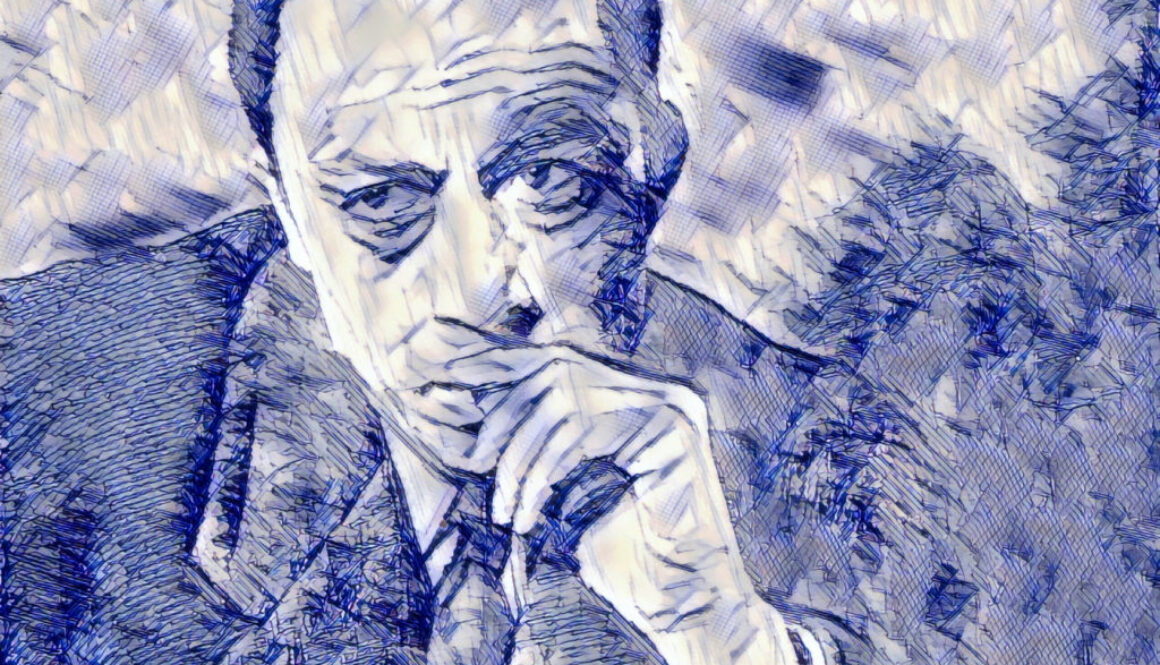
The only thing that’s proven helpful thus far is a 73-year-old novel that’s been on my reading list for several years now: Albert Camus’ “The Plague.”
Although written during World War II — and intended as an allegory for the Nazi occupation of France — this classic novel feels immediately relevant. A disease that spreads from animals to humans wreaks havoc on an unprepared population, one that is too wrapped up in itself and its economic dealings to take the threat seriously at first. Meanwhile, self-interested politicians delay making important decisions. Eventually, when denial no longer works, there are quarantines, supply shortages, fake remedies, issues with masks and, of course, mounting deaths. If not for the fact that the plague only ravishes a single town — instead of the entire world — it would seem almost perfectly prescient.
Nevertheless, the novel resonates in other ways, such as with its theme of exile and isolation. Camus actually introduces it even before the plague arrives, as a comment on modern life in general. The quarantines only make this sense of isolation more acute — something that no doubt feels familiar and will only sink in further once we are fully bored with streaming movies and video chats.
Ultimately, as the novel unfolds, Camus shows us that it’s possible to break out of this depression — even in a moment of crisis — by depicting a kind of active resistance to the plague that fosters solidarity and compassion, with a focus on saving lives.
While I’m far from the first to find this classic so insightful and relevant in our current moment of crisis, I doubt few have had it near the top of their reading list for as long as me. The reason for that is my recently completed 10-part podcast series “City of Refuge,” which tells the little-known story of a cluster of French villages on a remote plateau that rescued 5,000 refugees during World War II.
All throughout my research, Albert Camus and “The Plague” kept popping up. It was mainly as just a side note, because, as it happens, the famous French-Algerian author wrote much of the novel while living on the plateau in one of those courageous villages. He was, in essence, completely surrounded by people doing everything they could to save the lives of those in need.
I was never quite sure how, or whether, to mention this interesting fact in my series. And now I’m glad I didn’t merely mention it, because it’s deserving of a deeper dive. So, what follows is an examination of Albert Camus’ “The Plague” and the real-life nonviolent history that helped shape its timely, and timeless, message.
Albert Camus left his native Algeria in the summer of 1943 with the plan of spending the winter in the mountains of France. He had contracted tuberculosis in both of his lungs, and his doctor prescribed the fresh air as part of his treatment. Camus’ wife, Francine, knew of the perfect place — a quiet, sparsely populated plateau in south-central France, where she had often vacationed as a child.
Once they were settled into a boarding house — only two miles from the village of Le Chambon, the center of the plateau’s nonviolent resistance — Camus and his wife enjoyed the rest of their summer together. Then, in the fall, Francine returned to her teaching position in Algeria. Camus soon decided to join her, as the war was worsening and getting home seemed like a good idea. But just as he had made plans to hop a steamer back to Algeria, the Allies invaded North Africa.
It was November 7, 1942, and with the Nazis quickly responding to the invasion by occupying Southern France, Camus was now trapped. Days later, in his notebook, he drove the point home further, writing down the phrase “Like rats!”
It isn’t surprising he made this analogy. Rats were on his mind a lot in those days. They were the harbinger of death in the novel he had begun working on a year earlier — a novel that would, of course, become the acclaimed “La Peste” or “The Plague.” At this early stage, however, Camus was far from settled on a title. Not only did most of the work lie ahead of him, but the next 14-15 months he would spend on the plateau — exposed to its unique culture of resistance and rescue — would have a serious impact on the novel. Surprisingly, this fact isn’t widely discussed.
“Many of the biographers assumed that Camus didn’t know anything about what was going on on the plateau,” said Patrick Henry, author of “We Only Know Men,” the first book to truly explore Camus’ time on the plateau. “[They] never did their homework.”
In other words, Camus’ biographers weren’t in contact with the plateau’s local historians and researchers to the degree that Henry was. In fact, it was thanks to one of those contacts that he was able to interview an old friend of Camus’ — a Jewish French Algerian named André Chouraqui, who lived on the plateau during the war.
“Camus used to go to his house, and they would eat Algerian food and talk,” Henry said. “He was a specialist on the Bible, and he talked to Camus about the plague and the significance of the plague in the Hebrew Bible.”
Importantly, Chouraqui did clandestine work for the Jewish relief organization Œuvre de Secours aux Enfants, or OSE. “City of Refuge” listeners will recognize it as the organization Jewish rescuer Madeleine Dreyfus worked with. In fact, after she was arrested, it was Chouraqui who took over her duties of bringing refugee children to the plateau and hiding them. Learning this naturally made Henry wonder how much Camus knew about the rescue operation being conducted on the plateau.
“André Chouraqui wrote and told me, ‘Of course Camus knew everything that was going on,’” Henry explained. In fact, it would have been hard for him to miss — as, according to Henry, “There were actually Jews living in the same boarding house where Camus was living.”
Given how ubiquitous the rescue operation was on the plateau by this point, the next obvious question was whether or not Camus knew André Trocmé, the plateau’s charismatic pastor who lived in Le Chambon and was one of the driving forces behind the rescue effort.
Chouraqui told Henry that “Albert Camus had always known about the resistance that Pastors [Edouard] Theis and Trocmé conducted in Le Chambon,” but wasn’t sure Camus knew André Trocmé personally.
Nelly Hewett, André Trocmé’s daughter, confirmed this when I spoke to her. She said that although her parents never met Camus, “They knew of Chouraqui and he knew of them.” She also mentioned Pierre Fayol, the Jewish leader of the plateau’s armed resistance.
“They all were friends those guys. Fayol visited with my dad. Chouraqui visited with my dad. They had an inner group of which my dad was not a part. But they respected my dad’s work.”
Henry did some more digging and found that Fayol mentioned Camus in his memoir several times, noting that they often listened to the BBC together. This meant that Camus was plugged into all aspects of resistance on the plateau. That said, it’s important to note that resistance armies didn’t start popping up in France until around the time Camus arrived on the plateau, about midway through the war. The nonviolent resistance in Le Chambon and the surrounding area, on the other hand, had been going on for a couple of years already. Nevertheless, Fayol was respectful of its mission.
“On the plateau, there was very little killing going on,” Henry said. “Trocmé and Fayol were working together because they knew that, if they attacked, the Germans would bomb the place or kill people and the whole rescue mission would be destroyed. There wasn’t a great question of violence on the plateau.”
‘A greatness that I don’t have’
Realizing that Camus was apprised of these goings on, Henry began to see “The Plague” in a new light.
“Once I got that, it was like the key to the novel,” he said. “Let me read the novel now with everything I know about Le Chambon, and see what connections I can make.”
For starters, at just the surface level, there was the obvious allegory to the Occupation.
“In France the Germans were considered like a plague,” Henry explained, adding that they were called “la peste brune,” or “the brown plague,” because of their brown uniforms.
Although the idea of the allegory is well-established, it’s not always been appreciated by critics. Jean-Paul Sartre and other French thinkers were upset with Camus for comparing Nazism to a nonhuman phenomenon that was unrelated to human evil and therefore out of our control. But Camus’ plague was a stand-in for more than fascism. It was also a symbol for what he considered to be, more broadly, our culture of death — which he saw on all sides of the political spectrum, from the wealthy conservative establishment to the revolutionary dictatorships of the left. As a result, existential Marxists like Sartre were already primed to take issue with Camus and his novel. According to Henry, Sartre’s magazine Les Temps Modernes called it “boy scout morality” — really denigrating it in the worst way.
While the Marxists saw Camus as a pacifist, his actual views were a bit more complicated. We’ll explore that more momentarily. But first, let’s continue to examine the other connections between “The Plague” and the plateau — namely how some of the characters in the book resemble real people Camus knew or heard about.
One such character is Joseph Grand, a sort of secondary character who the narrator at one point refers to as the hero. But that comes with a bit of a qualification. Since Camus didn’t find the concept of heroism appealing, he has his narrator say that if there were a hero, it would be Grand because he’s just an ordinary man who did the right thing without thinking about it or seeking recognition.
“That’s the guy who is living right next to Camus,” Henry noted, referring to a scene in the 1989 documentary “Weapons of the Spirit,” where Director Pierre Sauvage interviews Camus’ real-life neighbor on the plateau, a man named Émile Grand. Whether the character in the novel is meant to be him it’s hard to say. More broadly, the Grand character seems to be a strong representation of the plateau’s rescuers at large. As André Trocmé’s wife, Magda, once said, “None of us thought that we were heroes. We were just people trying to do our best.”
In “The Plague” resistance is depicted through what are called “sanitary squads,” a sort of civilian-based defense against the death-dealing pathogen. Notably, they are created and organized by a rather idiosyncratic pacifist character named Jean Tarrou, who shares a few commonalities with Camus himself — aside from his rhyming last name.
“Camus was against killing,” Henry explained. “He waged war against the death penalty in France. His father saw an execution and came home and vomited. Camus heard the story about his father, and he tells the it in ‘The Plague.’”
More specifically, the character of Tarrou tells it. Only, instead of Tarrou’s father witnessing the execution, his father is actually the prosecutor demanding the death penalty. Tarrou explains that he saw his father’s state-sanctioned blood lust and decided to run away. At first, he joins various leftist struggles against oppression. Eventually, though, he comes to the realization that because these struggles sometimes involved killing to achieve their means he was fighting against an unjust system without bringing a just one into existence. Because of this, Tarrou says, “I had the plague already, long before I came to this town.” In short, he’s noting Camus’ broader use of the plague as a metaphor for humanity’s self-destructive qualities.
As Camus saw it, there is only one thing you can do with this knowledge: Become what he called “a rebel,” or someone who stands up for life and solidarity. In the novel, Tarrou explains his philosophy by saying, “There are pestilences and there are victims, and it’s up to us, so far as possible, not to join forces with the pestilences.”
For this reason, Henry describes Tarrou as “the ideal total nonviolent person.”
At one point in the novel, Tarrou lays out his basic formulation on pacifism, saying, “I decided to reject everything which directly or indirectly, for good reasons or for bad, kills. I definitely refuse to kill.”
It’s such a perfectly stated position on pacifism, and yet Camus himself was not an absolute pacifist. For all the nonviolence imagery in the novel, Camus saw violence as both “unavoidable and unjustifiable.” In fact, while writing to a friend nearly a decade after the war, he said: “I studied the theory of nonviolence, and I’m not far from concluding that it represents a truth worthy of being taught by example, but to do so one would need a greatness that I don’t have.”
However, Camus does let his character Tarrou have it.
“Tarrou has the greatness, and it links to Trocmé, who believes that one must resist violence but only with ‘the weapons of the spirit,’” Henry said.
At the same time, however, Tarrou has key differences with André Trocmé — namely religion. Tarrou says he wants to become a saint without God. But André Trocmé, a Protestant minister, was absolutely a man of God. Interestingly, though, his wife Magda was not religious and therefore, in many ways, embodied this idea of a secular saint.
“Mother always said that she really didn’t believe in God — the God that was usually a ‘He’ and was the head of the world and solving the problems,” Hewitt said. “But she had everything else that made her a Christian. All the qualities, all the generosity.”
So, if Tarrou was a match for anyone on the plateau at that time, it was almost certainly Magda Trocmé. That said, as I mentioned earlier, the Tarrou character is closer to Camus himself than any other real person.
According to the acclaimed theologian and writer Thomas Merton, Camus had a hard time accepting nonviolence because of how much he associated it with Christianity, which he largely rejected and saw as pushing a kind of self-interested do-nothing nonviolence. This is unfortunate, Merton argues, because it led Camus to overlook authentic nonviolence, which in many ways mirrors the kind of active resistance he clearly admired.
Ultimately, in Merton’s assessment, Camus didn’t like to offer precise doctrines or absolute formulas. He was quite reasonably — like any activist today — not wanting to preach or prescribe from a position of privilege. So, according to Merton, “at the risk of seeming inconclusive,” Camus “does not prescribe a method or tactic.”
Nevertheless, it’s not hard to read between the lines of “The Plague” and see what kind of resistance Camus is getting at.
“Camus is recognizing the nonviolent struggle for saving human lives,” Henry said. “Stopping people from getting infected, etc.”
In fact, the one instance of “revolutionary violence” that appears in the novel fails to achieve anything. It happens when a few armed men attack the gates of the town, trying to break out. They exchange fire with security forces, leading to a few deaths. This only really succeeds in sparking a wave of looting, that in turn led to martial law and executions. But, as Camus notes, there were so many deaths from the plague at this point, nobody cared — they were “a mere drop in the ocean.”
This isn’t to say Camus isn’t sympathetic to the stress and anxiety that led to the violence and lawlessness. We relate to one of his characters, a journalist named Raymond Rambert, who — like Camus — is an outsider, trapped in this place and separated from his wife. Rambert tries to escape by securing clearance papers through an illicit underground network. But along the way he has a change of heart and decides to stay, joining the sanitary squads and aiding the struggle to defeat the plague.
“That’s what happened to Camus,” Henry explained. “He tried to get out, and then he didn’t go out. And just like the character in the novel, he believes that he belongs there. And it is his duty to be part of the Resistance.”
In the fall of 1943, after more than a year on the plateau — witnessing active resistance to the Nazi agenda — Camus moved to Paris, where he became co-editor of Combat, the underground resistance newspaper. Even then, however, rescue work remained on his mind. He even tried to help hide a Jewish woman he met by writing a letter to Pierre Fayol back on the plateau saying “I’m sending someone to you who has a hereditary infection.”
“Camus knew what was happening,” Henry said. “He was sending a Jew to be protected there in Le Chambon.”
‘Fashion an art of living in times of catastrophe’
There’s one last character in “The Plague” worth exploring, and he’s probably the most important, as he’s also the novel’s narrator. His name is Bernard Rieux, and he is the town’s doctor. (Incidentally, there was a similarly named real-life Dr. Riou in Le Chambon during that time.) He is in many ways a different side of the same coin as Tarrou.
When Tarrou says he wants to become “a saint without God,” Rieux says he just wants “to be a man.” Tarrou then responds by saying, “Yes, we’re both after the same thing, but I’m less ambitious.” It’s a rather telling bit of self-deprecating humor through which Camus is letting us know that Tarrou’s pursuit of secular sainthood and Rieux’s pursuit of being a decent person are basically the same thing.
However, if there is a difference in the labels, it could be argued that by the end of the novel, it is Tarrou who becomes a man and Dr. Rieux who becomes a “saint without God.” Whereas Tarrou gets out of his head a bit and starts living not as an outsider, but in solidarity with his fellow citizens, Dr. Rieux is tested and never comes up short. He just continues to cure the sick and relieve human suffering. Notably, he is a healer, a term that Tarrou seems to equate with the saints. Most importantly, though, both characters have no desire to prove anything — and this is the quality that ties them back to the people of the plateau.
“Weapons of the Spirit” Director Pierre Sauvage underscored this connection in his film, noting this passage from the novel: “For those of our townspeople who were then risking their lives, the decision they had to make was simply whether or not they were in the midst of a plague and whether or not it was necessary to struggle against it. The essential thing was to save the largest number of people from dying. The only way to do this was to fight the plague. There was nothing admirable about this attitude. It was merely logical.”
Ultimately, it’s the message of “The Plague” — not the characters or the type of resistance depicted — that’s in sync with what happened on the plateau during the war. When accepting the Nobel Prize for literature in 1957, a decade after “The Plague” came out, Camus essentially summed up that message, saying, he wanted people to “fashion an art of living in times of catastrophe, to be reborn by fighting openly against the death instinct at work in our society.”
Camus himself, however, did not live much longer. It was only a few years later, in 1960, that he died in a car crash at the age of 47. Despite having accomplished so much at a relatively young age, there are those who think even bigger things were in the works.
“Camus was going somewhere,” Henry said. “Some say Camus was on the road to a religious conversion, but it could have been a conversion to something where he would be able to accept total nonviolence.”
This is not hard to imagine. After all, as Merton noted, Camus oftentimes spoke like a pacifist and, in practice, came very close to the nonviolent position. Much like ardent pacifist André Trocmé, Camus spoke out against revenge killings after the Germans had been defeated. He also was one of the first to condemn the bombing of Hiroshima, calling it “the ultimate phase of barbarism” in human history.
Whether or not he was headed toward some kind of personal conversion to total nonviolence isn’t really the point. It merely underscores that Camus was one of the few leading international voices of his time willing to consider its merits. In fact, he reportedly attended a conference on peace and peacemaking in Le Chambon shortly after the war. It was organized by none other than André Trocmé and attended by pacifist leaders from around the world.
According to Henry, “He was sitting in the back of the room and made some remark about people getting together to talk about these things is wonderful.”
Ultimately, what drew Camus to nonviolence — at least the kind practiced on the plateau during the war — is the focus on saving, not harming, lives.
“On the plateau he recognizes that nonviolence is a great way of saving Jews,” Henry said. “The Jews that were saved during the Holocaust were not saved by confronting the Nazis with violence. They always got killed when they did that. They couldn’t defeat this machine.”
In short, Camus saw something special happening on this tiny, isolated plateau where he was stuck for part of the war, and he drew inspiration from it to produce a singular work of art that offers empowering lessons on how to act in moments of crisis. Viewed from our current position, in the middle of this pandemic, it’s quite simple.
“When you leave it at the level of the microbe, it’s not complicated today,” Henry said. “We don’t have to kill anybody. We have to remain decent.”
Even then, however, the plague is never fully defeated. As Camus’ character Dr. Rieux notes on the final page of the novel, after the city overcomes the outbreak, “The plague bacillus never dies or disappears for good.” It lies dormant, until the day it rouses up its rats again and sends them forth to die in some unsuspecting place.
For that reason, we must never forget how to fight it — whether it comes in the form of a pathogen, fascism or some other cynical, destructive force. As the stories of the plateau and “The Plague” tell us, we are going to need solidarity, compassion and a steadfast commitment to saving lives.
In the words of Camus, “What’s true of all the evils in the world is true of plague as well. It helps men to rise above themselves.”