There is so much to love in the 1927 action film, The Gaucho: a lively, funny performance by Douglas Fairbanks, a fiery turn by Lupe Velez, who reminds us that she was a great actress before she became a gruesome punchline. That color sequence, those amazing technical innovations. Once derided, now recognized as a masterpiece, as well as an over-the-top hoot.
Not least among its pleasures, this wonderful poster by some anonymous artist, the kind of thing that could stand on its own even if there were no movie to advertise.
Just look at this.
One other thing: Don’t smoke, kids. But sometimes, in art, smoking is cool. And it’s Douglas Fairbanks smoking, back in 1927. He’d be dead now anyway.
Recent projects have expanded sewer capacity in some neighborhoods. But antiquated storm pipes leave the city vulnerable to the new normal of massive rain storms. “We need to rainproof New York City,” one expert said.
Cars try to drive through rising flood water down Leonard St in Brooklyn on Sept. 1. | Hiram Alejandro Durán/ THE CITTY
The unprecedented rainfall that remnants of Hurricane Ida dumped on Sept. 1 made New York City’s climate vulnerabilities starkly visible, less than two weeks after Tropical Storm Henri broke previous rain records.
Boulevards across boroughs could’ve been mistaken for rivers. Yankee Stadium became a lake. Waterfalls cascaded into subway stations.
The scenes were vastly different from those from the coastal flooding in 2012’s Superstorm Sandy, which prompted high-profile protection projects focused on waterfront areas vulnerable to storm surge and sea-level rise.
The recent deluges highlight how heavy rains have been largely left out of the equation, experts told THE CITY.
“We need to rainproof New York City,” said Amy Chester, managing director of Rebuild By Design, a federal effort launched by the U.S. Department of Housing and Urban Development after Sandy.
The flooding from Ida occurred because an overloaded, century-old drainage system was not built to accommodate that much water, city officials acknowledge.
“Rainfall rates were really extraordinary and far exceeded the capacity of the system,” city Department of Environmental Preservation Commissioner Vincent Sapienza said Thursday at a briefing with Mayor Bill de Blasio and Gov. Kathy Hochul in Hollis, Queens. “Anything over two inches an hour, we’re going to have trouble with.”
The National Weather Service measured more thanthree inches an hour at the storm’s peak. At least 13 people died — including 11 trapped in flooded basement apartments.
Environmental advocates are calling for the city to enhance how it handles stormwater by expanding green infrastructure to increase absorption and by updating the system of sewers and pipes. Federal funds could help, but even with resources available it would take years to expand the city’s drainage capacity to handle massive weather events such as Ida.
“We’ve done a good job of thinking a lot about water coming in from the edge, but we’ve done a less good job of thinking about water coming from the sky,” said Rob Fruedenberg, vice president of the energy and environment program at the Regional Plan Association.
‘Clear and Present Danger’
Ida’s downpour — more than 7 inches in all in many parts of the city — overwhelmed a sewer system already hard-pressed to handle run-of-the-mill heavy rain.
Much of the city’s network handles both waste and rain runoff in a single pipe. When rainfall exceeds the system’s capacity, starting at about a tenth of an inch of rain per hour, untreated sewage bypasses treatment plants and makes its way directly into city waterways.
Intensely concentrated rainfall adds the risk of flooding to the mix, when even the combined sewer system cannot keep up with the influx. Climate research commissioned by the city projected in 2015 that the number of days with rainfall of at least four inches would increase by as much as 67% by this decade compared to the period of 1971 to 2000.
“It’s hard to overstate on how many systemic levels this represents a clear and present danger,” said Eddie Bautista, executive director of the New York City Environmental Justice Alliance, noting that the largest combined sewer overflows are located in communities of color.
When it comes to storm drainage, he said, “We’re taking it for granted at our own peril.”
After Superstorm Sandy caused citywide devastation, the influx of federal dollars mainly went to projects to rebuild and shore up the coastline. Many of those projects are still not near completed. But preventing inundation by rain in vulnerable locations is just as important, climate watchers say.
As required under 2018 laws sponsored by then-Councilmember Costa Constantinides (D-Queens), the city Department of Environmental Protection in May released a stormwater resiliency plan, along with a map of areas likely to flood due to stormwater. Both were due in 2020 but were delayed because the COVID-induced budget crisis forced the work to pause, said Mitch Schwartz, a de Blasio spokesperson.
The plan lays out actions for the city to undertake over the next decade, from advance storm alerts for basement residents to including stormwater flood measures in the city’s climate resiliency design guidelines.
The very first item on the agenda: “Inform the public about flood vulnerability from extreme rain.”
De Blasio on Friday said he would accelerate the timeline for implementing the stormwater plan’s measures and establish an Extreme Weather Response Task Force to develop response protocols. He asked New Yorkers to brace for the unexpected.
“This kind of radical change in weather is beyond the understanding, beyond the reach of our typical measuring tools,” de Blasio said. “Things are happening that our projections can’t track with accuracy or consistency, which means we have to assume the worst in a way we never had before.”
Planning had already been underway for years. De Blasio’s OneNYC climate and infrastructure strategies are evolutions of former Mayor Mike Bloomberg’s 2007 PlaNYC, which identified what the city would need to address flash floods and upgrade the drainage system.
Ted Timbers,a spokesperson for the Department of Environmental Protection, said the city “invests hundreds of millions of dollars annually to upgrade the entire city’s drainage system, inland and coastal.”
Separating combined sewers is in process in Gowanus, College Point and Canarsie, according to Timbers. Meanwhile, the city is investing nearly $2 billion through 2025 upgrading drainage systems in flood-plagued Southeast Queens to increase capacity and prevent inundation, as well as making headway in Staten Island, he added.
But the city has no comprehensive initiative in place or planned to expand drain capacity throughout the city to prevent flooding.
Since Ida, elected officials have been demanding more.
“We need a much more aggressive and comprehensive approach now, one that doesn’t just rely on more studies and private-sector incentives, but brings the resources, regulatory reform, implementation, and enforcement needed to make change at scale quickly,” City Councilmember and comptroller candidate Brad Lander (D-Brooklyn) said in a statement.
He referred to the stormwater resiliency plan as “utterly inadequate.”
Queens Borough President Donovan Richards said at Thursday’s Hollis news conference: “Queens needs to see much more infrastructure investment.”
“We cannot wait until tomorrow. We need it today,” he added. “These lives could have been saved if we had investment that we sorely needed a long time ago.”
Natural Absorption
A cheaper — and quicker — way to manage stormwater is through green infrastructure projects, which absorb and redirect water. These interventions include rain gardens, rain barrels, permeable playgrounds and green roofs — generally, practices that decrease impervious surfaces or divert stormwater from even entering the drainage system.
Those measures can minimize, but not fully eliminate, the effects of extreme weather, experts say.
“We need to think about a plan and an investment strategy that looks at reducing urban heat, stormwater based flooding and benefitting habitat and clean air all at once,” said Kate Boicourt, director of New York and New Jersey coasts and watersheds at the nonprofit Environmental Defense Fund. “A lot of that comes down to green infrastructure investments.”
Hiram Alejandro Durán/ THE CITTYHiram Alejandro Durán/ THE CITYObtained by THE CITYHiram Alejandro Durán/ THE CITTYHiram Alejandro Durán/ THE CITYObtained by THE CITYClaudia Irizarry Aponte/ THE CITYKatie Honan/THE CITYClaudia Irizarry Aponte/ THE CITYJose Martinez/ THE CITY
New York City boasts more than 11,000 of these interventions, making the program the largest green infrastructure program in the country, according to the DEP’s Timbers. These include small “rain gardens,” also known as bioswales, designed to absorb excess rainwater on city streets and other public spaces.
Those programs haven’t been going perfectly: A 2019 audit from city Comptroller Scott Stringer found that out of 104 rain gardens reviewed, “the majority were not sufficiently maintained to ensure their proper functioning and appearance.” Litter and weeds plagued many sites.
Last year, the City Council voted to require certain construction projects to prevent runoff by retaining and managing stormwater on site. DEP is advancing rules scheduled to go into effect next year.
‘Water Is Our Wildfires’
Environmental advocates say the city still has a way to go.
“There’s a limit to green infrastructure, but you’ve got to at least start with that,” Fruedenberg said. “Maybe it’ll capture that first inch, and then make it a little better.”
Beyond that, the city can then take more dramatic steps: Fruedenberg pointed out that cities in South Korea and China have transformed lanes of traffic into canals, for example.
“Water is our wildfires,” he said. “We can use design to accommodate that.”
Department of Environmental Protection Commissioner Vincent Sapienza answered questions at the scene of the drownings in Queens. Sept. 2, 2021.
If Congress passes a federal infrastructure bill, New York City would be poised to receive an influx of funds that de Blasio indicated would go towards resiliency efforts.
“We’re about to make massive infrastructure investments on a scale we’ve never made before as fast as humanly possible,” he said Friday. “Then we’ll have to deploy everything the city’s got and private contractors to keep updating sewer systems everywhere, but it will be a race against time.”
A windfall for the city could fund capital investments to solve interconnected societal and environmental problems, Chester noted.
“Every single time that we go to capital projects, we should be incorporating resilience planning for flash floods, for storm surge, for heat,” she said. “Every dollar we spend will be wasted if we have to build it back again in another 10 or 20 years.”
^^^
THE CITY is an independent, nonprofit news outlet dedicated to hard-hitting reporting that serves the people of New York.
Facebook is an interesting thing. Bad in lots of ways, and I think it is mostly bad. Friends bragging about their kids, about their lives that are better than yours, visiting your home city and not calling you, going to parties you weren’t invited to. Terrible.
But it also serves as a sort of weird diary, or even a memory bank.
For example, today, FB reminded me of an opinion that I expressed seven years ago about the Chelsea Cain controversy.
The what?
Chelsea Cain’s 2014 Controversy
This is what I said on Facebook.
I felt really strongly about the cause of supporting unlikable authors back then, and I swore that I would buy her books. (Full disclosure: I didn’t buy any of her books. I didn’t even download a sample. I announced my intentions to the world and promptly forgot all about it.) I also blogged about her.
What did Chelsea Cain do, back then, that was so bad?
It’s awfully hard to figure out what she did after the space of just under a decade. The screen shots are available on Goodreads, in a closed group, and of course, as with anyone who speaks a little too loudly on the web, she has since deleted whatever it was she said.
But from various comments on Goodreads in response to my post, I can gather this: Ms. Cain, a thriller writer, received a bunch of questions from readers about what order she would prefer that they read her books. At one in the morning, facing disappointing sales of her most recent novel, she released a post somewhere expressing some annoyance. It appears she used the “eff word,” and that she referred to these questions as “boneheaded.” And the feeding frenzy began. She deleted her posts but clarified that she would not apologize for a single word she had written, and a new feeding frenzy began.
Should we cancel books written by jerks?
I wrote a column, not defending her poor manners, but arguing that we should still read books by poor mannered authors, if they are good. I received responses! One reader, Zahara Cerise, wrote, “the idea that any person is going to be hurt by not reading a particular author’s books is kind of silly. Unless the author has written the most unqualifiedly brilliant book of all eternity past, present and future, no one is going to sustain any damage from not reading certain books.”
While Ms. Cerise overstated the point, I generally agreed. If the author has not written a good book, no one who does not read it will suffer in any way. So if the author is not nice, and the book is not especially good, then by all means don’t read it. I would go a step further: if the author is nice, but the book is not good, you should still not read it. As I wrote back then, “If she is good but not great, then we shouldn’t be reading her anyway (at least till we’ve finished with all the greats, which will take some time)!”
But what if the author is a jerk and her book is great? Then, by all means read it. What if the author is a criminal, but her book is great? Read it. Don’t invite the author to your cocktail party, or to speak to your bridge club, but read her book.
A qualified defense of novelists who are jerks
And, as I noted seven years ago:
Many many many novelists are peculiar people who behave in self-defeating ways, and many of them really don’t understand what they’ve done wrong. That’s why they were novelists in the first place back in the good old days – they lacked the talent to go out into the world and hold down a “real” job that required “people skills,” and we could lock them away someplace where they wouldn’t insult too many people, and they could drink themselves to death without ruining too many other lives in the process. Unfortunately, the advent of the internet has changed all that …. Novelists need to package themselves, publicize themselves, write entertaining tweets and so on. I hope I seem relatively comfortable in that sort of venue, but not everyone is. There should be some place in our world for the incurably socially awkward.
You see, if you are an asshole, you should be a novelist!
I also have a day job, which involves sharpening pencils and replying to emails. What if I start sending nasty emails to my colleagues? Then I should be fired. And what if a prospective employer calls for a recommendation? No one should then recommend me. Cannot control his emails.
But people should still read my books if they are great. (Views differ.)
Great literature and great art is more important to the culture than great pencil sharpening and email replying. There are plenty of people who can quite handily step into my shoes at work. But for better or worse, there is only one person who could have written The Strange and Astounding Memoirs of Watt O’Hugh the Third. If it is great, read it. If it is not, do not.
Chelsea Cain, in case you are wondering, remains controversial, shoots off her mouth. And I still haven’t read any of her books. But none of this mishigas is standing in the way.
On Paricia Highsmith, A.A. Milne, Frederick Exley and other jerks
I will tie this up with a few words from the younger Drachman, which I wrote back in 2014:
If we need great suspense writers, we can start with Patricia Highsmith [rather than Chelsea Cain] before we bother with the good-but-not-great. Patricia Highsmith was really really not a nice person, but I am glad that didn’t keep me from reading the first two Ripley books, and if she were alive and on the web, we’d all be in for a lot of abuse.
I am not defending [Chelsea Cain], any more than I defend F. Scott Fitzgerald’s adultery, Frederick Exley’s horrible treatment of his first wife, William Styron’s cold behavior towards his children, J. D. Salinger’s weird stalking of Hollywood starlets, A.A. Milne’s inability to relate lovingly with Christopher Robin other than through the printed page, or any number of other strange and self-destructive things that novelists do and have done and will continue to do.
Back when I was a film critic, one director whom I admire a great deal was horribly and unjustifiably rude to me, regardless of the incredibly nice things I had said about him in print. At that moment, I understood one reason why he had not succeeded in Hollywood, in spite of being one of the most original and entertaining directors around. I still recommend his movies, because they are very good, but I won’t have him over for tea. I hope he will still have a chance to continue to make movies, even though he is a jerk. I do think I would have lost out without that director’s films, and without A.A. Milne’s books, or those of F. Scott Fitzgerald, Frederick Exley, and so on.
A.A. Milne was an interesting case, and I wrote a column on it back in the ’80s when the issue first came to light. (It’s not on the web – it was pre-web.) I just couldn’t believe that he didn’t love his young son. I thought maybe he expressed it through the written word because that was the only way he could. A strange fish indeed, and it was very sad, and he created a lot of pain, not the least of which was the fact that his son, who felt quite unloved, had to hear throughout his life what a wonderful father his old pop was. He could not leave it behind, because it was always there in front of him, on TV, in bookstores, in movie theaters. I hope he found some sort of peace with this. While this wrinkle affects my view of Milne pere, he still created a magical world that I don’t mind visiting. A.A. Milne never had the opportunity to interact with his readers, because he wrote in the 1920s, but I suspect that if he had, it would have been awkward and unsettling for the readers.
Here’s to all the assholes who write great books. Enjoy!
^^^
Steven S. Drachman is the author of The Strange and Astounding Memoirs of Watt O’Hugh the Third, which is available in paperback from your local bookstore, Amazon and Barnes & Noble; it is also available as a Kindle e-book.
We at Audere had a great summer, and it gave us a chance to reflect on our best and most popular stories. Happily, our “stats” app helps, constantly reminding us which stories you, our readers, loved, and which ones you didn’t care for much at all.
The fifth most-read article was our interview with Torsten Krol. The Dolphin People writer has remained stubbornly anonymous (“Torsten Krol” is a pseudonym) and our interview was something of a “get,” his first interview in over a decade. The extremely diverse topics about which he has written books, he told us, “may have created the impression that I’m several people, and in a way I am, but all those people are located inside the one skull. Having asserted that I’m one person, I feel other questions relating to my identity are irrelevant.” It was an interesting chat.
At number 4: In 2018, the Watt O’Hugh novelist Steven S. Drachman reviewed a film weirdly titled Disney Christopher Robin, which he acknowledged that he had not seen, but which in his view told so many extravagant falsehoods about the life of the real Christopher Robin Milne that it deserved a sight-unseen pan. “[W]hy exactly do our totalitarian overlords at Disney need to tell us this lie about the life of a real man?” Drachman asks. “It is because the real Christopher Robin was not a Disneyesque creature at all; he did not believe in eternal childhood and eternal childishness. He grew up.”
In 2020, author Julie Stamm talked to us about Some Days We…., her blunt yet optimistic picture book about being a parent with multiple sclerosis. “I can say wholeheartedly that diagnosis has changed me,” Stamm told us. “I don’t really remember the old me.” The interview is our third most-read article.
In the second most-read article in Audere history, bestselling novelist Donna Levin remembers her grandmother, Rae Stern, a cheerful but secretly depressed rabbi’s widow. “What she needed, I believe, was meaningful work of her own,” Levin writes, “something that was more than just a holdover from the glory days of Rebbetzinhood.”
At #1, A Big Hand for the Raunch Hands, Drachman’s appreciation of the late Mike Chandler, who headed a raucous and popular rock band in New York in the 1980s, and who died of cancer in 2018, having never become world-famous, in spite of expectations all those years ago. “[H]e really did have a lot of great shows and a lot of fans, back then,” Drachman writes, “and not everyone has that, nights when you rule the audience, nights when you are king. I hope that means he would say he had a good life.”
And an honorable mention: Alan N. Levy wrote our seventh most-read article; as a tribute to his deceased best friend, Levy wrote, “I’d like to describe a moment that I’ll simply label, ‘The Funniest Thing Ever Said.’ ” Alan died unexpected and suddenly a few months before his debut novel, The Tenth Plague, appeared in print. We hope wherever he is now, he is enjoying all his posthumous rave reviews.
(For the record, our least popular piece was a digital painting entitled “Autumn in the City,” which depicted beautiful fall leaves puddled around piles of garbage.)
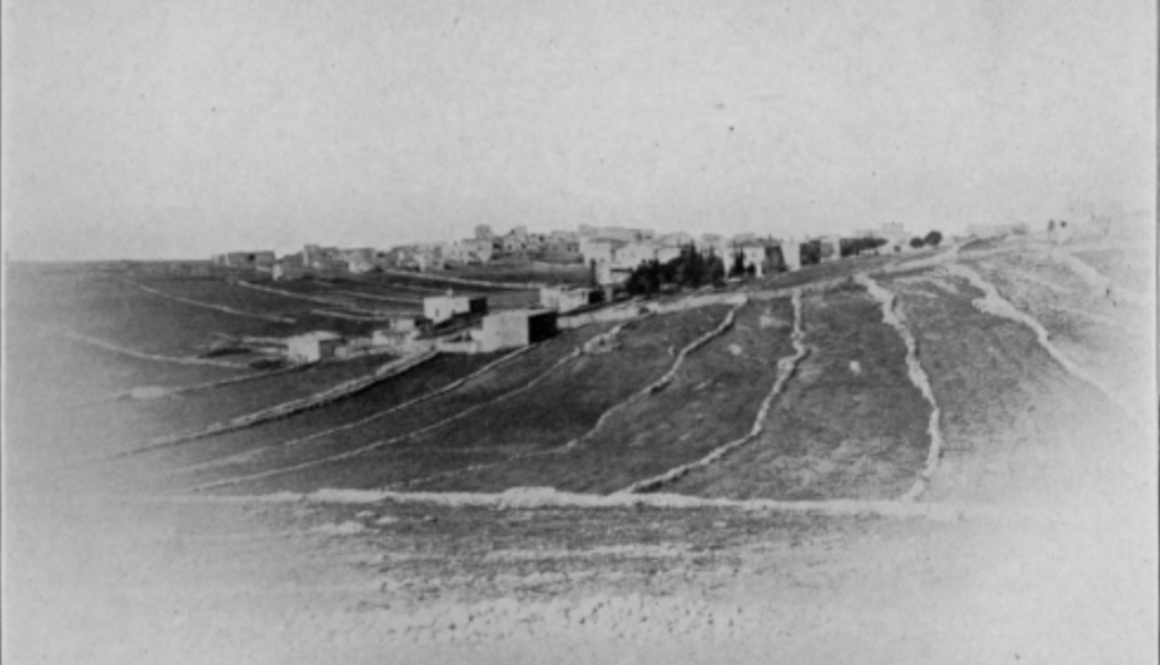
[Editor’s Note: This is the latest in our series of sketches of Palestine before the creation of the state of Israel, intended to build understanding of the legitimacy of all claims to the land. This sketch is by Elihu Grant, from his book, The People of Palestine (1907).]
The dominant religious influence in Râm Allâh is the Greek (Orthodox) Church. It is customary all through the near East, the field of the Greek Church, to admit to the chief ecclesiastical positions priests of Greek blood only. The head priest of the Râm Allâh Church was a Cretan who had come to this village in 1899.
He spoke the Arabic language but lamely. He was very affable and rather good looking. All Greek priests wear the hair long though they knot it up for convenience. The ordinary dress is a long black gown and rimless, cylindrical black hat.
When we called on the priest he conversed courteously and treated us to preserves and coffee. His attendant was a lad from the Greek islands whom he also used as his censer boy at church functions. This head priest goes by the title raîs, that is, head-one among the people. He is unmarried, as are all the superior clergy. There are four other priests for the church, who are natives of the place, speak the Arabic language, of course, and are married. The title for such a priest is Khûry.
Whenever there is such a one in a family of Syrians the entire family is apt to adopt the word Khûry as a family name. The names of the four khûrys of the Râm Allâh Greek Church during my acquaintance with the village were Ḥanna, Ayûb, Ḳustandy and Salîm. These under priests have most of the intercourse with the people, intermeddle with all sorts of affairs, like any native villager, and are a visible bond between the common and the ecclesiastical life of the village.
One of these four, who is reputed to be wealthy, acts as a sort of private banker in his parish, lending money about at the enormous rates which obtain among the peasants. The government rate is nine per cent, but this legal percentage is often more than doubled in practise, while for small, short-time loans the charges mount to huge proportions. One day as I walked out into the village I saw this khûry sitting in front of the dispensary. He had been consulting the physician about some ailment and had received the advice to take a sitz bath, but he lacked the very important aid of a bath-tub. He applied to me, as he saw me, to lend him a bath-tub, but I had nothing of the kind that was portable. He next heard that I was buying some articles for a new boarding-school for boys and suggested that if I bought some of the large copper vessels called ṭunjerehs, one of the variety used for washing clothes would suit his purpose.
But again I had to disappoint him, as I told him I was just then short of money and decided to buy only the smaller cooking ṭunjerehs at present. He looked surprised at my confession of temporary poverty, but followed up his lead affably by declaring that I was very welcome to come to his bank. It was some minutes before I saw the line of thought the thrifty fellow was following, that I should borrow money of him (the rate was then about twenty per cent) to buy bathing facilities which he might borrow of me. This will help to illustrate the unembarrassed egotism with which some of the people deal with one after the “heads-I-win, tails-you-lose” order. They are as unimaginative as children in setting your interests at naught and complacently securing all for themselves. And they will do it with all the dramatical touches of idealism and an unselfish air.
The village tradition of the founding of Râm Allâh is told by the peasants as follows: A certain Christian shaykh living in Shôbek, down towards Wâdy Mûsâ, became the father of a little girl. A Moslem shaykh, visiting the father, spoke in a complimentary way of the little child and was courteously answered, as in all cases where praise is bestowed on any possession, whether a new article or a new child, the owner or father usually replying, “It is for you.” So in this case the father replied, “She is for you,” meaning, of course, nothing by it except the usual courtesies.
Years passed by and the little baby girl became an attractive maiden, when the Moslem shaykh came and claimed her for his bride. The father protested, but was reminded of the visit of years before and the reply of the father, which had been taken in real earnest by his visitor. Consternation fell on the Christian family at the impending fate of the little daughter claimed by a Moslem. They would rather that the girl should die than marry thus, but they were in no condition to resist the demand. During the night the Christian shaykh took the only course possible, the desperate one of flight to other parts. Accompanied by his four brothers and their families he fled. No members of the large family could be left behind lest vengeance should be executed on them for the disappointment. They journeyed northward and were joined by certain Moslems who also had reasons for seeking a change of home.
The two parties traveled together, probably for greater safety. They all came into the country north of Jerusalem and the Christians, being blacksmiths, chose what were then wooded hills, the present site of Râm Allâh, though now there is no growth to evidence the early conditions. The Moslems settled about el-Bîreh. To-day when the Bîreh people laugh at Râm Allâh people and say, “Your fathers must have been foolish not to choose lands near the good Bîreh spring, but over there in that thirsty country,” some of the Râm Allâh people answer, “Our fathers were blacksmiths, and in their days the hills here were covered with woods which supplied them with charcoal.” To-day, as has been noted elsewhere, the largest section of Râm Allâh’s people is called the Ḥadadeh, that is, “the blacksmiths.”
Another version of the story has it that the Christians settled at el-Bîreh and the Moslems at Râm Allâh, but because the Christians were blacksmiths they arranged with the Moslems to exchange sites since there was so much material for charcoal around Râm Allâh. If this version could be credited it might help to account for the old mosk in Râm Allâh.
The villagers of Râm Allâh are often hard workers. Their hours of labor are from sunup to sunset. They often sing happily while they are digging the vineyards in lieu of plowing them where the vines are close. Twenty-five cents a day is fair pay for unskilled labor of this sort, though for skilled labor, such as that of a first-class mason and builder, the price may run to a dollar, or a little over. Women and boys work hard for from twelve to fifteen cents a day. From four to eight dollars a month secures a man servant who, if he is a clever one, will do countless services and become almost indispensable. He will try hard to meet the foreigners’ ideas and wishes and improve in his ability to anticipate them.
It does not do to nag and annoy the native helper by too close and nervous application of Western ideals of work, accuracy and punctuality, for one gets oneself into a very unlovely state of nervous irritability and often wears out a really valuable servant by unnecessary trifles of supervision. The peasant is used to a certain ease and generosity of judgment and if wisely watched will accomplish a good deal of work in a very fair way.
One fresh from Europe or America is tempted to supercilious airs, as if everything native to the country were inferior and vastly so. But a longer acquaintance emphasizes the fact that, the world over, our virtues, superiorities and so forth are put on in spots rather than in a consistent through and through grain. And one soon finds plenty of occasion in Palestine to blush for occurrences which must make a sensible native think us a very unlikely set of people to be receiving so many gifts from a kind Providence.
The conditions under which they see most foreigners persuade them that lack of money does not exist in America and possibly that it is not very common in Europe. Then, too, they see so many childless married couples, these naturally being the freest to travel, or to undertake missions, that the contradiction of this apparent curse upon us mystifies them. And as to sanity of mind and clearness of religious doctrine or practise, foreigners in Jerusalem must often be on the defensive in order to keep even self-respect.
Deep in the Sumatri pine forest, on Helica 3, sat a high-tech dwelling whose surface was completely obscured by a complex array of light-canceling panels. Just as the array denied visual detection from every angle, a complementary array of noise-canceling baffles ensured no revealing sound could escape.
Inside this extraordinary abode, purposely hidden on a sparsely populated human colony planet, was Crawford Caldera. Now a retired exogeologist, he’d spent most of his professional career exploring the surface of remote asteroids. Despite his far-flung life, anyone who imagined an exotic interior space loaded with souvenirs of alien worlds would be disappointed.
Crawford’s taste ran more to the homey end of the spectrum with rich browns and bright yellows complemented by stainless steel track lighting. His furniture, spare, ergonomic and functional had been selected for comfort first. Crawford’s only concession to style was to ensure that every piece fit within the same design school. The one exception was the room off his spacious bedroom devoted to his extensive collection of crystalline rock formations from across settled space. There, no expense had been spared to allow three-dimensional radiographs of every stone in his collection to envelop the interior and immerse the viewer in a world of pure geometry.
Unknown to Crawford, his former employers, whom he’d always thought of as “the Firm,” had been trying to breach his defenses for weeks. But even getting a message through had posed a challenge. In fact, to reach Crawford’s private comlink, the Firm’s comsignal was forced to navigate an encryption maze as intricate as the mammalian neural network it was patterned after. Over the past ten years since Crawford’s retirement at age fifty-five, the maze had blocked comsignals from an expansive roster of grasping relatives, fawning sales reps, down-at-heel ex-lovers and former colleagues looking to reminisce about The Old Days.
It was the blissful isolation he’d dreamed about his entire adult life.
Why else had he used a sizable chunk of his retirement bonus to build the perfect hideaway? By all appearances, the expense had been worth it, because the Firm’s Head Office had only discovered Crawford’s hideout by virtue of top-of-the-line sensors, including a Boustrian mass detector.
Though that kind of tech was normally off-limits to all but upper-echelon military operatives, to Crawford’s chagrin, the Firm in question was the Interstellar Mining Commission. It was the largest government agency devoted to asteroid cultivation in the Tau Ceti sector. Given how much of interstellar life depended on the huge cache of mineral deposits it had uncovered and developed over the past thousand years, IMC always got its way.
As a consequence, when it came time to break through Crawford’s encryption logjam, the IMC had the full cooperation of GalaxyPol’s top cyber team. They also gained access to the retired geologist’s full psychological profile. Not, that is, a sketchy list of personality traits but a complete breakdown including, as it were, a character map of Crawford’s “buttons.”
This is how, one Thursday afternoon, while Crawford was deeply preoccupied with doing precisely nothing, a soft-spoken woman of astonishing grace came to appear on his doorstep and knock insistently on a door that ought to have been invisible. Startled, Crawford paused long enough to pull on a baggy pair of khakis, run a comb through his graying hair and try in vain to fluff up his scraggly, salt-and-pepper beard. Only then did he tap into his onscreen door monitor and bark out a question.
“You wouldn’t happen to be with the IMC, would you?” he asked.
_______________________________________
ADVERTISEMENT
__________________________
The woman in her early thirties, who stared into his security camera, stood about five-eight. Her high-collared, olive-green jacket gave her a sporty look, as did her black canvas pants, tucked into calf-length, chocolate brown boots. And yet, she was all business.
“You obviously received our call, Mr. Caldera,” said the intruder. “No need to be cute about it.”
Crawford took a deep breath, reached for a clean T-shirt and entered a command string into a digital panel embedded in the wall of his spacious living room. The door swung open and in walked his unexpected guest, accompanied by a small, lemon-yellow android that stalked in on four nimble black legs. Its deep, resonant voice unnerved Crawford almost as much as the woman herself.
“No apparent threat, Agent Chaplin,” it said.
The woman extended her right hand as the door swung shut behind her without so much as a whisper.
“Arielle Chaplin,” she said. “Nice to meet you, Mr. Caldera. Don’t mind 6N7. It doesn’t mince words”
“Me neither,” said Crawford. “I’m not interested.”
Arielle walked past him and sat down on his plush, brown suede couch with the grace of a dancer — or perhaps a karateka.
“Practiced saying that in front if a mirror, did you?” she asked. “Know that your level of interest is irrelevant. So why not invite me for lunch and make the best of it?”
Crawford rolled his eyes.
“No meal service on government flights?” he asked.
“Make it easy on yourself, Mr. Caldera,” said Agent Chaplin. “Right now, I’m from the IMC. Send me away and I’ll come back later — only from GalaxyPol.”
“Your robot already gave you away,” said Crawford. “And your attitude. So you can forget about lunch. Get to the point.”
Her face a mask of indifference, Agent Chaplin gave Crawford a stark choice. He could either take a new assignment or lose his pension. His vague memory of a “right to consultation” clause made his throat go dry.
“You know this makes no sense,” he said. “Look at me. Am I in any shape to strut out onto an asteroid?”
A glance at Crawford’s flabby physique told the story of a once-fit operative who’d taken no further interest in his appearance after taking early retirement. As a confirmed hermit, he had no one to look sharp for and no interest in climbing back onto the wheel of love and desire.
Agent Chaplin smiled.
“Not yet,” she said. “You’re about three nanobot therapies away from fitness. So come on, get dressed for the real world and let’s go. I’ll send a team to pick up your essentials this afternoon.”
“Not until you explain what the rush is,” said Crawford.
The startlingly beautiful woman reached into her jacket, retrieved a dull, black lase pistol and aimed it at his chest.
“I believe this is explanation enough,” she said.
“Don’t be ridiculous,” said Crawford. “If you were sent here to kill me, I’d be dead already. Besides, didn’t GalaxyPol train you to recognize a hologram?”
Crawford’s image disappeared like so much steam. All it had taken was a flick of his finger on a miniaturized holoprojector attached to his belt.
“All right Mr. Crawford,” said Agent Chaplin. “My mistake. I should’ve known you’d pick up some tricks from the Skelanese.”
Arielle was referring to Crawford’s last, eight-year mission in the asteroid belt at the outer edge of the Skeena system. The Skelanese, a species of sinewy, catlike creatures, had earned a reputation for developing the most intricate chip architectures in settled space. Their command of stealth tech was several decades ahead of the times. In fact, every way Crawford had made his home invisible and impenetrable was with tech that his former employers had considered “off the shelf.”
“Though I’m not legally bound to justify my arrival,” said Agent Chaplin, “I see you’re determined to waste my time until I do. So get in here and I’ll give you the run down … Oh, come on!”
Arielle’s exasperated expression had been triggered by the entrance of not one, but twenty-four “Crawfords,” identically clad in baggy, off-white khakis, a pair of bright red running shoes and a blue T-shirt with the words “USSF Relentless” emblazoned in lavender.
“One of us is real,” they all said. “Tell me the truth and find out which.”
The GalaxyPol operative tilted her ovoid head to the right.
“How will you know if I’m telling the truth?” she asked. “I’m just curious.”
“By whether it matches the reconnaissance reports I read on COSNET last night,” said the holoclones in unison. “I still have security clearance, you know.”
“Kind of degrades the honor, if you ask me,” said Arielle. “But here goes.”
Crawford’s holograms appeared to listen intently as she outlined the mission the retired operative had been roped into. According to a report filed by a geological team in a relatively uncharted region of the Phaeton galaxy, an entirely new substance had turned up in the substrata of asteroids within a narrow belt at the farthest extreme of the Skelana system.
“You don’t need me,” he said. “A little laser ablation will reveal everything you need to know. I’ll bet even 6N7 could handle that for you, can’t you, Boy?”
At the mention of its name, Arielle’s lemon-yellow android raised itself on its back legs.
“The nominally demeaning appellation, ‘Boy,’ is inaccurate,” it said. “In any case, my laser capability extends only so far as defending Agent Chaplin from perceived threats.”
“And?” asked the Crawford clones.
“My analysis shows,” said the android, “that the Agent is merely in danger of acute aggravation.”
“As it turns out, lasers are the last thing we need. Mr. Caldera,” said Arielle. “Our quarry emits so much light that we’ve already lost two servicebots.”
The Crawfords chuckled.
“Come on,” they said. “You make it sound like your team dug up a small star from the soil of an asteroid.”
But that, apparently, was the same conclusion that GalaxyPol’s astronomy team had come to.
“It makes no sense,” said Arielle, “but nobody said it had to. We found a jagged metaversal rift right in our backyard, and it looks like it leads right to a duplicate version of the cosmos as we know it.”
The Crawford’s stared at her, wide-eyed, slapped their foreheads and collapsed into a solitary version of what Agent Chaplin fervently hoped was the flesh-and-blood organic original.
“I see I convinced you,” she said. “Can we get moving now?”
Crawford folded his arms across his chest.
“You parroted the report on COSNET,” he said. “Good job. But the more truth there is to this story, the less you need me. I’m a geologist, not a cosmic midwife.”
“Mr. Caldera, I have no idea what you’re talking about,” said Arielle. “Nor do I have time to listen to the explanation. So I’ll tell you what I know instead. You’re the one person in the human sphere who has had extensive contact with the Skelanese. You spent eight years in their employ, presumably to help them find the perfect natural, space-based platform for a mysterious experiment. All this time, we’ve wondered why, as advanced as they are, they couldn’t have produced a platform of their own. But thanks to this discovery, we now have a pretty good idea. They were looking for the perfect interface for this bizarre experiment in controlled metaversal interaction — and needed a scapegoat if the project went south.”
“You think the Skelanese opened this … rift … of yours?” asked Crawford. “They wouldn’t do that. They worship Nature, just the way it is. Besides, I still don’t see….”
For a second time that morning, Agent Chaplin’s lase pistol peeked out of her jacket.
“I’m setting this on stun,” she said. “Nothing the nanobots can’t repair. Now, Mr. Crawford, did you or did you not receive a johlantra encounter suit from your hosts on your last day of active duty?”
“Sure, yeah,” said Crawford. “They gave me this weird ceremonial outfit. You want to see it? But hold on. If you think the Skelanese are behind this tiny sun, or whatever, why don’t you just ask them?”
Arielle lowered her weapon.
“That’s why I’m here,” she said. “We can’t. The Skelanese — all of them — are gone.”
A new Episode of A Slight Miscalculation will appear every other Monday. See all episodes here.
^^^
Mark Laporta is the author of Probability Shadow and Entropy Refraction, the first two novels in the science fiction series, Against the Glare of Darkness, which are available at a bookstore near you, on Amazon and at Barnes & Noble. He is also the author of Orbitals: Journeys to Future Worlds, a collection of short science fiction, which is available as an ebook.
Look, are we presidential historians? No. But on the other hand, what is the qualification to be a presidential historian? It’s not like being, say, a doctor or a lawyer. You don’t need a license, after all! So maybe we are presidential historians.
The stock market goes up and down, and how much the president impacts that is a matter of debate, but it’s certain that if it’s up, it will eventually go back down. And military endeavors will come along, and the president will do the best he can with the military he’s inherited. But some presidents make structural changes that fundamentally and permanently change our nation for the better or the worse, which is why we agree that Andrew Johnson, Franklin Pierce and James Buchanan belong in the bottom three slots, and why Lyndon Johnson and Franklin Roosevelt deserve significantly higher rankings.
So here are a few thoughts as to where the “historians” got it wrong.
Abraham Lincoln:
Let’s start with a statement of fact about which not everyone agrees: “The United States was set up as a loose collection of independent states, each of which had a perfect right to go its own way if it wished.” Even if not true, it was something the South believed, and which the South still believes. As a matter of course, when a liberal wins the presidency, the Texas governor generally threatens to secede. As bad as it might have been to the economy of the North to lose the cotton fields, Lincoln probably should have let the bastards go their own way, and to offer sanctuary and citizenship to any escaped slave who might make it over the border. But instead he fought a costly and horrible war without ever considering how a nation is supposed to function if the losing side can just outvote the winning side after the war is over. His bumbling led to the awful, tribalist, minority-rule nation that we have since become. And his preference was to send freed slaves back to Africa.
Minuses:
He wrecked the United States forever;
He wasn’t particularly enlightened on racial matters, and
He probably wasn’t nice to his wife.
Pluses:
he liked making out with other men and seems not to have been particular troubled about it, which is kind of charming for a gentleman of the mid-19th century.
Verdict: We’d drop him from #1 to #36.
Warren Harding:
This guy always ranks near the bottom, absolutely entirely based on a complicated and relatively minor financial scandal in his administration, in which he was not involved; since the public learned of the scandal (known, obscurely, as “Teapot Dome”) after Harding’s death, the president never had a chance to explain it, or to argue for his legacy.
Pluses:
He presided over an era of financial expansion and unprecedented prosperity;
The entire country loved him;
He was charismatic and forceful;
He bravely pushed for a sweeping anti-racism agenda, although he didn’t achieve it in his brief two years in office. Remarkably, when his opponents tried to discredit him by alleging that he was Black, he declined to deny it, which was an exceedingly brave position to take in an era that saw the South seeking to reinstate white nationalism. “One of my ancestors may have jumped the fence,” he told a reporter. He won the election anyway.
Minuses: Cheated on his wife, including in the White House closet. We don’t think that has anything to do with presidential excellence, but “moral authority” is a category on the list, and judging from the results, it seems to refer to adultery.
Verdict: We’d bump him up from #37 to #12.
Jimmy Carter
Ineffectual in almost every possible way.
Pluses:
He wore nice sweaters, late in his administration;
His clunky incompetence wins him some sympathy points, like a klutzy five-year-old who fell in the mud, and is sitting there, dazed, in the mud, wondering what went wrong.
Minuses:
He was the worst communicator of all modern presidents;
He destroyed the Democratic Party for a generation, shepherding in a weird, right-wing, supply side realignment that would never have happened otherwise;
After arm-twisting Israel into wide-ranging territorial concessions for a promised peace, subsequently spent the rest of his presidency and post-presidency bad-mouthing both the prime minister he had arm-twisted and the entire nation. The promised peace has yet to arrive;
A bunny rabbit attacked him, which made him a laughingstock. Insisting that it was a “killer” bunny rabbit didn’t help him;
He was ineffectual at handling the economy and ineffectual at handling foreign relations;
He claimed to be a nuclear scientist but never learned how to pronounce the word “nuclear”;
He was ineffectual at handling negotiations with Congress, controlled by his own party;
He permitted tiny, impoverished Iran to make the United States appear weak and defeated;
He’s often praised as one of our best ex-presidents, because of his charitable activities, or something. Tell that to the presidents who have had to deal with his meddling. So if one may even count a post-presidency in a president’s rating, then Carter’s post-presidency is a minus.
Verdict: We’d drop him from #26 to #40.
Chester Arthur
At the time that he ascended to the presidency, Chester Arthur was as crooked as they come, living off graft and carousing with hookers and corrupt machine politicians. But as president, he looked to the idealism of his youth, rather than the corruption of his middle age, to become a brave, bridge-burning reformer.
Pluses:
Chester Arthur stands, to date, as the only professional horror fiction writer elected president; his story, “The Defaulter — A True Tale” was published in The Antiquarian and General Review (it wasn’t a true tale);
As president, he wrote a progressive and brave denunciation of the Chinese Exclusion Act, which was visionary for its time, and he managed to somewhat defang the law when threatened with a veto override;
We think the hookers were an affectation to impress his friends, since Chester Arthur gets extra credit here for his cheerfully romantic youthful love letters to another young man; he wrote of “sitting up like owls till two or three in the morning with our pipes … laying bare to each other our adventures and experiences … & then tumbling into bed in the ‘wee sma’ hours’ & falling soundly asleep in each other’s arms”;
He was a civil rights lawyer, in his pre-presidency, who desegrated New York City’s public transportation system;
He reformed the civil service administration, which prior to his administration was a cesspool of graft; this was especially remarkable, given the powerful allies he alienated by this move. Indeed, his life is a poetic arc, of an idealistic abolitionist and civil rights attorney who lost his way then found ultimate redemption in the presidency.
Minuses: Due to his single, partial term, his achievements didn’t match his potential.
Verdict: We’d bump him up from #30 to #11.
Richard Nixon
OK, he “resigned in disgrace.” Ironically, had he stayed and fought, and remained in office, he would be considerably higher on the list. Our “last liberal president” (as Pat Moynihan once praised him), Nixon’s achievements are legendary, from realignment with China and his brave exit from the Vietnam quagmire to his efforts to save the state of Israel during the Yom Kippur War and a visionary concern for environmentalism that brought us the Environmental Protection Agency, which he created by Executive Order. His civil rights record was also commendable (the “Southern Strategy” notwithstanding.) The tapes that have been released in the years since his fall have revealed a prescient support for marriage equality.
Verdict: We’d bump him up from #31 to #9.
And don’t forget:
George H.W. Bush:
His “Willie Horton” campaign paved the way for Donald Trump’s racism; his Iraq War paved the way for his son’s Iraq War; he was the first president in decades to veto a civil rights bill. He changed America for the worse.
The Verdict: We’d drop him from 21 to 32.
^^^
Image: Steven S. Drachman from a photograph John Bakator