When Covid closed down the world, the most interesting places to go were in VR; expansive vistas, imaginary landscapes, and not least-of-all, amazing nightlife, filled with people, dancing and laughing and socializing, sometimes falling in love, all with no fear of catching anything and dying.
If you have not ever been in VR, you have an amazing experience in store for you. It’s not like a video game that you watch on a screen. You feel as though you are really somewhere else, and when you take off your headset, you feel as though you have been away. It’s that immersive; it tricks the brain.
Nothing will ever be the same for you.
The world is open again now, for the moment anyway, but we still think that VR is more than worth visiting.
Here are a few of the best things going on this weekend in our adjacent world.
Friday, December 17, 2021 from 5:00 PM to 11:00 PM (EST), in AltspaceVR; free
For their “Keep on Techno Night,” organizers Owen Offset and Jake Upfront have designed a night of clubhopping among four VR hot spots, each of which is based on a legendary nightclub that is not currently open — but you may recognize them once you are inside.
Jake tells us to expect “five international Techno DJs/producers, playing the latest techno and hard techno … we will dance in four different realistic VR venues, all of which are optimized for Meta Quest 2,” although you can visit through any VR headset compatible with AltspaceVR. As with many VR experiences, you can also visit via your PC or Mac, though the true immersive experience requires a headset.
“Three of the clubs,” Jake says, “were in operation until they were closed for COVID a week ago. And the fourth had its last party in 1996. The three clubs do have some variations from the original clubs, so they are rather inspired on these clubs. It is after all VR, so you can make whatever your heart so desires. I just build and learn from the events we host regularly, what works in VR, what people like and what can be improved….”
The prior versions of Ecliptic were great nights out, and this weekend’s evening promises to be downright spectacular.
“It’s amazing,” Jake says, “what we can do with the XR2 chip.”
Thursday, December 16, 2021 from 6:30 PM to 10:30 PM (EST), in AltspaceVR; free
An open-mic night at a beautiful duplex nightclub on the first two floors of a sky-high mansion. Perform if you want, and you could win a real trophy. (It will arrive in the mail.) Or just relax and watch, the performers are pretty good. Smoke a cigar, drink a martini, lounge in the pool, have a word with Matty, the proprietor, who’s a nice fellow. Be careful on the balcony … the view is beautiful, but you can fall off the balcony, into the bay, if you don’t watch your step.
Friday, December 17, 9 pm (EST) in AltspaceVR; free
A laid-back party on a tiny, sandy islet beside a small dock, with a tiki bar and some nice tunes. Go and mingle, juggle some flaming torches. It’s a pleasant, cheerful place to hang out and drink a virtual beer.
“Venues” is a VR multiplex, with numerous programs that play simultaneously on gigantic multi-story screens in beautiful, tiered theaters.
The lobby is a bustling social scene, and you will meet some of the most outgoing folks in VR here. But be sure to mute or block the kids who run around without adult supervision; a benefit of VR is that you can block people who annoy you, and then you just never see them again.
The Multiverse Planetarium is a beautiful new science museum dedicated to the solar system and space flight. The space is filled with exhibits, games, toy rockets and viewing platforms from which you can observe all the planets up close.
Recently refurbished to add more great stuff, including a fun new maze, it’s often under-utilized, but it’s thorough, informative, lively and bound to catch on.
One hopes more museums will soon grace the virtual world.
Hugo
(2011, dir. Martin Scorsese); any time, in BigScreen; $4.99/person.
BigScreen was once a virtual movie theater lobby with virtual movie theaters — you would buy your ticket and go in and watch a movie in a virtual audience, a magical experience during the dark days of the pandemic.
Business logistics got in the way (VR’ers don’t like to show up on time), but one hopes a real “going out” theater experience will eventually return.
Still, today you can invite a bunch of friends to watch a 3D movie in your virtual home theater (in your mansion) or in a gigantic, old-style movie theater.
Some 3D movies just don’t hold up on BluRay and demand to be seen as originally intended. Hugo is a prime example, and BigScreen is the best place to see this terrific movie.
In these pages, Steven S. Drachman called Hugo, which is based on a graphic novel by Brian Selznick, “a really atypical Scorsese movie, a movie kids really loved when it came out (and which taught them something about the history of movies), as well as an incredible recreation of yesterday’s Paris.”
Sunday, December 19, 2021 from 9:15 PM to 11:30 PM (EST) in Altspace VR; free
A compelling recreation of a vintage Harlem blues club, with cigarette girls, fried chicken and stage performances by deceased Harlem blues legends.
Outside the club, you can wander the streets of Harlem. And remember: “The Boom Boom Room is not responsible for any raids or burglaries that might happen while you are on the premises.”
Preceded by a performance at THE FLYMAXX of a new episode of “Becoming The Moe-ettes.”
^^^
Audere Magazine writes regularly about VR and technology. See more here.
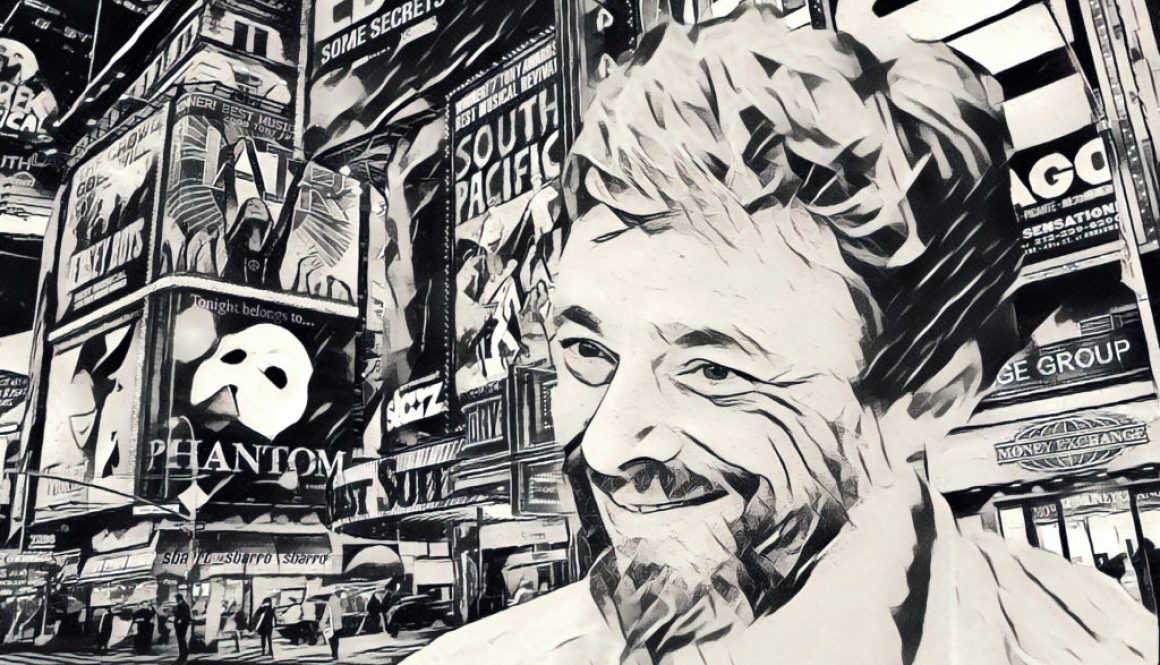
When I told my husband that I was going to record my own thoughts about Stephen Sondheim, he asked, do you have anything new to say?
It was a fair question. So much has been written, filmed, and broadcast about Sondheim’s work, not only since his passing, but over the years. Still, I think I do.
My mother planted the seed of my love of musical theater. She played The Music Man and Bye Bye Birdie and, of course, West Side Story on our turntable. Yes, I’m that old.
Neither of the first two hold up for me in the age of Les Misérables, Rent and Dear Evan Hansen. West Side Story wasn’t even one of my faves. The only song I really loved was “Officer Krupke,” for its irreverence and inventive rhymes. I had to ask my mom what a “social disease” was. She dodged the question.
There’s nothing in this podcast you don’t know….
Last week, one of my daughters mentioned that the New York Times’ “Daily” podcast was a tribute to Sondheim. There might not be much in it you don’t already know, she acknowledged. His troubled childhood, the mentor he found in Oscar Hammerstein, his breakthrough musicals of the 7os…? What was the first show for which he wrote music and lyrics? No, not A Funny Thing Happened on the Way to the Forum. It was Saturday Night, which wasn’t produced until 1997. Gotcha.
“No, there’s nothing in this podcast you don’t know,” she said, but I loved her for thinking of me.
I’ve been mostly avoiding the mass quantities of tributes, articles and interviews. (By the way, where were all you true believers when Assassins played a mere 73 performances at Playwrights Horizons?) I avoid them not because I’m such an expert – there’s plenty I “don’t know” – but because if I admire someone, be they scientist or painter, I don’t want to run the risk of finding out that they were jerks in their personal life. Frank Lloyd Wright, the genius architect – don’t get me started. Let the work be the work; never mind the person who created it. Sondheim once said something slightly unkind about Rodgers and Hammerstein, and even that bugged me. It’s easy to get on my bad side; I’ve often described myself as the Sweeney Todd of San Francisco: “she never forgets and she never forgives.”
A modest and kind man
With the exception of his remark regarding Rodgers and Hammerstein, by all accounts, Sondheim was a modest and kind man, who mentored others the way Hammerstein mentored him. (How is a man named Oscar Hammerstein not Jewish? It’s one of those one-Jewish-grandparent things.) But I’m not taking any chances.
However, I couldn’t resist Sondheim’s short interview with Patti LuPone from last year, since I’m also a huge fan of LuPone’s. Keep your Sarah Brightmans and Kristin Chenoweths – give me a mezzo-soprano who can belt. It was a mere six-minute clip, excerpted from a longer segment, first broadcast on CBS Sunday Morning. I didn’t mean to look at the comments, because I was certain it would be a long list of what I call “overkvell,” but one leapt out: It was from “Pam0626: Aside from his musical genius, he comes across as a humble man. Rest well, Mr. Sondheim.”
Now, I hate seeing the letters “R.I.P.” They evoke the tall, narrow headstones and skeletons of Halloween decorations. Spell it out as “rest in peace,” and it’s not distasteful, but it’s a cliché, which is, if anything, worse.
I envied Sondheim
But “rest well:” those two words make it sound as though Mr. Sondheim is still somewhere. Just taking a nap, or on a well-deserved vacation. Maybe getting ready to produce more work. Don’t misunderstand: I don’t like to think of the afterlife as a place where the smart and talented, let alone the famous, get special privileges. (When the mother of a friend of mine was dying, someone asked her what famous people she wanted to meet in heaven. Aimee Semple McPherson, maybe?) I don’t believe in an afterlife, but I can’t quite forsake hope, either. If there were one, it would be a place where everyone can do what they love, and there are no bad reviews, no Ben Brantleys, or John Simons, or Lindsay Ellises. I don’t believe in hell, either, but if anyone….
I didn’t just admire Sondheim, I envied him. Although he was older than I, and a gay man (I love gay men! My best friend is a gay man! However, in the words of Oscar Hammerstein himself, “I enjoy being a girl”), I would have traded places with him, if temporarily, because I would have liked to feel, in my own body and brain, what it was like to have produced the work he did.
Now I envy him for other reasons: he lived a long life, he was working up until the end, and when he went, he went fast.
So, rest well.
^^^
Donna Levin is the author of four novels, all of which are available from Chickadee Prince Books. Her most recent novel, He Could Be Another Bill Gates, is available on Amazon, Barnes and Noble, or at the bookstore right across the street from your home. Please take a look.
His body now considerably more lithe, due to the nanobot treatments he’d received through GalaxyPol, Crawford dashed down the Sky Rock’s corridors, jumped into the nearest bank of maglev lifts and raced into the ship’s launch bay. A fresh lander waited for him on deck and he wasted no time climbing in. A familiar voice greeted him.
“This lander is prepped and ready,” said 6N7.
Crawford’s head whipped to the right, where he saw the lemon yellow-and-black android once again housed in a clear wall compartment.
“How did you…” he said. “I left you on the bridge.”
“As with any modern android,” said 6N7, “my consciousness is not housed in a structure analogous to an organic brain. It is stored on COSNET or, as now, on Sky Rock and piped in as needed. Every lander on this ship is equipped with an android casing of this type. Agent Chaplin simply rerouted my consciousness here the moment she authorized your return to the asteroid.”
Crawford smiled. He hadn’t waited for authorization, but the official report would assure Arielle’s higher-ups that he had. Even in a crisis, he realized, the bean counters would insist on leaving no legume behind.
“Right.” he said. “Let’s go, before our Frankenstein decides it’s not scared of us any more.”
Soon they were back out in space where the action was. Crawford had to hope, he realized, that “the action” didn’t involve a spatiotemporal rift big enough to swallow him up before he reached the asteroid’s surface. But luck was with him and the lander completed the short hop the hollowed-out rock that was rapidly becoming the center of the universe. As he disembarked, after first freeing 6N7 from his plastic cage, he crunched across the asteroid’s surface with the confidence of inevitability embedded in his heart. Just up ahead, he found the entrance escalator exactly where he’d left it.
Either this works or nothing does, he told himself.
Before long, the kreljebtra’s increasingly misshapen form hove into view. He stopped a few meters short and pointed at the device
“Test the waters,” he told 6N7.
The android hesitated before taking a wide, spiraling path toward the kreljebtra.
SAID WOULD NOT HARM.
The kreljebtra’s clanky voice echoed through Crawford’s encounter suit like a voice shouting across a canyon.
“No need to scream,” said Crawford.
His heart racing, the geologist-turned-GalaxyPol-agent walked straight up to the hulking structure and saw for himself just how distorted local space time had become to produce such a monstrosity. At a meter out, the kreljebtra spoke again.
CLOSER NOT ADVISABLE. INSTABILITY. WHAT DO YOU WANT?
“To understand,” said Crawford. “You said your mission was to fix a hole in the Cosmos made by the Skelanese, by Djaleerin. But you’re making more holes — rifts — and that’s got to stop.”
NOT ME. OTHERS MAKE HOLES. I TRY TRY TRY TO FIX. OTHERS MAKE MORE.
“Others like you?” asked Crawford. Though the kreljebtra’s broken command of language made it laborious, Crawford eventually arrived at what sounded like a reasonable explanation for the dilemma they faced. That is, if something so bizarrely complex could be considered reasonable. As 6N7 had already suggested, the “others” that the kreljebtra referred to were parallel versions of itself. How many versions? The kreljebtra’s estimate ranged from a few dozen to a number large enough to stand in for infinity in any sense that a human mind could grasp.
“What if you just stopped?” asked Crawford. “if you are all trying to repair each other’s errors, wouldn’t it make sense to break the chain?”
NOT STOP. CREATE IMBALANCE. MUST KEEP BALANCE.
6N7 stood up on its hind legs and spoke on an encrypted comlink to Crawford’s encounter suit.
“I suggest the device is locked in a logical fallacy not unlike those you humans were susceptible to in your early years as a technological society,” it said. “The idea is that an illogical action must be continued indefinitely to resolve a conflict that the action itself perpetuates.”
Crawford frowned. If 6N7 were right, the kreljebtra was engaged in what used to be called a “forever war” with an unseen enemy, little realizing that the enemy was its own anxiety.
“What do you suggest?” he asked the android. “If you’re right, we’ll never talk that monstrosity out of wrecking the universe. Besides, even if we did shut this thing off, what chance will we have to bring the Skelanese back from the … the limbo they’re in?”
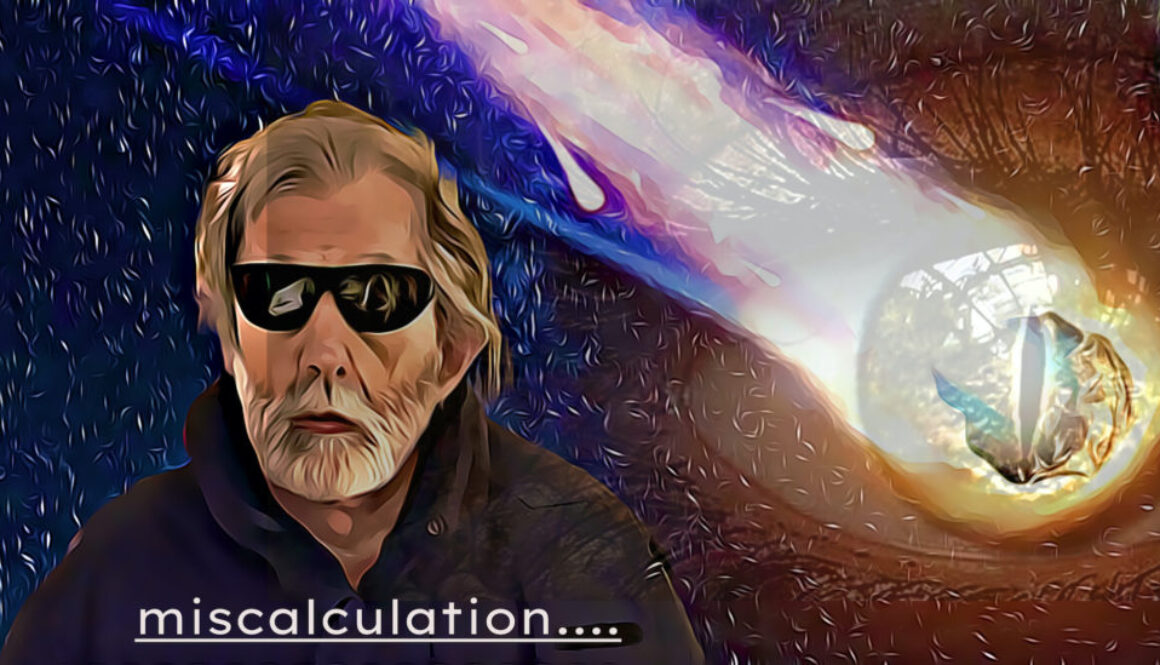
“While I recognize your impulse toward empathy,” said 6N7, “I believe it is misguided. The Skelanese made a tragic miscalculation that we may never reverse. However, if the kreljebtra continues, all is lost.”
Crawford wasn’t ready to give up on his former employers just yet. Despite their colossal failure with this device, he figured their brilliance was worth fighting for. He turned his attention back to the kreljebtra,
“Where are your makers now?” he asked. “They didn’t intend just to “make holes” as you say.”
The kreljebtra spoke again, but with a marked shift in ferocity, that made Crawford regret asking so blunt a question.
SKELANESE NOT MAKE. ONLY DESTROY. ONLY I STOP THEM. SAVE UNIVERSE.
The kreljebtra began spewing out wave after wave of micro spatiotemporal rifts that registered on the visor of Crawford’s encounter suit as a series of smoke rings at a distance of no more than five AU from the asteroid.
Completely bonkers, he thought.
At the moment, they had only one weapon against the out of control machine, and he had no idea if it would work a second time. If they were going to risk giving the Skelanese device another “migraine,” he had to be sure it was worth the risk.
Have to take control, he thought. But I need remote access….
Crawford reached out to 6N7 over the same encrypted comlink that they had just used
“You know that trick you did on the Sky Rock,”he said, “where you rerouted your consciousness? If we distracted the kreljebtra long enough, do you think you could reroute your mind into that?”
“Possibly,” said 6N7, “provided I can find a compatible signal network within the device. The odds of that are low, given the differences between the human and Skelanese technology base.”
Stunned, Crawford wracked his brain for any scrap of memory — anything at all — that might enlighten his android companion. What was it Djaleerin had told him when he first arrived at her research lab?
Our technology is based on the reification of information. What we wish to achieve we first express as interactions between multiple data sets, each with its own properties. Their intersection becomes “real” when we find those core interactions. From there design templates flow like oil.
“Too bad I don’t actually understand that,” he muttered. But he realized that he had nothing to lose by passing the thought on to 6N7.
“Is there any way to reconfigure your internal data to match the kreljebtra’s signal network?” he asked. “You know, find analogous patterns and ‘translate’ yourself into them?”
He held his breath and hoped that he hadn’t just spouted complete nonsense. When the android appeared to freeze, he feared the worst. But before long 6N7’s status lights began blinking rapidly.
“That is an interesting proposal,” said the android. “I gather you mean I should reify my consciousness in a novel manner.”
Crawford tried his best to sound nonchalant.
“Why of course,” he said. “How long do you think you’ll need?”
The news was not good. The alien intelligence was built from a complex series of number relationships that, as Gwendolyn had theorized, had been reified as a functioning consciousness. 6N7 would need time to assimilate the patterns created by this process and sort out each of its many discrete functions. The android’s estimate of at least an hour made sweat break out on the back of the geologist’s neck. Was it for this that he originally studied asteroid formations at the far edge of the Sombrero galaxy? Who knew how much more damage the kreljebtra might do in that much time?
“We’re gonna need a distraction,” he said. “So you can slip in unnoticed. Dial up Arielle and get the Sky Rock to give this thing another migraine.”
“You are forgetting the temporal dilation we discovered on our last visit,” said 6N7. “The crew of the Sky Rock will not receive my request until sometime tomorrow at the earliest. Should I postpone my work?”
“Get started,” said Crawford. “I’ll think of something.”
It was go time, he realized, and even though his personal risk was clear, the risk to … everything … was greater still if he didn’t act.
Have to hope this thing is just smart enough to be confused by ‘magic,’ he told himself.
He walked a good ten meters away from his android companion, planted the boots of his encounter suit firmly in the asteroid’s crumbly interior surface and issued a fateful voice command.
“Call mirroring subroutine,” he whispered. Instantly, the asteroid’s surface was littered with holographic projections of himself, just like the ones that had filled his living room the day he first met Arielle.
“Hey you!” he called out to the kreljebtra, ”it looks like the Skelanese are making copies of me, too.”
The flurry of micro spatiotemporal rifts died down rapidly. The hulking machine’s central unit, a misshapen sphere lit up in an ominous, dark orange glow.
THAT CANNOT BE. ONLY I CONTROL HOLES IN THIS UNIVERSE.
Crawford bit his lip. This was no time for a fit of the giggles.
______________________
ADVERTISEMENT
_______________________________________
“Looks like they outfoxed you,’ he said. “I … I can feel myself being pulled in a million directions.”
The retired geologist gave a whispered command to the holoprojector embedded in his encounter suit and watched as a new bevy of “Crawfords” appeared, looking eerily stretched and attenuated.
WHAT IS … YOU… INCORRECT … PHOTONS … ONLY PHOTONS.
Crawford glanced at 6N7, but the yellow-and-black android was standing stock still, its head pointed toward the kreljebtra. He realized he’d have to take his con game up a notch. He clutched his throat and fell to his knees and, for extra measure, channeled his voice through his suit’s external comsystem, distorting its overtones.
“It’s … ripping … me … apart!” he shrieked. “Make it … make it stop … you have to … to help….Help!”
NO. NOT ME. NOT ME. I STOP NOW SO YOU SEE. I STOP NOW.
Little by little, the flurry of micro rifts faded away and for the first time since he touched down on the asteroid, Crawford felt his sense of time returning to normal. A split second later, he heard 6N7 over their encrypted comlink.
“I will begin the transfer now,” it said. “On my signal, run for the lander, return to the Sky Rock and persuade them to leave the Skelana system. I will explain when I am able.”
“Will you shut the kreljebtra down?” asked Crawford. “Can you?”
“Unknown,” said 6N7. “But it is not my intention for the moment in any case. I must test my conclusions about the kreljebtra’s inner functions. My immediate goal is to put the AI into a kind of stasis. Stand by.”
No surprise to Crawford, the alien device noticed the intrusion immediately.
WHAT IS … NO … MY SYSTEM IS SECURE …SECURE …YOU CANNOT …YOU …
Crawford took this opportunity to shut down his projector, which he feared was too big a drain on his encounter suit’s power reserve. 6N7 had told him to run back to his lander. But if he were expecting a message from the android it was clear he was too preoccupied at the moment. By all appearances, a violent struggle was underway. The kreljebtra, which up until then had been dark, with the exception of a few winking status likes, began to glow, starting with its roughly spherical center. Within mere seconds, however, the entire three-meter monstrosity, its metaveral accretions included, was a virtual fireball of greenish-blue light.
Crawford whispered a voice command to increase the shielding on his encounter suit, but he needn’t have bothered. Before he could get the words out, the Skelanese suit had compensated, though not without issuing a disturbing warning.
Shield capacity at maximum. Retinal damage immanent at current energy levels.
Crawford stared hard at 6N7, hoping for some sign that the android was about to take control of the kreljebtra. He was tempted to flee to the lander but, he realized, he had no idea what response that would elicit from the infernally glowing machine. As if in answer, Djaleerin’s voice emanated from the device, though this time, it was impossible to see her image on its view screen, Her voice, distorted by static rang out clearly enough, all the same, into the sound system of his encounter suit.
“Crawford, Beloved,” she seemed to say. “If you cannot yet leave the asteroid, have the good sense to turn around. You were always too absorbed in your work, as I was. Save yourself!”
Startled, Crawford could only assume that this new message had been triggered by the kreljebtra’s sudden spike in temperature,With the light and heat coming off the alien devicealready beyond intolerable, he turned and ran for the lander. For all he knew, he reasoned, 6N7 might have failed or might need several more hours to accomplish his long-shot goal. But running, it turned out, proved more difficult than he expected. Panting, he called out to his android companion over their encrypted comlink.
“What’s happening?” he said. “Can … barely … move.”
“Temporal displacement,” said 6N7. “It’s trying to shake me off by tossing me out of Time altogether. But I’m too far integrated for that. One moment more.”
His back to the glowing alien device, Crawford could do nothing but hope. Pointlessly he closed his eyes as a last defense against its intense glare, which now permeated everything. His mind roamed over his memory of his first meeting with the Skelanese, with Djaleerin and everything that followed. Did he wish now, he’d never accepted that last assignment from the IMC? If only he’d followed his instinct. If only…
Suddenly, Crawford noticed a stillness behind him and saw his visor displays gradually returning to normal. A reassuring voice entered his ears.
“All clear,” said 6N7. “Hurry to the lander and follow my previous instructions.”
“But if you’ve deactivated the kreljebtra,’ said Crawford, “why not join me?”
“Mission not accomplished,” said the android. “I must stay to interact with the metaversal variants and bring them under control as well.”
By now, Crawford had reached the lander and opened its main hatch.
“But there must be … millions of them,” he said.
“The number is undoubtedly several orders of magnitude higher,” said 6N7. “I will not return from this mission in your lifetime. Please leave. I cannot with absolute confidence assert that I have this device under my complete control,”
Crawford shook his head. He spared himself the absurdity of a sentimental goodbye to the android, flung himself into the lander’s airlock and initiated the launch sequence as soon as possible. Within half an hour, he was back onboard the Sky Rock, where he was greeted by a storm of incredulous questions from the crew.
A new Episode of A Slight Miscalculation appears every other Monday. See all episodes here.
^^^
Mark Laporta is the author of Probability Shadow and Entropy Refraction, the first two novels in the science fiction series, Against the Glare of Darkness, which are available at a bookstore near you, on Amazon and at Barnes & Noble. He is also the author of Orbitals: Journeys to Future Worlds, a collection of short science fiction, which is available as an ebook.
For as long as albums have existed, they have offered listeners wonder, hope, truth and reality concerning the state of the human condition.
This is achieved through a group effort. Artists, producers, songwriters, engineers, artwork designers and liner note writers carefully curate and present a structured soundtrack, with tracks sequenced in such a way to take listeners on a journey. It can provide a brief bit of order to listerners’ often chaotic lives.
But what happens if we listen to songs from an artist’s album randomly rather than in their intended order?
Producers such as myself take into consideration that, as I put it, art is humanity expressed. As such, we try to create albums that reflect personal life experiences.
And just as storylines make sense only when you have the context of the beginning and the end, listeners need to understand the impetus for why the album was even made.
Stage one involves an exploration of an album’s concept. It is here that the themes of the album are discussed and established.
Stage two is the improvisational processes. This is when musicians work together to create song structures, grooves and lyrics to convey the themes.
Then comes stage three: the composition or documentation of the album. This is achieved in the recording studio with audio engineers and producers, who determine the final versions of the songs that will be put on the album.
Finally, stage four is the creative performance or delivery of an album. This takes place post-recording and involves the marketing and communications strategy to promote the album through concerts, music videos and interviews. The creative team decides which mediums and platforms the album will appear on.
The footage reveals the four members of arguably the most influential band going through the creative process.
First they discuss the rationale for a song – the exploration. Then they create the song’s structure of melody, harmony and rhythm through – improvisation. They then record the album’s repertoire – composition. Finally, they rehearse the songs to be performed within a specific order for future concerts – delivery. https://www.youtube.com/embed/Auta2lagtw4?wmode=transparent&start=0
A rubric for success
Another important variable is ordering of songs on an album in such a way as to cater to a number of different requirements.
For example, it is ordered to help balance palatability and appreciation. If the album has too many intense songs at the beginning – for example, songs that are fast tempo, loud and busy in musical interaction – the listener might assume that the artist has no regard for pacing the “storyline” and energy levels of the album as a whole.
A producer also wants to avoid sonic fatigue, which can happen when a listener gets exhausted by an album that has too much musical intensity at the beginning. To achieve this, producers make sure that the songs vary in instrumentation, harmonic progression and dynamic levels when placed next to one another.
The order of tracks can also influence listeners’ empathy and relatability with the artist’s vision for the album by mirroring the songs’ themes or the artist’s life stories to the order in which they manifested in real life. For example, a musician might be telling an autobiographical story through the songs that mirror their chronology in real life.
Bruce Springsteen discussed in his 2016 autobiography the very purposeful way he ordered the songs on his album “Born to Run,” to give listeners the impression of a day passing from early morning to late at night. Meanwhile, multi-Grammy Award-winning saxophonist Michael Brecker ordered his last album, “Pilgrimage”, to mirror the final stages of his life as he battled cancer.
Different artists and genres approach albums in different ways. But there are certain rubrics by which albums can be ordered. One standard example I suggest of how a 12-track album may be ordered is as follows:
Track 1: An anthem song with high energy, vibrancy and intensity, with rich instrumental textures.
Track 2: A medium tempo track with fewer instrumental textures, lyrics. The idea is to express more vulnerability.
Track 3: A high-energy number with completely different instrumental textures. For example, if track 1 uses lots of acoustic instruments, then track 3 will be more digital in attribute.
Track 4: A strong ballad.
Track 5: The second-most powerful song on the album, generally in a different tempo and time signature – for example, it could be a waltz or a swing-style song.
Tracks 6 to 11, which would traditionally have been on the “b” side of vinyl albums, tend to be more relaxed and less concerned about commercial appeal. They focus on conveying more philosophical and poetic nuances.
The last track of the album, track 12 in this example, is generally either nostalgic or doesn’t entirely resolve itself either lyrically or musically. The aim is often to inspire the listener to purchase the next album.
This structure isn’t set in stone, but if readers pick up their favorite album, there is a chance that some of the above rules will apply.
An album’s social message
Album sequencing is typically one of the final stages and takes place during what is called a “spotting session.”
During this stage, the artists, producers, artists’ management and publicists engage in album sequencing to ensure the themes of the album are communicated fluidly and the artist’s vision can be understood when listening to the album from beginning and end.
Reflecting on all that goes into sequencing an album’s tracks can give music lovers a better understanding for why Adele’s non-randomization request was supported by so many musicians. By clicking on random, listeners might be missing the message as well as the audio journey that has been carefully created.
Jefferson Machamer’s comic strip from the 1920s with the shocking title never caught on back then, but maybe 2021 is the year!
In the last episode, Patty, a beautiful heiress and flapper, has arrived at the resort Soak-You-on-Sea to search for her fiance, Peter, who, to her deep humiliation (and more than a little nervous jealousy), has taken a job as a waiter, the two argue in the restaurant and go off their separate ways, both bereft and love-sick.
Now you are up to speed!
In this final episode of Patty’s arc, will they reconcile?
^^^
Whew! Glad those crazy Jazz Age kids are back together. This is the final available episode of Petting Patty. We will print more as we find them.
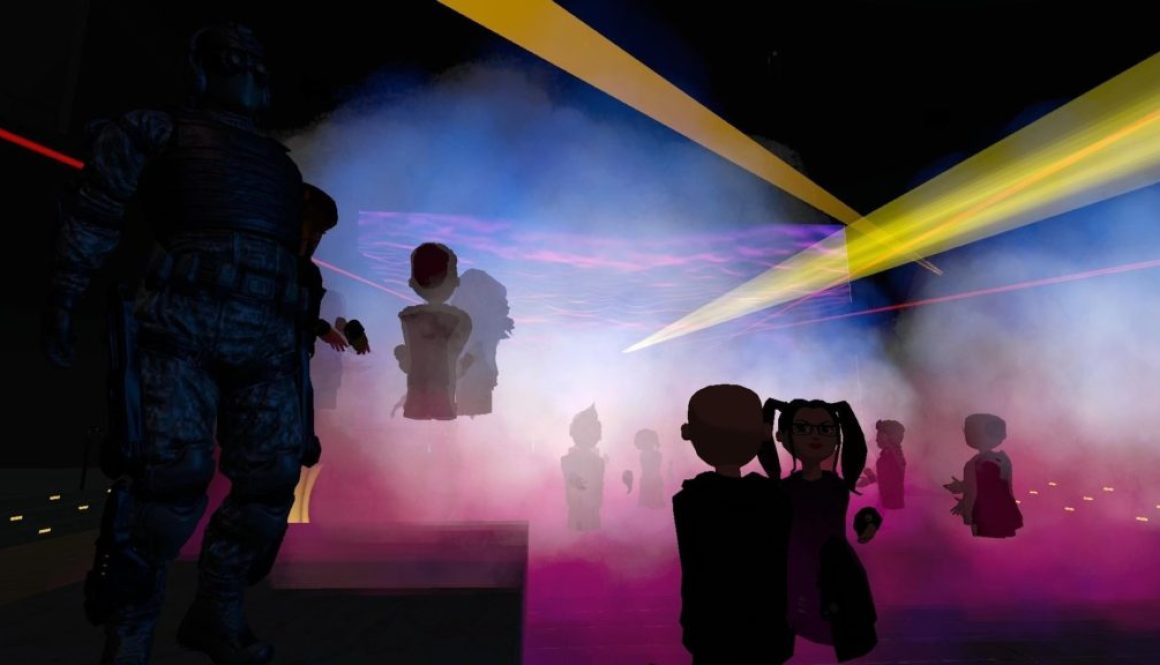
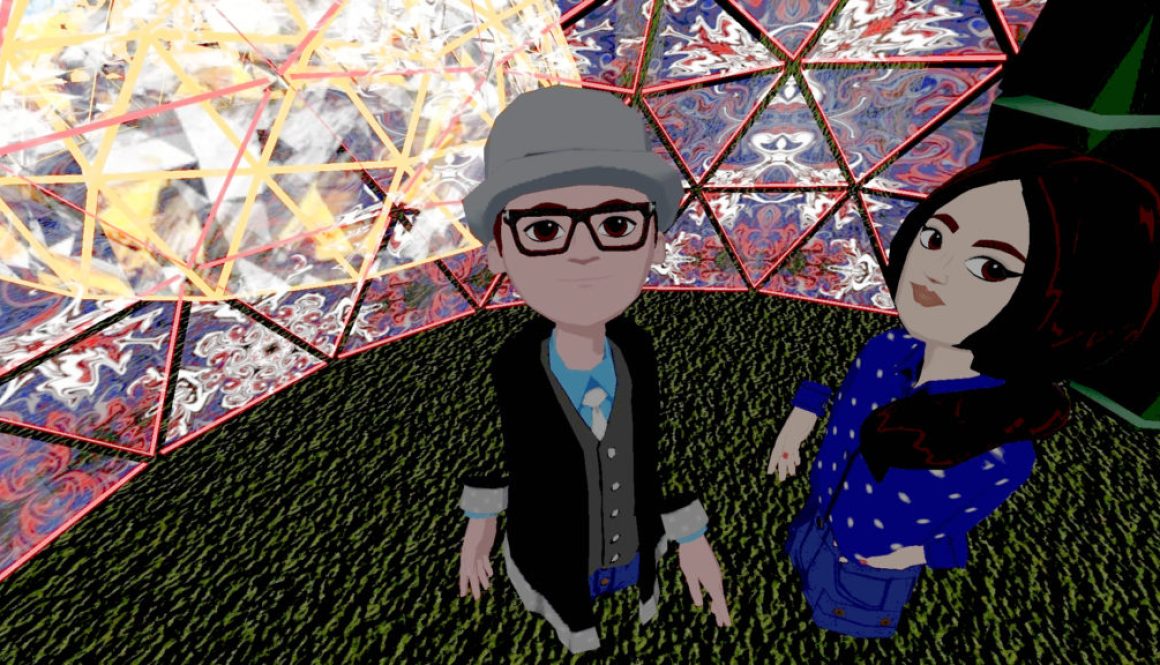
Saturday, December 4, I attended an amazing party in Virtual Reality, the Mandala Festival. The “world-designers” responsible for the party created an expansive venue for their event, with a neon forest, waterfalls, a gigantic stage with video screens, stained glass domes for the party-goers to dance beneath (see photo), and looming above it all, a ferris wheel with a beautiful view of everything, which the guests could ride. DJ Push played Psytrance live from Germany. Park benches were scattered around the grounds, so we could sit down, rest and talk.
I was young again.
As you can see from the photo, the avatars attending the event leave a lot to be desired (they are cartoonish torsos), but that’s the drawback of a technology still in its relative infancy. Better avatars take computer storage, which is limited, and more detail creates glitches.
One strange thing about the avatar problem is that one forgets about it pretty quickly; this is just how people look, here. Still, as the technology develops, and our avatars grow more realistic, we will breach the “uncanny valley,” and everything will change.
Still, it was an amazing party, a real triumph. It was fun, exciting. I was really there.
The week before, a companion and I visited a nightclub in Tokyo (well, the VR version of Tokyo). The venue was beautiful, the dance floor was crowded. At the bar, a bartender served drinks.
We could sit at a lounge area, a few steps below the dance floor, or walk onto the balcony, with its beautiful view of Tokyo.
The world-builders behind the nightclub had also designed the city streets, so we wandered through a nighttime VR version of the Japanese capital. The streets were too quiet (no car noises, and no citizens walking around other than the night-club guests), but it gave me a sense of the direction that the technology might take us. Imagine, for example, when we can really set hundreds of AI “chatbots” loose in VR, to wander through this kind of cityscape. “Chatbots” with memories and personalities, living their “lives.”
Yo La Tengo, in Real Life
A few days earlier, I attended the Yo La Tengo Chanuka concert at the Bowery Ballroom. Fred Armisen, their surprise comedy guest, provided an observational musical standup routine that, but for his bemused delivery, could have been a college musical composition class.
“Um. Every drum solo you’ve ever heard is exactly the same….” he noted. “The drummer will begin with something simple, just to throw you off.” Then he walked the audience through the elements of a drum solo.
He was probably right, but it was still funny.
But this: I had to take the subway there, and get there early to find a spot in the club. I needed a spot by the wall, to lean my 56-year-old back against. (No seats.) I didn’t have such a great view. The music was too loud for my 56-year-old eardrums, and so I stuck tissue in my ears. Some lady stood right in front of me, and her ass invaded my space.
My friends and I were the oldest people there, and everyone knew it.
I was thinking how cool this would have been in VR. No space limitations; the drinks would have been free. I could have turned down the volume on my headset. It wouldn’t have cost me $98, since the concert-promoters wouldn’t have had to secure a real “space” and paid for the band’s travel. Just as Yo La Tengo wouldn’t have had to travel anywhere, I wouldn’t have had to travel anywhere. I wouldn’t have had to get there early. I could have attended as a young man, and I would not have been embarrassed about being old.
VR is better than IRL.
My new avatar
I recently came across this photo of myself, from a 1990 trip to France.
I’m not really all that handsome in the photo. But because I was young then, I looked comparatively handsome, much more handsome than today. Compared to my current, disgusting and decrepit self, this photo is downright beautiful.
In VR, someday, I can be that guy again.
Here I am in front of my VR mansion, for example.
I was never really there, I don’t own that suit, it’s not a photo of me (it’s an image generated by an AI program based on the 1990 photograph in France) but someday, I could be that guy.
He looks pretty charismatic.
You know, technology can fix the climate crisis, cure cancer, all of that. But the side effect of technology has always been this kind of thing.
In the future, we will all lose our grip on reality. Will that be bad?
Just as investigators examine an airplane’s black box after a crash to determine what went wrong in flight, researchers and artists in Australia are preparing for future inhabitants of Earth to go searching for clues about humanity’s potential demise—and are constructing an archive of humans’ failure to stop the climate emergency, which scientists say could drastically alter life on the planet.
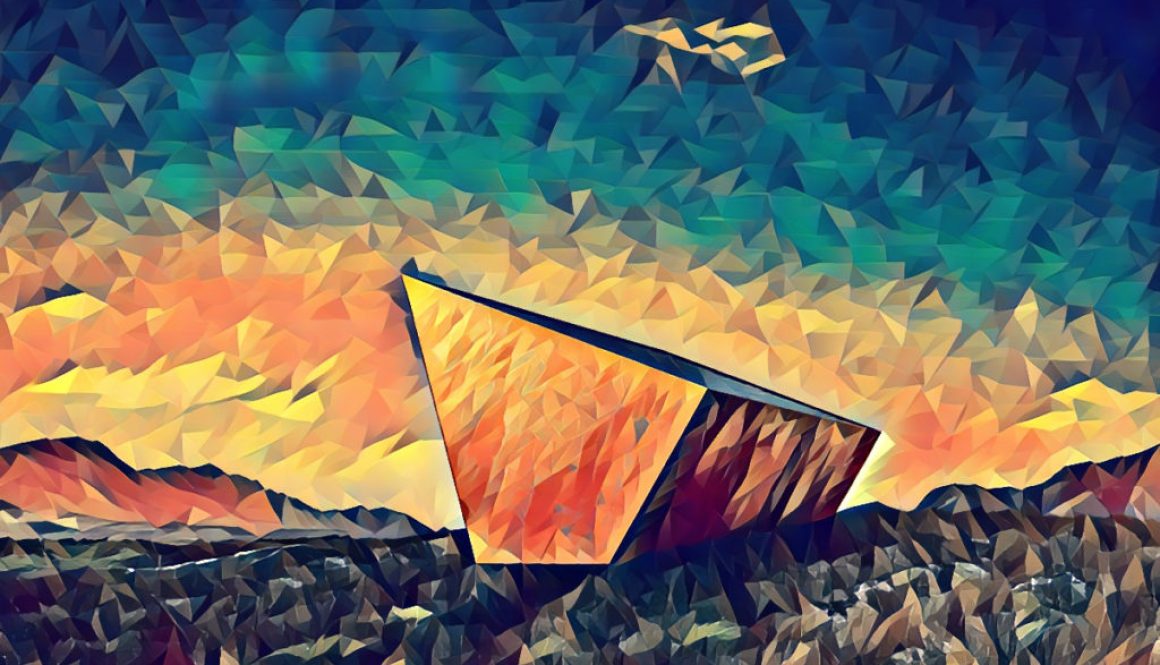
Data researchers at the University of Tasmania are working with the marketing company Clemenger BBDO and the artists’ collective Glue Society to construct a 33-foot long vault made of three-inch thick steel, which they’ve dubbed “Earth’s Black Box.”
The vault is expected to be completed in 2022 and will lie in a remote plain in Tasmania, where it will keep a record of the planet’s rising temperature and extreme weather changes and of policymakers’ missteps and inaction, as they lead the global population further down the path of the climate emergency.
“If the worst is to happen and as a civilization, we do crash as a result of climate change,” Jim Curtis, executive creative director at Clemenger BBDO, told Reuters, “this indestructible box will be there and will record every detail of that, every inaction and action we take towards that, so whoever is left or whoever finds it afterwards learns from our mistakes and it doesn’t happen again.”
The creators began keeping records last month at the United Nations Climate Change Conference (COP26)—where fossil fuel lobbyists were better represented than any country, policymakers watered down language regarding the end of coal extraction, and several wealthy countries failed to increase their emission targets for the coming decade.
“If the worst is to happen and as a civilization, we do crash as a result of climate change, this indestructible box will be there and will record every detail of that.”
The summit led climate action advocates to warn that humans are failing to act decisively enough to limit the heating of the planet to 1.5°C above pre-industrial levels—condemning the global population to risks including more deadly heat waves, famine, and sea level rise.
The watchdog group Climate Action Tracker said in November that the planet is on track to heat up by at least 2.4°C.
“The purpose of this device is to provide an unbiased account of the events that lead to the demise of the planet, hold accountability for future generations, and inspire action,” the creators wrote on their project’s website.
The researchers and artists behind Earth’s Black Box collected discussions and official statements made at COP26, and will continue gathering similar data that will be stored on an automated, solar-powered hard drive within the box. The hard drive can collect data for about 50 years.
The box will also collect daily data showing temperatures of oceans and land, the level of carbon dioxide in the atmosphere, ocean acidification, and biodiversity.
Earth’s Black Box is being constructed to withstand
cyclones, earthquakes, and other disasters, and the makers say that if a catastrophic planetary event resulting from the climate crisis draws near, they will engrave instructions for opening the vault on its exterior.
“I’m on the plane; I don’t want it to crash,” Curtis told the New York Times Friday. “I really hope that it’s not too late.”
The Earth’s Black Box website warns that actions—and inaction—taking place all over the world “are now being recorded” and will be collected in the structure.
“How the story ends is completely up to us,” the creators say.
^^^
Image of the black box designed by Steven S. Drachman.
This article originally appeared in Common Dreams and is republished under a Creative Commons license (CC BY-NC-ND 3.0). Feel free to republish and share widely.