

Chickadee Prince
About Chickadee Prince
Posts by :

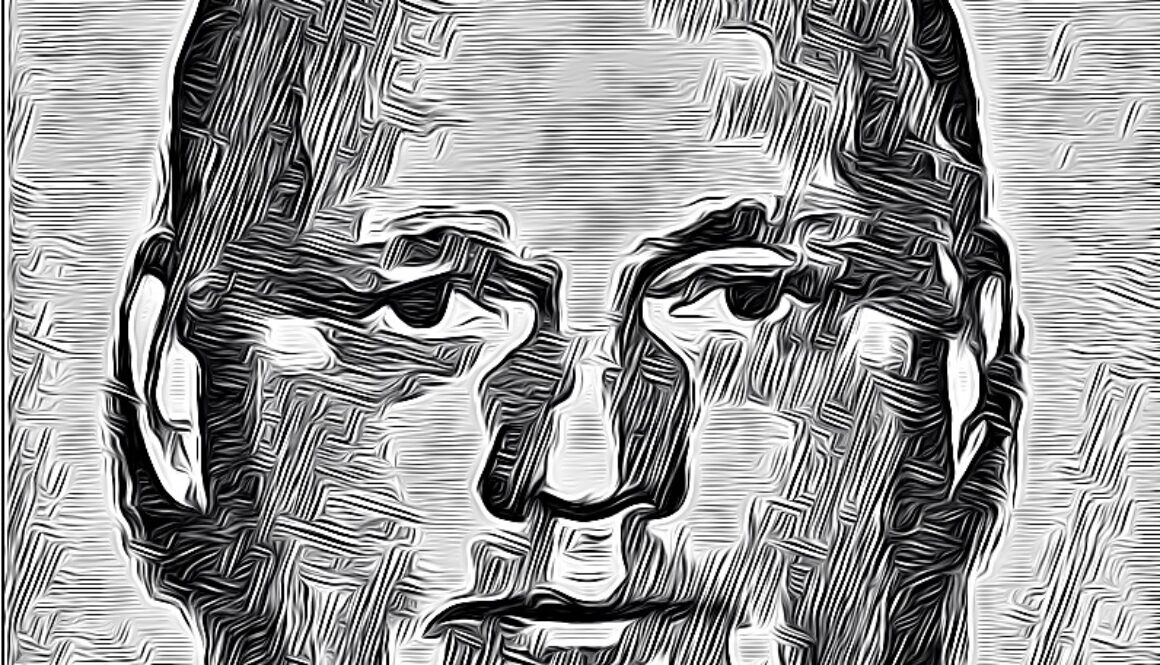
A Patriot In Trump-World
By Alon Preiss.
It’s now been a week since a man named Robert Bowers massacred eleven Jews in a Pittsburgh shul. If you read the news, or listen to the president, you might think that they were gunned down because they belonged to the Jewish race, or for the offense of peacefully praying. You might think that this was a simple example of anti-Semitism, some free-floating evil that, unfortunately, still exists out there in society. But there is a reason why supposed anti-Semites are going after targets like the Pittsburgh shul and Jewish financier George Soros rather than Sheldon Adelson and the Kushners.
In reality, last Saturday, my fellow Jews were gunned down because the shul in which they were praying was involved with an organization called HIAS, or the Hebrew Immigrant Aid Society, a Jewish group that actively and openly supports immigrants and refugees. “HIAS likes to bring invaders in that kill our people,” Bowers wrote on the internet before the attack. “I can’t sit by and watch my people get slaughtered.”
Why do you think that happened now?
Listen: in the weeks leading up to the massacre, President Trump and the right-wing media have raised alarm bells about a “caravan” of Latin American refugees traveling to our southern border. Using language that Bowers later adopted, Trump tweeted, “This is an invasion of our Country” which would bring terrorism and disease into America. And not just an invasion from outside our borders. President Trump and his minions in the right-wing media explicitly stated that certain of our traitorous fellow citizens are actively working to destroy America by financially supporting the caravan.
If one takes the president seriously, these traitors in our midst would absolutely include HIAS. Three days before the massacre, HIAS released the following:
HIAS Statement on Central American Caravan — Under longstanding U.S. and international law, individuals fleeing persecution have the right to seek asylum. HIAS urges the United States government to respect the rule of law, provide all asylum seekers the opportunity to present their claims as required by law, and treat all migrants fairly and humanely. We hope that the asylum seekers and migrants stay safe and that they comply with established laws and procedures for seeking asylum and entering the United States. Most fundamentally, we must remain committed to upholding the human rights of those seeking asylum.
What did Trump do after visiting Pittsburgh to pay his respects? He got right back to it, condemning the caravan, as well as the Democrats and the supportive cabal of shadowy Jewish globalists that Trump claimed were paying its way; on October 31, he explicitly accused Jewish financier George Soros.
Everyone seems to agree that you cannot blame Trump if a Trump supporter (or, in the case of Robert Bowers, a supporter of the Trump agenda) turns violent. And this would be true if Trump’s political discourse followed a standard Republican/Democrat trope, which the Republican supports lower taxes on the rich, the Democrat supports a stronger social safety net, some accusations fly here there, but no one accuses anyone of treason and murder.
But here, the president of the United States was not just debating tax policy. He has accused American citizens of seeking an invasion of the United States, the slaughter of her populace and the destruction of our society. Including HIAS, and the Jews supporting HIAS, who were murdered last week.
Here is what I would ask. Let’s say you are a good, brave and patriotic citizen, and the President of the United States alerts you to a conspiracy on our shores so serious that it could destroy America from the inside. Wouldn’t you be absolutely justified in taking matters into your own hands? Shouldn’t you do so, if you believe in America? Sure, doing so would be illegal, but the president himself has told you that American laws mostly benefit a cabal of globalist elites. And the president was passing along very serious information; there have certainly been times in world history when patriots have had to act. If you were listening to the president, this was one of them.
I am not saying that in today’s America, anyone is justified in taking the law into his own hands. But Trump and his media are not portraying today’s America as it really is: they are portraying a land under siege and invasion.
Remember Edgar Maddison Welch, who traveled from North Carolina to Washington, D.C., based on assurances from a host of journalists and politicians, including Michael Flynn, President Trump’s national security adviser, that Hillary Clinton and a conspiracy of Democrats were holding children captive as sex slaves in the basement of a pizza parlor.
Edgar Maddison Welch wanted to rescue the children. He really did.
Wasn’t that exactly the “right” thing to do, if he believed the message coming from the media he listened to, and the administration he supported? After all, both the administration’s national security advisor and Infowars assured him it was happening, and the president himself had praised Infowars as a legitimate and reliable source of information and personally handpicked his own national security advisor. If Michael Flynn and Infowars founder Alex Jones really believed the things they were saying, shouldn’t they have tried to rescue the children themselves?
Again, given all of this, didn’t Edgar Maddison Welch do exactly the right thing?
Sure, he knew he was breaking the law, but since he thought he was doing it to rescue children from a corrupt “Soros-occupied” and “deep state” government intent on protecting criminal Democrats and opposing a legitimately elected president, wasn’t Edgar Maddison Welch absolutely morally correct to do what he did?
And the week before last saw a Trump fan, Cesar Sayoc, attempt to assassinate a variety of American citizens whom Trump himself had targeted as criminals, including CNN, whom Trump classifies as an enemy of the American people, as well as George Soros, whom Trump and the conservative media have targeted as a traitor, someone paying terrorists to enter the country and kill Americans.
Why shouldn’t an American citizen help his president by fighting against such enemies of the American people? The president, after all, is privy to information the rest of don’t have.
I think the answer is that we’re all supposed to know that President Trump is just having a bit of fun and telling crazy stories about the elitists who never took him seriously, and that the president can’t be blamed if someone is stupid enough to believe his lies. Everyone also ought to know that the reporters of the conservative media are just out there telling a good story and chasing ratings. If Alex Jones reports that Hillary Clinton is holding children as sex slaves, and some gullible sap believes him, well, you can’t really blame Alex Jones for that, can you?
But in any sane world, if the president announces an imminent terrorist invasion of America, we should all rally around him to defend our shores. If the administration announces that children are being held captive as sex slaves in the basement of a DC pizza parlor, we should all descend on the place and rescue the kids. If the president identifies enemies of the American people in our midst seeking to kill Americans and destroy our society, we should all do whatever we can to stop them. The president of the United States should not be the equivalent of the guy on the corner with a tinfoil hat, someone all reasonable people know to ignore.
We should all be able to believe what our president, his administration and his media tell us when it comes to matters of urgent national security. Is that really unreasonable?
In today’s America, even most of his supporters cynically understand that you cannot believe a word that Trump says. Even their viewers cynically understand that you cannot believe a word the conservative media reports.
But it’s not the cynics we need to worry about.
Alon Preiss is the author of A Flash of Blue Sky (2015) and In Love With Alice (2017), which are both available from Chickadee Prince Books.

The World Series: Now and Then
By Granville Wyche Burgess.
The third game of this year’s World Series broke all kinds of records: longest postseason game in history for time (7 hours, 20 minutes) and innings (18), most number of players used (44), most pitchers (a tie, with 18), most pitches by a reliever (97). The time it took to play it lasted longer than the entire 1939 World Series. I feel no shame in admitting that I went to bed after the game was tied through nine innings, some time after midnight—when the game was only half over!
The fact is, I can’t stay up late enough to watch the games these days, and I’ve been thinking about that in the context of how the World Series used to be played. When I was a boy, most of the games, if not all of them, were played during the day, when the whole family might be able to watch together, which my family often did, even my sisters. And if the game were played during the week? No problem. When I was in the 7th grade, my entire junior high school listened to Game 7 of the 1960 over the loudspeaker in my classroom. In those days, schools had their priorities straight in terms of which was more important, baseball or math.
Ironically, this Game 3 ended with an 18th-inning walk-off homerun (Now). Game 7, which many think is the greatest baseball gave ever, ended with Bill Mazeroski’s 9th-inning walk-off homerun (Then). One happened when I was peacefully dreaming away. The other happened when my classmates and I jumped and shouted and pounded on our desks. The Pirates had beaten the Yankees! And everybody hated the Yankees. Of course, we were in South Carolina!
Granville Wyche Burgess is an Emmy-nominated screenwriter, playwright and Amazon-bestselling novelist. His new baseball novel, The Last At-Bat of Shoeless Joe, will be published by Chickadee Prince Books in 2019.
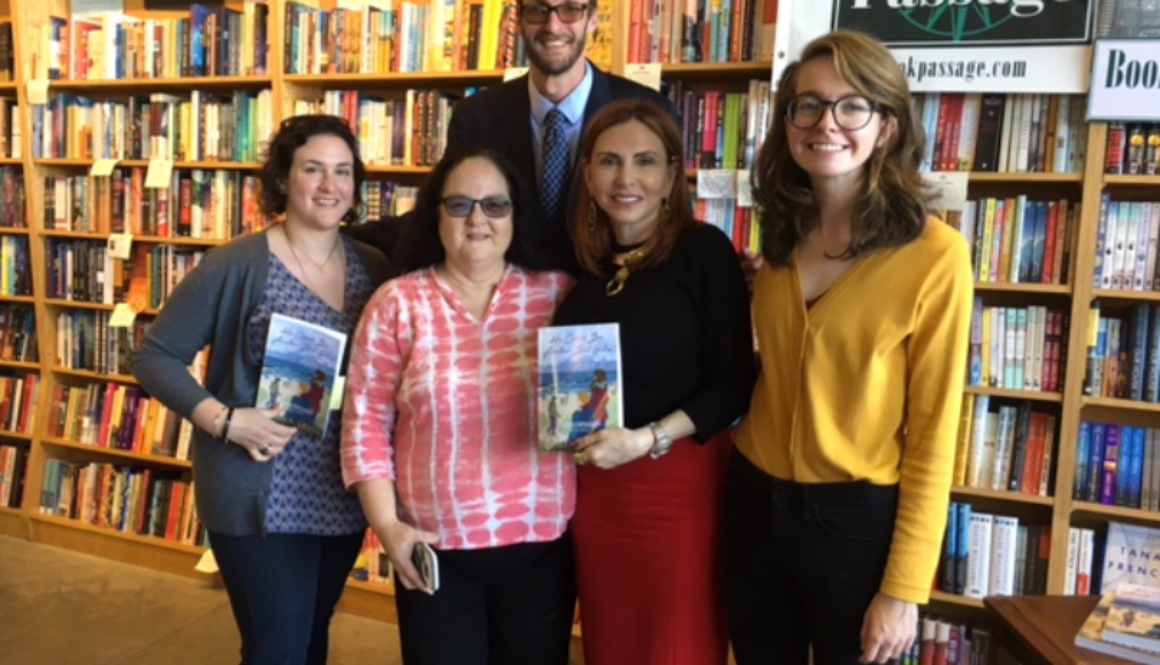
Editor’s Pick: Donna Levin on the Web
 The engaging and energetic CPB author Donna Levin has been especially busy the past couple of months, appearing all over the internet (and in bookstores, including Book Passage in San Francisco, pictured above). In Female First, she lists eight things she’d like her readers to know about her (“Half the Starbucks baristas in San Francisco,” she writes, “have memorized my daily espresso drink), including the very personal reason she now writes novels featuring characters on the autism spectrum: her own son is on the spectrum. In Lit Hub, she writes about the day she first learned his diagnosis, and the road she traveled balancing her calling as a novelist with her life as the mom of an autistic child, which she also discusses, movingly, on the podcast Different Brains. “The advantage of working at home is that you’re there when your kids need you,” she writes, in Working Mother. “The disadvantage of working at home is that you’re there when your kids want you.” It’s difficult, of course, for anyone to knock out that next page. In GirlTalkHQ, Donna reveals her secret for beating writer’s block: a community of female writers. “Before I met them,” she says, “I did not believe such women existed, and learning that they do is as valuable as anything el
 se they gave me.” Finally, Donna talks about the supportive autism community, and her new book, in an interview right here in Audere Magazine. “It is a community,” she tells us. “And when I speak of the autism community, I mean not only those on the spectrum, but their families, friends, and all those who are committed to creating full lives for everyone.”
More to come.
Donna Levin is the author of four novels, all of which are available from Chickadee Prince Books. Her latest novel, He Could Be Another Bill Gates, was published this month; it’s available on Amazon, Barnes and Noble, or at the bookstore right across the street from your home. Please take a look.
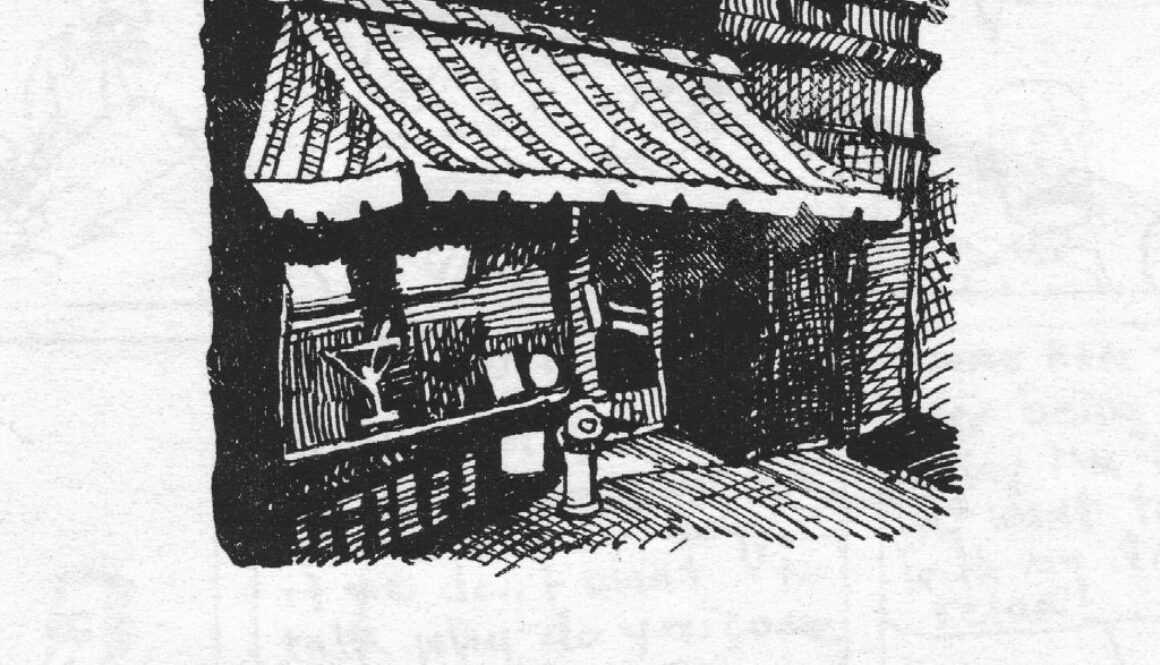
At the Cedar Tavern: A Cartoon by Craig Eastland
The Cedar Tavern was a legendary Greenwich Village bar, frequented by a who’s-who of avant garde writers and artists of the time. Craig Eastland looks back at one eventful night, in 1956.


Craig Eastland is a Boston artist, among many other things. You may see more of his work at https://yuppiegohome.com/.
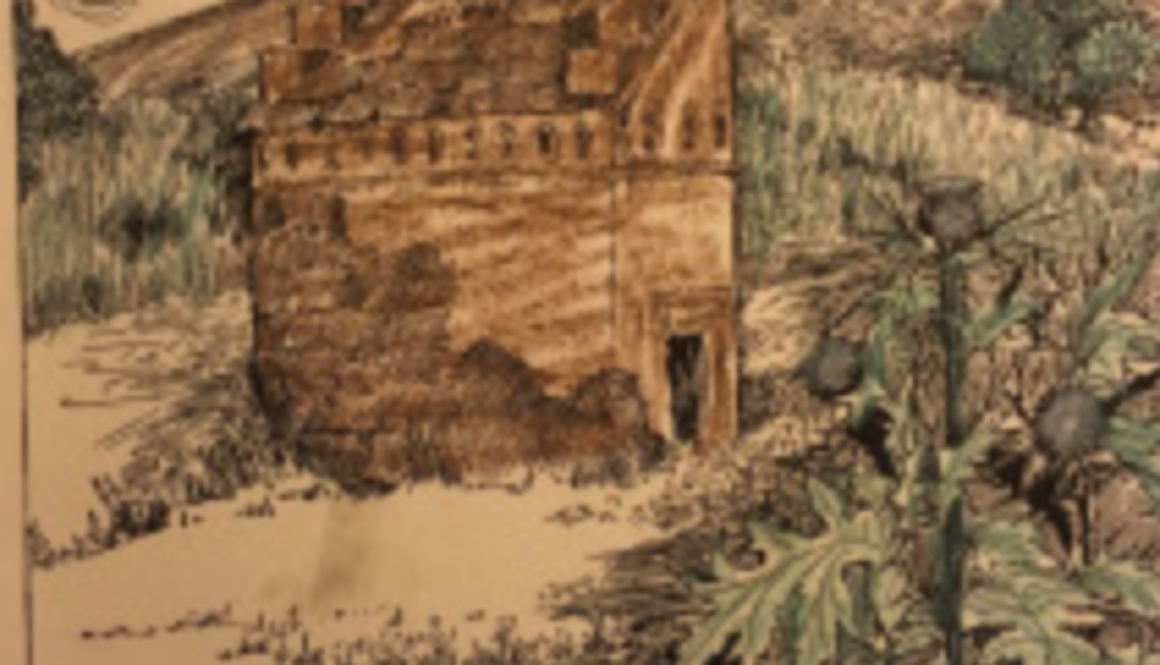
Oblivioni: Rediscovering a Forgotten Fairy Tale
In a wide stretch of pasture, in the middle of a lonely field, with its back to the bleak north blast which swept over the shuddering grasses, making them hum and sing like complaining voices, stood a Dovecote.
There are few literary experiences more strange and poignant than reading an utterly forgotten children’s book, especially a copy that once belonged to actual children, whose names are still legible in the book. They have since grown into adults, after all, and then grown old. (And then died, of course.) When I used to read a story like that to my kids (back when they were of the age), it was like visiting another world, one which only we knew. My kids may be the only children alive today who know and love this story, I would imagine, as I read.

Thirty years ago or so, I pulled Violet Jacob’s 1905 story collection, The Golden Heart, from a dusty shelf in a used bookstore, somewhere out there in the world. The book was long out of print, utterly unknown. When, at the very end of the last century, my kids entered into our household, one story in this volume, The Dovecote, became a haunting favorite of ours, for a while anyway.
It’s an especially vivid story, about intrigue in the king’s court that explodes into a full-blown civil war, turmoil in the countryside, a royal couple made refugees in their own kingdom. A shape-shifting queen is injured in battle, a real rebellion breaks out, peasants choose sides, and a witch named Maddy Norey gives the Monarch and his Queen sanctuary in the well-hidden dovecote that gives the tale its title, nurses them back to health, and then seeks to engineer their return to power. By the end of the yarn, when the dovecote’s doors close, locking Maddy Norey away forever, we are reminded of many ordinary citizens who have changed history in some small way, and who have then vanished from sight, remembered if at all only for their relationship to the world’s rulers. As Jacob wrote, heartbreakingly:
“Looking straight southward towards the pastures, the sloping ground at the foot of the trees was all one fertile cornfield, as yet uncut, and, half-way up it, where the hill was steepest, stood three elms, growing close together and making a dark spot of shade in the middle of the yellow grain. These were called ‘Maddy Norey’s trees.’ What Maddy Norey’s history had been no one alive knew, but tradition said that she had lived in a small cottage under the shadow of the elms, and men ploughing the field in the late November days had run their ploughshares against deeply-embedded stones at their roots, and told each other that they had struck the foundations of Maddy Norey’s house. They did not know that the witch, Maddy Norey, was alive still, and living hardly out of the sound of their voices in the Dovecote.”

Violet Jacob is remembered today, somewhat, as a 19th century poet, which is not entirely surprising. She recalls a bit Evelyn Sharp, a fairy tale writer who is instead more renowned (which means, sort of obscurely noted) for a novel called At The Relton Arms, and even more prominently (that is, just barely) as a suffragist and journalist. While Sharp’s book of fairy tales, Wymps, is more whimsical than The Dovecote, Sharp reminds me of Violet Jacob in a few ways.
They are both authors who have grown obscure with the years, and they are both remembered now (where at all) for things other than their writing for children; they both wrote children’s stories that transcended the genre of the time, Jacob by creating a tale of alliances and battles that anticipated later children’s fantasy stores, like the Hobbit, which then begat adult fantasy novels; and Sharp by locking her fairy tales together and building a fairy tale world of some complexity; and, like Elizabeth A. Lyn, author of brilliantly kinky and celebrated adult S/F books and one little-known fantasy novel for the very young (The Silver Horse), when Sharp and Jacob wrote for children, they were both unable to rein in their imaginations, to disguise their intelligence, or to dumb down their stories.
The Golden Heart remained utterly obscure for a hundred years and was finally brought back to the public by a Scottish press in 2011, which jettisoned the cover’s fleeing princess and heart-strewn motif and instead decorated the cover with a photograph of violets, and a subtitle that described it as “Scottish Womens [sic] Fiction,” which it decidedly is not, with or without the missing apostrophe.
As of this writing, it has received not a single Amazon review and sold not a single copy. The Dovecote can periodically be found online, where one might read it for free. Needless to say, it is worth seeking out.