

Chickadee Prince
About Chickadee Prince
Posts by :

Alon Preiss: Come on, Kevin Hart, let’s hear a REAL apology
My personal view on Mel Gibson is this: he is a talented, brutal film director, and his future films really ought to be made and watched.
I felt the same way about Leni Riefenstahl, incidentally, and I think film history is poorer for her ostracism.
Like most Americans of his age, when he’s drunk and angry, Gibson rants about the Jews. Like most Germans of her time, Leni Riefenstahl didn’t really do anything to oppose the Hitler regime and actively cooperated with it. I would not suggest that either ever adequately apologized or atoned.
If Gibson were ever to apologize or atone, it would have to begin with an abject acknowledgment of his own antisemitism, not the denials and justifications we have seen so far. He would have to acknowledge that he hates and fears the Jews, that he is trying to understand this and to change.
Enter Kevin Hart.
He has said a bunch of stuff on Twitter about gay people over the years. By now, you know what it is. On a comedy special, he said this, “Me, as a heterosexual male, if I can prevent my son from being gay, I will.”
He has since then apologized for “insensitive words from my past.” He has said that he should not have to “justify or explain the past.” He has said he has “moved on.” He has “matured.” He has criticized those who would criticize his hateful words as making “a malicious attack on my character,” adding, “All I do is spread positivity.” (How dare they quote me accurately! Have they no shame?) On his remark that he would do everything in his power to cure his son of his homosexuality, he has said, “I wouldn’t tell that joke today, because when I said it, the times weren’t as sensitive as they are.” And this: “I don’t have a homophobic bone in my body.”
Well, maybe Hart doesn’t have any homophobic bones, but either he has homophobic brain cells, or he was willing to foment the worst sort of hatred, for years, to curry favor with a homophobic audience.
The above-quoted remark from his comedy special was hardly a “joke,” as he has characterized it. It was a little piece of viciousness, without humor or wit. Would he not tell it today because he realizes it was wrong? Or because audiences today are more sensitive than they were back then, in 2010?
His apology was worthless, dismissive, as though words from his past were the equivalent of words from someone else. I apologize for my brother’s behavior, all those years ago.
Any true apology, any true reckoning, would address this issue: is Kevin Hart a former-homophobe, who now realizes how wrong he was, someone who would now accept and love his son even if the boy were gay? Or is he a man who once told homophobic jokes on stage, and on Twitter, because he knew they would resonate with a certain bigoted audience, and who now realizes how much that sort of opportunism damages our society, and who would never do it again? People were murdered because of the sort of attitude that, until very recently, Kevin Hart championed. Truly changing means coming to terms with what he did, and explaining why he did it.
Ellen DeGeneres has now come to Hart’s defense, and she is free to enjoy his comedy and to champion him, just as I am free to enjoy Mel Gibson movies, The Great Gatsby and Prufrock. But let’s not pretend that he has apologized or atoned. He has not. And it is very unlikely that a man who has failed to grapple with what he did in the past has truly changed.
***
Alon Preiss is the author of A Flash of Blue Sky (2015) and In Love With Alice (2017), which are both available from Chickadee Prince Books.Design by Steven S. Drachman from a photo by NBC.

Steven S. Drachman: A Response to Bret Stephens
Some years ago, I had a great idea for a final peace deal between Palestine and Israel. I tested it out; Palestinians liked it. Jews liked it, but they thought the Palestinians would never accept it. I really went all in. I started a web-magazine and a Facebook page devoted to my commentary on such things. I gave a TED Talk. I published a Kindle Single. I published my plan in Arabic.
Never mind what the idea was. I think it was a good one. I still think it could work.
But fundamental to my idea was that Israel ought to put a decent plan on the table. She should not even worry about whether the Palestinians would accept it. If Israel’s leaders didn’t like my wonderful idea, then nevertheless they should sit down with Middle-East experts from various nations and political viewpoints, work out an acceptable approach, get sign-off from America and the Arab states, and let the Palestinians leaders (and, importantly, the Palestinian people) know that when they are ready to make peace, here is the agreement that will be waiting for them.
I got a bunch of praise here and there. A few people began to push similar plans. I eventually stopped writing so much about this. I turned back to my long-delayed novel. The last vestiges of goodwill deteriorated in Israel and Palestine. I still believe what I believe, but it didn’t seem to matter.
Recently, I read a column by Bret Stephens in the New York Times entitled When Anti-Zionism Tunnels Under Your House, with which I both adamantly agree and adamantly disagree. (Bret Stephens, an anti-Trumper who questions climate science, frequently has this effect on me.)
You often hear people describe themselves as “anti-Zionist but not anti-Semitic,” which I think is usually unlikely, like my friends who are “fiscally conservative but socially liberal.”
If you’re not willing to tax and spend to help the underprivileged, you might be libertarian, but you’re not liberal. If you wish to deny the Jews their state, alone among the nations of the world, you may have designed intellectual-sounding talking points, you may know some individual Jews whom you like, but it’s quite unlikely that you’ve really reconciled yourself to the Jews.
I understand the argument that one may be anti-Zionist but not anti-Semitic. At a shul to which I used to belong, one member proposed a boycott of local Jewish businesses, unless they would sign a statement calling for the abolition of Israel. She was Jewish, and she was willing to do business with right-thinking Jews, so how could this be anti-Semitic? Well, the presence of Jews within an anti-Semitic movement doesn’t make that movement any less anti-Semitic, and an anti-Semitic sentiment idea remains anti-Semitic, even when uttered by a Jew.
OK, you may argue: there are plenty of “nations” who would love to have their own recognized country, and there are plenty of policymakers who don’t favor the recognition of those proposed new nations. President Obama, for example, didn’t recognize Kurdistan, or Catalonia, or Uighurstan as independent countries. Was he racist against Kurds, Catalonians or Uighurs? Of course not. Not everyone gets a nation; why should the Jews? Isn’t there a geopolitical, policy argument in favor of anti-Zionism?
 Bret Stephens responds,
“Anti-Zionism might have been a respectable point of view before 1948, when the question of Israel’s existence was in the future and up for debate. Today, anti-Zionism is a call for the elimination of a state — details to follow regarding the fate befalling those who currently live in it.”
Indeed, I know a man who believes Germans should not have their own country. This is because he hates Germans. He hates them because of the Holocaust, and I gather he just doesn’t like being around them. There is something fundamentally different when you want to eliminate an existing country. Proposing to eliminate an existing nation, recognized by the UN, is a big deal, arguably hate speech. So far as I know, the only such proposal in the world today that intellectuals discuss seriously is the proposal to take Israel away from the Jews.
Still, I understand the other side. I don’t agree with it. I want Israel around. But I understand those who say that discussions of a post-Israel world are intellectually legitimate. I just disagree.
So I am Stephens’ camp with respect to most of this editorial.
But I take exception to the following statement:
“The good news is that the conversation about anti-Zionism remains mostly academic because Israelis haven’t succumbed to the fatal illusion that, if only they behaved better, their enemies would hate them less.”
Why is it “good news” that Israel does not “behave[] better”?
This brings us full-circle to my little, forgotten peace proposal.
If Israel behaved better, if Israel put a plan on the table designed to be acceptable to an average Palestinian, there are certainly current enemies — well-meaning left-leaning church ladies in the Midwest, for example — who would indeed hate them less, who would not support boycotts. It is not the case that there are no convincible critics of Israel. Some criticism is based on substance, and better behavior would win us friends. It would make it easier for Zionists like me to defend Israel. It could indeed create momentum from the ground up within the territories. (I am not sure whether Bret Stephens knows any Palestinians, but I do — most Palestinians are not unreasonable people.)
And then on a moral, Jewish level, Israel is supposed to be a light unto the nations, it is supposed to “behave better.” Why not behave better?
When I made this point in the comments to the Stephens column, and the usual suspects made the usual response, that in the past there were offers made, which the Palestinians refused, so why bother putting the offer on the table and leaving it there?
This really missed my point.
Nothing useful ever comes from Israel being good and decent, so why bother being good and decent?
But being good and decent, performing mitzvot (Hebrew for “good deeds”), is supposed to be what Israel and Judaism are all about. And, really, there are some people who like good and decent people better than mean and indecent people.
When you actually have a friend of Israel arguing that Israel should not “behave better,” we have really hit a new low.

This Fire: Poetry by Pen Pearson, Stuart Witt and Charlotte Mew
Remember when every newspaper and magazine published poetry? Let’s get poetry out of its corner, and back into our daily life. Anyway, we’re giving it a try.
Stuart Witt is a poet and retired math teacher. Charlotte Mew was a great but little-known English poet of the late 19th century. Pen Pearson teaches writing and literature at Northern State University and is the author of Bloomsbury’s Late Rose, a novel about Charlotte Mew, which Chickadee Prince Books will publish in Fall 2019.


This Fire (by Pen Pearson)
She says, I’m just a firefighter working for the U.S. Forest Service.
She says, I’m just a woman trying to make a living doing her job.
She says, I’m just a person who’s got her co-workers’ backs when fire rages.
I’ll tell you about other women like her.
They wake naked on sheet-less beds, disoriented and ashamed.
They wake with bruises on their bodies, tattoos on their minds.
If they report the abuse, they’re demoted and threatened.
They’re told: Don’t be “one of those girls,” which they know means “bitch.”
What happens to their drinking buddies, their peerless firefighters
who say, If women can’t take the heat, they should go back to the kitchen?
They must think it’s a man’s job we’re trying to do.
We say:
Why grope our breasts and crotches, call us names and harass us?
Why not prove we can’t do the job based on the job, not our sex?
Don’t write QUIT in the soot on our cars when we file a report.
Don’t leave pornography in the driver’s seat for us to find.
Don’t call us “one of those girls,” which we know means “ballbreaker.”
Even now, smell kindling catch fire. Hear the flames’ whispers
transmogrify to rattled breath, witches cackling over spoils.
Feel the fire’s heart rage out of control, explode with fury.
See flames tower above skyscraping redwoods and blackening smoke
lay down on and strangle the air. Sense oxygen emptying your lungs,
your own life give birth to an anonymous, amorphous monster
whose tyrannical power sears you. Know we’re here to fight fire with water,
with dust, with fire itself, and with our comrades, women and men,
an armed front attacking this wall with ungloved hands, mouths uncovered.
We’re here to fight fire with words, with our words against his words
when necessary. We’re here to walk through the fire’s center and come out alive—
fierce shoots of cedar saplings engendered by this fire’s ash.
Design by Steven S. Drachman from an image by Alexas Fotos/Pixabay

Alon Preiss: The Christmas Spirit Gets Me Every Year
I’m not a Christian, but I get swept up in the Christmas spirit every year.
(Except this year. More on that later.)
The buildup is really very brilliantly done; on Thanksgiving afternoon, we start getting some inkling of hope, some sense that human beings may not be evil after all. Santa shows up at the parade. We have a little champagne buzz at 4 pm, which is nice, come to think of it. Who would not believe that Peace on Earth might really be possible, might really be coming soon, hearing so many songs about it, sung by so many smiling faces, without a dissenting voice. A few weeks later, at office Christmas parties (misleadingly misnamed “Holiday Parties,” even though, really, they are Christmas parties), you begin to discover that your horrible co-workers have some good qualities – as a matter of fact, you like all of them! How was it possible that you didn’t notice this before? Gosh, if I can share a drink with the awful Hank in the accounting department, that incompetent and vile moron, and realize that I was wrong about him all this time, then maybe there is hope for humanity after all.
The world really does become more beautiful. Shop windows, city streets. Christmas trees are beautiful. Christmas lights are beautiful. The Christmas world is beautiful. Something terrific is coming.
Generally, every year, the president does Christmas stuff, he says Christmas things, about the good in the hearts of all mankind, about our commonalities, about family, friends, the things that bind the world together. It’s usually incredibly moving, hokum notwithstanding: son-of-a-gun, maybe we are wonderful, human beings, Americans, whatever. A song on the radio says that Snoopy decided not to kill the Red Baron today, because it’s Christmas, even though he had a clear shot, even though he really could have killed him, dead-dead-dead. Christmas is a day when you don’t kill anyone, even if you really really want to! Democrats and Republics share a toast of champagne, and everyone heads home to be with her family.
By the afternoon of December 24, it really does seem as though the Messiah is about to arrive, because we don’t need him anymore, do we? – we’ve solved our problems on our own – and I’ve always heard that the Messiah will arrive when we don’t need him anymore. Just to say, Hey, good work everybody.
I don’t celebrate Christmas, I have no Christian relatives, but, even so, I always just know good things are coming. I don’t say it out loud, I don’t intellectualize it, I just feel it.
I don’t even realize it, until Christmas is over, just like that, and the ineffable disappointment sinks in.
On December 26, we discover that Christmas was a day like any other day, after all, except that the letdown is worse, because, without even knowing it, we all expected so much.
And look at what it’s left us in its wake, this Christmas.
You wake up on December 26 to headlines about terrible Christmas tree fires, a lunatic dad who dressed up like Santa and killed his whole family. Dead, sticky, molting trees molder, stinking and rotting, on the sidewalk, for weeks, covered with frozen dog turds. Frozen vomit, scattered here and there. Christmas decorations strung across gates and front doors turn brown in the polluted rain, which freezes and melts and freezes again, until it’s like a brown paint made out of diarrhea. We return to work, everyone’s hungover and angry at the relatives, especially that drunken uncle. (You know the guy.) You realize that you are going to die, and that there is no God and no Heaven, which you’d somehow forgotten in the lead-up to what you thought would be the beginning of some earthly Paradise.
We’ve all been tricked again.
Until this year.
Christmas Eve, when almost no financial traders were even at work, the market nose-dived. The president spent all day sending hostile and threatening tweets. The government closed down, the Christmas tourists had nowhere to go, and the president announced a plan to leave the ever-loyal Kurds alone to be slaughtered by the Iranians and the Turks. The administration seems on the verge of falling apart, amid Christmas eve finger-pointing and recriminations. Your portfolio manager has not returned any of your calls for days. You may not have any money left at all. Who knows? He won’t call you.
There’s a message here somewhere, and it’s not a good one. But at least there will be no post-Christmas letdown.
Drink some eggnog for me today.
###
Alon Preiss is the author of In Love With Alice, published by Chickadee Prince Books. He would not mind if you buy it. Design by Steven S. Drachman, from an image by geralt/pixabay
Dispossession – Poetry by Pen Pearson
The set is a stadium in whose parking lot
fears of losing one’s car are well-founded
and where personal effects that I carry
or wear such as the ring on my right-hand
ring finger, my wallet, all my money,
and even the orthotics in my shoes
threaten to dispossess me as I walk
around wondering where in the world
I parked my car, which isn’t really my car.
Because this is only a dream about loss,
not the reality that dreams refract,
I find myself on the lost-and-found floor
within the stadium’s dimly lit bowels
witnessing belt upon belt conveying
strangers’ things, pawed by other strangers,
who, in their vain pursuit of recovering
what they’ve lost in the disarray of goods,
reconcile themselves to what they find,
as if secondhand shoes, used household goods,
or drawers of yellowing handkerchiefs
could return all mourners to their right minds
if not quash our world’s collective grief.
A stranger myself, I mine the quarry
for the sterling silver ring I left behind
on a public restroom’s sink years ago,
forgetting my car and neglecting the purse
on my shoulder, its contents ripening
like fruit strangers might pluck or falling
onto the conveyor belt unbeknownst
to me, until I discover I’ve lost the ring
from my right hand while searching
for the other ring I liked half as much.
Resigned, I substitute a stranger’s ring
for the rings I’ve lost, as if the luggage
of a foreign traveler whose itinerary
I assume when imagination deserts me.
The stranger’s ring doesn’t feel right,
so I wear it the same way a widow wears
her husband’s wedding band on a chain
around her neck to remind herself of
the wife she once was, that other woman
whose family resemblance no mirror
persuades her is more than a coincidence.
Pen Pearson is the author of Bloomsbury’s Late Rose, a novel about Charlotte Mew, a poet in Edwardian London, which Chickadee Prince Books will publish in Fall 2019.
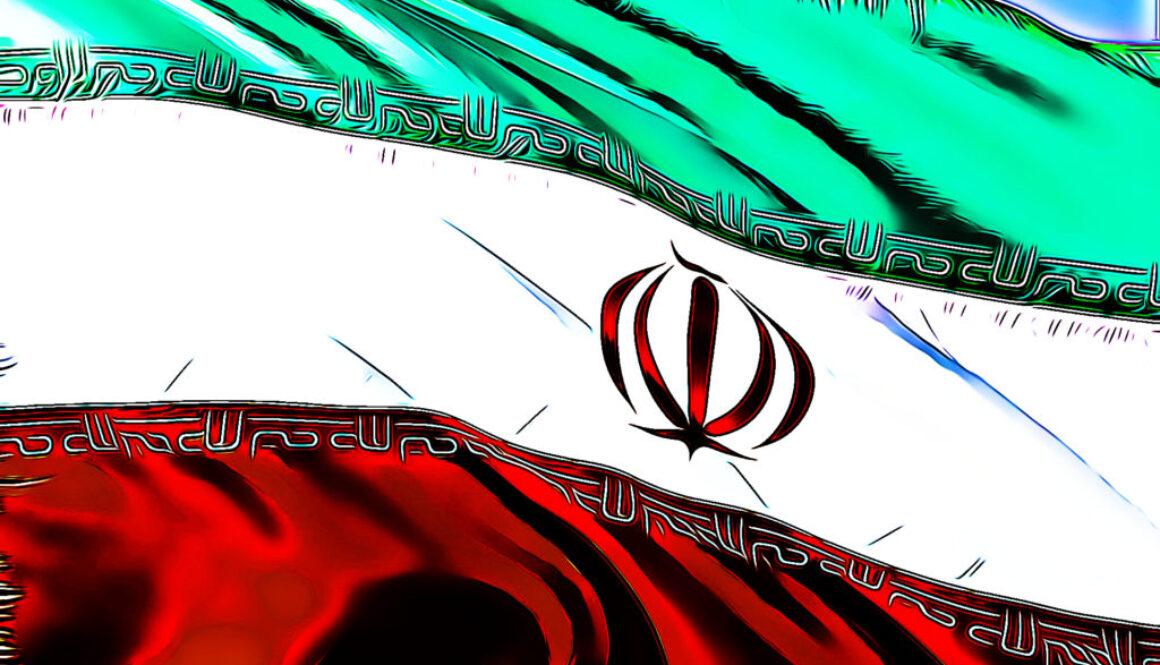
Alan N. Levy: We should not have entered into the nuclear deal with Iran
First of all, I’m vehemently opposed to ethnic profiling.
The practice is a national embarrassment and disgrace to any nation engaging in the practice, and in Germany in the late 1930’s and 1940’s, we see how glaringly dangerous and outrageous became the results of mindlessly deciding a group is ill-fitted for inclusion in a society. Profiling leads to hatred, or perhaps hatred leads to profiling … not sure about that chicken and egg discussion at the moment, but under Nazi rule, the next logical step was a string of death camps. May we never forget the lessons of Auschwitz or Bergen-Belsen.
Two code words in being Jewish are, “Never Again.” Never here, never there, never anywhere. That philosophy, that NEED, became the bedrock on which the State of Israel was created, and there was an immediate understanding that in order for Israel to survive while surrounded by so many nations hostile to her existence, she had to be stronger than her adversaries. Only the strongest shall survive is a fundamental law of nature and that is how species evolve and flourish. And Israel has sprouted wings. Her deserts bloom, and her military establishment and rank and file men and women know that they are the thin line preventing slaughter of their families. You probably have read that the sworn goal of Jihadist Iran is to kill every Jewish man, woman, and child in Israel and when that is what’s at stake, one tends to fight more determinedly to avert catastrophe and another holocaust. Necessarily, the IDF has become a force with which to be reckoned. Ultra-modern conventional weapons, an air force second to none, and a formidable array of nuclear weapons give Israel a significant combative edge while still being vastly outnumbered in the region.
Would Tel Aviv be concerned if Iran or Egypt purchased five hundred T-14 Armata battle tanks from Russia? Of course, but that purchase would not tip the scales of power in the Middle East. Israeli jets might use neutron weapons to instantly exterminate hostile tank crews, and IDF paratroopers could then capture the unmanned and silent tanks in the field. In warfare, technology is power, and the State of Israel has the power to control her own destiny.
Well, HAD the power to control her own destiny, at any rate.
On March 3rd, 2015 Prime Minister Benjamin Netanyahu addressed a joint session of Congress, and his plea fell on deaf ears. He strongly urged the United States not to move forward with an agreement with the Islamic Republic of Iran, in which we and other key nations allowed billions of dollars in frozen Iranian assets to be released. And in return, Iran agreed not to have more than 5,060 centrifuges at their nuclear facility at Natanz for a period of ten years.
The State of Israel has every intention to exist for more than just the next ten years. Benjamin Netanyahu would not have flown to Washington to express concern over a conventional weapons sale between Russia and an Islamic nation, especially when Israel’s military has the technology and expertise to neutralize any threat those weapons might pose. In fact, the IDF might actually welcome the deployment of five hundred sophisticated Russian-built battle tanks, because they would become Israeli tanks in a battle lasting at most two hours. But Iran being allowed to build nuclear weapons with a mere decade moratorium is a horse of an entirely different color.
So I wrote a novel, entitled, The Tenth Plague. The acorn from which it grows is the Iran nuclear deal, and in it, that nation has perfected nuclear weapons by the year 2028. Prime Minister Netanyahu’s greatest fears have become reality, and with the knowledge that if only one missile pierces through Israel’s nuclear umbrella, Tel Aviv would instantly become a sheet of glass for the next thousand years, Mossad and Washington ponder what to do about this very real threat.
That brings me to the tip of the spear, the sharp point of this article.
In an article written by Jordan Arizmendi and published on January 29, 2017 on the online site, “Medium”, the author states, “Massachusetts Institute of Technology (MIT) did a study about the education levels of certain ethnic groups in America. The study found that more than one in four Iranians hold a Master’s degree or a doctorate. This statistic makes Iranians the most highly educated group in America. President Trump has authorized executive actions banning Iranians from our country.”
And according to the site PAAIA, Public Affairs Alliance of Iranian Americans, “According to the U.S. Census Bureau’s 2011 American Community Survey, 470,341 (+/- 21,201) individuals reported their first or second generation ancestry as Iranian. However, it is widely believed that this figure is an undercount of the Iranian American community. This can be attributed to a lack of participation in the census surveys, as well as the methods used by the Census Bureau to obtain such information. Estimates of the size of the Iranian American community range from 500,000 to one million.”
So this is a puzzle, and here’s yet another piece … an article written by Laura Bridgestock entitled, “Top Tech Schools: MIT or Cal Tech?” and published on June 11, 2018. From her article, “MIT’s 11,466-strong student body makes it roughly five times the size of Caltech’s 2,238. Both institutions have a greater number of postgraduates than undergraduates, reflecting their research-intensive focus. Well-established among the world’s top tech schools, both attract applications from talented students all around the world, leading to highly diverse student bodies. International students account for around 29 percent of enrollments at both MIT and Caltech. At Caltech, the proportion of international students is much higher among graduate students, with 45 percent coming from outside the US, whereas only eight percent of undergraduates are international.”
Back to the lead in to this article … racial profiling. If we have more than 500,000 people of Iranian descent living in the United States, and revered institutions such as Caltech and MIT have at least a few hundred international graduate students (I selected that number modestly) studying physics and electrical engineering, let’s be generous and say there is just one such student who will, with his newly acquired talents and expertise, return to Tehran and participate in that nation’s nuclear weapons program. Just one. Brilliant, driven, doctorate in hand, and he returns to Natanz to supervise centrifuge installations.
So what do we do about all this? Put Iranian Americans in internment camps or solve this dilemma Nazi-style? Nope. Never again. Not to Jews, and certainly not to Iranian Americans who breathe the same free air as you and I do. Or can we refuse to educate ALL foreign students, for a young and seemingly innocent man with a British passport may possibly be an ardent Jihadist, and he could end up working at Natanz, as well. Or do we refuse to educate Iranian Americans at all, for fear some of them will return to Tehran? That’s as ridiculous as refusing to educate a kid from Germany, because just maybe his great-grandfather fought in World War II. And while I’m on that subject, President Trump traces his ancestry to the village of Kallstadt in Germany, and we elected him president. No, no, no. The focus on citizens here or those who seek education is incorrect and is fluttering with stupidity.
We cannot and should not cause our own precious citizens to suffer, nor should we diminish our commitment to educate those with the will and desire to learn, because the government of the nation of their ethnic heritage has embarked on a perilous course. If the statistic cited here is accurate, I applaud Iranian Americans for their commitment to education and the number of higher degrees they hold. And perhaps some of these people have complaints about our loose and decadent society, concerns I readily share with them. We’re all entitled to our opinions.
We are a nation of free thoughts and spirit. We are a nation of discord and rampant disagreements, and from those processes stems our greatness. We must remain tolerant within, but impatient with those who seek to harm us. There has always been a line in the sand, and while it’s easy to wipe it away, it nonetheless remains. Just as the State of Israel cannot tolerate an authoritarian state embarking on a project to develop and deploy nuclear weapons, neither can this nation allow that eventuality.
The issue at hand has nothing to do with education or the lack thereof. It has nothing to do with how many people of what flavor or ethnicity reside where or do what. It has nothing to do with religion or race. Rather, it has everything to do with a serious threat from a bully, and we must recognize and fend off that threat with whatever measures are necessary to eliminate it.
There is no such thing as theoretical power. If you have it and you use it, then you have it. If you have it and you don’t use it, but others fear you might, then you still have it. But if you have it and you don’t use it, and others believe you will not use it, then you are a Eunuch.
Tragically, there are nations who believe we are powerless. First and foremost, we must show those in Tehran the error of that thought process. We should not have entered into the nuclear deal with Iran, obscurely labeled the, “Joint Comprehensive Plan of Action.” Just think about that moniker for a moment. If anything, it’s a plan of IN-action, in that we’re going to allow Iran free reign to develop nuclear technology and devices after a decade of purported peace and tranquility. A better name might have been, “The Ostrich Agenda”, wherein the free world’s formerly powerful nations stick their collective heads in the sand and hope for the best.
The approach used by this nation to a dedicated and unwavering enemy state is similar to the failed international concepts utilized by Washington a few decades ago, a thought process still embraced today. Stop the spread of Communism. We don’t need a plan, we simply need to arm the opposition in dozens of nations, prop up dictators like the Shah of Iran simply because they warm to us rather than to Moscow, and everything will be just fine. We have never understood that a reactionary international foreign policy will never defeat a consistent, driven, and focused enemy, whether that enemy is Russia, China, North Korea, or Iran. To react, by definition, implies that an event has first occurred to which a response is suggested or required. And often the response is too little, too late. Or insignificant and powerless. Pointless.
When we sided with and armed the Shah of Iran, we chose to support a brutal totalitarian regime. And when his regime was overturned by the masses, the pendulum in Iran swung swiftly in the opposite direction. By virtue of our shortsightedness, the United States created the menace that is now the Islamic Republic of Iran, a dedicated and focused adversary that possesses the will and the means to do us harm. We can sign papers of agreement and compromise and afterward sip twenty-one year old Balvenie in celebration of our successes, but those actions show a deep and foreboding misinterpretation of the men with whom we are toying. Iran poses a significant terroristic threat to the security of this and other nations. We must deal with that threat while it is still feasible to do so, before that adversary becomes one of an entirely different magnitude. In April of 1951, General Douglas MacArthur openly advocated expanding the Korean Conflict and attacking China with the observation that China, “has now taken on the character of a united nationalism of increasingly dominant, aggressive tendencies.” President Eisenhower recalled MacArthur and rebuked him for openly advocating that position. But History repeats herself, and we are once again at a pivotal moment on a treacherous slope.
Assuming there remain historians in the year 2050, what will they write about America’s decision-making prowess in 2013, 2018, and beyond? We have history against us here. We entered World War I because our allies were attacked. We entered World War II because of Pearl Harbor. Again, we were attacked (well, maybe FDR wanted that to happen, in order to move us into the war, or perhaps that statement is a monumental example of why we’re not supposed to believe everything on the Internet). But, regardless of manipulation and structure, we were attacked. And that’s our modus operandi. America reacts. In the scenario I’ve described, zeroing in on individual citizens is an affront to humanity, and it is also part of a shell game that makes us appear to be taking steps to curtail something or other. In the meantime, the true jaguar in the jungle is lurking and gaining strength. Do we wait until Tehran pounces mightily and devastatingly? Do we react forcefully or with bleak words of opposition if and when Tel Aviv ceases to be the beating heart of a free nation? Or do we become truly angered when Washington, New York City, or Baltimore erupt as fireballs engulf those cities?
Waiting and reacting are no longer options, not when an attack will be with nuclear weapons by an enemy that believes it is glorious to die in the name of Jihad. To predict our immediate future and the serious nature of a threat from Iran, we cannot hold dear to the concept of MAD being a reasonable deterrent, for we are dealing with an unreasonable enemy. Jihadists look forward to death, and if we value our existence, we must recognize with whom we are dealing.
When we structured and moved forward with the “deal” with Iran a few years ago, and I place the word “deal” in quotation marks because normally, both sides gain something in a “deal”, it was entirely one-sided. Iran was given billions of dollars in withheld funds in return for a promise. I envision their representatives reaching out and shaking our hands, with their other hands behind their backs, fingers crossed. A promise not to develop nuclear technology, i.e., weapons, for ten years. Seriously? We call that a “deal”? To President Trump’s credit, he has consistently stated what I’ve claimed here. This was not a deal, or at least it was an atrocious one, for we gained nothing in the scheme of things. Now, we’ve renewed sanctions, but that decision will merely harden the resolve of those in Iran. With billions at their disposal and strong ties to North Korea and Russia, it doesn’t take much imagination to structure a new deal between Tehran and Pyongyang … a flow of desperately needed dollars to North Korea in return for assistance in the development of Iran’s nuclear capabilities. By imposing sanctions once again after the original deal was put in place is akin to closing the barn doors after all the livestock has escaped … too little, and much too late.
In our dealings with the Islamic Republic of Iran, and we have been doing this for quite some time, we are reaching out to pet a rabid dog and feeling everything is going to be just fine.
He hasn’t bitten us. Yet. If this nation waits to react to what Iran intends to do with newly perfectly nuclear technology and weaponry, we are on a collision course with monumental disaster. Their path is clear. Ours awaits the courage to act.
Alan N. Levy is the author of the thriller, The Tenth Plague, published by Chickadee Prince Books in 2019.
Design by Steven S. Drachman, from an image by RonnieK/PixaBay